Understanding India's Latest CPI Data
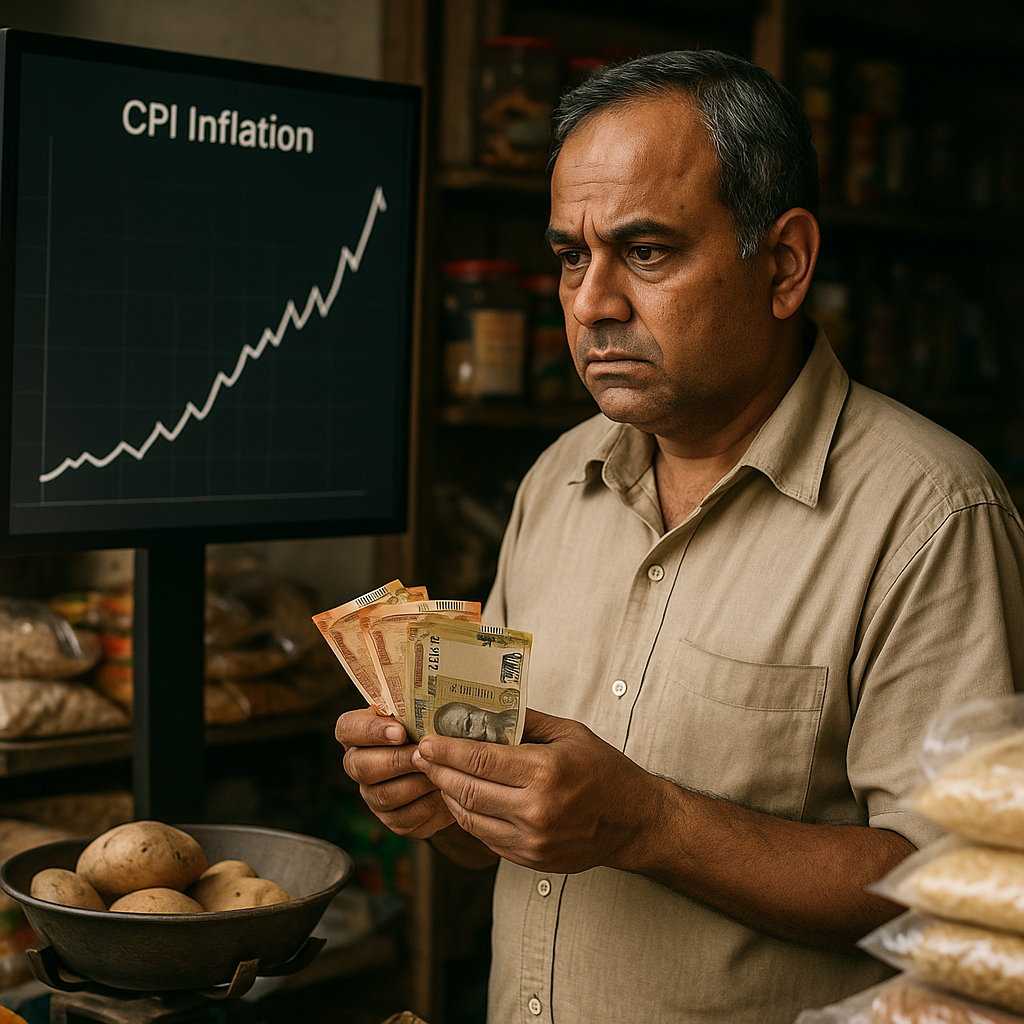
India's Consumer Price Index (CPI) inflation for June 2026 has reached 4.38%, marking a significant spike in retail inflation to an 18-month high of 4.4%. This increase is primarily driven by higher food and fuel prices, raising concerns among economists and policymakers about the potential impacts on the Indian economy and consumer spending.
Background on CPI and Inflation
The Consumer Price Index (CPI) is a critical economic indicator used to measure inflation by tracking the changes in the price level of a basket of consumer goods and services. Inflation reflects the rate at which the general level of prices for goods and services is rising, and subsequently, purchasing power is falling. A moderate inflation rate is often seen as a sign of a growing economy, but when inflation rises too quickly, it can erode consumer purchasing power and savings.
What Changed in June 2026?
In June 2026, India's CPI inflation breached the target range set by the Reserve Bank of India (RBI) after remaining stable for over a year. The primary drivers of this increase were food and fuel prices, which are significant components of the CPI basket. The volatility in these categories can significantly impact overall inflation rates, as seen in the recent data.
Why It Matters
Inflation affects various aspects of the economy, including consumer purchasing power, savings, and investment decisions. When inflation rises, the cost of living increases, which can lead to reduced consumer spending. This, in turn, affects businesses, particularly those in sectors reliant on consumer purchases, such as retail and leisure. Additionally, higher inflation can lead to increased borrowing costs if central banks raise interest rates to stabilize prices.
Implications for Economic Policy
The breach of inflation targets suggests potential shifts in economic policy, particularly concerning interest rates. Central banks, like the RBI, may consider increasing interest rates to curb spending and stabilize prices. This potential rate hike could have widespread effects on borrowing costs, investments, and economic growth. Policymakers will need to balance these measures to avoid stifling economic recovery.
Impact on Consumer Spending
Higher inflation generally leads to increased living costs, affecting consumer spending patterns. With food and fuel prices driving inflation, households may need to adjust their budgets, prioritizing essential expenses over discretionary spending. This shift could impact sectors reliant on consumer purchases, such as retail and leisure industries. Consumers may also become more price-sensitive, seeking discounts and value-for-money options.
Calculating Personal Inflation
While the CPI provides a general measure of inflation, individual experiences may vary. Personal inflation rates can differ based on spending habits and geographic location. Consumers can calculate their inflation rate by assessing changes in their regular expenses, such as groceries, transportation, and housing. Understanding personal inflation can help individuals make informed financial decisions.
Market Reactions and Currency Fluctuations
The rise in inflation has also influenced market dynamics, with the Indian Rupee experiencing pressure due to higher oil prices and the anticipation of US CPI data. Currency fluctuations can affect import costs and international trade, adding another layer of complexity to economic planning. Businesses involved in international trade may need to adjust their strategies to mitigate risks associated with currency volatility.
Potential Government Responses
As inflation breaches targets, government responses could include policy adjustments to manage economic stability. These might involve subsidies or tax reliefs for essential goods, aiming to mitigate the impact on consumers. However, specific government actions remain unclear, with policymakers likely monitoring ongoing economic indicators. The effectiveness of these measures will depend on timely implementation and the ability to address the root causes of inflation.
What Readers Should Watch Next
While the current inflation data provides a snapshot of economic challenges, several factors remain uncertain. The precise government response, potential interest rate changes, and long-term impacts on consumer behavior are still developing. Staying informed about policy updates and economic forecasts will be crucial for navigating these changes. Readers should pay attention to announcements from the RBI and government regarding monetary and fiscal policies.
Sources and Method
Additional source links:
Why this matters
For readers following Impact of India's Rising CPI Inflation on Economic Policy and Consumer Prices, the useful takeaway is not just the headline. The important part is understanding what the available report confirms, what it leaves open, and why later updates may change the picture.
This article keeps the wording cautious because the source material is the factual boundary. The added context is meant to help readers understand the development without turning early information into unsupported claims.
Comments
Post a Comment