Gold Rate Today: Latest Context for a Market Still Shaped by Inflation, Rates and Central Bank Buying
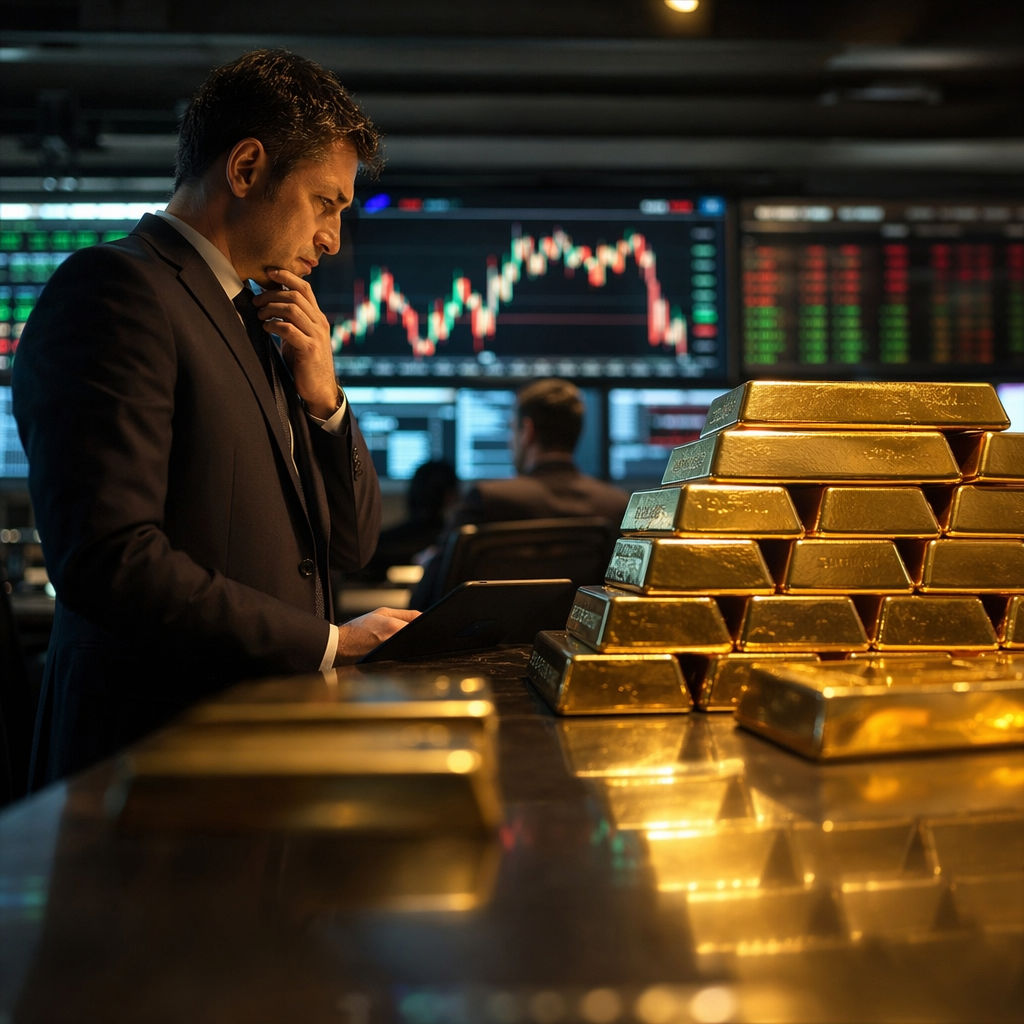
Gold remains one of the world’s most closely tracked daily prices, with its rate influenced by U.S. interest rates, inflation data, currency movements, central bank demand and geopolitical risk. As of 2026, the gold market is being measured against two years of unusually strong price action: spot gold reached a record above $2,400 per troy ounce in 2024, according to Reuters reporting at the time, after sustained demand from central banks and investors seeking a hedge against uncertainty.
Because gold trades globally almost 24 hours a day, the “gold rate today” varies by market, purity, tax structure and currency. International benchmarks are usually quoted in U.S. dollars per troy ounce, while retail rates in countries such as India are commonly quoted per 10 grams for 24-karat and 22-karat gold, including local taxes and making charges where applicable. The daily price available to a buyer in a jewellery store can therefore differ from the international spot price reported by financial news agencies.
As of 2026, the key question for households and investors is not only what today’s gold rate is, but why it is moving. The answer lies in a combination of official inflation data, central bank policy, exchange rates and physical demand, all of which have shifted materially since 2024.
How Today’s Gold Rate Is Set
Gold has several reference prices. The international spot price reflects immediate trading in the wholesale market. Futures prices, such as those on COMEX in New York, reflect contracts for delivery at a later date. The London Bullion Market Association, or LBMA, also publishes benchmark prices used by institutions. Local retail rates are then adjusted for currency conversion, import duties, taxes, logistics and merchant margins.
For example, when the U.S. dollar strengthens, gold can become more expensive for buyers using other currencies, even if the dollar-denominated spot price is stable. In India, one of the world’s largest gold-consuming countries, the domestic rate is affected by the rupee-dollar exchange rate and customs duties. Government tax decisions therefore play a direct role in the rate paid by consumers.
In July 2024, India reduced the basic customs duty on gold and silver as part of the Union Budget, according to official Government of India budget documents. The move affected landed costs for bullion and was closely watched by jewellers, refiners and traders because India relies heavily on imported gold to meet domestic demand.
Key Data Points Behind the Gold Market
Gold’s recent movement has been supported by measurable economic and policy developments. The following figures provide context for today’s gold rate:
- 2024: Spot gold traded above $2,400 per troy ounce during 2024, reaching record levels, according to Reuters market coverage.
- 2024: The World Gold Council reported that central banks remained major buyers of gold, continuing a multi-year trend of official-sector accumulation.
- 2024: U.S. consumer inflation cooled from the peaks seen in 2022, but official data from the U.S. Bureau of Labor Statistics showed inflation remained a key factor in Federal Reserve policy decisions.
- 2024: India cut customs duties on gold and silver in the Union Budget, according to Government of India budget documents, affecting domestic pricing.
- 2025: Gold demand continued to be tracked closely through World Gold Council quarterly demand reports, with central bank purchases, jewellery demand and exchange-traded funds among the major categories.
- As of 2026: Gold pricing continues to be driven by the path of U.S. interest rates, the dollar index, inflation expectations and official reserve management by central banks.
Why U.S. Interest Rates Matter for Gold
Gold does not pay interest. That makes it sensitive to the level of interest rates, especially in the United States, where Treasury yields serve as a global reference point. When real yields rise, gold can face pressure because investors may prefer interest-bearing assets. When markets expect lower rates, gold often gains support because the opportunity cost of holding bullion falls.
The Federal Reserve raised interest rates sharply in 2022 and 2023 to fight inflation. By 2024, investors were focused on when and how quickly rate cuts might begin. Reuters reported throughout 2024 that changing expectations for U.S. rate cuts contributed to movements in gold prices, with softer inflation readings and weaker economic indicators often supporting bullion.
As of 2026, traders still monitor U.S. inflation releases, employment data and Federal Reserve statements because these indicators shape bond yields and the dollar. A stronger dollar can weigh on gold by making it more costly for non-U.S. buyers, while a weaker dollar can support demand.
Inflation and the Gold Rate Today
Gold has historically been viewed as a store of value, but its relationship with inflation is not automatic. Prices can rise during periods of inflation concern, but they can also fall if central banks respond with higher interest rates. For this reason, official inflation data is central to daily gold market analysis.
According to the U.S. Bureau of Labor Statistics, U.S. inflation declined from its 2022 peak but remained above the Federal Reserve’s 2% target for much of the subsequent period. This mattered for gold because persistent inflation kept rate expectations uncertain. Investors watched whether inflation was slowing enough to allow monetary easing without reigniting price pressures.
In other major economies, inflation and currency movements also influenced gold demand. Households in countries with weaker local currencies may see higher domestic gold rates even when the international price is unchanged. This is especially relevant in emerging markets where gold is used both for jewellery and savings.
Central Bank Demand Since 2024
Central banks have become one of the most important sources of gold demand. The World Gold Council reported that official-sector purchases were historically strong in recent years, with many central banks adding gold to diversify reserves. This trend supported the market in 2024 and remained a major factor watched by analysts into 2025 and, as of 2026, continues to be part of the broader gold-rate discussion.
Central banks hold gold as part of foreign exchange reserves. Unlike currencies, gold is not issued by a single government. Reserve managers may buy gold for diversification, liquidity and long-term risk management. The International Monetary Fund publishes official reserve statistics that include gold holdings reported by member countries, making central bank activity one of the more visible institutional factors in the market.
Reuters has reported repeatedly that central bank purchases, especially from emerging-market economies, helped support gold prices during periods when investment flows into gold-backed exchange-traded funds were mixed. That distinction is important: gold can rise even when ETF demand is weak if physical and official-sector demand is strong enough.
Jewellery Demand and Retail Gold Rates
For many consumers, the gold rate today matters most in jewellery markets. Retail prices are typically quoted for 24-karat, 22-karat and sometimes 18-karat gold. The purity affects the price: 24-karat gold is nearly pure bullion, while 22-karat gold contains a smaller share of alloy metals and is widely used for jewellery.
India and China are the two largest consumer gold markets, according to World Gold Council data. Seasonal demand can influence local premiums, especially around festivals, weddings and the Lunar New Year period. However, high prices can reduce jewellery demand because consumers may delay purchases or buy lighter items.
In India, the final rate paid by customers can include goods and services tax, making charges and hallmarking-related costs. The Bureau of Indian Standards oversees hallmarking standards for gold jewellery, and official hallmarking rules are intended to protect consumers by verifying purity. These factors mean that a published city-wise gold rate may not be identical to the final invoice price.
Gold Rate Today in Domestic Markets
Domestic gold rates are calculated from the international price, exchange rate and tax structure. A simplified calculation converts the dollar price per troy ounce into the local currency price per gram, then adjusts for duties and taxes. A troy ounce equals about 31.1035 grams, a standard used in international bullion markets.
If the global spot price rises but the local currency strengthens, the domestic price may rise by less than the international move. Conversely, if the local currency weakens, the domestic gold rate can rise even when global bullion is flat. This explains why consumers in different countries may experience different “today” rates at the same time.
As of 2026, currency conversion remains one of the most important reasons local gold rates differ from global headlines. For buyers, checking both the live international spot price and the local retail rate provides a clearer picture of the cost.
Role of Exchange-Traded Funds
Gold exchange-traded funds, or ETFs, allow investors to gain exposure to bullion without holding physical metal. ETF flows are closely watched because they can indicate institutional and retail investor appetite. When ETF holdings rise, funds generally need to hold more gold. When investors redeem shares, holdings can decline.
World Gold Council quarterly reports track ETF demand as one component of total gold demand. In recent years, ETF flows have sometimes diverged from central bank buying. That means the gold rate can be supported by official purchases even when financial investors are reducing ETF exposure.
For the daily gold rate, ETF flows are one factor among many. Short-term moves are often driven by U.S. economic data, Federal Reserve commentary, bond yields and the dollar. Longer-term direction is influenced by demand from central banks, consumers and investors.
What Buyers Should Check Before Using Today’s Gold Rate
The headline rate alone does not show the total cost of gold. A consumer buying jewellery should check purity, hallmarking, taxes, making charges and buyback terms. An investor buying coins, bars or ETFs should compare spreads, storage costs, fund expense ratios and liquidity.
It is also important to distinguish between buying and selling rates. Dealers typically sell at a premium and buy at a discount. This spread can vary by product size, purity and market conditions. Smaller coins and bars often carry higher premiums per gram than larger bars because of minting and distribution costs.
For transparent comparison, buyers should ask whether the quoted rate is for 24-karat or 22-karat gold, whether taxes are included and what making charges apply. In regulated markets, invoices and hallmarking details are important consumer protections.
Outlook Indicators to Watch in 2026
As of 2026, the gold rate is likely to remain closely tied to economic data releases and official policy decisions rather than a single factor. The most important indicators include U.S. inflation, Federal Reserve rate decisions, Treasury yields, the dollar index, central bank reserve data and demand from major consumer markets.
Reuters market reports have consistently identified these drivers in daily gold coverage, while official sources such as the U.S. Bureau of Labor Statistics, the Federal Reserve, the International Monetary Fund and national government budget documents provide the underlying data used by traders and analysts.
For readers tracking the gold rate today, the most reliable approach is to compare a live bullion quote with official currency rates and local tax rules. The international price shows the global direction. The domestic rate shows the actual cost to the buyer.
Gold’s daily rate is therefore not a single universal number. It is a market price translated through currency, policy and retail costs. That distinction is essential for understanding why the rate reported by global news agencies can differ from the price displayed by a local jeweller or bullion dealer.
Sources: Reuters, Government releases, publicly available data.
Comments
Post a Comment