Understanding Weather Patterns in India
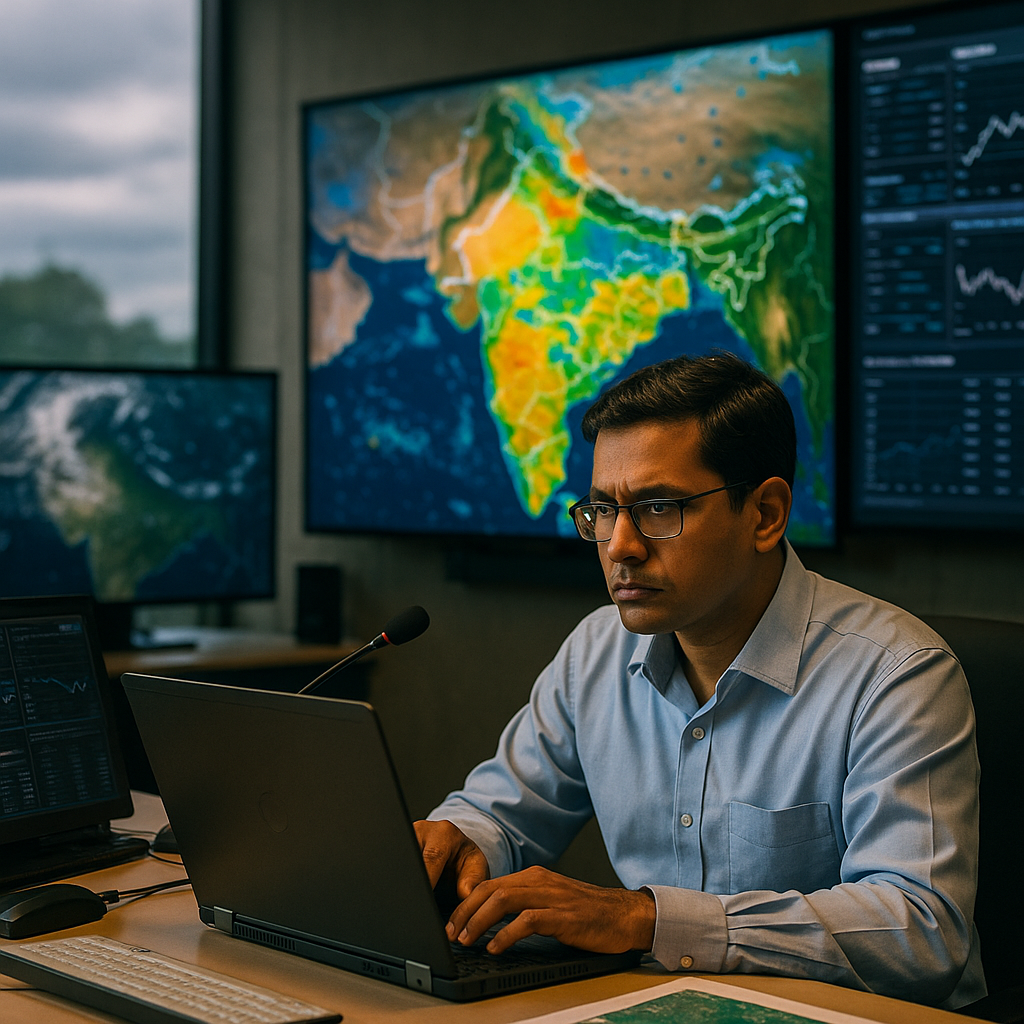
India's diverse climate poses unique challenges for meteorologists tasked with predicting weather patterns. The country's vast geographical expanse includes regions with varying climates, making accurate weather forecasting essential for agriculture, disaster management, and daily life. Recent advancements in meteorological tools and techniques have significantly improved the accuracy of weather predictions across the nation.
Latest Tools in Indian Meteorology
The Indian Meteorological Department (IMD) has been at the forefront of integrating advanced technology for weather forecasting. Here are some of the key tools and techniques currently being utilized:
- Doppler Radar Systems: These systems provide real-time data on precipitation, wind speed, and storm movements, aiding in timely alerts for severe weather conditions.
- Satellite Imagery: Satellites like INSAT and GSAT offer comprehensive coverage of the Indian subcontinent, helping meteorologists track weather patterns and predict changes.
- Numerical Weather Prediction Models: These models use mathematical equations to simulate atmospheric conditions, providing forecasts based on data inputs from various sources.
- Automatic Weather Stations (AWS): AWS are deployed across the country to continuously monitor temperature, humidity, wind, and rainfall, feeding data into prediction models.
Current Weather Alerts and Predictions
As of mid-July 2026, most parts of India are experiencing dry conditions, while heavy rainfall alerts have been issued for Bihar, Bengal, and the northeastern regions. The IMD has flagged potential flood threats and thunderstorms in multiple states, emphasizing the importance of preparedness. According to AajTak, these alerts are crucial for ensuring public safety and minimizing damage.
Implications of Weather Forecasting
Accurate weather predictions are vital for several sectors:
- Agriculture: Farmers rely on forecasts for planning sowing and harvesting activities, ensuring crop protection from adverse weather.
- Disaster Management: Timely alerts allow authorities to implement evacuation plans and mitigate the impact of natural disasters.
- Travel and Tourism: Weather forecasts help travelers plan their trips, avoiding areas with severe weather conditions.
Challenges in Weather Prediction
Despite technological advancements, predicting weather with complete accuracy remains challenging due to factors such as:
- Complex Climate Systems: India's varied geography results in complex interactions between different climate zones.
- Data Limitations: Gaps in data collection can lead to less accurate predictions, especially in remote areas.
Background on Indian Meteorology
The Indian Meteorological Department, established in 1875, has been instrumental in advancing meteorological science in India. Over the years, the IMD has evolved from basic observational methods to employing sophisticated technology, which has greatly enhanced its forecasting capabilities.
What Changed in Meteorological Practices
Recent years have seen a significant shift in meteorological practices in India, with a focus on integrating technology and improving data collection. The deployment of more automatic weather stations and the use of advanced computational models have been pivotal in this transformation. According to The Times of India, these advancements are expected to continue improving forecast accuracy.
Why Accurate Weather Prediction Matters
Accurate weather predictions are crucial for minimizing economic losses and safeguarding lives. In a country like India, where agriculture plays a vital role in the economy, precise weather forecasts can help optimize agricultural productivity and reduce the risk of crop failure. Additionally, effective disaster management strategies rely heavily on accurate predictions to prevent loss of life and property.
What Readers Should Watch Next
Readers interested in meteorology should keep an eye on new technological developments and policy changes in weather forecasting. Innovations such as machine learning and artificial intelligence are expected to further enhance the accuracy of weather predictions in the coming years. Staying informed through reliable sources and remaining prepared for sudden weather changes is essential.
Sources and Method
Our analysis is based on information from reputable sources such as AajTak and The Times of India.
Additional source links:
Why this matters
For readers following Advancements in Indian Meteorology: Tools and Techniques for Accurate Weather Predictions, the useful takeaway is not just the headline. The important part is understanding what the available report confirms, what it leaves open, and why later updates may change the picture.
This article keeps the wording cautious because the source material is the factual boundary. The added context is meant to help readers understand the development without turning early information into unsupported claims.
What is still unclear
The linked source does not answer every possible follow-up question. Timelines, official responses, wider impact, and next steps may need clearer reporting before readers can treat them as settled facts.
Where the evidence is limited, the safer reading is to treat the current details as a snapshot. That approach protects readers from overconfident summaries and keeps the post useful even as the story develops.
Comments
Post a Comment