Weather in India: Why Forecasts, Heat Alerts and Rain Warnings Matter More Than Ever
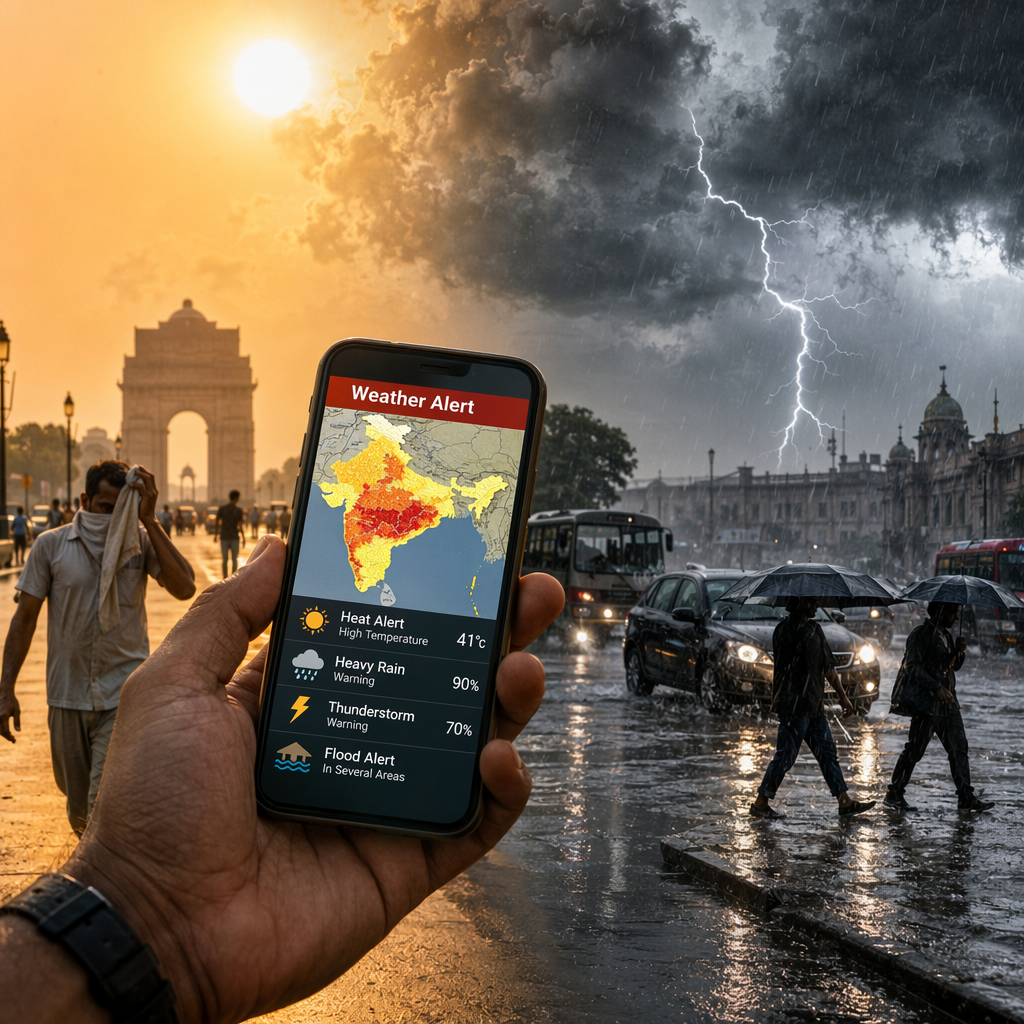
India’s weather is no longer just a daily conversation about whether it will rain. It now affects school timings, electricity demand, crop decisions, water storage, public health advisories, city traffic plans and even the way households prepare for summer and monsoon months. From extreme heat in northern and central India to heavy rainfall spells along the coast and in the Himalayan states, weather has become a practical risk-management issue for citizens, governments and businesses.
The importance of weather information has grown because India is highly exposed to seasonal contrasts. A large share of annual rainfall arrives during the southwest monsoon, while summers can produce long heat spells across the plains. Winters bring fog, cold waves and air-quality complications in parts of north India. Cyclones in the Bay of Bengal and Arabian Sea can disrupt coastal districts within days. In this setting, a weather forecast is not merely a prediction; it is a tool for public safety.
The India Meteorological Department, commonly known as IMD, remains the country’s primary official weather agency. It issues daily forecasts, nowcasts, colour-coded warnings, cyclone bulletins, heat-wave alerts and rainfall updates. State disaster management authorities, district administrations, agricultural agencies and local bodies often act on these advisories. For the public, the challenge is to understand what these alerts mean and how to respond without panic.
The Weather Story Behind Everyday Decisions
Weather in India influences routine choices more than many people realise. A heat-wave warning can change outdoor work hours. A heavy-rain alert can affect school closures, traffic diversions and train services. A dense-fog forecast can delay flights and highway movement. A cyclone warning can trigger evacuation plans, port advisories and fishing restrictions.
During 2024, weather warnings attracted unusual public attention as several parts of India experienced intense summer heat. The IMD’s 2024 seasonal heat outlooks and daily bulletins repeatedly highlighted above-normal maximum temperatures in parts of the country during peak summer periods. The agency also used heat-wave terminology for situations when temperatures crossed defined thresholds, depending on plains, coastal areas or hilly regions. Such warnings were important because heat stress can affect elderly people, outdoor workers, children and those with pre-existing health conditions.
Rainfall, too, remained central to national planning. The southwest monsoon normally accounts for the bulk of India’s annual rainfall, a point long emphasised by the IMD in its monsoon documentation. In 2024, as in every year, monsoon onset, progress, breaks and withdrawal were closely tracked because they influence agriculture, reservoir levels and food inflation expectations. Even when all-India rainfall looks close to normal, local extremes can still create floods in one district and rainfall deficits in another.
What “Weather” Really Includes
In common speech, मौसम often means today’s sky condition: sunny, cloudy, rainy, humid or cold. Scientifically, weather covers the short-term state of the atmosphere. It includes temperature, wind, humidity, rainfall, pressure, visibility and storm activity. Climate, by contrast, refers to long-term patterns observed over decades.
This distinction matters. A single day of heavy rain does not define climate change, and one cool week does not cancel a warming trend. But repeated records, longer heat spells, intense rainfall episodes and changing seasonal behaviour are studied by meteorological and climate agencies to understand broader risks.
For citizens, the immediate need is simpler: read the forecast correctly. If an official agency says heavy rainfall is likely at isolated places, that does not mean every neighbourhood will flood. If a district receives an orange warning, it means authorities and residents should remain prepared for possible disruption. Weather forecasts are probabilistic by nature, but warnings become more useful when people treat them as preparation signals.
Key Weather Facts and Recent Context
Several recent, dated facts show why weather awareness remains important in India:
- 2024: The India Meteorological Department issued heat-related outlooks and warnings during the summer season as several regions faced above-normal temperature risk.
- 2024: The southwest monsoon remained a major focus of official IMD updates because it is central to agriculture, water storage and seasonal planning.
- 2024: The National Disaster Management Authority continued to publish public guidance on heat-wave safety, including avoiding unnecessary exposure during peak afternoon hours and staying hydrated.
- 2024: State and district authorities in flood-prone and cyclone-prone areas used official weather warnings to issue local advisories, including instructions for fishermen and residents in vulnerable zones.
- 2025-2026: Weather preparedness is expected to remain a public-policy priority as Indian cities expand heat action plans, improve drainage planning and rely more heavily on warning systems issued by official agencies.
These facts are useful not because they suggest every season will be dangerous, but because they show how weather has become a governance issue. Forecasts help authorities prepare ambulances, shelters, water supply measures, crop advisories and disaster-response teams.
Heat Waves: The Most Personal Weather Hazard
Heat waves are among the most direct weather threats because exposure can affect the human body quickly. The IMD classifies heat-wave conditions using temperature thresholds and departures from normal temperatures. In the plains, a heat wave is generally associated with high maximum temperatures and significant deviations from normal. Coastal and hilly areas have different considerations.
During severe heat, the danger is not only the maximum temperature. Humidity, night-time temperatures, wind, access to shade and physical workload also influence risk. A day that reaches 42°C in a dry area can feel different from a humid coastal day with lower temperature but high heat stress. For outdoor workers, traffic police, delivery personnel, construction labourers and street vendors, exposure can be prolonged and unavoidable.
Public health agencies usually advise simple measures: drink water regularly, avoid peak-afternoon outdoor activity when possible, wear light clothing, use shade, and check on vulnerable people. The National Disaster Management Authority has published heat-wave safety guidance along similar lines. These steps may sound basic, but they can reduce risk when followed consistently.
Heat also affects infrastructure. Electricity demand rises due to cooling needs. Roads and railway systems can face stress in extreme conditions. Water demand increases, and urban heat islands can make densely built neighbourhoods warmer than surrounding areas. This is why heat action plans increasingly combine health advisories with urban planning measures such as cool roofs, public water points and shaded spaces.
Monsoon Rain: Lifeline and Risk
The monsoon is India’s most watched weather system. It supports kharif crops, replenishes reservoirs and groundwater, and shapes rural incomes. At the same time, heavy rainfall can trigger floods, landslides, urban waterlogging and transport disruption.
The IMD tracks monsoon onset over Kerala, its northward progress, active and break phases, low-pressure systems and withdrawal. The public often focuses on whether rainfall is “normal,” but the distribution matters as much as the total. A district may receive a month’s average rain within a few days, causing floods, while nearby areas may remain relatively dry.
Urban rainfall risk has also increased because cities have more paved surfaces, dense construction and pressure on drainage systems. Heavy rainfall that would once have been absorbed by open land can now run quickly into roads, underpasses and low-lying colonies. Local bodies therefore need not only weather alerts but also drain cleaning, pumping stations, traffic control and emergency communication.
For households, monsoon preparedness includes checking roof leakage, avoiding flooded roads, keeping essential medicines safe, charging phones before severe weather, and following official traffic and disaster-management advisories. In rural areas, agricultural advisories linked to weather can guide sowing, irrigation, fertiliser use and pest management.
Cyclones and Coastal Preparedness
India’s coastline faces periodic cyclone risk, especially from systems forming over the Bay of Bengal and the Arabian Sea. Cyclone forecasting has improved significantly over the years, and official bulletins now provide track, intensity and landfall guidance days in advance. The IMD issues cyclone updates, while state disaster management authorities translate them into evacuation, shelter and fishing advisories.
In cyclone situations, wind speed is only one part of the hazard. Storm surge, heavy rain, flooding, falling trees, power disruption and damage to temporary structures can be equally dangerous. Fishermen and small boat operators are especially vulnerable when warnings are ignored. Port warnings, coastal police announcements and district-level evacuation orders are therefore critical.
Good cyclone preparedness is based on early action. Families in vulnerable coastal areas are usually advised to keep documents, medicines, drinking water, dry food and emergency contacts ready. Authorities may move people from low-lying zones to shelters if landfall risk becomes serious. The success of such measures depends on trust in official warnings and timely communication in local languages.
Winter Weather: Fog, Cold Waves and Visibility
Winter weather in northern India brings a different set of concerns. Dense fog can reduce visibility on highways and at airports. Cold-wave conditions can affect people without adequate shelter, especially during late-night and early-morning hours. In some regions, winter weather also interacts with air pollution, creating poor visibility and health concerns.
The IMD issues fog forecasts and cold-wave warnings when conditions meet defined criteria. Transport agencies, airlines and railway authorities use these updates for scheduling and safety decisions. For ordinary citizens, winter advisories help with travel planning and protection of children, elderly people and outdoor workers.
Unlike dramatic storms, fog and cold waves may appear routine, but they can be disruptive. Road accidents, delayed trains, flight cancellations and health complications can follow when visibility drops or temperatures fall sharply. Reliable official forecasts help reduce uncertainty.
How to Read Weather Alerts Responsibly
Weather information spreads quickly through social media, but not all of it is reliable. Screenshots, old radar images and exaggerated messages can create confusion. The safest approach is to check official bulletins from agencies such as the India Meteorological Department and local disaster management authorities.
Colour-coded warnings are especially important. While exact definitions can vary by hazard and agency format, the general idea is simple: green usually indicates no major warning, yellow suggests awareness, orange indicates preparedness, and red signals the need for action. A red warning does not mean disaster is guaranteed at every location, but it does mean the risk is serious enough for authorities and residents to act carefully.
Forecast users should also note the time period and location. A warning for a district may not apply equally to every village or urban ward. A nowcast may cover the next few hours, while a seasonal outlook covers broader probabilities. Understanding these differences prevents both panic and complacency.
Why Weather Literacy Is Now Essential
India’s growing dependence on accurate weather information reflects broader economic and social changes. Farmers need rainfall and temperature guidance. Power companies monitor heat and cooling demand. Airlines and ports depend on wind, visibility and storm forecasts. Schools and offices respond to extreme weather advisories. Hospitals prepare for heat stress, water-borne disease risks and cold-related illness.
Weather literacy means knowing what information to trust, how to interpret warnings and when to take action. It also means accepting uncertainty. Forecasts improve with better satellites, radars, models and observation networks, but the atmosphere remains complex. A responsible forecast communicates risk; a responsible reader prepares without spreading rumours.
For the public, the most practical habit is to check official updates during high-risk seasons: summer heat, monsoon rain, cyclone periods and winter fog. Local context matters. A coastal warning may be irrelevant to an inland city, while a hill-state rainfall alert may carry landslide risk even if the rainfall amount appears moderate to people in the plains.
The Bottom Line
Weather is now a daily public-safety subject in India. It affects health, farming, transport, electricity, water and disaster preparedness. The same forecast that helps a farmer plan sowing can help a city prepare for flooding or a family avoid unsafe travel. The key is to rely on named official sources, understand warning levels and act early when credible alerts are issued.
As India moves through hotter summers, intense rainfall spells, winter fog and recurring cyclone threats, मौसम will remain more than a casual topic. It will remain one of the most important pieces of information citizens use to plan their day, protect their families and reduce avoidable risk.
Comments
Post a Comment