Vinesh Phogat: From Olympic Heartbreak to a New Public Role
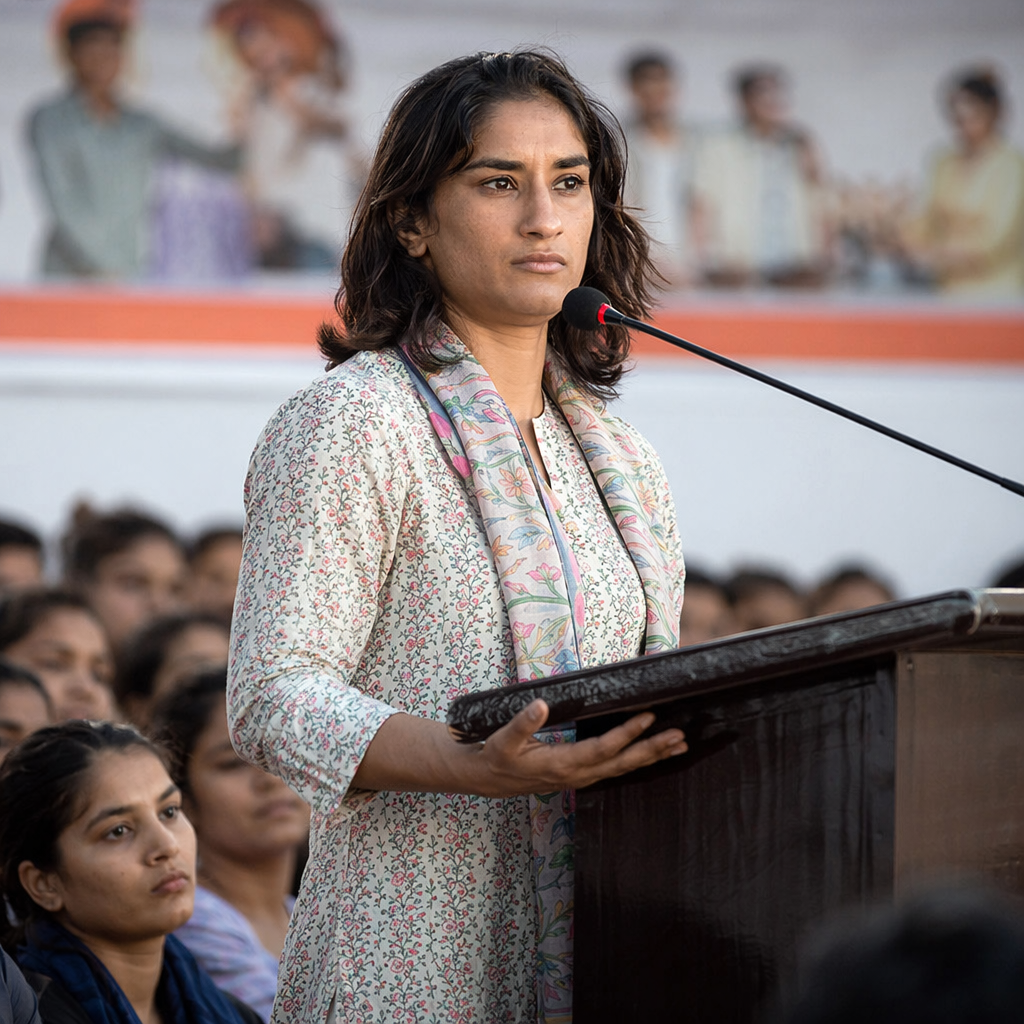
Vinesh Phogat became one of India’s most searched sporting names in 2024 after a dramatic turn at the Paris Olympics: she reached the women’s 50kg wrestling final, but was disqualified before the gold-medal bout for being overweight by a small margin, according to reporting by major Indian news organizations and Olympic coverage. The episode turned an already prominent wrestler into the center of a national debate about athlete welfare, weight management, sports administration and the emotional cost of elite competition.
For many Indian sports followers, Phogat’s story is familiar but still unusual. She belongs to the well-known Phogat wrestling family from Haryana, a family often associated with the growth of women’s wrestling in India. She is also a Commonwealth Games gold medallist and a World Championships medallist, achievements that made her one of the leading Indian wrestlers of her generation before the events of 2024 pushed her public profile far beyond the sports pages.
This article looks at Vinesh Phogat’s career, the 2024 Paris Olympics controversy, her role in the wrestlers’ protest movement, and her move into public life, while separating verified developments from speculation.
Who Is Vinesh Phogat?
Vinesh Phogat is an Indian freestyle wrestler from Haryana. She competes in women’s wrestling and has represented India in multiple international competitions, including the Olympics, Commonwealth Games, Asian Games and World Championships. Her career has often been discussed alongside India’s broader rise in women’s wrestling, particularly after the success of athletes from Haryana on the global stage.
Phogat is part of a family strongly associated with the sport. Her cousins Geeta Phogat and Babita Phogat became widely known after their wrestling achievements and after their story reached a larger popular audience through film and media coverage. Vinesh, however, built a separate sporting identity through her own international medals, consistency and longevity.
Before the Paris Olympics, she had already experienced the physical risk of elite wrestling. At the 2016 Rio Olympics, she suffered a serious knee injury during competition, an incident that halted her campaign and became one of the defining setbacks of her early Olympic career. She later returned to international wrestling and continued competing at a high level.
Key 2024 Context: Why She Was in the News
The year 2024 was pivotal for Phogat. She moved into the 50kg weight category for the Paris Olympic cycle and secured qualification. At the Paris Olympics, she defeated several opponents on the way to the final, including a major early-round win over Japan’s Yui Susaki, a result widely reported by Olympic and Indian sports media because Susaki had entered the event as one of the most dominant wrestlers in the category.
Her run made her the first Indian woman wrestler to reach an Olympic final. That achievement alone would have been historic. But the story changed before the final bout. Phogat was disqualified after the official weigh-in found her above the permitted limit for the 50kg category. News organizations including Reuters, The Indian Express, The Hindu and ESPN India reported that the margin was about 100 grams.
The disqualification meant she was not allowed to compete in the final. It also meant she did not receive the silver medal that would normally go to a losing finalist. The decision was based on wrestling’s competition rules regarding weight categories and weigh-ins. Phogat appealed to the Court of Arbitration for Sport, seeking a joint silver medal, but the appeal was dismissed, according to reporting by Reuters and Indian news outlets that covered the CAS outcome.
Useful 2024-2026 Dated Facts
Several dated facts from 2024 help explain why Phogat’s name remained in the national conversation beyond the Olympic arena:
- August 2024: At the Paris Olympics, Phogat reached the women’s 50kg freestyle wrestling final, becoming the first Indian woman wrestler to do so, according to Olympic and Indian sports coverage.
- August 2024: She was disqualified before the final after the official weigh-in placed her above the 50kg limit; Reuters and Indian sports outlets reported the margin at around 100 grams.
- August 2024: Phogat filed an appeal before the Court of Arbitration for Sport for a joint silver medal, but the appeal was dismissed, according to Reuters and Indian news organizations.
- August 2024: After the Olympic disqualification, Phogat announced her retirement from wrestling in a social media post that was widely reported by Indian news organizations.
- September 2024: Phogat joined the Indian National Congress, according to reporting by Press Trust of India and major Indian news outlets.
- October 2024: She won the Julana Assembly seat in Haryana, according to results reported by the Election Commission of India and Indian news organizations.
The Paris Olympics Disqualification
The Paris episode became one of the most discussed incidents involving an Indian athlete in 2024 because it combined an extraordinary sporting result with a procedural outcome that many fans found difficult to accept emotionally. In wrestling, athletes must meet the specified weight limit at official weigh-ins. If an athlete is over the limit, even by a small amount, competition rules can lead to disqualification.
Phogat’s case drew attention because she had already completed the bouts that took her into the final. Reports by Reuters and Indian news organizations said she and her support team had tried to cut weight overnight, a common but physically demanding process in combat sports. The final weigh-in, however, did not go in her favor.
The outcome triggered debate on multiple issues: whether weight-cutting practices are safe, how much medical support athletes receive, how rules are communicated and applied, and how national sports systems prepare wrestlers for multi-day events. It also raised public questions about responsibility, though the formal sporting decision rested on the competition rules.
From a factual standpoint, the key point is that Phogat was disqualified under the weight rule before the final and her later appeal did not change the result. The emotional response in India was intense, but the official medal outcome remained unchanged.
Earlier Career and International Success
Vinesh Phogat’s reputation was not built only on the Paris controversy. She had been one of India’s most decorated female wrestlers for years. She won medals at the Commonwealth Games and Asian Games and became a World Championships medallist, placing her among the country’s leading wrestlers of the past decade.
Her career also reflected the evolution of Indian women’s wrestling. Haryana, in particular, has produced many women wrestlers who challenged social expectations and competed internationally. Phogat’s rise came within that context, but her longevity and resilience made her stand out.
At different points in her career, she competed in different weight categories. That is important because weight categories are central to wrestling strategy and preparation. A change in category can affect training, diet, strength, endurance and recovery. Her move to the 50kg class for the Paris cycle became especially significant after the Olympic weigh-in controversy.
The Wrestlers’ Protest and Public Advocacy
Before the Paris Olympics, Phogat was also prominent in the wrestlers’ protest movement in India. In 2023, she was among the athletes who publicly protested against former Wrestling Federation of India chief Brij Bhushan Sharan Singh, who faced allegations of sexual harassment. The matter was widely covered by Indian and international news organizations. Singh denied the allegations.
The protests involved several leading wrestlers and became a major sports governance issue. They raised questions about athlete safety, complaint mechanisms, institutional accountability and the treatment of women athletes in Indian sport. The movement brought wrestlers into a difficult public space: they were both competitors and complainants, balancing training with legal and political developments.
Phogat’s role in those protests shaped how many people viewed her in 2024. To supporters, she represented an athlete willing to speak publicly on issues beyond medals. To critics, the protests became entangled with politics and sports administration. A neutral reading is that Phogat’s public identity expanded during this period from elite wrestler to athlete-advocate.
Retirement Announcement After Paris
After the Paris Olympics disqualification, Phogat announced that she was retiring from wrestling. Indian news organizations reported her social media statement, which conveyed exhaustion and disappointment after the Olympic outcome. Retirement announcements after emotionally severe events can sometimes be revisited by athletes, but as reported at the time, her statement indicated an intention to step away from competition.
The announcement was significant because Phogat was still a major name in Indian wrestling and had just produced a historic Olympic run before the disqualification. It also underlined the psychological pressure faced by elite athletes, especially in sports where a single weigh-in, injury or referee decision can alter years of preparation.
Sports bodies and public figures responded with messages of support. However, the practical implications for Indian wrestling were larger: India had to consider the future of a women’s wrestling program in which Phogat had been a central figure.
Entry Into Politics
In September 2024, Phogat joined the Indian National Congress, according to Press Trust of India and major Indian news outlets. Her move came shortly before the Haryana Assembly elections and followed a period in which her public visibility had grown because of both sports and protest-related developments.
She contested from Julana in Haryana. In October 2024, she won the seat, according to the Election Commission of India’s results as reported by Indian news organizations. That result marked a formal transition from athlete to elected representative.
The shift from sport to politics is not unusual in India, where several athletes have entered public life. But Phogat’s case was distinctive because it came soon after one of the most emotional episodes of her sporting career. Her campaign and victory also connected her to Haryana’s political landscape, where wrestling, rural identity, women’s participation and youth employment are recurring public themes.
Why Vinesh Phogat Still Matters
Phogat remains important for several reasons. First, her sporting career represents a major chapter in Indian women’s wrestling. She competed internationally for years and reached a level that few Indian wrestlers have achieved. Second, her Olympic disqualification continues to be studied as a case involving rules, preparation, athlete health and institutional responsibility.
Third, her participation in the wrestlers’ protest placed her at the center of a national conversation about the treatment of athletes, especially women athletes. Regardless of political interpretation, the protest period brought issues of safety, accountability and governance into mainstream discussion.
Finally, her election to public office means her influence is no longer confined to wrestling. As an elected legislator, her public work will be judged by governance, constituency service and policy engagement, not only by her sports record.
A Career Defined by More Than One Moment
It would be incomplete to define Vinesh Phogat only by the Paris Olympics disqualification. That moment was dramatic and consequential, but it came after years of international competition, recovery from injury, medal-winning performances and public advocacy.
Her story also shows how modern athletes can become public figures in multiple ways. They are judged by results, but also by how they respond to institutions, controversy and public pressure. In Phogat’s case, the transition from wrestler to elected representative has made her career one of the most closely watched athlete-to-politician journeys in recent Indian public life.
As of the latest developments reported in 2024, Phogat’s competitive wrestling future appeared to be closed by her retirement announcement, while her political career had begun with an electoral win in Haryana. For followers of Indian sport and public affairs, her next chapter will be measured less by weigh-ins and medals and more by legislative work, local issues and public accountability.
Comments
Post a Comment