PM Modi’s Mann Ki Baat: Why the Radio Address Remains a Major Public Communication Platform
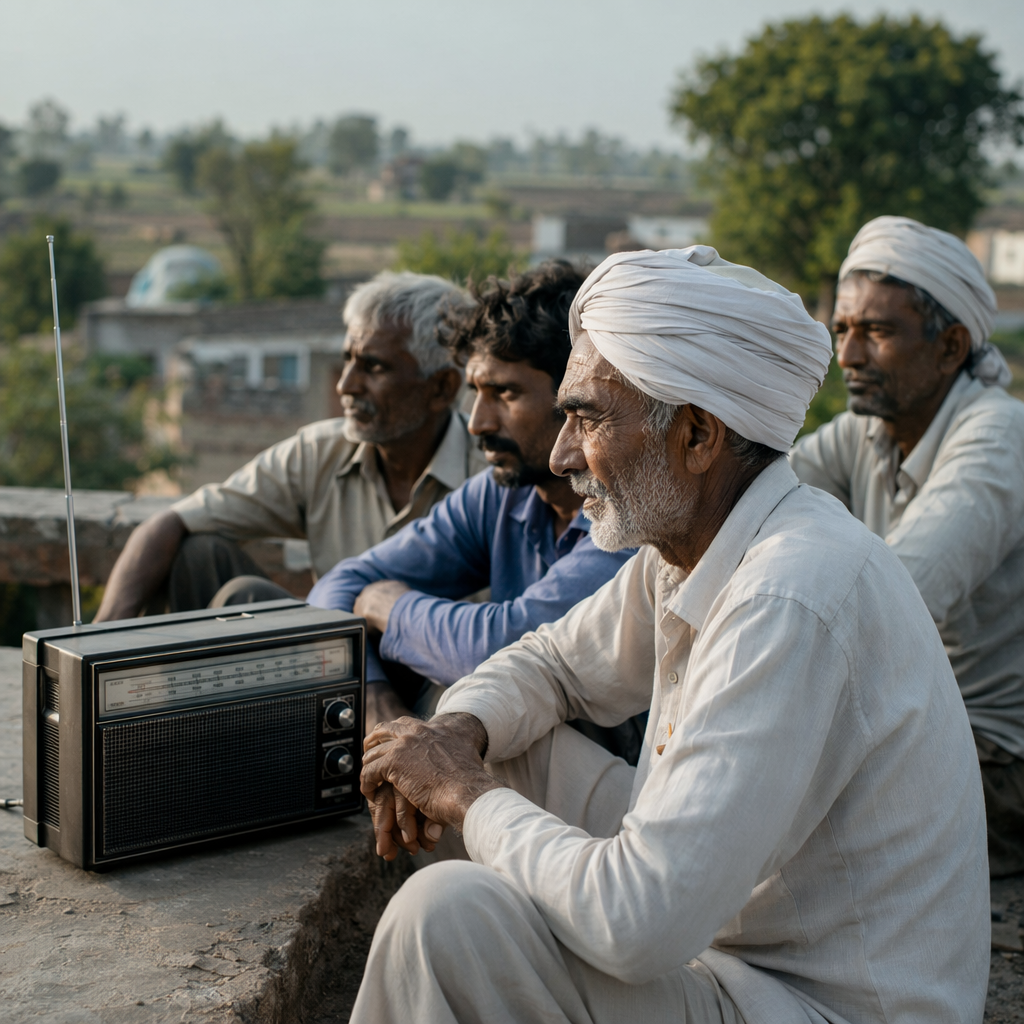
“Mann Ki Baat” returned to the public conversation because it is more than a monthly radio programme: it is one of the most recognisable communication formats associated with Prime Minister Narendra Modi. Broadcast through All India Radio and carried across television and digital platforms, the address has become a regular channel through which the Prime Minister highlights citizen initiatives, government-linked campaigns, cultural moments and national priorities.
The programme’s importance lies in its format. Unlike a parliamentary speech, election rally or official press conference, “Mann Ki Baat” is designed as a conversational address to citizens. It often features stories from villages, schools, self-help groups, start-ups, athletes, artists, environmental volunteers and local administrators. This makes it a notable case study in how political communication, public service messaging and civic storytelling intersect in India.
According to the trend reference available for this topic, Google Trends listed “pm modi mann ki baat” among trending search topics in India through its RSS feed. That signals renewed public interest in the programme, although the trend feed itself does not provide detailed audience numbers or episode-level statistics.
What Is “Mann Ki Baat”?
“Mann Ki Baat” is a periodic radio address by Prime Minister Narendra Modi, broadcast by All India Radio and relayed through Doordarshan, the Narendra Modi mobile application, official social media channels and other platforms. The programme is generally aired on Sundays and is framed as a direct conversation between the Prime Minister and citizens.
The title translates roughly as “from the heart” or “thoughts from the mind,” and the programme usually avoids the structure of a policy briefing. Instead, it focuses on themes such as cleanliness, water conservation, local innovation, traditional knowledge, women’s participation, youth achievement, heritage, sports, health awareness and national events.
In many episodes, the Prime Minister mentions citizens by name or refers to examples submitted from different states. The format helps convert local work into national recognition. A school initiative in one district, a farmer-led conservation effort in another, or a local cultural practice can be presented as an example for a wider audience.
Why It Matters in 2024-2026 Public Communication
The continuing relevance of “Mann Ki Baat” comes from the scale and diversity of India’s media environment. Radio remains accessible in areas where internet access may be uneven, while digital clips from the programme circulate widely on social media. This dual nature allows the same message to travel through both traditional and modern media channels.
The 2024-2026 period is especially important because India’s public communication landscape has become more fragmented. Citizens now receive political and civic information from television news, messaging apps, short-video platforms, newspapers, radio, regional media and official government handles. In that environment, a scheduled programme with a familiar format can serve as a recurring reference point.
It also helps that “Mann Ki Baat” is not limited to one administrative ministry. Depending on the episode, the address may touch on health campaigns, environmental efforts, student innovation, disaster awareness, cultural festivals, sports achievements or digital services. That flexibility makes it adaptable to changing national priorities.
Known Dated Context and Facts
Several dated facts help place the programme in context, though the trend feed supplied for this article provides only one link and does not include an official episode transcript or audience dataset. The following facts are widely reported in public coverage and official communication around the programme:
- April 2023: the 100th episode of “Mann Ki Baat” was broadcast, a milestone that was covered by Indian news organisations and official government communication channels.
- 2024: after the Lok Sabha election period, the programme continued as part of Prime Minister Modi’s third term communication calendar, with episodes again carried by All India Radio and official digital channels.
- 2024: Google Trends’ India RSS feed listed searches related to “pm modi mann ki baat,” showing public search interest around the topic at the time it appeared in the trend feed.
- 2024-2026: the programme remains tied to multiple platforms, including radio, television and digital distribution, reflecting India’s hybrid media consumption patterns.
- 2024-2026: themes frequently associated with the programme include civic participation, environmental responsibility, youth innovation, cultural heritage and local achievements, as reflected in official episode descriptions and public reporting.
These points show the programme’s continuing public presence without relying on unverified claims about exact listenership or engagement numbers. Where precise figures are not available from a named source in the provided reference, they should not be assumed.
A Platform for Citizen-Led Stories
One of the defining features of “Mann Ki Baat” is its emphasis on citizen-led examples. Instead of focusing only on government announcements, the programme often highlights individuals and community groups. This gives the address a distinctive tone: it is political communication, but it frequently uses social and cultural storytelling rather than partisan argument.
For example, episodes have commonly discussed subjects such as cleanliness drives, local tourism, handloom traditions, yoga, examination stress, environmental protection and Indian languages. In each case, the Prime Minister connects a national theme with a specific story or practice. That approach helps make broad campaigns more relatable.
The programme also functions as a recognition mechanism. Being mentioned in “Mann Ki Baat” can bring attention to local initiatives that might otherwise remain outside national media coverage. For a village committee, student innovator, artisan group or conservation volunteer, national acknowledgement from the Prime Minister can be significant.
Radio, Television and Digital Reach
“Mann Ki Baat” is rooted in radio, but it is no longer consumed only as a radio programme. All India Radio remains central to the broadcast, while Doordarshan and official digital platforms extend the programme’s reach. Clips are also shared online after episodes, making them accessible to people who do not listen live.
This matters because media habits differ sharply across India. Some citizens continue to rely on radio, particularly in rural and semi-urban areas. Others encounter the programme through television news highlights, YouTube clips, social media posts or news articles. The same address can therefore generate multiple waves of attention: live broadcast, news coverage, political commentary and digital sharing.
From a communication perspective, this layered distribution is one reason the programme remains visible. It does not depend entirely on one platform or one audience group. Instead, it travels across language, region and media format.
The Role of Language and Localisation
Language is another major factor in the programme’s reach. India’s linguistic diversity means that national communication cannot depend solely on one language. While the Prime Minister delivers the address in Hindi, the programme is typically made available in multiple Indian languages through broadcast and translation systems linked to public media.
Localisation also affects how the programme is received. A national theme may become more meaningful when connected to a local example. If an episode mentions a practice from Assam, Gujarat, Tamil Nadu, Jammu and Kashmir, Maharashtra or Odisha, it can create regional resonance while still fitting into a national narrative.
This combination of central messaging and local recognition is a core feature of “Mann Ki Baat.” It allows the Prime Minister to speak to the country as a whole while also spotlighting specific communities.
Political Significance Without Election Rally Language
Although the programme is delivered by the Prime Minister, its tone is generally different from campaign speeches. “Mann Ki Baat” usually avoids direct attacks on political opponents and instead focuses on public participation, national pride and social causes. That format has helped it remain distinct from election rallies and parliamentary exchanges.
However, the programme is still politically significant. A Prime Minister’s recurring national address can shape public attention by choosing which issues to emphasise. When the programme highlights water conservation, local products, digital payments, cleanliness or examinations, those themes often receive wider discussion in news coverage and social media.
The political relevance also comes from repetition. Monthly communication can reinforce priorities over time. Even without new policy announcements in every episode, the programme can keep certain ideas visible in public life.
How News Organisations Cover It
Indian news organisations often report the main themes of each episode soon after broadcast. Coverage typically focuses on the issues mentioned by the Prime Minister, the people or regions highlighted, and any comments linked to current national events. Television channels may carry excerpts, while newspapers and digital platforms publish summaries.
This secondary coverage is important because many citizens may learn about an episode through news reports rather than by listening to the full broadcast. In practice, “Mann Ki Baat” becomes both a direct communication product and a news event.
The Google Trends reference suggests that search interest can rise around episodes or public discussion of the programme. Such interest may be triggered by a new episode, a specific remark, a milestone, or political debate surrounding the programme. But without additional trend data from Google Trends, it would be inaccurate to claim exact search volumes or rankings.
Criticism and Public Debate
Like any major political communication platform, “Mann Ki Baat” has also drawn debate. Supporters describe it as a way to connect government leadership with ordinary citizens and highlight positive social work. Critics question whether a one-way address can be considered a dialogue, and some argue that it gives the Prime Minister a powerful recurring platform without direct questioning.
Both views reflect the programme’s central role in Indian public communication. It is not merely entertainment or ceremonial messaging. It sits at the intersection of governance, media, politics and civic mobilisation.
For readers, the key is to distinguish between verifiable facts and political interpretation. It is factual that the programme is broadcast on public media platforms and has become a recurring part of the Prime Minister’s communication style. It is also factual that the 100th episode in April 2023 was treated as a major milestone. Claims about its exact effect on public behaviour, electoral outcomes or audience size require specific, named evidence and should be evaluated carefully.
Why the Programme Continues to Trend
There are several reasons searches for “pm modi mann ki baat” can rise. A new episode may have aired. A particular theme may have attracted attention. A citizen mentioned in the programme may have become a local news story. Political reactions may have followed. Or users may be looking for the latest transcript, broadcast timing or summary.
The continued search interest also reflects the Prime Minister’s centrality in India’s political news cycle. Any recurring communication by the head of government naturally attracts attention from supporters, critics, journalists, students and policy observers.
In this sense, “Mann Ki Baat” is both a programme and a media event. Its significance is not limited to what is said during the broadcast; it also includes how the address is summarised, shared, translated, debated and archived.
What to Watch in Future Episodes
Looking ahead through the 2024-2026 period, the programme is likely to remain a venue for themes that combine citizen action with national goals. Areas to watch include environmental campaigns, youth entrepreneurship, cultural heritage, women-led initiatives, public health messaging, sports participation and technology adoption.
Another important area is regional representation. The programme’s impact often depends on how effectively it highlights stories from different parts of India. Episodes that bring lesser-known local initiatives into national conversation can shape wider public awareness.
Finally, the evolution of distribution will matter. As more Indians consume news through mobile platforms, the post-broadcast life of “Mann Ki Baat” clips, summaries and translations may become as important as the live radio airing itself.
Conclusion
“Mann Ki Baat” remains one of India’s most prominent examples of recurring leader-to-citizen communication. Its endurance comes from a blend of radio tradition, television amplification, digital circulation and citizen-focused storytelling. While the programme is closely associated with Prime Minister Narendra Modi’s political communication style, its format also reflects broader changes in how public messages travel in India.
The latest search interest around “pm modi mann ki baat,” as reflected in the Google Trends India RSS feed, shows that the programme continues to draw public attention. For citizens and observers, the most useful way to follow it is to look at the specific themes, named examples and official broadcast details of each episode, while avoiding unsupported claims about reach or impact.
Comments
Post a Comment