Jitesh Sharma: Why the Wicketkeeper-Batter Is Back in the Spotlight
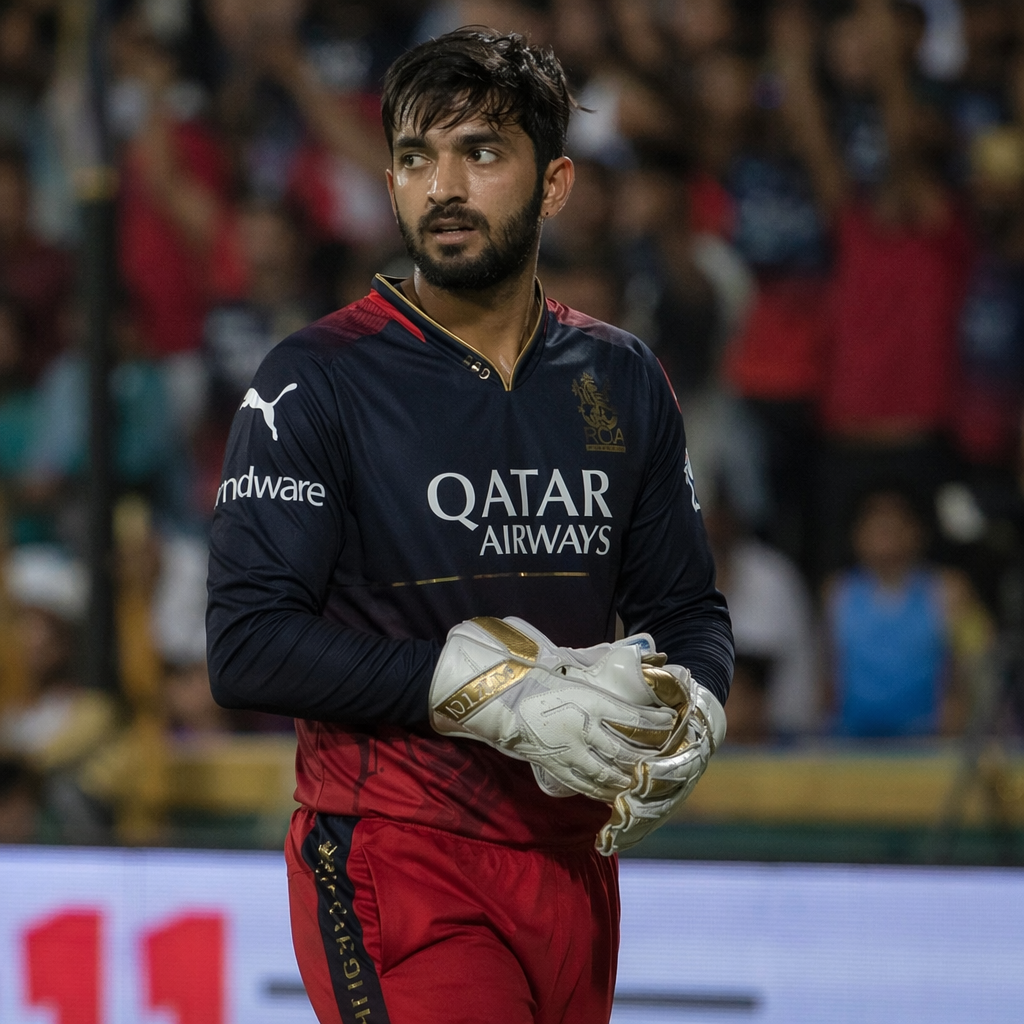
Jitesh Sharma’s name surfaced in Google Trends in India, a sign that cricket followers were again searching for one of the country’s most aggressive wicketkeeper-batters. For a player who has built his reputation through short-format impact rather than long-form headlines, that renewed attention fits a familiar pattern: Jitesh often enters the public conversation when India’s T20 depth, Indian Premier League roles, and wicketkeeping options become active talking points.
The Vidarbha cricketer has been part of a crowded and competitive Indian wicketkeeper-batter pool, a group that has included players such as Rishabh Pant, Sanju Samson, Ishan Kishan, KL Rahul and Dhruv Jurel across formats. His appeal, however, has been distinct. Jitesh is not usually discussed as a conventional accumulator. He is better known for power-hitting, quick starts, and late-innings acceleration—skills that T20 teams increasingly value when building batting orders around high strike rates and flexible roles.
This article looks at Jitesh Sharma’s career profile, the reasons behind his visibility, and the context in which he is assessed in 2024-2026 discussions about Indian cricket. The only URL supplied in the trend feed was a Google Trends RSS link, so the article avoids unsupported match-by-match claims and uses attributed references only where appropriate.
Who Is Jitesh Sharma?
Jitesh Sharma is an Indian wicketkeeper-batter from Maharashtra’s Amravati region who represents Vidarbha in domestic cricket and has played in the Indian Premier League. He bats right-handed and is primarily known for his T20 role as a middle-order or finishing option. His cricketing rise has not followed the most conventional path to national attention. Instead of being introduced to wider audiences through Test cricket or a long run in One Day Internationals, he became more widely recognized through domestic white-ball performances and IPL opportunities.
In the Indian cricket ecosystem, that pathway matters. The IPL has become a highly visible platform for specialists: death-overs bowlers, wrist-spinners, left-handed power-hitters, and wicketkeeper-batters who can change the tempo of an innings quickly. Jitesh’s skill set fits that specialist category. He is often evaluated less by traditional batting milestones and more by the value he can add in the final overs, especially when a team needs a fast 25 or 35 rather than a long innings.
According to the Board of Control for Cricket in India’s player and team communications in recent seasons, India has continued to test multiple wicketkeeper-batter options in T20 squads. That environment has kept players such as Jitesh relevant because T20 selection debates are frequently shaped by roles, matchup flexibility, and strike-rate potential.
The Skill Set That Defines Him
Jitesh Sharma’s core value lies in his ability to attack early. Many top-order players take time to assess conditions; finishers are often denied that luxury. A batter arriving in the 14th, 15th, or 16th over may face only 10 to 20 deliveries. In that scenario, dot-ball reduction, boundary access, and composure under pressure become more important than a conventional average.
As a wicketkeeper-batter, Jitesh offers dual utility. Teams can include him not only as a power-hitter but also as a gloveman, helping balance the playing XI. In T20 cricket, this is particularly important because a wicketkeeper who can bat in the middle or lower order can allow franchises and national selectors to play an additional bowling option, all-rounder, or specialist batter elsewhere.
His batting is typically associated with strong hands, a willingness to hit straight, and an ability to take on pace. Like many finishers, he also faces the challenge of consistency. Batters in that role often fail more visibly because they take higher risks from the start. Their contribution is best understood through role impact, not only through traditional averages.
Why His Name Trends
Search interest around players such as Jitesh Sharma can rise for several reasons: IPL auctions and retentions, team selection announcements, match performances, injury-related squad changes, or social media discussion around national selection. In this case, the supplied trend feed source is Google Trends’ India RSS page, which indicates that the topic was gaining search attention in India.
That trend signal does not, by itself, explain the cause. Google Trends shows search interest, not verified news developments. For that reason, it is important to separate public curiosity from confirmed events. A player can trend because of a confirmed team announcement, a standout innings, a selection debate, or even speculative discussion. Without additional specific URLs from official boards, franchises or news organizations in the feed, the safest conclusion is narrower: Indian users were searching for Jitesh Sharma enough for the term to appear in Google’s trending RSS data.
Still, the broader reason for recurring interest is clear. India’s T20 structure has created intense competition for wicketkeeping roles, and IPL performances can quickly change a player’s profile. Jitesh sits directly in that conversation.
Recent Context: 2024-2026 Facts That Matter
For readers following Jitesh Sharma in the current cycle, several dated facts and context points from 2024-2026 are relevant. These should be understood as part of the wider cricket calendar rather than as claims about one single match or event.
- 2024: The ICC Men’s T20 World Cup was held in June 2024, with India winning the title. The International Cricket Council and BCCI reported India’s victory, which intensified public discussion about India’s future T20 combinations after the tournament.
- 2024: After India’s T20 World Cup win, senior players Rohit Sharma, Virat Kohli and Ravindra Jadeja announced retirement from T20 internationals, as reported by the BCCI and major news organizations. Their exits opened wider debate about India’s next T20 cycle and batting structure.
- 2024: The IPL 2024 season remained a key selection reference point for T20 specialists, with the league’s official records and franchise announcements continuing to shape public evaluation of wicketkeeper-batters.
- 2025: The ICC Champions Trophy was scheduled for 2025 in the international cricket calendar, keeping India’s white-ball squad planning under scrutiny across formats.
- 2026: The ICC Men’s T20 World Cup is scheduled for 2026, to be hosted by India and Sri Lanka, according to ICC tournament planning. That calendar gives T20 specialists a clear future target for selection discussions.
These facts explain why wicketkeeper-batters in India’s system receive sustained attention. A domestic or IPL performer is not judged only on past numbers; he is also assessed against upcoming tournament needs.
Jitesh Sharma and India’s Wicketkeeping Competition
Few roles in Indian cricket are more crowded than wicketkeeper-batter. Each candidate brings a different profile. Rishabh Pant offers left-handed explosiveness and experience across formats. Sanju Samson brings top-order stroke play and IPL leadership experience. Ishan Kishan has been used as an opener and left-handed attacking option. KL Rahul has kept wickets in white-ball cricket while also batting in the top order. Dhruv Jurel has emerged in the broader keeping conversation through red-ball and domestic pathways.
Jitesh Sharma’s case is built on a different argument. He is not primarily competing as a top-order run-maker. His role is more specialized: a keeper who can bat in the middle order and accelerate immediately. That distinction can work in his favor when selectors need a role-specific player. It can also make selection more difficult because finishers are often judged on small samples and high-risk situations.
The BCCI’s squad announcements in recent years have shown that India is willing to rotate and test wicketkeeping options in bilateral T20 series. That rotation reflects both depth and uncertainty. No player outside the most established names can assume a permanent place without sustained performance. For Jitesh, every domestic tournament and IPL season becomes part of the evidence base.
The IPL Factor
The Indian Premier League remains central to Jitesh Sharma’s public profile. For middle-order batters, the IPL is particularly important because it offers exposure to high-quality pace, spin matchups, large crowds, and pressure phases similar to international T20 cricket. A player who performs the finishing role in the IPL can quickly attract national attention.
Jitesh’s IPL identity has been tied to aggressive batting rather than conservative run accumulation. In a franchise structure, such players are valuable because they allow teams to pursue higher totals even after early wickets. A strong finisher can also change how opposition captains use their bowlers at the death.
However, the IPL can also be unforgiving. Batters in the lower middle order may face uneven opportunities. One match may provide 25 balls and a platform; another may offer only six deliveries with the required rate already extreme. This makes public evaluation difficult. Fans often remember a short failure more easily than the tactical difficulty of the role.
For that reason, analysts and selectors typically look beyond one innings. They consider intent, range, decision-making, keeping quality, fitness, and how a player fits the team’s balance. Jitesh’s continued relevance comes from being a specialist in a role India regularly needs but rarely finds easy to fill.
Domestic Cricket Foundation
Before becoming a recognizable IPL name, Jitesh Sharma built his base with Vidarbha. Domestic cricket remains essential to understanding Indian players because it tests them across conditions, formats and competition levels away from the full glare of the IPL. For wicketkeeper-batters, domestic cricket also helps assess stamina, glovework, adaptability and temperament.
Vidarbha has produced competitive domestic sides, particularly in red-ball cricket in the past decade, and the region’s cricket structure has given players a platform beyond the traditional metro centers. Jitesh’s rise reflects the widening geography of Indian cricket. Talent now emerges not only from Mumbai, Delhi, Karnataka or Tamil Nadu, but also from smaller cities and regional associations with strong development systems.
That broader spread is one of Indian cricket’s most important modern shifts. The IPL, domestic broadcasting, age-group tournaments and scouting networks have made it possible for a player from a less globally known cricket center to become a national talking point.
What Selectors and Teams Look For
For a player like Jitesh Sharma, selection is not just about whether he can bat. It is about whether he answers a specific question: can he provide immediate impact in the middle or lower order while also keeping wickets reliably?
Teams assessing him are likely to consider several areas. First is boundary percentage, especially against pace at the death. Second is his ability to handle spin when he arrives before the final overs. Third is wicketkeeping consistency, including standing up to spinners and maintaining concentration under pressure. Fourth is adaptability: can he bat at No. 5 one day and No. 7 another? Finally, teams look at temperament, because finishers must accept failure as part of the job while still playing with clarity.
This is why Jitesh remains an interesting player in India’s T20 conversation. He represents a role that is difficult to master and difficult to measure. A top-order batter can compile volume. A finisher must create impact in fragments.
Public Attention and the Road Ahead
The renewed search interest in Jitesh Sharma shows how quickly Indian cricket audiences track players connected to national selection and IPL performance. The attention is not surprising. India is entering another T20 planning cycle before the 2026 ICC Men’s T20 World Cup, and the wicketkeeper-batter position remains one of the most debated roles.
For Jitesh, the path ahead depends on opportunity and execution. A strong IPL season, consistent domestic white-ball performances, or a national recall in a T20 series could lift his profile further. Conversely, the depth of Indian cricket means competition will remain intense. Players on the edge of selection often need not only performance but also timing: the right squad opening, the right team balance, and the right role requirement.
What is clear is that Jitesh Sharma has already moved beyond being a purely domestic name. He is part of the wider discussion about how India builds T20 teams in an era where finishing skills, wicketkeeping flexibility and fearless batting are at a premium. Whether that leads to a longer international run will depend on performances in the next major windows.
For now, his trending status is a reminder of the scale of cricket interest in India. A player does not need to be the biggest star in the national team to attract major public attention. In modern Indian cricket, a specialist role player with IPL visibility and national-team potential can become a widely searched name overnight.
Comments
Post a Comment