FIFA World Cup 2026 Schedule: The Biggest Tournament Calendar Yet
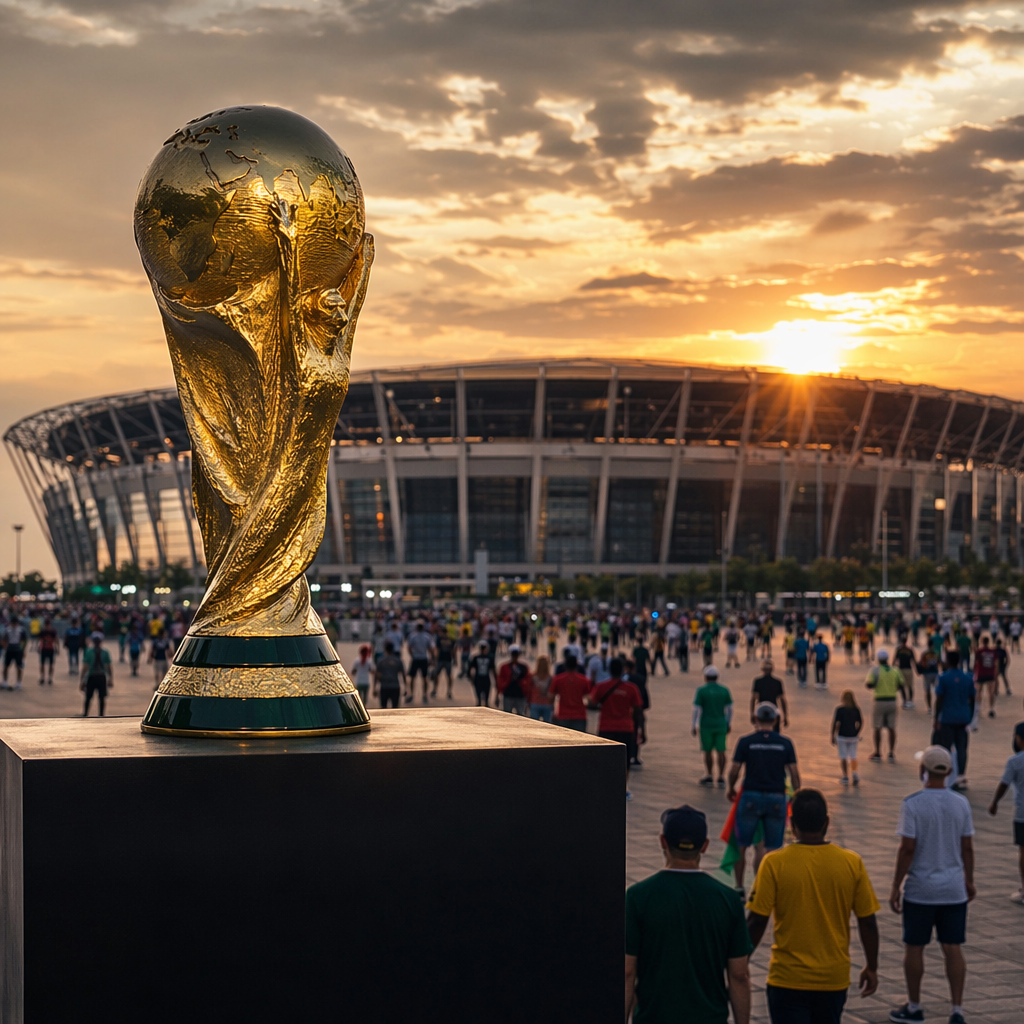
The FIFA World Cup 2026 will open on June 11, 2026, and conclude with the final on July 19, 2026, making it the largest men’s World Cup in the tournament’s history by teams, matches and geographic spread. FIFA has confirmed that the competition will be staged across three countries — the United States, Canada and Mexico — with 48 teams competing in 104 matches.
That expanded calendar is the central reason the 2026 schedule has drawn such wide interest. For fans, broadcasters, teams and host cities, the tournament is no longer a month-long event centered in one nation. It is a continent-wide operation that will move from Mexico City to Toronto, from Los Angeles to New York/New Jersey, and through a total of 16 host cities across North America.
The full match-by-match schedule, including kickoff times for all fixtures, is being phased through FIFA’s official tournament communications and is subject to final qualification results, draw allocations and broadcast arrangements. However, the major structure is already established: the opening match will be played at Estadio Azteca in Mexico City, while the final will be held at MetLife Stadium in East Rutherford, New Jersey, representing the New York/New Jersey host region.
Key Dates in the 2026 World Cup Schedule
FIFA’s published tournament framework sets the competition period from June 11 to July 19, 2026. That 39-day window is longer than several recent World Cups because the event has expanded from 32 teams to 48 teams. The larger field means more group-stage matches and a longer knockout pathway before the champion is crowned.
Several dated facts define the schedule. FIFA confirmed that the opening match is planned for June 11, 2026, in Mexico City. The final is scheduled for July 19, 2026, at MetLife Stadium in the New York/New Jersey area. FIFA has also stated that the tournament will include 104 matches, compared with 64 matches under the 32-team format used at recent editions.
Another important scheduling point is the use of three host countries. Canada will stage men’s World Cup matches for the first time, while Mexico will become the first country to host matches in three different men’s World Cups, after previously hosting in 1970 and 1986. The United States, which hosted the 1994 FIFA World Cup, will stage the majority of venues in 2026.
How the Expanded Format Shapes the Schedule
The 2026 edition introduces a major format change. FIFA has said the tournament will feature 48 national teams, up from 32. The teams will be divided into 12 groups of four. The top two teams from each group, along with the eight best third-placed teams, will advance to a new round of 32.
This creates a longer knockout stage than the previous format. Instead of moving from the group stage directly into the round of 16, the 2026 tournament will add one extra elimination round. As a result, teams reaching the final will need to play eight matches rather than seven.
The group stage will therefore carry more scheduling complexity. More teams, more matches and more travel windows mean that rest days and venue sequencing become central to the calendar. FIFA’s scheduling design attempts to limit travel where possible by assigning teams to regionalized pathways, but fans should still expect some teams to move between countries depending on draw outcomes and knockout progression.
Confirmed Host Cities and Stadium Pattern
FIFA has listed 16 host cities for the 2026 World Cup. Eleven are in the United States, three are in Mexico and two are in Canada. The schedule distributes matches across these venues, with the biggest knockout fixtures concentrated in several major stadiums with large capacities and major transport links.
The confirmed host cities are:
- Canada: Toronto and Vancouver.
- Mexico: Guadalajara, Mexico City and Monterrey.
- United States: Atlanta, Boston, Dallas, Houston, Kansas City, Los Angeles, Miami, New York/New Jersey, Philadelphia, San Francisco Bay Area and Seattle.
Mexico City’s Estadio Azteca carries particular historical significance. FIFA has designated it as the venue for the opening match, which means it is set to become the first stadium to stage matches in three men’s World Cups. It hosted games in both 1970 and 1986, including famous final matches in each of those tournaments.
MetLife Stadium, representing the New York/New Jersey host region, has been selected for the final. The stadium has hosted major American football and international soccer events, and its location in the New York metropolitan area gives FIFA a large media and commercial market for the closing match.
What Is Known About the Match Calendar
The 2026 schedule is built around several stages: the group stage, round of 32, round of 16, quarterfinals, semifinals, third-place match and final. FIFA’s tournament structure confirms that the opening phase begins on June 11, 2026, and the final takes place on July 19, 2026.
The group stage will begin with the opening match in Mexico City. The United States and Canada are also expected to open their participation in their own host countries, a common arrangement in modern World Cup scheduling. FIFA has used host-nation placement in previous tournaments to manage local demand, broadcast planning and national interest.
Once the group stage ends, the tournament will move into the 32-team knockout bracket. This is where the schedule becomes significantly different from the 2022 World Cup in Qatar. Because there is an extra elimination round, the path to the trophy is longer, and squad depth may become more important.
The semifinals are scheduled to be played in two separate U.S. host cities. The final will follow at MetLife Stadium on July 19, with the third-place match held one day earlier. FIFA has traditionally staged the third-place playoff on the day before the final, and the 2026 tournament follows that broad structure.
Why the 2026 Schedule Is More Complex Than Previous Editions
The main difference is scale. The 2026 World Cup will involve 104 matches, a major increase from the 64-match format used in 2022. That expansion affects everything from stadium operations and policing to team training bases and fan travel.
Geography is another factor. The tournament will span several time zones. Matches in Vancouver, Los Angeles and Seattle will be scheduled far from the eastern time zone venues such as Toronto, Boston, Philadelphia, Miami and New York/New Jersey. This matters for international broadcasters, particularly in Europe, Africa and Asia, where kickoff times can fall late at night or early in the morning.
FIFA, host city organizing committees and national soccer federations will also need to coordinate training facilities, media centers and transport plans. The schedule is not just a list of matches; it is a logistical framework for teams, fans and commercial partners.
For supporters planning travel, the most practical advice is to follow official ticketing and fixture announcements from FIFA. Search interest around the schedule often rises when new details are published, but unofficial fixture graphics can quickly become outdated if they are not based on FIFA’s latest allocations.
Ticketing and Fan Planning
FIFA is responsible for official World Cup ticketing. Fans should expect ticket demand to vary sharply by venue, team and stage. Opening matches, host-nation games, knockout rounds, semifinals and the final are typically among the highest-demand events.
Travel planning will be more complicated than in a single-country tournament. A supporter following one team may need to consider multiple cities and even multiple countries if that team advances. The group-stage draw will therefore be one of the most important moments for fans, because it will determine early travel routes and likely ticket targets.
Visa and entry requirements will also matter. The United States, Canada and Mexico each have their own immigration rules. FIFA can organize the tournament schedule, but entry permission remains the responsibility of national authorities. Fans should check official government guidance before booking international travel.
Broadcast Timing and Global Audience
Because the 2026 World Cup is being staged in North America, match timings will be particularly important for viewers in Asia, including India. A match played in the evening in the eastern United States may be shown in the early morning in India, while a match on the U.S. West Coast may fall even later for South Asian audiences.
FIFA and broadcast partners usually balance local stadium attendance, television windows and player welfare when setting kickoff times. For 2026, that balance is more difficult because of the number of cities and time zones involved. Weather may also be a consideration, particularly for afternoon matches in warmer host cities.
The tournament will be held during the North American summer. That means organizers will need to account for heat management, hydration breaks where required under match regulations, and stadium-specific conditions. Several venues are modern NFL stadiums with large capacities, while others have different roof, turf and climate characteristics.
Competitive Impact of the New Schedule
The longer format could affect team strategy. Under the 2026 structure, a team that reaches the final will play eight matches. Coaches will need to manage player workloads across a longer knockout path, and squads may rely more heavily on rotation during the group stage.
The introduction of the round of 32 also changes the risk calculation in group play. With the eight best third-placed teams advancing, a team may still qualify after an uneven start. However, that does not necessarily make the group stage easier. Seeding, goal difference and disciplinary points can become decisive when ranking teams across different groups.
For emerging football nations, the expanded field offers more access to the World Cup stage. For established contenders, it adds another elimination match that must be navigated before the quarterfinals. The schedule therefore increases both opportunity and uncertainty.
Important 2024-2026 Facts Already Confirmed
The following schedule-related facts are central to the 2026 World Cup and have been stated by FIFA in its tournament communications:
- June 11, 2026: the tournament is scheduled to begin with the opening match in Mexico City.
- July 19, 2026: the final is scheduled to be played at MetLife Stadium in the New York/New Jersey host region.
- 48 teams: FIFA has expanded the men’s World Cup field from 32 teams to 48 teams for 2026.
- 104 matches: the 2026 edition will include 104 fixtures.
- 16 host cities: FIFA has assigned matches to cities across Canada, Mexico and the United States.
- Three host countries: the tournament will be jointly hosted by Canada, Mexico and the United States.
What Fans Should Watch Next
The most important remaining schedule milestones are the completion of qualification, the final draw and the confirmation of detailed kickoff times for every fixture. Qualification determines the 48-team field. The draw assigns teams to groups and pathways. Kickoff times then allow fans to make practical decisions about tickets, travel and viewing plans.
For now, the broad calendar is clear. The FIFA World Cup 2026 will begin in Mexico City on June 11 and end in the New York/New Jersey area on July 19. It will be the first 48-team edition, the first to feature 104 matches, and the first men’s World Cup jointly hosted by three countries.
That combination explains why the schedule is receiving attention so far ahead of the tournament. For national teams, the calendar defines preparation. For host cities, it sets operational deadlines. For fans, it is the starting point for one of the largest travel and viewing events in global sport.
Comments
Post a Comment