Weather in Hyderabad: Heat, Rainfall and Climate Trends as of 2026
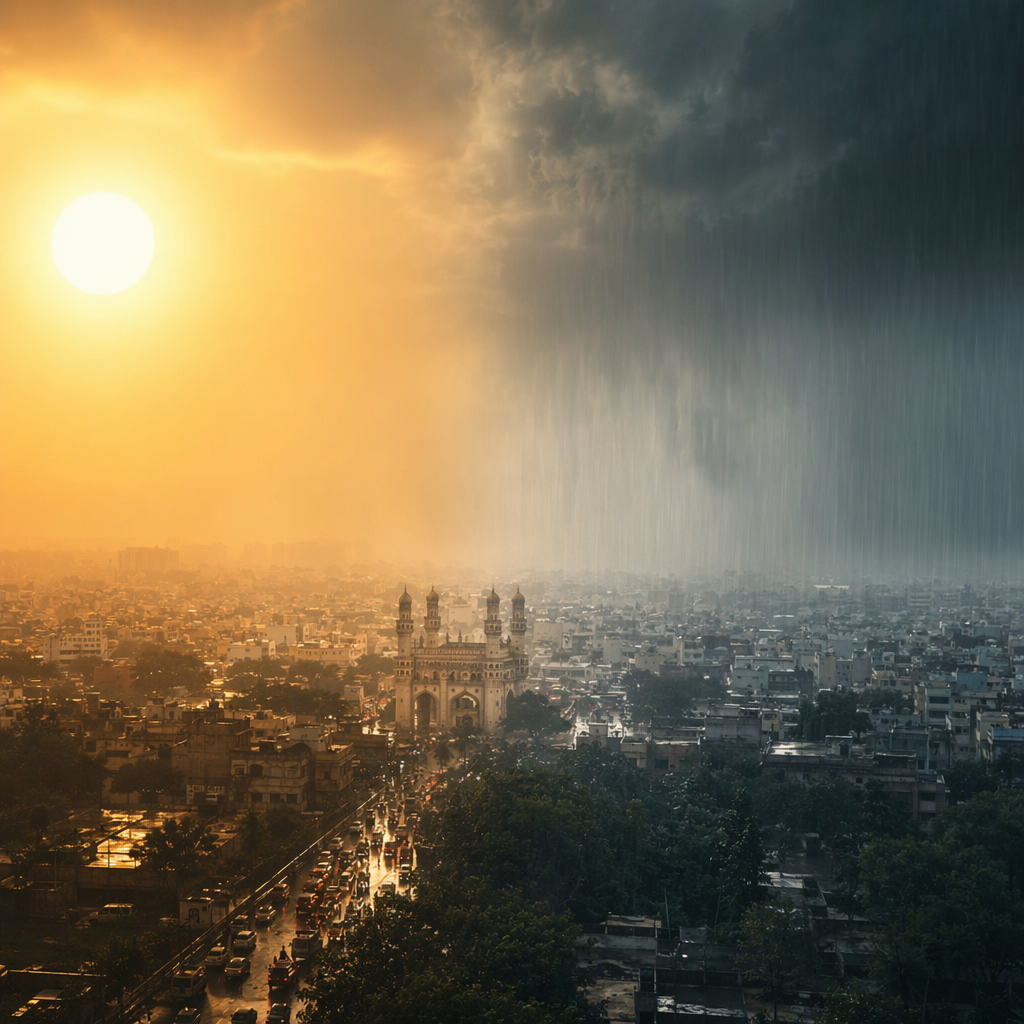
Hyderabad recorded one of its most intense recent hot-season patterns in 2024, with Telangana government data and India Meteorological Department-linked advisories showing repeated heat warnings across the state during April and May. The city, located on the Deccan Plateau at an elevation of about 500 metres, has long been known for hot summers, a monsoon-dependent rainfall cycle and relatively mild winters. But recent years have brought sharper public attention to heat stress, intense rainfall spells and urban flooding risks.
As of 2026, Hyderabad’s weather profile is best understood through three main factors: the pre-monsoon heat season from March to May, the southwest monsoon from June to September, and the cooler dry months from November to February. The city is the capital of Telangana and one of India’s largest metropolitan areas, meaning that weather changes affect transport, public health, electricity demand, construction activity and water management.
According to the India Meteorological Department (IMD), India’s official weather agency under the Ministry of Earth Sciences, Telangana falls in a region where summer temperatures can regularly cross 40°C in several districts. Hyderabad city usually records lower peak temperatures than parts of northern Telangana, but dense construction, traffic corridors and reduced open surfaces can increase local heat exposure. Government heat action advisories issued in 2024 and 2025 repeatedly urged residents to avoid outdoor work during peak afternoon hours, drink water frequently and monitor vulnerable groups.
Hyderabad’s seasonal weather pattern
Hyderabad has a tropical wet-and-dry climate. The city does not experience the long, cold winters seen in northern India. Instead, temperatures remain moderate during winter and rise rapidly from late February onward. The main rainy season arrives with the southwest monsoon, normally beginning in June and continuing into September. October can also bring post-monsoon thunderstorms, especially when weather systems form over the Bay of Bengal.
The city’s average annual rainfall is commonly placed at around 750 mm to 800 mm in long-period climate summaries used by Indian government agencies and urban planning documents. However, year-to-year rainfall can vary significantly. Some years bring heavy monsoon spells that produce waterlogging in low-lying roads, while others produce uneven rainfall distribution across the metropolitan area.
As of 2026, the main weather risks for Hyderabad are not limited to high maximum temperature. Urban authorities also monitor intense short-duration rainfall, stormwater drainage capacity, lightning, strong winds during convective storms and air quality changes during dry months. The Greater Hyderabad Municipal Corporation (GHMC), Telangana State Development Planning Society and IMD warnings are among the key public sources used for weather-related alerts.
Recent heat trends: 2024 and 2025
Heat was a major weather concern across Telangana in 2024. IMD and state-level bulletins reported heatwave conditions in several parts of Telangana during April and May 2024. In India, a heatwave is declared by IMD when maximum temperature crosses specified thresholds compared with normal conditions, or when plains record at least 40°C along with significant departures from normal temperature.
In April 2024, Reuters reported that India was facing intense heat in several regions, with temperatures above 40°C in parts of the country and official warnings affecting public life. Telangana was among the states where heat conditions were closely tracked. While Hyderabad city often remains slightly cooler than districts such as Nalgonda, Khammam, Adilabad or Ramagundam, the urban population is more exposed because of commuting, outdoor work and high built-up density.
Government advisories in 2024 urged residents to take precautions during afternoon hours, especially between noon and 3 p.m. Public health guidance included drinking oral rehydration solution when needed, wearing light cotton clothes, avoiding alcohol during extreme heat and watching for symptoms such as dizziness, fainting and confusion.
In 2025, Telangana again experienced hot pre-monsoon conditions, with IMD seasonal outlooks for India warning of above-normal temperatures and a higher number of heatwave days in several parts of the country. For Hyderabad, this meant that heat preparedness remained a routine part of summer planning. Electricity demand also typically rises during this period because of cooling needs in homes, offices, commercial buildings and technology campuses.
Rainfall and monsoon dependence
Hyderabad’s water and weather planning are closely linked to the southwest monsoon. Rainfall during June, July, August and September helps replenish local reservoirs and groundwater systems. The city receives rain from monsoon currents and from low-pressure systems moving inland from the Bay of Bengal. Rainfall is not evenly spread: a few heavy spells can contribute a large share of monthly totals.
In 2024, India’s southwest monsoon was closely monitored by IMD and reported by Reuters because of its importance for agriculture, reservoirs and inflation-sensitive food production. Telangana’s rainfall distribution varied by district, which is typical of monsoon seasons. Hyderabad experienced multiple thunderstorm and rainfall events during the monsoon months, with localised waterlogging reported in some urban stretches during heavy downpours.
Urban flooding in Hyderabad has been a recurring concern since the severe floods of October 2020, when unusually heavy rainfall caused major inundation in parts of the city. While that event falls outside the 2024–2026 period, it remains relevant because GHMC and state agencies have since continued to identify stormwater drain upgrades and lake protection as planning priorities. As of 2026, heavy rainfall risk remains an important civic issue because rapid urbanisation has reduced natural drainage space in several parts of the metropolitan region.
Rainfall data from Telangana State Development Planning Society stations and IMD observatories are used for daily monitoring. These datasets are important because weather can differ sharply between areas such as Begumpet, Rajendranagar, Gachibowli, Uppal and Shamshabad. A storm may produce heavy rain in western Hyderabad while leaving eastern neighbourhoods comparatively dry.
Key weather statistics and facts for Hyderabad and Telangana
The following figures are based on government releases, IMD-linked public data, Reuters reporting and publicly available climate information. They provide context for Hyderabad’s current weather profile as of 2026:
- 2024: India experienced repeated severe heat episodes during April and May, with Reuters reporting temperatures above 40°C in several regions and official heat warnings across multiple states, including parts of southern India.
- 2024: Telangana state authorities issued heat-related public advisories during the pre-monsoon season, asking residents to avoid direct sun exposure during peak afternoon hours and monitor children, older adults and outdoor workers.
- 2024: The southwest monsoon period, June to September, remained Hyderabad’s main rainfall season, consistent with IMD’s long-term classification for the region.
- 2025: IMD’s seasonal outlook for India indicated above-normal maximum temperatures over many parts of the country during the hot-weather season, keeping heat preparedness relevant for Telangana and Hyderabad.
- 2025: Telangana’s urban authorities continued monsoon preparedness work, including desilting drains and monitoring low-lying areas before and during the rainy season, according to government civic updates.
- As of 2026: Hyderabad’s long-period annual rainfall is generally around 750 mm to 800 mm, based on public climate summaries used for the city and surrounding region.
Temperature range through the year
Hyderabad’s hottest period usually begins in March and peaks in April or May. Maximum temperatures during this period often reach the high 30s Celsius and can cross 40°C during hot spells. Nights also become warmer before the monsoon arrives, reducing relief for people without cooling access.
June usually brings cloud cover, stronger winds and rain, which reduce daytime temperatures compared with May. However, humidity increases during the monsoon, making conditions uncomfortable even when maximum temperatures are lower. Thunderstorms can develop quickly, and intense rain over a short period can disrupt traffic.
From November to February, Hyderabad has its most comfortable weather. Morning minimum temperatures can fall into the teens Celsius in parts of the city and surrounding districts, while afternoons remain mild to warm. Winter fog is not as common or persistent as in northern Indian cities, but early-morning haze and air pollution can affect visibility during some dry periods.
Extreme rainfall and urban drainage
Hyderabad’s geography includes lakes, nalas and low-lying drainage channels that historically carried rainwater through the urban landscape. As the city expanded, several drainage routes came under pressure from construction, road widening and encroachments. Heavy rainfall can therefore create waterlogging even when the total seasonal rainfall is not unusually high.
GHMC has repeatedly identified monsoon preparedness as a civic priority. Work typically includes desilting stormwater drains, deploying emergency teams, monitoring vulnerable underpasses and issuing traffic advisories during heavy rainfall. In recent monsoon seasons, civic authorities have also used control rooms and field teams to respond to tree falls, stagnant water and damaged roads.
Short-duration rainfall is especially important. A heavy storm lasting one or two hours during evening traffic can cause delays across information technology corridors, arterial roads and residential areas. Low-lying sections near drains and lakes face higher risk. This is why ward-level rainfall and radar-based nowcasting are increasingly important for Hyderabad’s weather response.
Air quality and dry-season weather
Weather also influences Hyderabad’s air quality. During dry months, lower wind speeds and stable night-time air can allow pollutants to accumulate near roads and industrial clusters. The Central Pollution Control Board and Telangana State Pollution Control Board publish air quality data from monitoring stations. Air quality can vary by location, traffic density, construction activity and local wind patterns.
Unlike north Indian cities, Hyderabad does not usually face the same scale of winter smog linked to crop-residue burning and severe temperature inversions. However, dust, vehicle emissions and construction activity can still raise particulate levels. Rainfall during the monsoon generally helps reduce suspended dust, while dry spells can allow it to increase again.
Weather impact on daily life
For residents, Hyderabad’s weather affects daily routines in practical ways. In summer, schools and government agencies may issue precautionary guidance during heat alerts. Outdoor workers, delivery personnel, traffic police and construction labourers face higher exposure. Hospitals and public health officials monitor heat-related illness symptoms when temperatures rise sharply.
During the monsoon, commuting is the main disruption. Heavy rainfall can slow traffic on major corridors such as the IT belt, inner ring routes and roads near underpasses. Power interruptions may occur in isolated areas during thunderstorms or strong winds. Residents in low-lying neighbourhoods are advised by civic authorities to follow official alerts and avoid crossing flooded roads.
For businesses, weather risk is tied to logistics and workforce planning. Hyderabad’s information technology sector depends on reliable road access, electricity and internet infrastructure. Heavy rain during peak office hours can delay transport. Hot weather raises cooling demand in office towers and data facilities.
Climate context as of 2026
India’s Ministry of Earth Sciences and IMD have documented rising temperature trends across the country in long-term climate assessments. Reuters has also reported on India’s increasing exposure to extreme heat, citing official and scientific sources. Hyderabad’s experience fits into this wider national pattern: hot seasons are closely watched, and heat action planning has become a public administration issue.
At the same time, Hyderabad’s rainfall risk is shaped by urbanisation as much as by meteorology. The same amount of rain can produce different impacts depending on drainage capacity, lake storage, road design and land use. This means that weather forecasts, civic planning and emergency response are all part of the city’s climate preparedness.
As of 2026, residents and visitors should rely on IMD forecasts, Telangana government advisories and GHMC alerts for current conditions. Weather apps can provide quick updates, but official warnings remain the primary source for heatwave alerts, heavy rainfall warnings and thunderstorm advisories.
Sources: Reuters, Government releases, publicly available data.
Comments
Post a Comment