Trump and Iran: Sanctions, Nuclear Tensions and Regional Risks as of 2026
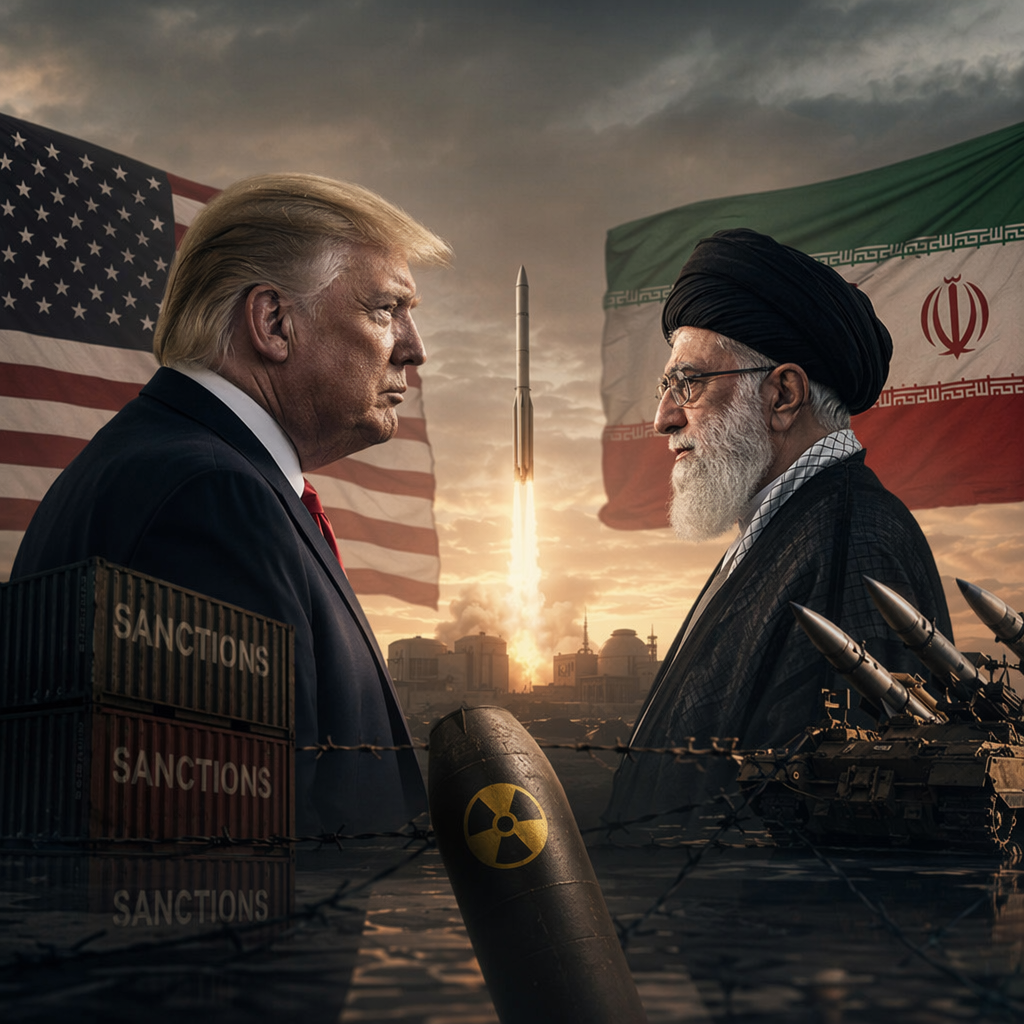
As of 2026, U.S.-Iran relations remain shaped by decisions taken during Donald Trump’s first presidency, including the 2018 U.S. withdrawal from the Iran nuclear deal, the reimposition of sanctions and the 2020 killing of Iranian military commander Qassem Soleimani. Those moves continue to influence nuclear diplomacy, oil markets, regional security and U.S. policy debates.
The Trump-Iran relationship is not a single issue. It includes the 2015 Joint Comprehensive Plan of Action, known as the JCPOA; U.S. economic sanctions; Iran’s uranium enrichment program; Iranian-linked armed groups in the Middle East; and the question of how Washington should respond to Tehran’s regional activity. Reuters, the International Atomic Energy Agency, U.S. government releases and United Nations documents show that the consequences of this period continued well beyond Trump’s first term.
Iran’s nuclear program is central to the dispute. The JCPOA, agreed in 2015 by Iran, the United States, Britain, France, Germany, Russia, China and the European Union, placed restrictions on Iran’s uranium enrichment in exchange for sanctions relief. The International Atomic Energy Agency was assigned to monitor and verify Iran’s commitments. In May 2018, Trump announced that the United States would leave the agreement, saying it did not address Iran’s ballistic missile program or regional activities. The U.S. Treasury then reimposed sanctions on Iran’s banking, energy and shipping sectors.
Since that withdrawal, Iran has gradually moved beyond several JCPOA limits. According to IAEA reporting cited by Reuters in 2024, Iran had increased its stockpile of uranium enriched up to 60%, a level below weapons-grade but far above the 3.67% limit set by the JCPOA. The IAEA reported in 2024 that Iran possessed more than 120 kilograms of uranium enriched to 60%, according to Reuters coverage of the agency’s confidential reports. Under the JCPOA, Iran’s total enriched uranium stockpile was capped at 202.8 kilograms of uranium hexafluoride, enriched to no more than 3.67%.
The nuclear data highlight the scale of change between the JCPOA period and the years after the U.S. withdrawal. Iran has said its nuclear program is for peaceful purposes. The United States and European governments have repeatedly said Iran’s expanded enrichment activity raises proliferation concerns. The IAEA has also reported difficulties in monitoring parts of Iran’s program after Tehran reduced some verification measures that had been in place under the JCPOA.
Economic sanctions have been another major part of Trump’s Iran policy. The U.S. Treasury’s Office of Foreign Assets Control continued to issue Iran-related sanctions designations after 2018, targeting oil sales, petrochemicals, shipping networks, banks, drone production and entities accused of supporting the Islamic Revolutionary Guard Corps. During 2024, the U.S. government announced multiple sanctions packages linked to Iran’s drone and missile activity, including measures after Iran’s April 2024 attack on Israel.
That April 2024 attack marked a major escalation. According to U.S. government statements and Reuters reporting, Iran launched more than 300 drones and missiles toward Israel on April 13, 2024. U.S., Israeli, British, French and Jordanian forces helped intercept many of them. The attack followed a strike on Iran’s consulate compound in Damascus, Syria, on April 1, 2024, which Iran attributed to Israel. Israel did not publicly claim responsibility for that strike at the time.
Trump’s earlier approach to Iran also remains linked to the U.S. killing of Qassem Soleimani, the commander of the Islamic Revolutionary Guard Corps’ Quds Force, on January 3, 2020, in Baghdad. The Trump administration said Soleimani was planning attacks on U.S. personnel. Iran responded on January 8, 2020, by firing ballistic missiles at U.S. forces at Al Asad air base and another facility in Iraq. The U.S. Defense Department later said more than 100 U.S. service members were diagnosed with traumatic brain injuries after the missile attack.
Oil markets are another area where Trump-era Iran policy continues to matter. Iran is a major oil producer, and sanctions enforcement affects supply routes, insurance, shipping and buyers. The U.S. Energy Information Administration has reported that Iran held about 209 billion barrels of proved crude oil reserves as of 2024, among the largest in the world. Reuters reported in 2024 that Iran’s oil exports had risen despite U.S. sanctions, with market analysts estimating exports above 1 million barrels per day during parts of the year. Figures vary because sanctions limit transparent reporting and many shipments use indirect routes.
As of 2026, U.S. policy toward Iran remains connected to several measurable issues:
- Iran’s enriched uranium stockpile: IAEA reporting cited by Reuters in 2024 said Iran had accumulated more than 120 kilograms of uranium enriched to 60%.
- April 2024 missile and drone attack: U.S. officials said Iran launched more than 300 drones and missiles toward Israel.
- U.S. troop injuries after the 2020 Iranian strike: the U.S. Defense Department reported more than 100 traumatic brain injury diagnoses among service members.
- Iran’s oil reserves: the U.S. Energy Information Administration listed Iran’s proved crude oil reserves at about 209 billion barrels in 2024.
- JCPOA uranium cap: the agreement limited Iran to 202.8 kilograms of enriched uranium hexafluoride at 3.67% enrichment before restrictions were exceeded.
- Sanctions activity: U.S. Treasury releases in 2024 announced multiple Iran-related sanctions packages tied to oil, drones, missiles and regional armed groups.
The JCPOA’s future remains uncertain. Talks to restore or replace the agreement continued intermittently after the Biden administration took office in 2021, but no restored deal had been announced by the end of 2024. Negotiations were complicated by Iran’s nuclear advances, U.S. domestic politics, disputes over sanctions relief and Tehran’s support for regional groups. European governments have also warned that Iran’s nuclear expansion has reduced the practical benefits of returning to the original JCPOA framework without additional steps.
Trump’s position has generally emphasized pressure rather than negotiated sanctions relief under the 2015 deal. During his first term, the administration described its policy as “maximum pressure.” The stated aim was to force Iran into a broader agreement covering the nuclear program, missiles and regional activity. Iran did not agree to such a deal during Trump’s first term. Instead, Tehran reduced compliance with parts of the JCPOA after waiting for European parties to offset the impact of U.S. sanctions.
Regional security is another major dimension. Iran supports and arms groups including Hezbollah in Lebanon, Hamas in Gaza, Palestinian Islamic Jihad, the Houthis in Yemen and several Iraqi militias, according to U.S. government assessments. Iran describes some of these groups as part of a regional resistance network. The United States designates several of them as terrorist organizations. The issue became more prominent after the October 7, 2023, Hamas-led attack on Israel and the war in Gaza that followed.
The Houthis’ attacks on commercial shipping in the Red Sea and Gulf of Aden added another Iran-related pressure point. Reuters reported throughout 2024 that Houthi attacks disrupted one of the world’s most important maritime routes, prompting U.S. and British strikes on Houthi targets in Yemen. The United States has said Iran provides weapons and support to the Houthis. Iran has denied directing Houthi operations. The disruption affected shipping insurance costs, route planning and delivery times, with many companies diverting vessels around southern Africa.
Iran’s drone program has also drawn increased U.S. and European scrutiny. The U.S. government has accused Iran of supplying drones to Russia for use in Ukraine, including Shahed-type unmanned aerial vehicles. Iran has acknowledged providing drones to Russia before the Ukraine war but has denied supplying them for use in the conflict. Reuters and U.S. government releases in 2024 reported sanctions on companies and individuals linked to Iranian drone production and procurement networks.
The Trump-Iran file also involves domestic U.S. legal and political questions. The 2020 Soleimani strike raised congressional debate over presidential war powers. Members of Congress from both parties questioned whether the executive branch had provided sufficient legal justification and consultation. The Trump administration submitted notifications under the War Powers Resolution, while Congress considered limits on military action against Iran without authorization. The broader issue remained unresolved: how much authority a president has to use force in response to threats from Iran or Iranian-backed groups.
Iran’s economy has been under strain from sanctions, inflation and currency weakness. World Bank and International Monetary Fund reporting in 2024 described Iran’s economy as dependent on hydrocarbons and vulnerable to sanctions, with high inflation affecting households. Iran has also faced domestic protests in recent years, including nationwide demonstrations after the 2022 death of Mahsa Amini in morality police custody. Human rights organizations and U.N. officials reported arrests and executions linked to protest activity. The Iranian government has said it acted against rioting and foreign-backed unrest.
U.S. sanctions policy has included humanitarian exemptions, but aid groups and analysts have said banking restrictions can still complicate transactions for medicine and other permitted goods. The U.S. Treasury has repeatedly stated that food, medicine and humanitarian goods are not sanctioned, while also maintaining financial restrictions on Iranian banks and designated entities. This distinction has been a recurring issue in debates over the effects of sanctions on ordinary Iranians.
As of 2026, the main facts are clear. Trump’s 2018 withdrawal from the JCPOA ended U.S. participation in the nuclear deal and restored broad sanctions. Iran later expanded uranium enrichment beyond JCPOA limits. The 2020 Soleimani killing brought the United States and Iran close to open conflict. The 2024 Iran-Israel exchange showed that direct state-to-state attacks, not only proxy conflict, had become part of the regional risk environment. U.S. Treasury sanctions and IAEA nuclear monitoring remain central tools in the policy dispute.
The available public record shows that the Trump-Iran confrontation continues to shape U.S. foreign policy choices. Any future approach to Iran must address verifiable nuclear limits, sanctions enforcement, regional armed groups, maritime security and the risk of direct military escalation. Those issues are documented in official U.S. releases, IAEA reports, Reuters reporting and public government data.
Sources: Reuters, Government releases, publicly available data.
Comments
Post a Comment