Iran-U.S. News: Nuclear Tensions, Sanctions and Regional Risks as of 2026
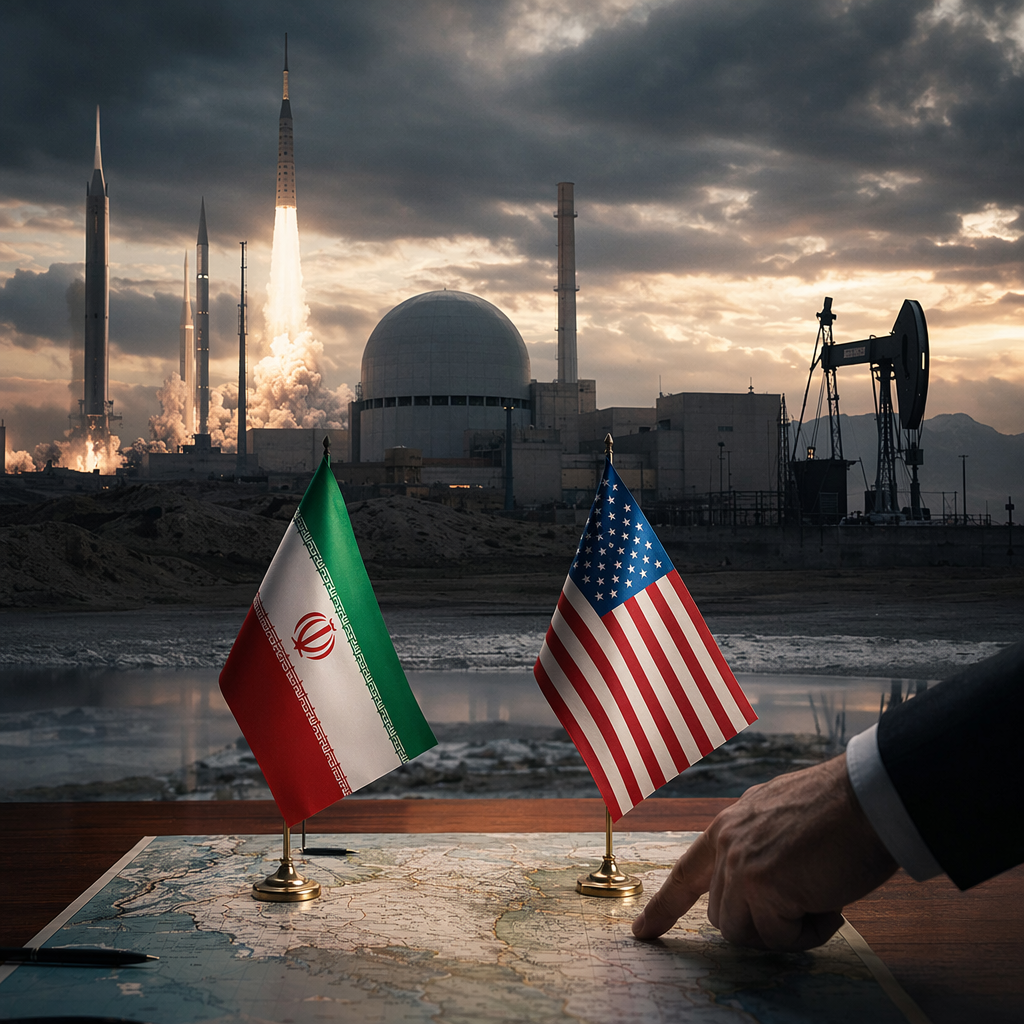
As of 2026, relations between Iran and the United States remain shaped by nuclear monitoring disputes, sanctions enforcement, regional security incidents and the unresolved future of the 2015 nuclear agreement. The International Atomic Energy Agency reported in 2024 that Iran had accumulated uranium enriched to levels far above the limits set under the Joint Comprehensive Plan of Action, while the United States continued to use sanctions and diplomatic coordination with European and Middle Eastern partners as central tools of policy.
The Iran-U.S. file is not one single dispute. It includes the nuclear programme, oil exports, detention cases, attacks on U.S. forces in the Middle East, shipping security in the Red Sea and Gulf region, and Iran’s support for armed groups. Reuters, U.S. government releases, United Nations documents and IAEA reports show that each issue has carried measurable consequences for energy markets, regional military deployments and diplomacy from 2024 through 2026.
Nuclear programme remains the central dispute
The nuclear issue remains the most closely watched part of Iran-U.S. relations. The 2015 nuclear deal, formally known as the JCPOA, placed limits on Iran’s uranium enrichment, centrifuge use and stockpiles in exchange for sanctions relief. The United States withdrew from the agreement in May 2018 under President Donald Trump, and Iran later reduced its compliance with several restrictions.
According to IAEA reporting cited by Reuters in 2024, Iran’s stockpile of uranium enriched to up to 60% had increased during the year. Uranium enriched to 60% is below weapons-grade level, which is generally around 90%, but it is significantly above the 3.67% enrichment cap set by the 2015 agreement. Reuters reported in November 2024, citing an IAEA confidential report, that Iran had enough uranium enriched to up to 60% for several nuclear weapons if further enriched, according to the agency’s technical benchmarks.
The IAEA has also said it has faced monitoring limitations in Iran. In 2024, Director General Rafael Grossi repeatedly urged Iran to increase cooperation with inspectors and resolve outstanding safeguards questions. The agency’s concerns include access to information, monitoring equipment and explanations about uranium traces found at undeclared locations in earlier investigations.
As of 2026, there is no publicly announced restoration of the JCPOA. The United States has stated through the State Department that Iran must meet its nuclear obligations and cooperate fully with the IAEA. Iran has said its nuclear programme is for peaceful purposes. The United States, European governments and the IAEA have continued to assess Iran’s enrichment activity as a major non-proliferation concern.
Sanctions remain a key U.S. policy tool
U.S. sanctions on Iran cover the energy sector, banking, shipping, petrochemicals, drones, missiles and individuals linked to security agencies. Since 2018, Washington has reimposed and expanded sanctions that were previously lifted or suspended under the nuclear deal. In 2024 and 2025, the U.S. Treasury Department announced multiple Iran-related sanctions packages, including measures connected to drone production, oil networks and support for armed groups.
In April 2024, after Iran launched a large-scale attack involving drones and missiles against Israel, the U.S. Treasury announced new sanctions targeting Iran’s unmanned aerial vehicle programme. The U.S. government said the measures were aimed at entities and individuals involved in procurement and production for Iran’s drone and missile capabilities. Reuters reported that Washington coordinated some measures with allies, including the United Kingdom.
Oil sanctions are especially important. Iran remains a major crude producer, but U.S. sanctions restrict the ability of Iranian oil to move through formal international banking and shipping channels. The U.S. Energy Information Administration reported that Iran produced roughly 3 million barrels per day of crude oil in 2024, though estimates of exports vary because sanctioned shipments often use indirect routes, ship-to-ship transfers and non-transparent ownership structures.
The U.S. Treasury has also targeted what it describes as “shadow fleet” shipping networks connected to Iranian oil. In 2024 and 2025, sanctions notices named tankers, trading firms and facilitators accused of helping move Iranian petroleum or petrochemical products. Iran has condemned U.S. sanctions as illegal and harmful to civilians. Washington says the sanctions are designed to pressure Iran over nuclear activity, regional actions and weapons transfers.
Regional security incidents raised risks after 2024
The wider Middle East security environment placed Iran-U.S. relations under additional strain from 2024 onward. U.S. forces remained deployed in Iraq and Syria as part of operations against Islamic State, and U.S. officials reported repeated attacks on American personnel by Iran-aligned militias after the Gaza war began in October 2023.
The U.S. Department of Defense said that between October 2023 and early 2024, U.S. and coalition forces in Iraq and Syria faced more than 160 attacks. In January 2024, three U.S. service members were killed in a drone attack at Tower 22, a U.S. outpost in Jordan near the Syrian border. The Pentagon attributed the attack to an Iran-backed militia network. Iran denied directing the strike.
The United States responded in February 2024 with airstrikes on targets in Iraq and Syria. U.S. Central Command said the strikes hit facilities used by Iran’s Islamic Revolutionary Guard Corps Quds Force and affiliated militia groups. The Biden administration said the response was intended to deter further attacks while avoiding a wider war with Iran.
Another major escalation occurred in April 2024, when Iran launched more than 300 drones and missiles toward Israel, according to U.S. and Israeli officials. The attack followed a strike on an Iranian diplomatic compound in Damascus that Iran attributed to Israel. The United States, Britain, France, Jordan and Israel helped intercept many of the incoming projectiles, according to official statements and Reuters reporting. Iran said the operation was a response to the Damascus strike and that it considered the matter concluded unless further attacks occurred.
Key Iran-U.S. figures and developments
The following figures from 2024 to 2026 show why the Iran-U.S. issue remains central to global security coverage:
- More than 160 attacks were recorded against U.S. and coalition forces in Iraq and Syria between October 2023 and early 2024, according to the U.S. Department of Defense.
- Three U.S. service members were killed in the January 2024 Tower 22 drone attack in Jordan, according to the Pentagon.
- More than 300 drones and missiles were launched by Iran toward Israel in April 2024, according to U.S. and Israeli government statements reported by Reuters.
- About 3 million barrels per day of Iranian crude oil production was estimated for 2024 by the U.S. Energy Information Administration.
- 60% uranium enrichment was reported by the IAEA as part of Iran’s enriched uranium stockpile in 2024, far above the JCPOA cap of 3.67%.
- As of 2026, the United States continues to list Iran as a state sponsor of terrorism, a designation first applied in 1984 by the U.S. State Department.
Detentions and prisoner issues remain sensitive
Detained citizens and dual nationals have long been a source of tension between Tehran and Washington. In September 2023, Iran and the United States carried out a prisoner exchange in which five Americans were released by Iran and five Iranians were granted clemency or released by the United States. The arrangement also involved access to about $6 billion in Iranian funds that had been held in South Korea, with U.S. officials saying the money could only be used for humanitarian purposes.
After the October 2023 Hamas attack on Israel and the start of the Gaza war, the U.S. government said access to those funds was effectively restricted. Iran said the money belonged to the Iranian people. The dispute continued to affect the political environment around any future negotiations.
Human rights issues are also part of the broader bilateral dispute. The U.S. State Department’s 2024 human rights reporting cited concerns in Iran including executions, restrictions on political participation, treatment of protesters and limits on freedom of expression. Iran rejects outside criticism of its judicial system and says foreign governments use human rights claims for political pressure.
Shipping lanes and Red Sea security
Maritime security became a major part of Iran-related news after Yemen’s Houthi movement increased attacks on commercial shipping in the Red Sea and Gulf of Aden from late 2023. The Houthis said their actions were linked to the war in Gaza. The United States and its allies accused Iran of providing support to the Houthis, including weapons and intelligence. Iran has denied controlling Houthi operations.
In January 2024, the United States and Britain began strikes against Houthi targets in Yemen after repeated attacks on vessels. U.S. Central Command published regular updates in 2024 on intercepted missiles, drones and naval threats. The disruptions affected one of the world’s most important shipping corridors, the route linking the Red Sea to the Suez Canal.
Reuters reported in 2024 that major shipping companies diverted vessels around the Cape of Good Hope because of Red Sea risks, increasing journey times and fuel costs. While the Houthis are a Yemeni group, U.S. officials place their weapons supply and training within a broader Iranian regional network, making the Red Sea part of the Iran-U.S. security equation.
Diplomacy continues through indirect channels
The United States and Iran do not have formal diplomatic relations. Switzerland represents U.S. interests in Tehran, while indirect diplomacy has often taken place through Oman, Qatar and European intermediaries. In 2024, Reuters reported that U.S. and Iranian officials had used indirect talks to discuss de-escalation, nuclear issues and prisoner matters.
Public statements from Washington have emphasized that the United States seeks to prevent Iran from obtaining a nuclear weapon while also avoiding uncontrolled regional escalation. Iran’s government has said it is willing to negotiate if sanctions are addressed and if talks respect Iranian sovereignty. However, official announcements through 2026 show no finalized agreement replacing or restoring the JCPOA.
The European parties to the 2015 deal — Britain, France and Germany — have also remained involved. They have supported IAEA resolutions calling for greater Iranian cooperation and have warned that Iran’s nuclear advances reduce the practical benefits of the original deal. Russia and China, both parties to the JCPOA, have criticized U.S. sanctions and supported diplomatic engagement with Tehran.
Domestic politics in both countries affects the agenda
Domestic politics has influenced the pace of Iran-U.S. engagement. In the United States, Iran policy has been debated in Congress through sanctions bills, defense authorizations and oversight hearings. Lawmakers from both major parties have supported measures targeting Iran’s drone and missile programmes, though they differ on diplomatic strategy and the role of negotiations.
In Iran, economic pressure from sanctions, inflation and currency weakness has shaped public debate. Government data and international financial assessments have shown that sanctions affect trade access, foreign investment and banking. Iran has also expanded economic ties with countries willing to continue trade despite U.S. restrictions, including China and some regional partners.
Iran held a presidential election in 2024 after President Ebrahim Raisi died in a helicopter crash in May 2024. Reuters reported that Masoud Pezeshkian won the July 2024 runoff election. Iran’s president has influence over domestic administration and diplomacy, but final authority over major national security decisions rests with Supreme Leader Ayatollah Ali Khamenei under Iran’s political system.
What to watch as of 2026
As of 2026, the main measurable indicators in Iran-U.S. news are the level of Iran’s uranium enrichment, IAEA inspection access, sanctions enforcement actions, attacks involving U.S. forces or partners, and oil export activity. Each of these areas is tracked through official releases, agency reports and market data.
Any change in the nuclear file would likely be reflected first in IAEA reporting or official statements from parties to the JCPOA. Any shift in U.S. pressure would likely appear through Treasury sanctions notices, State Department announcements or congressional action. Regional military developments would continue to be reported by U.S. Central Command, the Pentagon, Reuters and other international news agencies.
The Iran-U.S. relationship remains one of the most documented and data-driven foreign policy issues in international news. From 2024 to 2026, the record shows continued confrontation, indirect diplomacy and repeated efforts by international agencies to monitor nuclear and security risks.
Sources: Reuters, Government releases, publicly available data.
Comments
Post a Comment