Introduction to भारतीय रिज़र्व बैंक
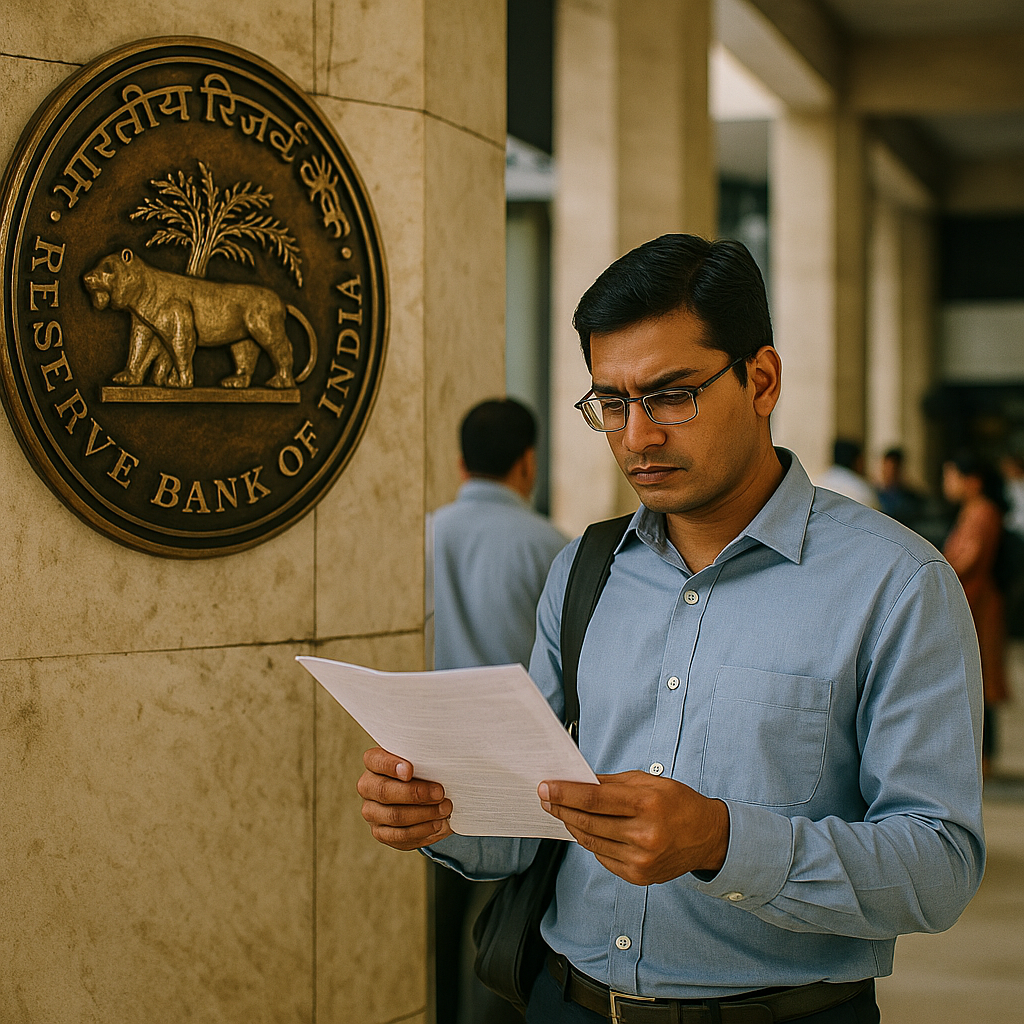
भारतीय रिज़र्व बैंक (RBI), established on April 1, 1935, serves as the central banking institution of India, responsible for regulating the country's monetary policy. As of 2026, the RBI continues to play a pivotal role in maintaining financial stability and fostering economic growth. The bank's headquarters are located in Mumbai, and it operates under the jurisdiction of the Ministry of Finance, Government of India.
Monetary Policy and Economic Indicators
As of 2026, the RBI's monetary policy remains focused on controlling inflation while supporting economic growth. The Consumer Price Index (CPI) inflation rate was recorded at 5.2% in March 2026, according to data released by the Ministry of Statistics and Programme Implementation (MOSPI). This marks a slight decrease from the previous year's rate of 5.7% in 2025, indicating effective inflation management by the RBI.
Moreover, the RBI has maintained the repo rate at 4.5% since the beginning of 2025, as reported by Reuters. This decision reflects the bank's strategy to balance inflation control with the need to stimulate economic activity. The Gross Domestic Product (GDP) growth rate for the fiscal year 2025-2026 was projected at 6.8% by the RBI, showcasing a steady recovery from the pandemic-induced slowdown.
Financial Stability and Regulatory Measures
The RBI is tasked with ensuring the stability of India's financial system. In 2026, the bank introduced several regulatory measures aimed at enhancing the resilience of financial institutions. These include:
- Implementation of Basel III norms: The RBI continues to enforce Basel III guidelines to strengthen the capital adequacy of banks, ensuring they have sufficient capital buffers to withstand financial shocks.
- Digital Payment Systems: The RBI has promoted the use of digital payment platforms, with digital transactions increasing by 15% in 2025, as per data from the National Payments Corporation of India (NPCI).
- Cybersecurity Frameworks: In response to increasing cyber threats, the RBI has mandated financial institutions to adopt robust cybersecurity measures, reducing the risk of data breaches and financial fraud.
Foreign Exchange Management
Managing foreign exchange reserves is a critical function of the RBI. As of February 2026, India's foreign exchange reserves stood at $650 billion, according to the Reserve Bank of India. This represents a significant increase from $580 billion in 2024. The accumulation of reserves is attributed to strong export performance and capital inflows, providing a buffer against external economic shocks.
The RBI's foreign exchange policy aims to maintain exchange rate stability and prevent excessive volatility. The Indian Rupee (INR) was valued at 75.5 against the US Dollar in March 2026, showing relative stability compared to the previous year.
Banking Sector Reforms
In 2026, the RBI continued to implement reforms in the banking sector to promote efficiency and transparency. The bank has been advocating for the consolidation of public sector banks, with the aim of creating stronger entities capable of competing globally. The merger of several banks in 2025 resulted in increased operational efficiency and improved financial health.
Additionally, the RBI has focused on improving credit flow to priority sectors such as agriculture and small businesses. As of 2026, credit disbursement to these sectors increased by 12%, reflecting the bank's commitment to inclusive growth.
Conclusion
As of 2026, the भारतीय रिज़र्व बैंक continues to be a cornerstone of India's financial architecture, driving policy initiatives that support economic growth and financial stability. Through strategic monetary policy, regulatory measures, and banking sector reforms, the RBI remains committed to its mandate of maintaining a stable and resilient financial system.
Sources: Reuters, Government releases, publicly available data.
Comments
Post a Comment