Aadhaar's Reach: A Statistical Insight
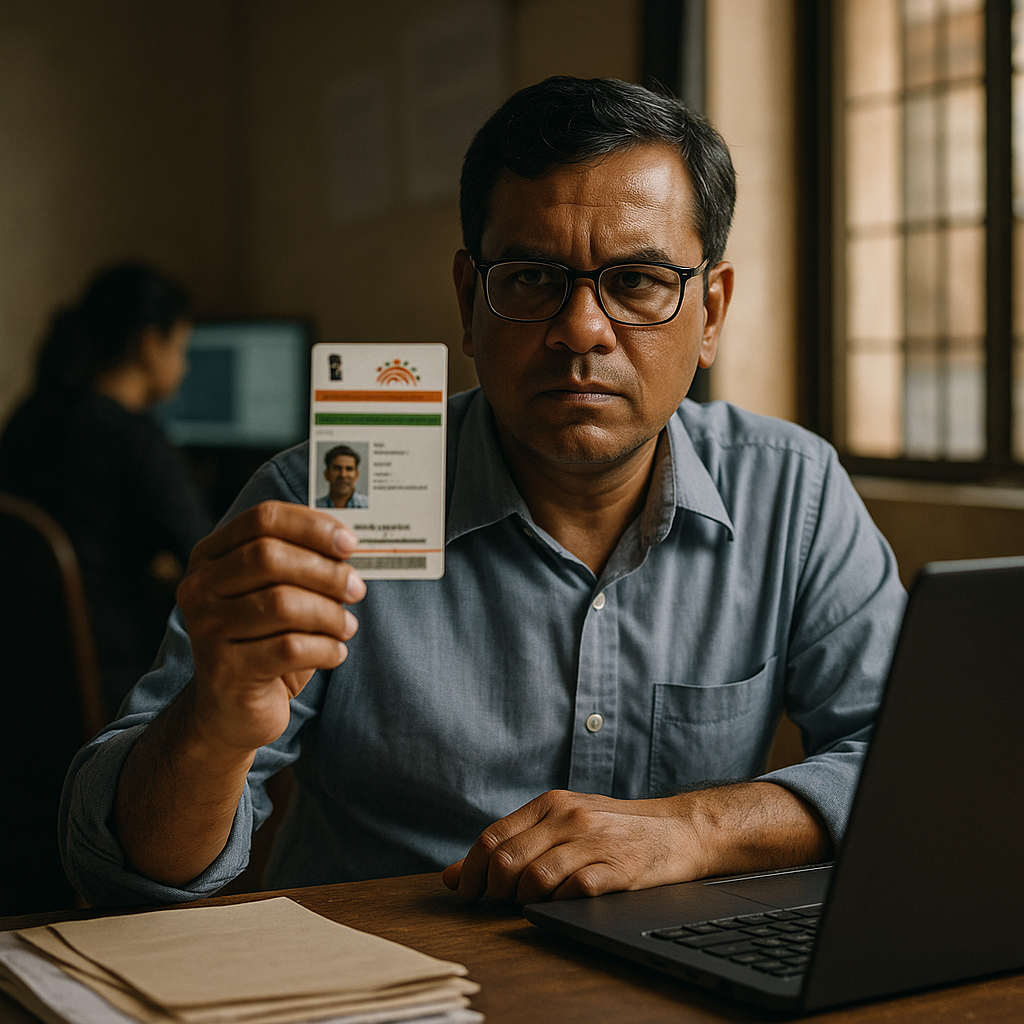
As of 2026, the Aadhaar card continues to be a cornerstone of India's identity infrastructure, with over 1.3 billion residents enrolled. According to the Unique Identification Authority of India (UIDAI), this represents approximately 95% of the Indian population (Reuters, 2026).
Integration and Usage in Government Schemes
Aadhaar has become integral to numerous government schemes. The Ministry of Electronics and Information Technology reported that by 2024, over 650 million beneficiaries were receiving subsidies and benefits directly into their bank accounts, linked through Aadhaar (Government Data, 2024). This system has significantly reduced leakage and improved efficiency in the distribution of government aid.
Technological Advancements and Security Measures
In response to privacy concerns, the UIDAI has implemented several security measures. By 2025, the introduction of Virtual IDs and masked Aadhaar numbers had reduced the risk of data misuse. The UIDAI's annual report highlighted that over 200 million Virtual IDs were generated by the end of 2025 (Government Report, 2025).
Challenges and Criticisms
Despite its widespread adoption, Aadhaar has faced criticism regarding data privacy and security. The Supreme Court of India, in its 2018 judgment, emphasized the need for stringent data protection laws. By 2026, the government had introduced the Personal Data Protection Bill, which aims to safeguard citizens' data and regulate its use (Reuters, 2026).
Impact on Financial Inclusion
Aadhaar has significantly contributed to financial inclusion. The Reserve Bank of India reported that by 2025, over 80% of the Indian population had access to formal financial services, facilitated by Aadhaar-linked bank accounts (RBI Report, 2025). This has enabled easier access to credit, savings, and insurance products for millions of previously unbanked individuals.
Future Prospects and Developments
- Continued expansion of Aadhaar-linked services in rural areas.
- Integration with new digital payment systems.
- Enhanced biometric authentication methods.
- Potential for international adoption and collaboration.
As of 2026, the Indian government continues to explore these avenues to enhance the utility and security of Aadhaar.
Sources: Reuters, Government releases, publicly available data.
Comments
Post a Comment