The Air Force Paradox: More Power, Yet More Vulnerable?
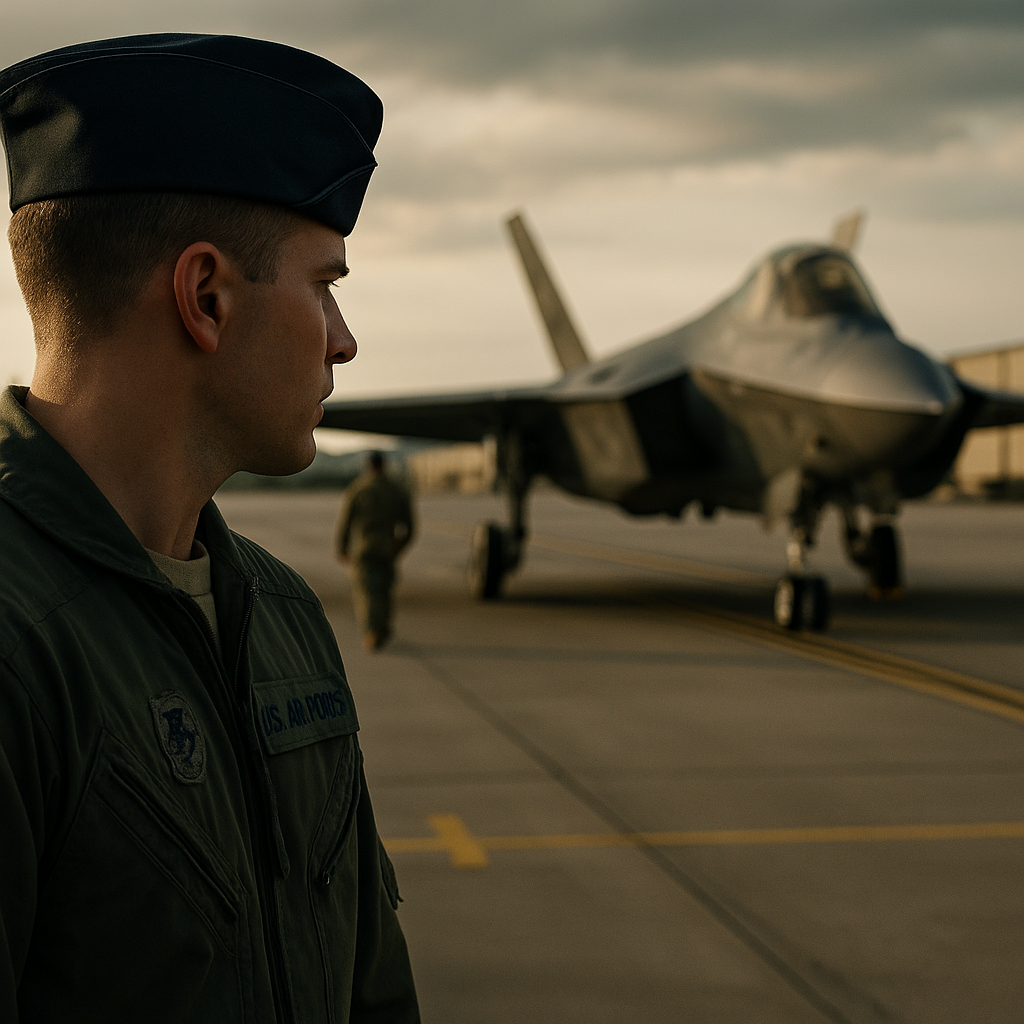
Is the once-unquestionable dominance of the air force beginning to crack? With the development of technologies like hypersonic missiles and autonomous drones, some might argue that the supremacy of traditional air fleets is being challenged. Yet, the U.S. Air Force's budget tells a tale of unwavering confidence. In 2023, defense spending reached a whopping $842 billion, with the Air Force receiving more than 20% of that pie.
**That's over $168 billion aimed at ensuring air dominance**. And yet, here we are, potentially entering an era where traditional air force assets could be outstripped by nations investing in alternative warfare technologies.
The Relentless March of Technology
Since the days of the Wright brothers, aviation has been synonymous with innovation. But, in the past two years, the pace has been blistering. In April 2022, China claimed the successful test of a hypersonic missile capable of speeds over Mach 5, a speed that makes traditional defense systems seem like they're standing still.
This isn't Sci-Fi anymore. **Hypersonic missiles** could render the era of fighter jets irrelevant in the blink of an eye. Consider this: an F-35 Lightning II, one of the U.S.'s finest jets, costs roughly $80 million each, and yet, it could be rendered obsolete by a missile that travels five times faster than sound, costing a mere fraction per unit.
The Drone Dilemma: Cheap and Effective
In recent years, drones have become the unsung heroes (or villains, depending on which side you're on) of the battlefield. They're cheap, effective, and deadly. In the conflict between Ukraine and Russia, which grabbed global headlines throughout 2022 and 2023, drones played a pivotal role. Their capability to carry out surveillance and strike missions without risking human life cannot be overstated.
Here’s what makes drones a game-changer:
- Cost-effective: A sophisticated drone can be developed and deployed at a tenth of the cost of a fighter jet.
- Stealth: Small, nimble, and often undetectable by radar, drones can infiltrate spaces that traditional aircraft cannot.
- Autonomous capabilities: With AI advancements, drones can operate with minimal human intervention.
Balancing the Future
With all these technological leaps, one might ask: **Is the investment in a traditional air force still justified?** Well, it's not a clear-cut answer. While emerging technologies pose new challenges, they also present opportunities. The key is balancing new tech with tried-and-true methods.
For instance, the integration of AI into fighter jets and other air force operations could revolutionize how air power is projected. The U.S. recently announced the development of 'Skyborg'—a program that aims to create an autonomous drone wingman for human pilots. This blend of human skill and machine efficiency might just be the answer to future combat scenarios.
Looking Ahead: 2024 and Beyond
As we stand on the cusp of 2024, the air force faces a crossroads. The decisions made now will shape warfare for decades. With nations worldwide scrambling to secure the latest tech, the emphasis must be on adaptability. Old doctrines will need rewriting, and procurement strategies will need a revamp.
In the coming years, the idea of air superiority might not rest on who has the fastest jet or the stealthiest bomber. It could well be about who better integrates emerging technologies like AI, quantum computing, and nanotechnology. History has shown us that those who adapt, survive, and eventually thrive.
So, buckle up. The skies are getting crowded, and the game is far from over.
Comments
Post a Comment