
PM Awas Yojana: A Dream or a Mirage?

Is PM Awas Yojana Really Addressing India's Housing Crisis?
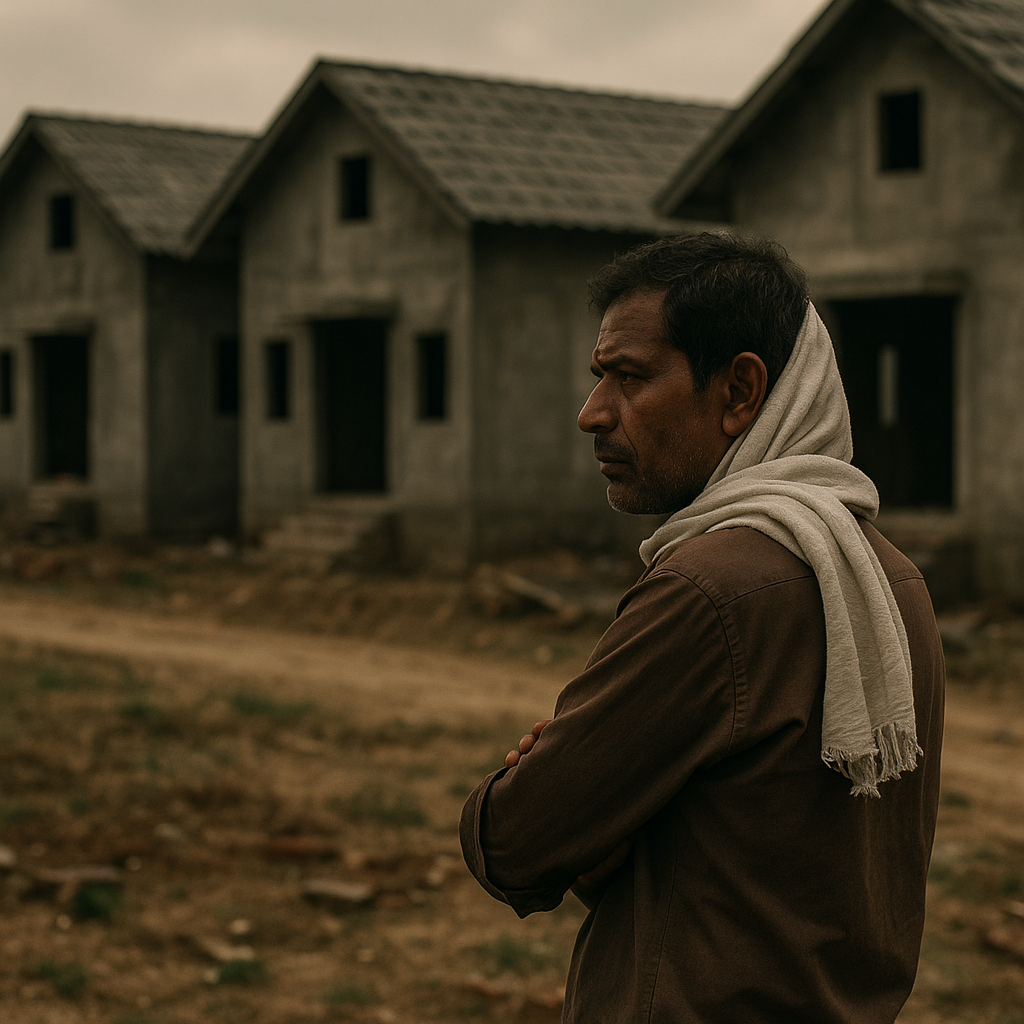
**3.61 crore homes**. That's the number promised by the Pradhan Mantri Awas Yojana (PMAY) since its launch in 2015. But here's the rub—how many of these homes actually stand today, housing families who once lived in dilapidated structures or crowded spaces? If we're being brutally honest, the scheme is a complex labyrinth teetering between optimism and skepticism.

The Lofty Promise Versus Reality

Let's cut through the noise. According to government data, by December 2022, a staggering **2.8 crore homes were sanctioned**. Yet, only **2.3 crore homes** have been completed. That leaves us with nearly **0.5 crore homes** hanging in the balance. While progress is evident, it's the pace of completion that raises eyebrows—especially when the goal was to eliminate the housing shortage by 2022. It's like promising the moon and delivering a meteor shower instead.

Budget Allocations: A Tug of War

Money talks, and it seems the whispers are getting louder. In the 2022 Union Budget, a sum of **₹48,000 crore** was allocated towards PMAY. Sounds substantial, right? But here's the kicker. This amount pales in comparison to the actual requirement to meet the original 2022 deadline. The fiscal tug-of-war further intensified during 2023, with no significant increase in budget allocations, causing many to question the government's commitment.

Recent Developments: Picking Up Pace or Just Empty Promises?

Between January and October 2023, there's been a flurry of activity, with state governments kicking into high gear to expedite the construction process. Yet, experts argue these efforts are akin to putting a band-aid on a gaping wound. **Bold action** is needed—not just the occasional flurry of construction work.

Challenges in the Pathway

While PMAY sounds promising, its implementation is fraught with challenges:

  • **Land Acquisition**: Securing land remains an arduous task, especially in urban areas where space is as precious as gold dust.
  • **Financing**: Despite subsidies, many households find themselves unable to obtain loans due to stringent banking criteria.
  • **Corruption**: Allegations of misappropriation and bureaucratic delays continue to plague the scheme.
  • **Quality of Construction**: The quality of some completed homes has been called into question, with reports of substandard materials and workmanship.

These hurdles are not just speed bumps; they are massive roadblocks that threaten to derail the entire initiative.

A Global Perspective: Are We Falling Behind?

Globally, countries like Singapore and Japan have set benchmarks in affordable housing through meticulous planning and execution. The PMAY was supposed to catapult India into the league of nations that provide dignified living conditions for all. Yet, the gap between ambition and reality remains as wide as the Grand Canyon.

It's high time we ask ourselves: Is PMAY just a mirage, a grandiose promise with little substance, or could it still evolve into the dream it once was? The answer is crucial, not just for the government but for millions of Indian families yearning for a place to call home.

Comments

Popular posts from this blog

Gautham Vasudev Menon: The Maverick of Tamil Cinema

The Enigma of Gautham Vasudev Menon Here's a hot take that might ruffle some feathers in the Tamil cinema world: Gautham Vasudev Menon is neither the savior nor the scourge of modern filmmaking—he's something entirely more complicated. While many fanatics hail him as the orchestrator of perfect celluloid symphonies, critics argue that Menon sometimes leans too heavily on melodrama and style over substance. But love him or hate him, one thing is clear: this man has reshaped Tamil cinema in a way few others have. From Engineer to Auteur Menon's journey is as cinematic as his movies. Born in 1973, this man's original script had him pegged as an engineer. Imagine a universe where Menon isn’t bending the rules of storytelling, but rather sketching cryptic blueprints in an air-conditioned office. Scary, right? Fast forward to 2001, Menon released his iconic film Minnale , proving that sometimes, calculated leaps of faith pay off. By 2023, he had directed 15 feature films,...

Astrology, Viral Videos, and the Nashik Phenomenon: A Deep Dive

The Nashik Astrologer Phenomenon: Unveiling the Viral Cosmos In a world where data science often wrestles the limelight from more mystical pursuits, the rise of a Nashik astrologer through a viral video has sparked debates that are as heated as they are illuminating. Over 5 million views in less than a week – a statistic that would make even the Kardashians blush. In an age where TikTok trends and Instagram stories dictate what’s hot, how does an astrologer from Nashik capture such attention? A Clash of Ancient Wisdom and Modern Skepticism The video, if you haven’t been one of the millions to see it, features a charismatic astrologer from Nashik effortlessly weaving intricate predictions with a sprinkle of showmanship. It's not just about what he says; it’s how he says it . With a delivery that rivals stand-up comedians and a confidence that would put seasoned TED speakers to shame, he has become a sensation. But here’s where it gets contentious. The critics are sharpening ...

Mann Ki Baat: A Megaphone for the Masses or Mere Political Theater?

The Radio Revolution Who would have thought that a medium as retro as radio would become a political powerhouse in the 21st century? In an era where TikTok influencers sway teens and breaking news pops up as Twitter notifications, Prime Minister Narendra Modi's Mann Ki Baat leverages the ancient airwaves to reach over 1.3 billion ears. It's a fascinating, albeit controversial, approach to governance in a digital world that’s increasingly tuned out of traditional broadcasts. Why Radio? Let's face it. In 2023, the average millennial wouldn’t be caught dead fiddling with a radio dial. But Modi’s Mann Ki Baat is not just about capturing attention—it’s about capturing sentiment. The show, which first aired on October 3, 2014, has become a monthly ritual, with its 100th episode airing in April 2023. 100 episodes is no small feat, especially for something that doesn't feature the latest viral sensation or celebrity gossip. So why radio? Here's the kicker: India b...