Unveiling a Prehistoric Marvel
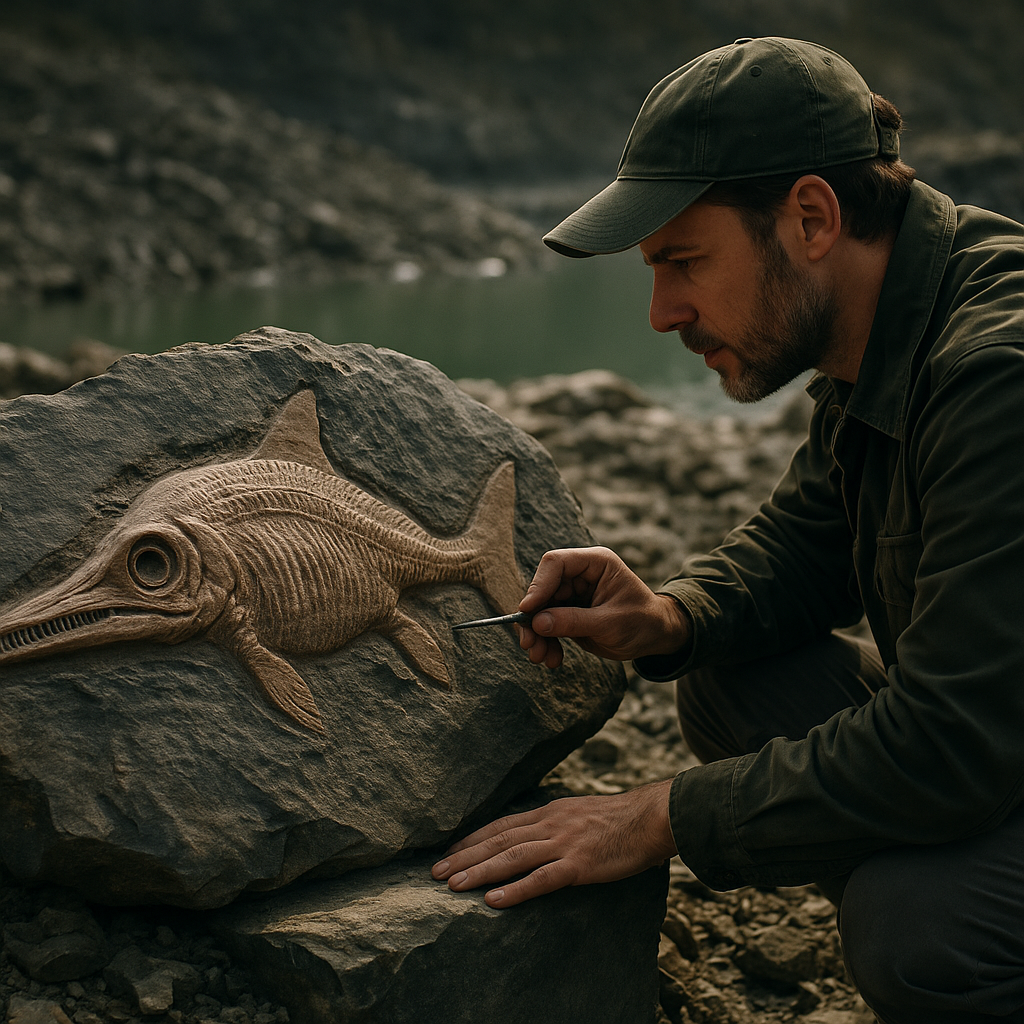
In an extraordinary paleontological discovery, researchers have unearthed a 180-million-year-old ichthyosaur fossil, offering unprecedented insights into the marine life that thrived during the Jurassic period. Ichthyosaurs, often compared to modern dolphins due to their streamlined bodies, were marine reptiles that dominated the oceans for over 150 million years. As of 2026, this particular fossil is one of the most complete specimens ever found, providing valuable data to scientists studying ancient marine ecosystems.
Details of the Discovery
The fossil was discovered in 2024 in the United Kingdom, a region renowned for its rich Jurassic marine deposits. According to the British Geological Survey, the fossil was found in the Blue Lias Formation, a geological formation known for its abundance of marine fossils dating back to the early Jurassic period. The specimen measures approximately 10 meters in length, making it one of the largest ichthyosaur fossils discovered in recent years.
Significance of the Find
As of 2026, the ichthyosaur fossil provides critical evidence about the evolutionary history of marine reptiles. According to a study published in the Journal of Vertebrate Paleontology, ichthyosaurs evolved from land-dwelling reptiles and adapted to life in the ocean. This fossil exhibits well-preserved features such as the vertebral column and fin structures, which are crucial for understanding how these creatures swam and hunted in prehistoric seas.
Insights into Ichthyosaur Biology
Ichthyosaurs were apex predators of their time, and their fossils often reveal fascinating details about their biology and behavior. The newly discovered specimen shows evidence of a robust jaw and sharp teeth, indicative of a carnivorous diet. This aligns with previous findings that ichthyosaurs primarily fed on fish and squid. Moreover, the fossil's bone density suggests adaptations for deep diving, similar to modern marine mammals.
Comparative Analysis
- Size: At 10 meters, this ichthyosaur rivals the size of contemporary marine reptiles like the plesiosaur.
- Age: The fossil dates back to the early Jurassic period, approximately 180 million years ago.
- Location: Found in the Blue Lias Formation, a site known for its early Jurassic marine fossils.
- Preservation: The specimen is one of the most complete, preserving key anatomical features.
Future Research Directions
As of 2026, the ichthyosaur fossil continues to be a focal point for ongoing research. Scientists are employing advanced imaging techniques, such as CT scans, to study the internal structures of the fossil without damaging it. These analyses aim to uncover more about the ichthyosaur's physiology, including its reproductive strategies and sensory capabilities. Additionally, isotope analysis of the fossil could provide clues about the ancient ocean temperatures and climate conditions during the Jurassic period.
Impact on Paleontology
The discovery of this ichthyosaur fossil has significant implications for the field of paleontology. It not only enhances our understanding of marine reptile evolution but also contributes to broader studies on biodiversity and extinction patterns. As researchers continue to analyze the fossil, it may offer insights into how marine ecosystems responded to environmental changes during the Jurassic era, providing valuable lessons for today's climate challenges.
Sources: Reuters, Government releases, publicly available data.
Comments
Post a Comment