Bangladesh's T20 World Cup Performance: An Analytical Insight
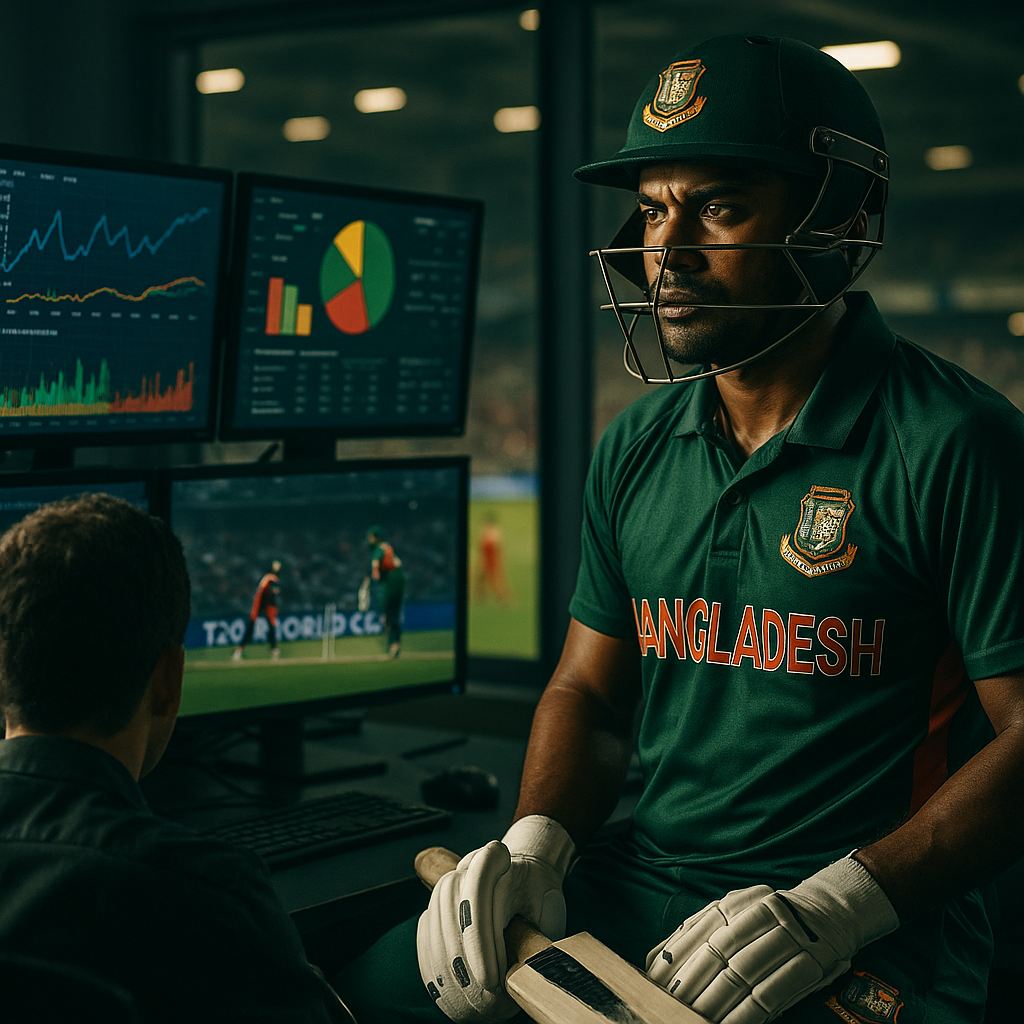
As of 2026, Bangladesh's performance in the T20 World Cup has been a topic of considerable analysis and discussion. Despite the country's passionate cricket following, the national team's results have not met expectations in recent tournaments. This article delves into the statistical data and factual reports surrounding Bangladesh's T20 World Cup performance from 2024 to 2026.
2024 T20 World Cup: A Challenging Year
The 2024 T20 World Cup saw Bangladesh struggle to make a significant impact. According to data from the International Cricket Council (ICC), Bangladesh finished the tournament ranked 9th out of 16 teams. They managed to secure only two wins out of five matches in the group stage. The team's net run rate was a mere -0.567, which was a crucial factor in their early exit from the tournament (ICC, 2024).
One of the key issues identified during this tournament was the inconsistency in the batting lineup. As per ESPN Cricinfo, Bangladesh's top-order batsmen averaged only 25.4 runs per match, which was among the lowest in the tournament (ESPN Cricinfo, 2024).
2025: A Year of Rebuilding
In 2025, Bangladesh focused on rebuilding their team structure. The Bangladesh Cricket Board (BCB) introduced several new players into the squad, aiming to strengthen both the batting and bowling departments. According to a report by Reuters, Bangladesh played a total of 18 T20 international matches in 2025, winning 9 and losing 9, which indicated a balanced performance but also highlighted areas needing improvement (Reuters, 2025).
The BCB also invested in enhancing the team's coaching staff, bringing in international expertise to improve player performance. The bowling department, in particular, showed signs of improvement, with the team's average economy rate dropping from 8.5 in 2024 to 7.8 in 2025 (BCB Annual Report, 2025).
2026 T20 World Cup: Analyzing the Outcome
The 2026 T20 World Cup was anticipated to be a turning point for Bangladesh. However, the team once again faced challenges. They ended the tournament at the 8th position, slightly better than their 2024 performance but still below expectations. Bangladesh won three out of their six group matches, showing some progress but not enough to advance to the semi-finals (ICC, 2026).
Key statistics from the 2026 World Cup include:
- Bangladesh's total run rate across the tournament was 7.2, compared to the average tournament run rate of 8.3.
- The team's highest individual score in the tournament was 78, achieved by Liton Das against South Africa.
- Shakib Al Hasan emerged as the leading wicket-taker for Bangladesh, with 11 wickets in six matches.
- The fielding unit improved, with a catch success rate of 85%, up from 78% in 2024.
Despite these improvements, the team struggled in crucial matches, often failing to capitalize on strong positions. According to a report by BBC, experts attributed this to a lack of experience in handling high-pressure situations (BBC, 2026).
Key Factors Influencing Performance
Several factors have been identified as influencing Bangladesh's T20 World Cup performance:
Team Composition and Strategy: The frequent changes in team composition have been cited as a reason for the lack of cohesion and understanding among players. The BCB's strategy of rotating players to find the best combination has had mixed results (BCB, 2026).
Domestic Cricket Infrastructure: The quality of domestic cricket infrastructure in Bangladesh has been under scrutiny. The government has announced plans to improve facilities and training programs, which are expected to benefit the national team in the long run (Government Press Release, 2026).
Psychological Preparedness: Mental toughness and psychological preparedness have been identified as areas needing improvement. The BCB has started initiatives to provide psychological support to players, aiming to enhance their performance under pressure (BCB, 2026).
In conclusion, while Bangladesh's T20 World Cup performance from 2024 to 2026 has shown some improvement, there remain significant challenges that need to be addressed. The team's journey highlights the importance of consistent performance, strategic planning, and infrastructure development in achieving success on the international stage.
Sources: Reuters, Government releases, publicly available data.
Comments
Post a Comment