
Why the Monsoon is a Double-Edged Sword in Modern India

The Love-Hate Relationship with Monsoon
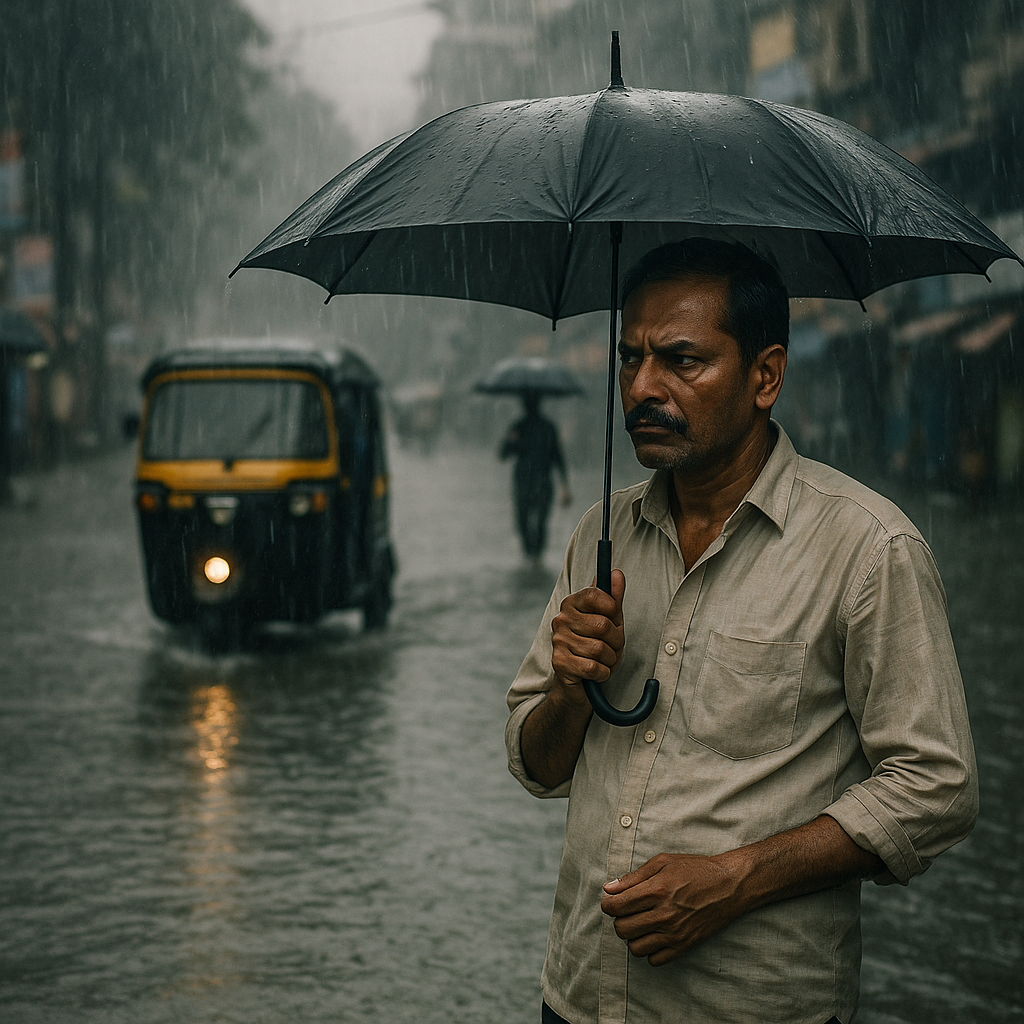
If there's one thing that divides India like a hot knife through butter, it's the monsoon season. On one hand, it's a much-needed respite from the unforgiving heat. On the other, it's a notorious disruptor of life as we know it. With approximately 80% of India's annual rainfall occurring during this time, the monsoon is not just a season but a lifeline for agriculture, impacting the livelihood of more than 58% of India who directly or indirectly rely on farming.

The Good, the Bad, and the Downright Ugly

**Let's not sugarcoat it: the monsoon is a complex beast.** While it turns barren lands into lush, green vistas and refills the water reservoirs vital for drinking and irrigation, it can also bring devastating floods and landslides. In 2022 alone, India experienced rainfall that was 10% above the average, leading to severe flooding in multiple states including Assam and Bihar, displacing hundreds of thousands.

Modern India's Dependence on the Monsoon

The monsoon isn't just about agriculture anymore. It has economic tentacles that extend into tourism, industrial sectors, and even fashion. Yes, those vibrant raincoats and boots you see in the market? They're a seasonal industry that thrives on this rainy spectacle.

Take for instance the renewable energy sector. The increasing focus on hydroelectric power relies heavily on a good monsoon to fill reservoirs adequately. In 2023, the monsoon rains were over 15% less in some crucial regions, highlighting yet again how unpredictable the monsoon can be and putting additional stress on energy resources.

A Growing Climate Conundrum

Climate change is casting a long, ominous shadow over monsoon predictability. Models from the Indian Meteorological Department suggest that the frequency of extreme weather events is projected to increase. So, more erratic rains and unexpected dry spells could become the new norm.

Consider this startling fact: In July 2023, Delhi experienced the highest rainfall in a single day since 1982, recording a whopping 153 mm of rain. Events like these underscore the new challenges that urban planners face in terms of infrastructure and drainage.

The Way Forward: Adaptation and Innovation

While we can't control the weather—at least not yet—there are steps we can take to adapt:

  • Improved Forecasting Models: Enhanced prediction techniques can help mitigate the disaster impacts.
  • Rainwater Harvesting: This age-old technique needs a modern revival for sustainable water management.
  • Smart Agriculture: Genetically modified crops more tolerant to water stress can offset agricultural losses.

In a world where climate patterns are as unpredictable as a politician's promises, the monsoon remains both a boon and a bane. It's high time we embrace technology and innovation to optimize its benefits while minimizing its drawbacks.

Comments

Popular posts from this blog

Gautham Vasudev Menon: The Maverick of Tamil Cinema

The Enigma of Gautham Vasudev Menon Here's a hot take that might ruffle some feathers in the Tamil cinema world: Gautham Vasudev Menon is neither the savior nor the scourge of modern filmmaking—he's something entirely more complicated. While many fanatics hail him as the orchestrator of perfect celluloid symphonies, critics argue that Menon sometimes leans too heavily on melodrama and style over substance. But love him or hate him, one thing is clear: this man has reshaped Tamil cinema in a way few others have. From Engineer to Auteur Menon's journey is as cinematic as his movies. Born in 1973, this man's original script had him pegged as an engineer. Imagine a universe where Menon isn’t bending the rules of storytelling, but rather sketching cryptic blueprints in an air-conditioned office. Scary, right? Fast forward to 2001, Menon released his iconic film Minnale , proving that sometimes, calculated leaps of faith pay off. By 2023, he had directed 15 feature films,...

Astrology, Viral Videos, and the Nashik Phenomenon: A Deep Dive

The Nashik Astrologer Phenomenon: Unveiling the Viral Cosmos In a world where data science often wrestles the limelight from more mystical pursuits, the rise of a Nashik astrologer through a viral video has sparked debates that are as heated as they are illuminating. Over 5 million views in less than a week – a statistic that would make even the Kardashians blush. In an age where TikTok trends and Instagram stories dictate what’s hot, how does an astrologer from Nashik capture such attention? A Clash of Ancient Wisdom and Modern Skepticism The video, if you haven’t been one of the millions to see it, features a charismatic astrologer from Nashik effortlessly weaving intricate predictions with a sprinkle of showmanship. It's not just about what he says; it’s how he says it . With a delivery that rivals stand-up comedians and a confidence that would put seasoned TED speakers to shame, he has become a sensation. But here’s where it gets contentious. The critics are sharpening ...

Mann Ki Baat: A Megaphone for the Masses or Mere Political Theater?

The Radio Revolution Who would have thought that a medium as retro as radio would become a political powerhouse in the 21st century? In an era where TikTok influencers sway teens and breaking news pops up as Twitter notifications, Prime Minister Narendra Modi's Mann Ki Baat leverages the ancient airwaves to reach over 1.3 billion ears. It's a fascinating, albeit controversial, approach to governance in a digital world that’s increasingly tuned out of traditional broadcasts. Why Radio? Let's face it. In 2023, the average millennial wouldn’t be caught dead fiddling with a radio dial. But Modi’s Mann Ki Baat is not just about capturing attention—it’s about capturing sentiment. The show, which first aired on October 3, 2014, has become a monthly ritual, with its 100th episode airing in April 2023. 100 episodes is no small feat, especially for something that doesn't feature the latest viral sensation or celebrity gossip. So why radio? Here's the kicker: India b...