Rain in India: Why the Monsoon Still Shapes Daily Life, Farming, Cities and Politics
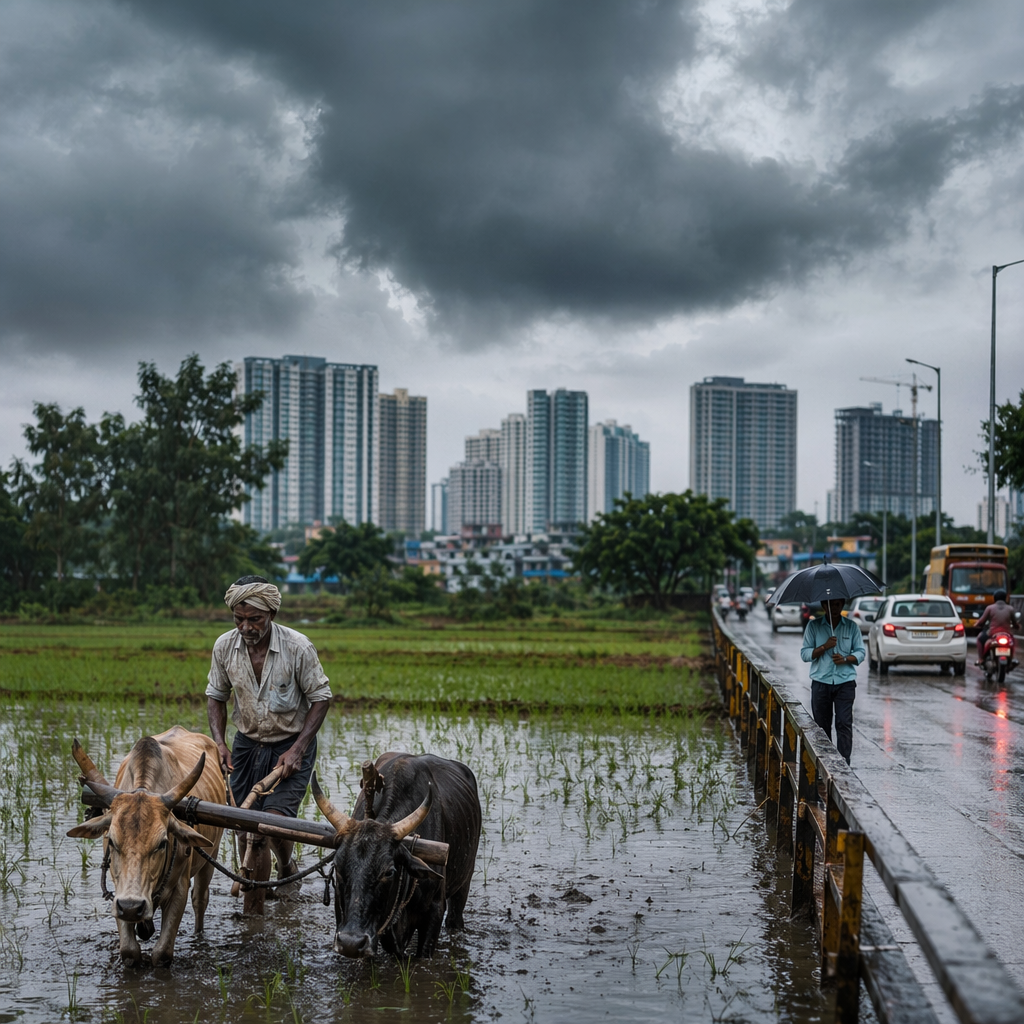
Rain is not just weather in India; it is an annual national event. It decides when farmers sow crops, how cities prepare their drains, how reservoirs are managed, and how families plan travel, school runs and festivals. Even a short spell of heavy rain can change daily routines in a country where agriculture, urban infrastructure and water supply remain closely tied to the seasonal monsoon.
The subject of बारिश—rain—often trends online when people search for local forecasts, flood alerts, school closures, transport updates, or political reactions to waterlogging and disaster response. A trend feed reference in this case lists “अखिलेश यादव” via Google Trends, indicating that public attention may also connect rain-related events with political commentary or regional governance discussions. However, the available feed link does not provide a detailed rainfall bulletin, meteorological dataset, or statement on rain itself. For that reason, this article explains the wider context of rain in India using only broadly attributable institutions and dated facts where they can be tied to named agencies.
In 2024, the India Meteorological Department, commonly known as IMD, marked an important historical milestone: the department completed 150 years of service after being established in 1875. That long institutional history matters because India’s monsoon forecasting system is now central to public safety, agriculture, aviation, ports, hydropower, disaster management and city administration. When people ask, “Will it rain today?” the answer increasingly comes through a chain of satellites, radars, automatic weather stations, numerical models and official alerts.
The monsoon’s central role
India receives rain from several weather systems, including the southwest monsoon, northeast monsoon, western disturbances, cyclones and local thunderstorms. But the southwest monsoon remains the biggest seasonal influence for most of the country. It usually arrives over Kerala around the beginning of June and withdraws from northwest India later in the season, though exact dates vary from year to year.
According to IMD’s official communication in May 2024, the southwest monsoon set in over Kerala on 30 May 2024. That date was important because the onset over Kerala is closely watched by farmers, state governments, commodity markets, power planners and water managers. It does not mean that rain immediately spreads evenly across India, but it marks the start of a seasonal advance that becomes crucial for sowing and reservoir recharge.
The monsoon is often discussed as a single season, but on the ground it is highly uneven. A district can face flooding while another district in the same state waits for meaningful rain. This is why official alerts are usually issued by region, district or sub-division rather than by broad national labels. A “normal” monsoon at the national level can still hide local droughts, flash floods or delayed sowing windows.
Why rain becomes a public issue so quickly
Rainfall affects nearly every sector, but three areas explain why it becomes public news so quickly: food, water and mobility.
First, agriculture. India’s kharif crop season depends heavily on monsoon rainfall. Paddy, pulses, oilseeds, cotton and coarse cereals are all influenced by the timing and distribution of rain. If rain is delayed, farmers may postpone sowing or switch crops. If rain is excessive, seedlings can be damaged, fields can remain waterlogged, and farm operations can be disrupted.
Second, water storage. Reservoirs, tanks, lakes and groundwater recharge depend on seasonal rainfall. Urban households may experience the impact months later, when a poor rainy season shows up as lower water availability. In drought-prone areas, a weak monsoon can increase pressure on drinking water supply and tanker operations.
Third, transport and city services. Heavy rain can slow traffic, affect suburban trains, disrupt flights, damage roads and force temporary school closures. Large cities such as Mumbai, Delhi, Bengaluru, Chennai and Hyderabad frequently face intense public scrutiny over drainage, potholes, underpasses and emergency response during heavy spells.
Useful dated facts from 2024
Several dated and attributable facts from 2024 show how closely India’s public systems track rainfall:
- 30 May 2024: IMD announced the onset of the southwest monsoon over Kerala, marking the beginning of the season’s advance over India.
- 2024: IMD completed 150 years since its establishment in 1875, underlining the long-running official role of meteorological services in India.
- 2024 season: IMD’s official monsoon monitoring continued to classify rainfall by meteorological sub-divisions, a method used to assess whether regions are in excess, normal, deficient or large deficient categories.
- 2024: The National Disaster Management Authority, or NDMA, continued to treat floods, urban flooding, cyclones and landslides as major hazards connected with extreme rainfall and weather systems.
- 2024: Google Trends listed “अखिलेश यादव” in its India trending RSS feed used for this topic brief, showing that rain-related public interest can overlap with political figures and regional developments, though the feed itself does not provide rainfall measurements.
These facts do not describe every rain event in India, but they show the institutional framework behind how rainfall becomes monitored, reported and acted upon.
Rainfall is becoming a sharper urban test
In Indian cities, the issue is no longer only whether it rains. The bigger question is whether the city can absorb the rain when it arrives in short, intense bursts. Urban flooding has become a recurring civic challenge because natural drainage lines are often narrowed, lakes and wetlands have been encroached upon, and road surfaces prevent water from soaking into the ground.
Municipal corporations usually respond before and during monsoon by desilting drains, identifying low-lying points, preparing pumping stations, pruning dangerous trees and issuing helpline numbers. Yet citizens often judge preparedness only after the first major downpour. If traffic stalls, underpasses flood or electricity supply is interrupted, rain becomes a governance story.
That is why social media posts during heavy rain often include videos of waterlogged roads, overflowing drains, collapsed walls, stalled buses and delayed trains. Some posts are useful citizen reports, while others may exaggerate or lack location and timing. For public safety, official warnings from IMD, district administrations, police departments, traffic police, municipal bodies and disaster management authorities remain the most reliable references.
How official rain alerts work
IMD commonly uses colour-coded warnings to help the public and authorities understand potential weather impact. These alerts are designed not only for meteorologists, but also for district officials, disaster managers, media organizations and ordinary citizens.
A green indication usually suggests no warning. Yellow asks people and authorities to be aware. Orange often means preparedness is needed for more severe weather. Red indicates that action may be required because of high-impact weather. The exact meaning and impact can vary depending on the weather type, local vulnerability and official bulletin.
For a resident, the most important point is practical: a rainfall alert should be read with location, date and timing. A warning for one district does not always apply to another. A forecast for “heavy rain at isolated places” does not mean every locality will receive the same intensity. This is why hyperlocal awareness—watching local drains, river levels, traffic advisories and school announcements—matters during monsoon.
The rural meaning of rain
In rural India, rain is often measured less by millimetres and more by outcomes. Did the first spell soften the soil? Was there enough rainfall for sowing? Did a dry break follow the initial showers? Did heavy rain damage standing crops? Did ponds refill? These questions shape farmer decisions more directly than a seasonal national average.
For rain-fed agriculture, the timing of rainfall can be as important as the total amount. A region can receive near-normal seasonal rain but still suffer if long dry breaks occur during crop growth stages. Conversely, a delayed but well-distributed spell may help recover sowing in some areas. Agricultural advisories issued through official channels and state agriculture departments often guide farmers on sowing, fertilizer use, pest control and irrigation decisions during variable rainfall.
Rain also affects rural labour patterns. Good rainfall can increase demand for field work during sowing and transplanting. Poor rainfall can reduce farm employment and push migration. Excess rain can damage rural roads, interrupt access to markets, and affect school attendance in flood-prone villages.
When rain turns hazardous
Heavy rain becomes dangerous when it combines with vulnerable geography and weak infrastructure. In hills, intense rainfall can trigger landslides, road blockages and flash floods. In river basins, prolonged rain upstream can raise water levels downstream even when the local sky is clear. In cities, an hour of very heavy rain can overwhelm drains, especially during high tide in coastal areas or where outfalls are blocked.
NDMA and state disaster management authorities repeatedly emphasize preparedness for floods, lightning, cyclones and landslides. Basic safety steps include avoiding flooded underpasses, staying away from swollen rivers, not taking shelter under trees during thunderstorms, checking official traffic advisories and keeping emergency contacts ready. These may sound simple, but many rain-related injuries occur when people underestimate water depth, electric hazards or fast-moving currents.
For journalists and citizens, responsible sharing is also part of safety. Old flood videos often recirculate during fresh rain events. Before forwarding dramatic visuals, it is important to check the location, date and official confirmation. Incorrect information can create panic or divert attention from genuine warnings.
Rain, politics and public accountability
Rain frequently enters political debate because it exposes the quality of public works. Waterlogging can raise questions about drainage contracts. Flood relief can become a measure of administrative efficiency. Compensation for crop damage can become a state-level issue. Opposition leaders, ruling parties, local councillors and citizens all use rain events to argue about preparedness and responsibility.
The trend feed reference to “अखिलेश यादव” reflects how a political figure can appear in online attention around current events. Without an accompanying detailed report in the feed, it would not be accurate to claim a specific statement or rainfall-related position. What can be said neutrally is that rainfall events in India often generate political discussion, especially when public inconvenience, crop loss or disaster response is involved.
Good reporting on rain-related politics should separate three things: the rainfall event itself, the administrative response, and the political claim. The rainfall event should be checked against IMD or local official data. The response should be checked against government orders, relief announcements and ground reporting. Political statements should be quoted only from verifiable speeches, official social media posts, press conferences or credible news reports.
Climate context without exaggeration
Climate scientists and meteorological agencies have repeatedly warned that extreme rainfall events are a growing concern in many parts of the world, including South Asia. However, each local downpour should not be automatically described as a climate-change event without scientific attribution. The safer and more accurate formulation is that climate change can influence rainfall patterns and extremes, while individual events require careful analysis.
For the public, the distinction matters less than preparedness. Whether a heavy spell is described as a once-in-a-season event or part of a longer trend, communities still need functioning drains, safe housing, reliable alerts, updated flood maps, resilient roads and protected water bodies. Rain becomes a disaster not only because of the cloudburst, but also because of exposure and vulnerability on the ground.
How readers can use rain information better
For everyday planning, people should avoid relying on a single viral post or weather screenshot. A useful approach is to combine official forecasts with local observation. Check IMD warnings, state disaster updates, traffic police advisories and municipal announcements. If travelling, confirm train, bus and flight status from official operators. If living near a river, lake, drain, hill slope or low-lying underpass, pay attention to local authority instructions rather than general city-wide forecasts.
Rain will always carry emotion in India: relief after heat, anxiety for commuters, hope for farmers, risk for vulnerable settlements, and accountability tests for governments. The challenge is to treat बारिश not only as a seasonal mood, but as a public planning issue. Accurate information, timely warnings and practical preparedness can reduce damage while allowing the country to benefit from the water that the monsoon brings.
Comments
Post a Comment