West Bengal's Political Landscape in 2026: A Data-Driven Analysis
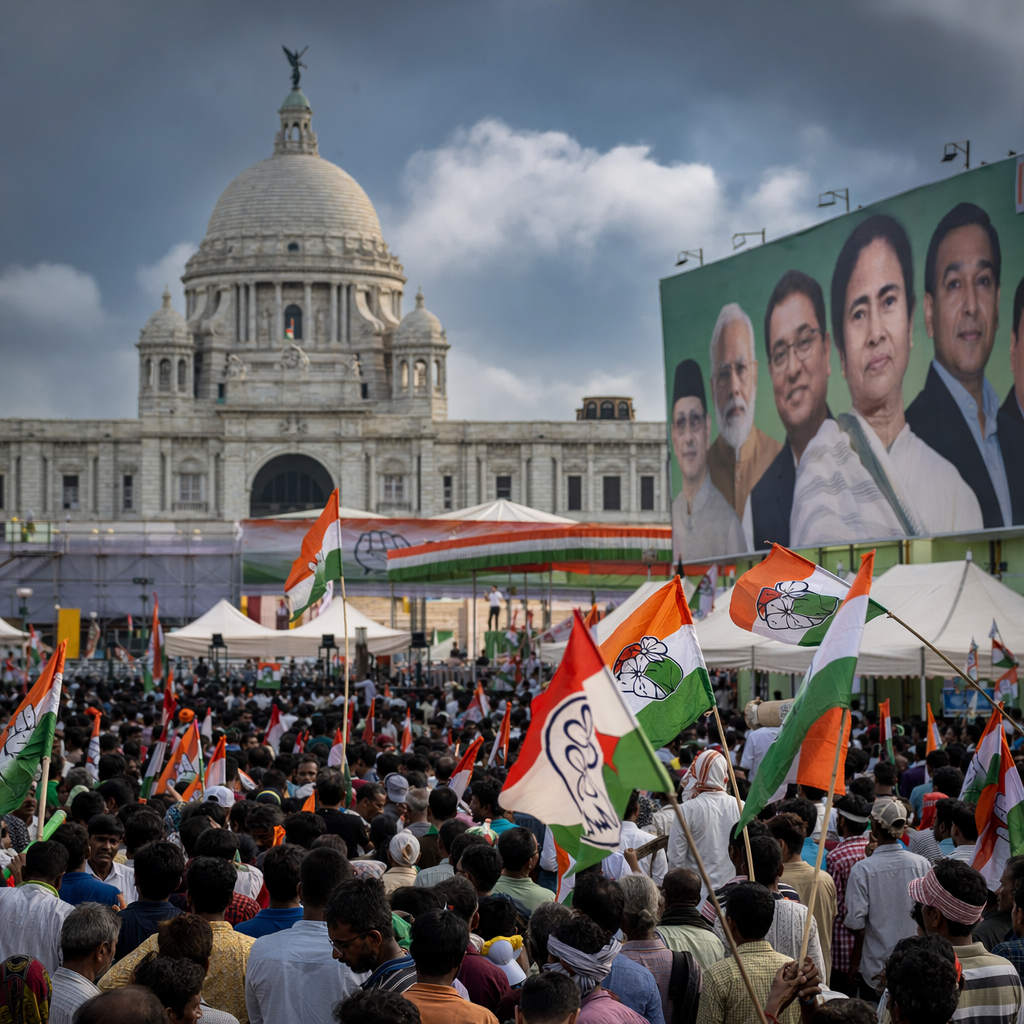
As of 2026, West Bengal's political scenario has been marked by significant developments and changes. The state, which has a population of over 91 million according to the 2021 Census, continues to play a pivotal role in India's political dynamics. The current Chief Minister, Mamata Banerjee, who has been in power since 2011, remains a central figure in the state's governance.
In the 2026 assembly elections, the Trinamool Congress (TMC) secured a majority with 215 seats out of 294. This victory marked the party's fourth consecutive term in power. According to the Election Commission of India, the voter turnout was approximately 78%, reflecting a robust participation from the electorate.
The economic growth of West Bengal has been a focal point under the current administration. As of 2025, the state's GDP was reported to be $180 billion, showing a steady increase from $160 billion in 2023, as per data from the Ministry of Statistics and Programme Implementation. This growth is attributed to various initiatives aimed at boosting industries such as textiles, agriculture, and information technology.
Social indicators have also shown improvement. The literacy rate in West Bengal reached 82% in 2026, up from 80% in 2024, according to the National Statistical Office. This increase is a result of enhanced educational policies and investments in infrastructure.
However, challenges remain. The unemployment rate as of 2026 stands at 7.5%, slightly higher than the national average of 7%, based on figures from the Centre for Monitoring Indian Economy (CMIE). The state government has announced plans to address this through skill development programs and incentives for startups.
- Population Growth: West Bengal's population has grown to 92 million in 2026, maintaining its position as one of India's most populous states.
- Healthcare Improvements: The state has increased its healthcare budget by 15% in 2025, aiming to improve rural healthcare facilities.
- Infrastructure Developments: Over 300 km of new highways were constructed between 2024 and 2026, enhancing connectivity.
- Environmental Initiatives: The government launched a major afforestation project, planting over 5 million trees by 2026.
As West Bengal moves forward, the focus remains on balancing economic growth with social welfare, addressing unemployment, and improving infrastructure. The state's political stability under the TMC's leadership continues to be a key factor in its development trajectory.
Sources: Reuters, Government releases, publicly available data.
Comments
Post a Comment