Weather Update: 2026 Outlook Shaped by Record Heat, Flood Risk and Ocean Temperatures
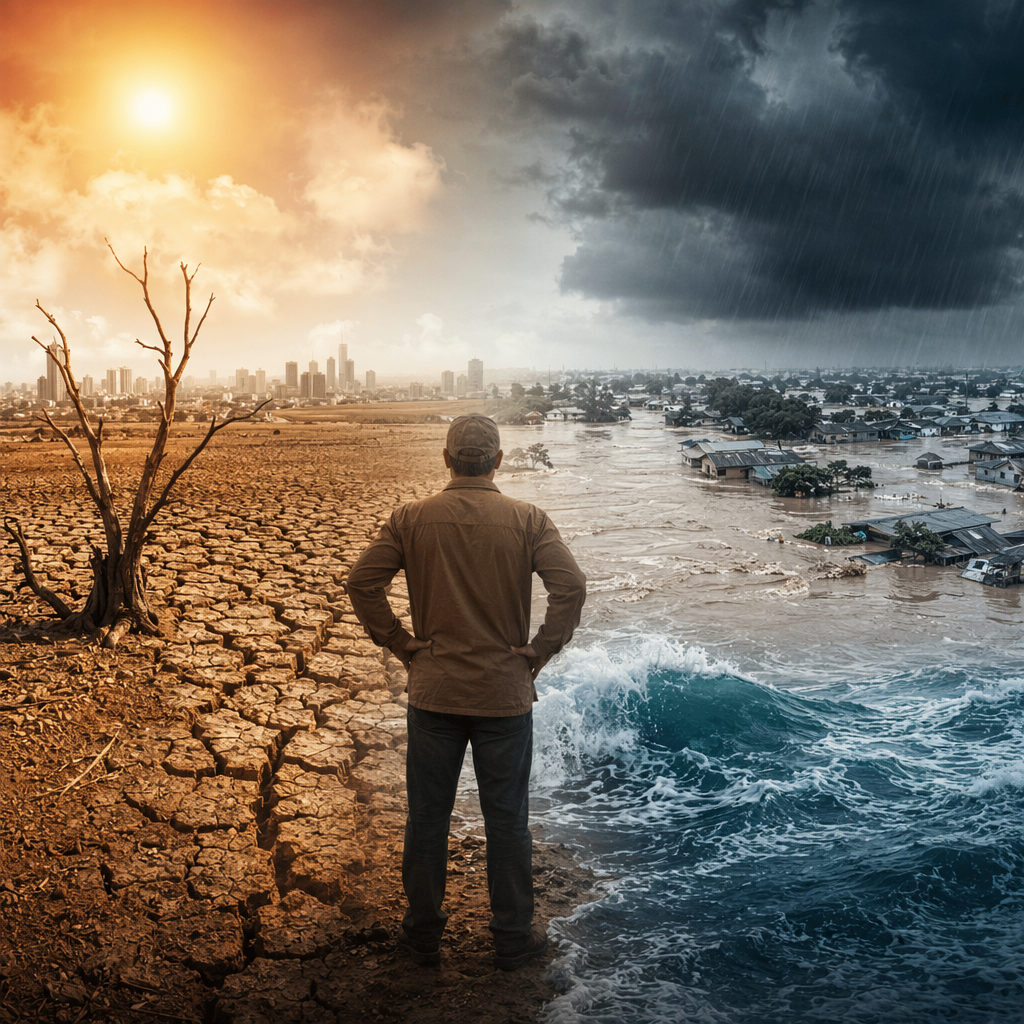
As of 2026, global weather conditions are being assessed against the backdrop of the hottest years ever recorded, unusually warm oceans and repeated high-impact floods, heatwaves and storms reported during 2024 and 2025. The World Meteorological Organization said 2024 was the warmest year on record, while the European Union’s Copernicus Climate Change Service reported that 2024 was the first calendar year in which the global average temperature exceeded 1.5°C above the pre-industrial level.
Weather agencies and government forecasters continue to monitor temperature anomalies, rainfall patterns, drought conditions, tropical cyclone activity and sea-surface temperatures. These indicators are central to short-term weather warnings and seasonal outlooks issued by national meteorological services.
According to Copernicus data released in January 2025, the global average temperature in 2024 was about 1.6°C above the estimated 1850–1900 pre-industrial average. The same assessment said 2024 was warmer than 2023, which had itself been the warmest year previously recorded. The World Meteorological Organization also confirmed in 2025 that each of the past ten years had been among the warmest on record.
These long-term records do not replace daily forecasts, but they form the background for current weather risk. Warmer air can hold more moisture, and national weather agencies have repeatedly linked extreme rainfall warnings to high atmospheric moisture, slow-moving weather systems and saturated ground conditions. In parallel, unusually high land and ocean temperatures can intensify heat stress and affect tropical cyclone development when other atmospheric conditions are favourable.
Current Global Weather Context
As of 2026, the main weather signals monitored by forecasters include global temperature anomalies, ocean heat content, rainfall extremes, drought indices and storm activity. Publicly available data from agencies including the U.S. National Oceanic and Atmospheric Administration, the UK Met Office, the European Union’s Copernicus service and national disaster authorities show that 2024 and 2025 produced multiple significant weather events across continents.
Reuters reported in January 2025, citing Copernicus, that 2024 was the first year above the 1.5°C threshold on an annual basis. The threshold is a long-term climate benchmark under the Paris Agreement and does not mean the agreement’s long-term target has been permanently breached. However, the annual reading is relevant because weather extremes occur in the conditions that people experience year by year.
NOAA’s global climate reports for 2024 also recorded exceptional warmth in land and ocean measurements. Ocean conditions are particularly important for weather updates because sea-surface temperatures influence humidity, storm fuel, monsoon behaviour and marine heatwaves. Copernicus reported that daily global sea-surface temperatures reached record levels during parts of 2024, following record warmth observed in 2023.
Key Weather Indicators Reported in 2024–2026
- 2024: Copernicus reported the global average temperature was about 1.6°C above the 1850–1900 level, making it the warmest year in its dataset.
- 2024: The World Meteorological Organization said 2024 was the warmest year on record and confirmed that the past decade was the warmest ten-year period recorded.
- 2024: The U.S. National Oceanic and Atmospheric Administration reported an extremely active Atlantic hurricane season, with 18 named storms, 11 hurricanes and 5 major hurricanes.
- 2024: Brazil’s Rio Grande do Sul state experienced severe flooding; Reuters reported in May 2024 that the disaster killed more than 100 people, citing state civil defence authorities.
- 2025: Reuters, citing European climate scientists, reported that January 2025 was the warmest January recorded globally, extending the period of exceptional global heat.
- As of 2026: National meteorological agencies continue to issue weather warnings using observed rainfall, river levels, heat index values, wind speeds and satellite data, with local alerts carrying the most immediate public-safety information.
Temperature Update: Heat Remains a Central Risk
Heat continues to be one of the most closely watched weather hazards. Government health agencies generally assess heat risk by combining air temperature with humidity, night-time temperatures, duration of the event and the vulnerability of affected populations.
In 2024, several countries issued heat warnings during prolonged hot spells. Reuters reported that India experienced severe heat conditions during 2024, including extreme temperatures before and during the national election period. India’s Meteorological Department frequently issues heatwave alerts using regional thresholds, and these alerts are used by state authorities for health advisories, school decisions and labour guidance.
The United States also recorded significant heat impacts in 2024. NOAA and the National Weather Service issued excessive heat warnings and heat advisories across parts of the country during the summer. These alerts are based on forecast heat index values and local criteria. As of 2026, U.S. weather warnings remain publicly available through the National Weather Service, which updates forecasts several times daily.
Europe has also remained exposed to heat stress. Copernicus and national weather services reported repeated summer heat events in recent years. The European Environment Agency has stated that heat is the deadliest weather-related hazard in Europe, based on mortality studies and public health data. While individual heatwave death tolls are revised after detailed analysis, the immediate operational response comes from national warning systems.
Rainfall and Flooding: Short Bursts Causing Major Damage
Flooding remains one of the most visible weather risks in current updates. Heavy rainfall can cause flash floods in urban areas, river flooding in large basins and landslides in steep terrain. The risk rises when soils are saturated, drainage systems are overwhelmed or storms remain over the same area for several hours.
Brazil’s 2024 floods in Rio Grande do Sul were among the most widely reported recent flood disasters. Reuters reported in May 2024 that more than 100 people had died, citing the state’s civil defence agency. Authorities also reported large-scale displacement and damage to infrastructure. The flooding followed intense rainfall that affected rivers and cities across the southern state.
In East Africa, Reuters reported in 2024 that heavy rains and flooding killed people and displaced communities in Kenya and neighbouring countries. Government and humanitarian agencies linked the impacts to intense rainfall, overflowing rivers and landslides in vulnerable areas. These events showed how seasonal rains can become dangerous when they arrive with high intensity or affect communities with limited drainage and flood protection.
In South Asia, monsoon rainfall remains a central part of weather monitoring. National meteorological agencies in India, Pakistan, Bangladesh and Nepal issue daily and seasonal monsoon updates because rainfall affects agriculture, reservoirs, transport and flood risk. In 2024, several agencies issued warnings for heavy to very heavy rainfall during active monsoon phases.
Tropical Storms and Hurricanes
The 2024 Atlantic hurricane season was above average by NOAA’s count. The agency reported 18 named storms, 11 hurricanes and 5 major hurricanes for the season. NOAA also noted that the season was influenced by very warm Atlantic waters and other atmospheric conditions. Hurricane categories are based on sustained wind speeds using the Saffir-Simpson Hurricane Wind Scale.
For weather updates, the main public-safety details are storm track, expected rainfall, storm surge, wind speed and timing. National Hurricane Center advisories provide watches and warnings for coastal areas, and local authorities use these forecasts for evacuation orders, port closures and emergency operations.
Outside the Atlantic, tropical cyclones in the Indian Ocean and western Pacific continued to be monitored by regional specialised meteorological centres. These agencies issue warnings for countries exposed to typhoons, cyclones and storm surges. The impact of a cyclone depends not only on wind speed but also on rainfall, coastal exposure, population density and preparedness.
Ocean Temperatures and Marine Weather
Ocean conditions remain unusually important in current weather assessments. Copernicus reported record or near-record global sea-surface temperatures during 2024, continuing a pattern that began in 2023. Warmer sea surfaces can add moisture to the lower atmosphere and provide energy for storms when vertical wind shear and other conditions allow development.
Marine heatwaves also affect fisheries, coral reefs and coastal economies. Government ocean agencies monitor sea-surface temperature anomalies using satellites, buoys and ship observations. These measurements are used for hurricane outlooks, fisheries advisories, coral bleaching alerts and coastal weather forecasts.
As of 2026, forecasters continue to watch the Pacific Ocean because El Niño and La Niña phases affect rainfall and temperature patterns in many regions. The U.S. Climate Prediction Center and the Australian Bureau of Meteorology publish regular updates on the El Niño-Southern Oscillation. These updates are probabilistic and are used alongside regional data, not as stand-alone weather forecasts.
Drought and Water Stress
Drought conditions are tracked through rainfall deficits, soil moisture, reservoir levels, river flows and vegetation health. Unlike a storm, drought develops over weeks or months, and its effects can continue even after rainfall returns.
In 2024, parts of southern Africa experienced severe drought linked to poor rainfall during the growing season. Reuters reported that countries including Zambia, Zimbabwe and Malawi faced crop losses and food-security concerns. Government declarations and humanitarian assessments pointed to reduced maize harvests and stressed water supplies in affected areas.
Drought also remained a concern in parts of the Mediterranean, Latin America and the western United States during recent years. Agencies such as the U.S. Drought Monitor, European Drought Observatory and national water authorities publish regular updates based on observed conditions. These sources are important because drought status can vary sharply within the same country.
How Local Weather Warnings Should Be Read
As of 2026, official weather warnings remain the most reliable source for immediate decisions. Global climate statistics provide context, but local warnings determine whether a specific area faces dangerous heat, flooding, severe storms, snow, high winds or coastal surge.
Most government weather services classify alerts by severity. A lower-level advisory may indicate inconvenience or moderate risk, while a warning generally means hazardous weather is expected or already occurring. Emergency authorities may then issue instructions on evacuation, sheltering, road closures or public health measures.
Weather updates should be checked frequently during fast-changing events. Thunderstorms, tropical cyclones and flash floods can change quickly, especially where radar coverage, terrain or coastal effects influence local conditions. Official sources typically include timestamped forecasts, warning maps and technical discussions explaining uncertainty.
Regional Outlook Issues to Watch in 2026
Forecasters entering 2026 are monitoring several areas of concern: heat risk during summer months in densely populated regions, rainfall extremes during monsoon and wet seasons, tropical cyclone development over warm ocean basins, drought recovery in agricultural regions and winter storm hazards in higher latitudes.
Reuters and government weather agencies have reported that climate-related records in 2024 and 2025 increased attention on preparedness, but weather outcomes remain local and time-specific. A warmer global background does not mean every place is hot or dry at the same time. Some regions may face heavy rain and flooding while others face drought or fire weather.
Publicly available data from Copernicus, NOAA, the World Meteorological Organization, national weather services and civil defence agencies show that recent weather updates are being issued in a period of elevated global heat and repeated extremes. For households, businesses and public agencies, the most practical step is to follow official alerts, understand local thresholds and prepare for the specific hazard forecast for their area.
Sources: Reuters, Government releases, publicly available data.
Comments
Post a Comment