Vivo X300: confirmed information, market context and what buyers should verify
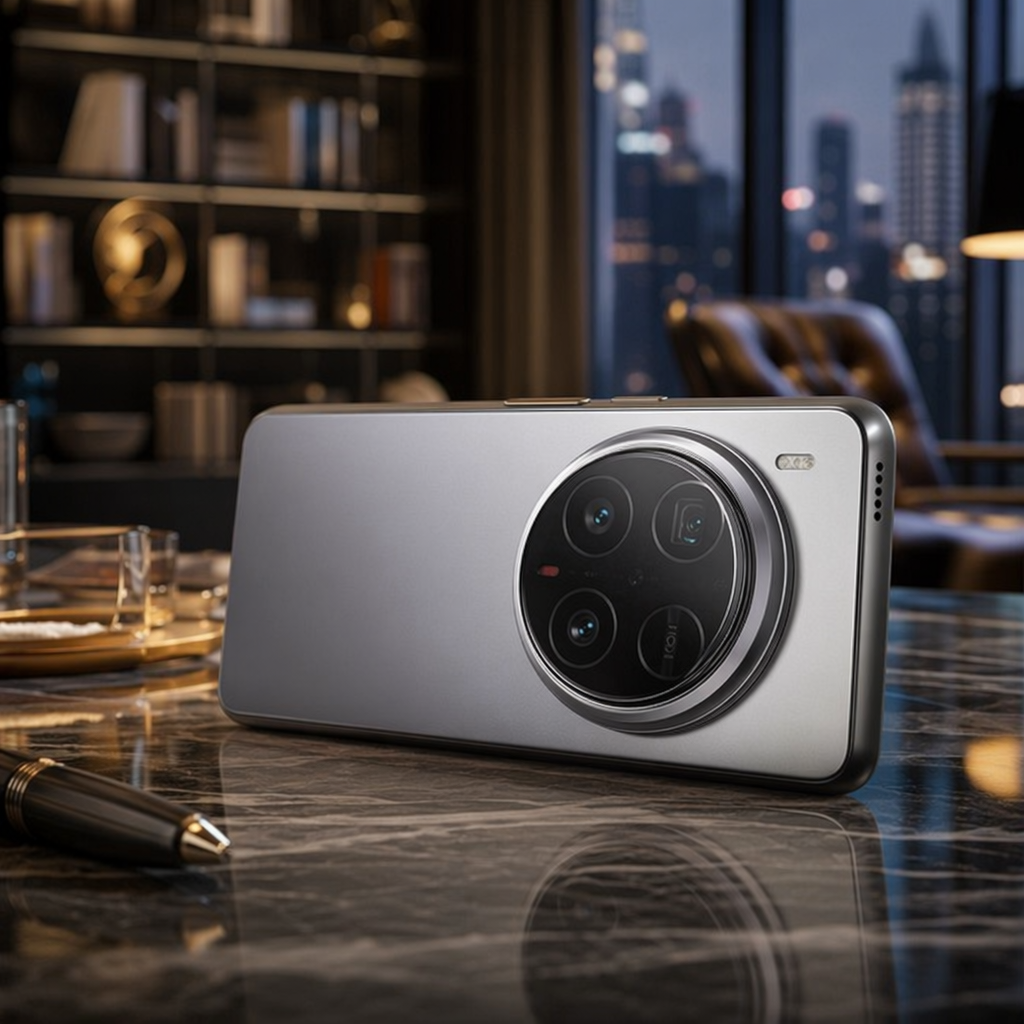
As of 2026, vivo has not published a full global specification sheet for a device officially sold worldwide as the “vivo X300” on its international website. That matters because the smartphone market is crowded with leaks, retailer placeholders and unofficial listings that can be mistaken for confirmed product information. For consumers, publishers and advertisers, the most reliable approach is to separate verified company announcements and regulator filings from unconfirmed online claims.
Vivo, owned by China’s BBK Electronics ecosystem, has built its premium X series around camera performance, display quality and fast charging. The company’s recent X-series strategy is relevant because it shows where a future X300-branded device would likely sit in the market: above mainstream V and Y series models and alongside other Android flagship phones. However, until vivo confirms the model in a press release, product page or regulatory filing, any detailed claims about chipset, camera sensors, battery capacity or price should be treated as unverified.
This article reviews what is verifiable about the vivo X300 name, vivo’s current flagship positioning, recent smartphone-market data from 2024 to 2026, and the checks readers should make before relying on any specification sheet or buying guide.
What is officially confirmed about the vivo X300?
As of 2026, there is no complete official global product page from vivo that confirms the vivo X300’s full specifications, launch date and international pricing. Vivo’s official global website and regional websites are the primary sources for confirmed device information. When vivo launches a model, the company normally publishes a product page with technical specifications and regional availability details.
Regulatory databases are another reliable source. In many markets, smartphones must be certified before sale. Examples include China’s Ministry of Industry and Information Technology, India’s Bureau of Indian Standards, the U.S. Federal Communications Commission and the European Union’s conformity processes. These filings can confirm model numbers, network support, charging ratings and battery-related information. But regulator entries do not always reveal the retail name, and they should not be used alone to confirm a consumer product launch.
Because the X300 name has circulated online, readers should check whether any article or listing cites a vivo press release, a regulator database entry or a retailer page that is active and region-specific. Unattributed specification tables should not be treated as official.
Where a vivo X300 would fit in vivo’s product line
Vivo’s X series has historically been positioned as the company’s premium imaging and flagship hardware line. Recent X-series models have used high-end processors, advanced camera systems and large batteries, with selected models co-engineered with ZEISS branding in markets where vivo advertises that partnership. This positioning can be verified through vivo’s own product pages for released X-series devices.
The X line is distinct from vivo’s V series, which is generally marketed around design and portrait photography in mid-to-premium price bands, and the Y series, which is focused more heavily on mass-market affordability. This segmentation matters for consumers because a phone carrying an X-series name would normally be compared with premium Android devices rather than entry-level models.
Still, a name alone does not confirm features. Smartphone brands sometimes vary hardware by country, memory configuration, network bands and charging adapter inclusion. A model sold in China may not match a model later launched in India, Europe or Southeast Asia. For that reason, regional product pages remain the most reliable source.
Smartphone market context: 2024–2026 data
The possible launch environment for a vivo X300 is shaped by a recovering but competitive global smartphone market. IDC reported that global smartphone shipments rose 6.4% year on year in 2024 to 1.24 billion units, marking a recovery after two years of decline. That 2024 figure is important because premium Android brands, including vivo, have been competing in a market where replacement demand returned but remained sensitive to pricing.
Counterpoint Research reported that the global smartphone market returned to growth in 2024 after two years of annual declines, with value growth supported by premium devices. Reuters also reported in 2024 that smartphone makers were emphasizing artificial intelligence features and camera upgrades to encourage consumers to replace older phones. These trends have affected flagship launches across Android brands.
In China, the world’s largest smartphone market, the competitive backdrop has been especially important for vivo. Canalys reported that China’s smartphone shipments grew in 2024 after a prolonged downturn, while local brands competed strongly across price categories. Government-linked data from the China Academy of Information and Communications Technology has also shown monthly swings in domestic mobile phone shipments, reflecting seasonality, promotions and product launch timing.
India is another key market. The Government of India has promoted domestic electronics manufacturing under production-linked incentive schemes, and official releases have said mobile phone production expanded sharply during the past decade. India’s Ministry of Electronics and Information Technology has stated that India has become one of the world’s largest mobile phone manufacturing hubs, with exports rising as global brands use Indian factories for regional and international supply.
For a premium vivo model, these market factors influence launch strategy, pricing and availability. Vivo may prioritize China first, then selected Asian and European markets, as it has done with some earlier flagship products. But launch sequencing can only be confirmed once vivo publishes regional announcements.
Key 2024–2026 statistics relevant to vivo and flagship phones
- 2024: IDC said global smartphone shipments reached 1.24 billion units, up 6.4% year on year.
- 2024: Counterpoint Research reported that the global smartphone market returned to growth after two consecutive annual declines.
- 2024: Reuters reported that handset makers increased promotion of AI features and camera upgrades as part of premium smartphone marketing.
- 2024: Canalys reported growth in China’s smartphone market, with domestic vendors competing strongly in the top shipment rankings.
- 2024–2025: India’s Ministry of Electronics and Information Technology reported continued expansion in mobile phone manufacturing and exports under government electronics-manufacturing initiatives.
- As of 2026: official confirmation of a global vivo X300 specification sheet should be checked against vivo regional websites and regulator filings before publication or purchase decisions.
What specifications should be verified before reporting on the vivo X300?
When a new smartphone name appears before formal launch, the highest-risk claims usually concern the processor, camera sensors, charging speed and price. These details are often circulated through supply-chain leaks or benchmark listings. Some later prove accurate, but many are incomplete or region-specific.
For the vivo X300, the following items should be verified only from primary or clearly attributed sources:
Chipset: A flagship vivo X-series phone would typically use a high-end mobile platform, but the exact processor must be confirmed by vivo or by a reliable benchmark entry tied to a certified model number. Benchmark listings can be fabricated or misidentified, so they should be treated cautiously.
Camera system: Vivo’s X series has focused heavily on imaging, but claims about sensor size, optical zoom range, stabilization hardware and ZEISS-related features require official confirmation. Camera hardware is also one of the areas most likely to vary between standard, Pro and Ultra versions.
Battery and charging: Charging wattage is frequently advertised differently across markets because of local certification, charger availability and packaging rules. A Chinese model may ship with a different adapter policy than a European model. Regulatory filings can confirm maximum charging input, but retail packaging details should be checked region by region.
Display: Claims about peak brightness, refresh rate and resolution should be checked against vivo’s official specifications. Smartphone brands often quote laboratory peak brightness figures under specific test conditions, which may differ from typical outdoor brightness.
Software support: For Android phones, update policy is increasingly important. Vivo has announced multi-year Android and security update commitments for selected models in some regions, but support periods can vary by country and model. Buyers should verify the stated update policy for the exact regional version.
Regulatory and availability checks
Before any phone reaches buyers, it normally passes through market-specific approval processes. These filings are useful because they can confirm that a device exists, even when the brand has not announced it publicly. However, filings are technical documents, not consumer launch statements.
In India, BIS certification can indicate that a model is being prepared for sale, but BIS listings often use model numbers rather than retail names. In China, MIIT and other telecom-related certifications can reveal network compatibility and sometimes product images. In the United States, FCC documents can confirm wireless bands, battery labeling and test reports, but not necessarily the final retail branding.
For the European market, compliance with CE requirements and product safety rules is essential. The European Union has also been tightening digital and device-related consumer protections, including rules affecting chargers, repairability and platform services. Such rules can influence how smartphones are packaged and marketed, although they do not confirm the existence of a specific model.
Pricing: why unofficial vivo X300 prices need caution
Unofficial price claims often appear before a launch, but smartphone prices depend on memory configuration, taxes, import duties, exchange rates and launch promotions. A converted Chinese price rarely matches the official price in India, Europe or the Middle East.
In 2024 and 2025, premium smartphone makers faced higher component costs in areas such as advanced camera modules, memory and high-end processors, according to market research commentary cited by Reuters and industry analysts. At the same time, brands used launch offers, bank discounts and trade-in programs to reduce the upfront price visible to consumers. That makes a single pre-launch price unreliable without region and configuration details.
For readers considering a future vivo X300 purchase, the safer approach is to compare official launch prices with competing phones only after vivo announces the model in that country. Published prices should specify RAM, storage, color, launch offer conditions and whether taxes are included.
Competition the vivo X300 would face
If vivo releases an X300 as a flagship model, it would enter a market dominated by Apple, Samsung and leading Chinese Android brands. IDC and Counterpoint data for 2024 showed competition remained intense at the top of the global market, with Apple and Samsung among the largest worldwide vendors and Chinese brands competing strongly in Asia and other regions.
Premium Android buyers typically compare camera performance, battery life, display quality, software support and resale value. Vivo’s X-series strengths have historically centered on mobile photography and charging speed, while competitors have emphasized longer software commitments, ecosystem integration and AI features. These comparisons should be made using tested retail units rather than pre-launch claims.
It is also important to distinguish between the Chinese domestic version and global variants. Chinese models may lack some Google services out of the box, use different software builds and support different network bands. Importing such a device can affect warranty coverage and compatibility with local carriers.
Consumer checklist before buying or reporting
Consumers and publishers should use a verification checklist before relying on any vivo X300 information. Confirm the retail name on vivo’s official regional site. Match the product name to the model number in certification documents where possible. Check whether the device supports local 4G and 5G bands. Confirm warranty terms with an authorized retailer. Review the official software update policy for the country of sale.
For journalists and website owners, attribution is essential. A statement such as “the vivo X300 has a 200-megapixel camera” should not be published unless vivo, a regulator, or a credible hands-on review with a retail unit confirms it. If the information comes from a leak, it should be clearly labeled as unconfirmed and should not be presented as a fact.
As of 2026, the most accurate statement is that the vivo X300 name remains dependent on official regional confirmation for specifications, pricing and availability. Readers should rely on vivo announcements, regulator records, Reuters and recognized market-research reports for market context, and authorized retailers for final purchase details.
Sources: Reuters, Government releases, publicly available data.
Comments
Post a Comment