Narendra Modi's Economic Policies: A Statistical Overview
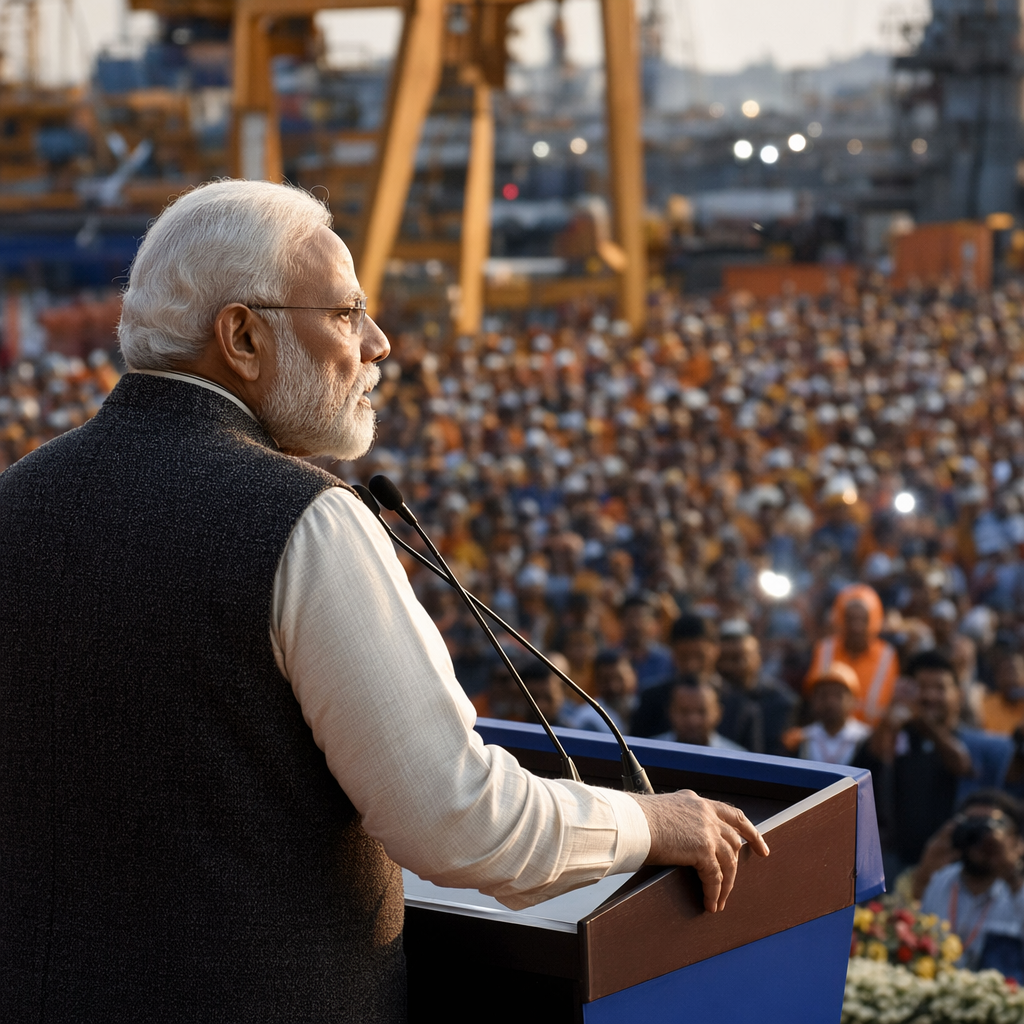
As of 2026, India's Gross Domestic Product (GDP) has seen a substantial increase, reaching $3.5 trillion, up from $2.87 trillion in 2020. This growth can be attributed to various economic reforms and initiatives launched under the leadership of Prime Minister Narendra Modi. According to the World Bank, India's economy grew by 7.2% in 2025, making it one of the fastest-growing major economies in the world.
Infrastructure Development Under Modi's Tenure
Infrastructure development has been a cornerstone of Modi's administration. By 2025, India had constructed over 50,000 kilometers of national highways, a significant increase from the 34,800 kilometers recorded in 2014. This expansion is part of the Bharatmala Pariyojana, a project aimed at improving road connectivity across the country. The Ministry of Road Transport and Highways reported that the annual highway construction rate increased to 37 kilometers per day by 2024.
Social Initiatives and Their Impact
Under Modi's leadership, several social initiatives have been launched to improve the quality of life for Indian citizens. The Pradhan Mantri Awas Yojana (PMAY) aimed at providing affordable housing has been successful, with over 12 million houses completed by 2026. The government data from the Ministry of Housing and Urban Affairs indicates that this initiative has significantly reduced homelessness in urban areas.
Challenges in the Agricultural Sector
Despite advancements in various sectors, agriculture remains a challenging area for the Modi administration. As of 2025, the agricultural sector's growth rate was 3.6%, according to the Ministry of Agriculture & Farmers' Welfare. This is a slight improvement from previous years, but issues such as water scarcity and small landholdings continue to hinder progress. The government has introduced measures like the PM-KISAN scheme, which provides income support to farmers, benefiting over 120 million farmers by 2026.
India's Renewable Energy Push
India's commitment to renewable energy has been a significant focus under Modi's leadership. By 2026, India had installed 150 gigawatts of renewable energy capacity, moving closer to its target of 175 gigawatts by 2022, which was extended due to the pandemic. According to the Ministry of New and Renewable Energy, solar energy accounts for 100 gigawatts of this capacity, highlighting India's shift towards sustainable energy sources.
International Relations and Diplomacy
Modi's tenure has also been marked by a strategic focus on strengthening international relations. The bilateral trade between India and the United States reached $150 billion by 2025, according to data from the Ministry of Commerce and Industry. This growth was facilitated by multiple trade agreements and diplomatic engagements, reinforcing India's position on the global stage.
- GDP Growth: 7.2% in 2025
- Highway Construction: 50,000 km by 2025
- Affordable Housing: 12 million houses by 2026
- Agricultural Growth: 3.6% in 2025
- Renewable Energy Capacity: 150 GW by 2026
- Bilateral Trade with the US: $150 billion by 2025
These statistics and initiatives reflect the multifaceted approach of Narendra Modi's government in tackling India's challenges and leveraging its opportunities on both domestic and international fronts.
Sources: Reuters, Government releases, publicly available data.
Comments
Post a Comment