Tata Sierra: what is known as of 2026
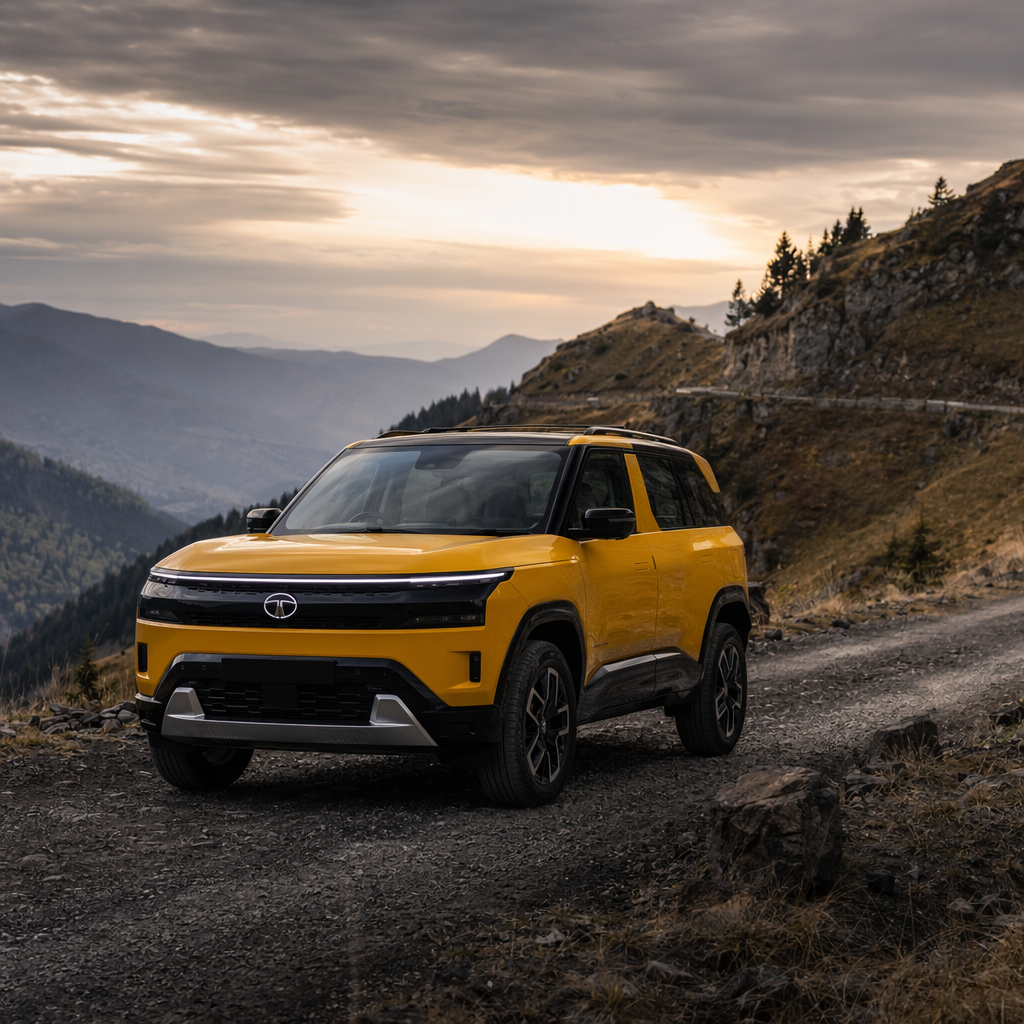
India’s passenger vehicle market crossed the 4-million-unit mark for the first time in calendar year 2023 and remained above 4 million units in 2024, according to industry data reported by Reuters. Within that market, sport utility vehicles continued to account for a rising share of sales, making the planned return of the Tata Sierra one of the more closely followed nameplate revivals in India’s automotive sector.
As of 2026, the Tata Sierra is a confirmed future model from Tata Motors, publicly shown in concept form and linked by the company to its broader strategy of expanding internal-combustion, electric and new-architecture passenger vehicles. The Sierra name originally belonged to one of India’s early lifestyle SUVs of the 1990s, but the current project is a new-generation model positioned for a market that has changed substantially in size, regulation and technology.
Tata Motors has displayed the Sierra concept at major Indian auto events, including Auto Expo 2020 and Auto Expo 2023. The newer concept signalled a closer-to-production direction with a five-door body style, SUV proportions and an electric-vehicle orientation, while Tata Motors has also indicated plans for multiple powertrain options across its future SUV portfolio. The final production specifications, prices and exact launch schedule must be read from company announcements when released.
Why the Sierra matters in today’s market
The Sierra’s return is tied to measurable changes in India’s vehicle market. Reuters reported that India’s passenger vehicle sales reached about 4.1 million units in 2023, a record year helped by demand for SUVs and premium models. Industry bodies reported that passenger vehicle sales remained strong in 2024, with utility vehicles continuing to dominate the growth mix.
That shift is important because the original Sierra was introduced in a market where private SUV ownership was still limited. The 2020s market is different. India now has a larger urban middle class, broader highway use, stricter safety rules, and a government-backed push for electric mobility. Tata Motors has positioned itself in that transition through models such as the Nexon EV, Tiago EV and Punch EV, making the Sierra revival part of a wider passenger vehicle and EV strategy rather than a standalone nostalgic product.
As of 2026, Tata Passenger Electric Mobility, a subsidiary of Tata Motors, is also using dedicated and flexible EV architectures for new products. The company’s Acti.ev architecture, announced in January 2024, underpins the Punch EV and is designed for future electric models. Tata Motors has also shown the Avinya concept for a separate future EV platform direction.
Confirmed public appearances and development signals
Tata Motors first brought back the Sierra name for the modern era when it displayed the Tata Sierra EV concept at Auto Expo 2020. The concept drew attention because it used the visual identity of the original model, especially the large rear-side glasshouse, while presenting it as a modern electric SUV concept.
At Auto Expo 2023, Tata Motors showed an updated Sierra concept with a more production-oriented five-door layout. This was a significant change from the three-door heritage link of the original Sierra. The five-door format reflects the practical requirements of India’s current family SUV market, where rear-seat access and daily usability are central to purchase decisions.
The company has not, as of 2026, published the full homologated technical sheet of the production Sierra. Therefore, confirmed details are limited to official concept displays, company statements on future product direction, and publicly available market information. Any claimed final range, engine output, price or variant list should be treated as unconfirmed unless issued by Tata Motors or filed in regulatory documents.
Real-time market context: 2024–2026 indicators
Several recent figures show why manufacturers are investing in SUVs and electrified products in India. These data points provide the business context for the Sierra’s planned return:
- Passenger vehicles: Reuters reported India’s passenger vehicle sales at about 4.1 million units in 2023, a record level, with SUVs as a major growth driver.
- Electric vehicles: Government of India Vahan dashboard data showed electric vehicle registrations above 1.5 million units in 2023 across categories, and registrations continued to rise in 2024, supported by two-wheelers, three-wheelers and passenger EVs.
- Tata Motors EV position: Tata Motors stated in its 2023-24 annual reporting that it remained a leading player in India’s electric passenger vehicle market, with models including Nexon EV, Tiago EV, Tigor EV and Punch EV.
- Policy support: India’s Ministry of Heavy Industries announced the Electric Mobility Promotion Scheme 2024 with an outlay of ₹500 crore for April–July 2024, later linked to continuing support for electric mobility before the PM E-DRIVE scheme.
- PM E-DRIVE: In September 2024, the Government of India approved the PM Electric Drive Revolution in Innovative Vehicle Enhancement scheme with an outlay of ₹10,900 crore for two years, aimed at supporting EV adoption and charging infrastructure.
- Tata Motors passenger vehicles: Tata Motors reported consolidated revenue of ₹4,37,928 crore for FY2023-24 in its annual report, reflecting the scale of the group during the period in which its passenger vehicle and EV plans were being expanded.
Design direction: heritage name, modern body style
The original Tata Sierra was known for its distinctive three-door format and curved rear-side glass. The new concept versions retain the name and some visual cues, but the production direction shown publicly is closer to a mainstream five-door SUV. This is consistent with the Indian market’s preference for five-door vehicles that can serve as primary family transport.
The Auto Expo 2023 concept had a squared-off SUV stance, an upright nose, slim lighting elements and a large glass area. The cabin concept presented a modern digital layout. These elements align with wider industry trends in the 2020s: connected-car interfaces, larger infotainment screens, premium interior materials and advanced driver-assistance features on higher variants.
However, as of 2026, Tata Motors has not released the final production interior specification for the Sierra. Features such as screen sizes, safety-assist systems, battery capacity or engine options can be confirmed only after official disclosure. This distinction is important because concept vehicles often include design and technology previews that may change before commercial launch.
Powertrain expectations versus confirmed facts
Tata Motors has publicly linked its future passenger vehicle plans with both electrification and conventional powertrains, depending on model and market need. The Sierra concept has been shown prominently as an electric vehicle concept. Tata’s EV subsidiary has also stated that its architectures are designed to support multiple body styles and range requirements.
Still, a factual reading as of 2026 is that the final production Sierra’s certified powertrain line-up has not been fully published by Tata Motors. Reports in the automotive press have discussed possible electric and internal-combustion versions, but such reports should be separated from official specifications. A reliable account can state that the Sierra has been shown in EV concept form and that Tata Motors is investing in EV platforms; it cannot state final battery size or certified driving range without a company filing or homologation document.
The wider Tata EV context is clearer. In January 2024, Tata Passenger Electric Mobility announced the Punch EV on the Acti.ev architecture. The company said the architecture was engineered for different range options, fast charging capability and multiple body styles. That announcement matters because it shows the technical direction Tata is taking for future EVs, even where individual model specifications remain undisclosed.
Safety and regulation will shape the production model
The Sierra will enter a market with tougher safety expectations than the one in which the original vehicle was sold. India has implemented Bharat NCAP, the country’s own new-car assessment programme, with the Ministry of Road Transport and Highways announcing the programme in 2023. Bharat NCAP began crash-testing protocols for passenger vehicles based on adult occupant protection, child occupant protection and safety-assist technologies.
Tata Motors has used safety ratings as part of its product positioning for several existing models. Some Tata vehicles have received high ratings from Global NCAP or Bharat NCAP, depending on model and test period. For the Sierra, no crash-test rating is available as of 2026 because the production model has not been launched and tested publicly. Any safety rating must therefore await official Bharat NCAP, Global NCAP or equivalent published test results.
Regulation also affects emissions and powertrain choices. India’s BS6 Phase 2 real-driving emission norms became applicable in 2023, requiring vehicles to meet stricter real-world emissions requirements. Any internal-combustion Sierra variant, if offered, would need to comply with the applicable emissions rules at the time of sale.
Competition: the SUV segment is larger and more crowded
The Sierra’s eventual market position will depend on its size, powertrain and price. India’s SUV segment in 2024 and 2025 included strong-selling models across sub-4-metre, compact, midsize and premium categories. Tata Motors already competes with the Nexon, Punch, Harrier and Safari, while other manufacturers sell models such as the Hyundai Creta, Kia Seltos, Maruti Suzuki Grand Vitara, Toyota Urban Cruiser Hyryder, Mahindra XUV700 and Scorpio-N.
If the Sierra is positioned between or near existing Tata SUVs, Tata Motors will need to differentiate it by design, seating layout, electric capability or feature mix. That positioning has not been finally disclosed. What is clear from public displays is that the Sierra is intended to be a lifestyle-oriented SUV rather than a direct replacement for the Harrier or Safari.
The EV competition is also expanding. MG Motor India, Mahindra, Hyundai, BYD and other manufacturers have sold or announced electric SUVs and crossovers in India. The Government’s PM E-DRIVE scheme, approved in 2024 with ₹10,900 crore in support, includes measures for charging infrastructure and EV adoption. Such policy support can influence the market environment for electric SUVs, although it does not determine the commercial success of any one model.
Tata Motors’ financial and corporate backdrop
Tata Motors’ ability to revive a legacy product comes during a period of broad corporate restructuring and EV investment. In FY2023-24, Tata Motors reported consolidated revenue of ₹4,37,928 crore in its annual report. The company’s passenger vehicle business operated alongside its commercial vehicle division and Jaguar Land Rover business.
In March 2024, Tata Motors announced a plan to demerge its businesses into two separate listed companies: one for commercial vehicles and related investments, and another for passenger vehicles, electric vehicles, Jaguar Land Rover and related investments. Reuters reported the announcement, noting that the move was intended to provide greater focus to the different businesses. Such restructuring is relevant to the Sierra because the model falls within Tata’s passenger vehicle and EV growth area.
Tata Motors has also invested in EV manufacturing and battery ecosystem partnerships. The company’s EV subsidiary has received investment from TPG Rise Climate in earlier funding rounds, and Tata Group companies have announced battery-cell and EV-related investments in India and abroad. These developments provide the industrial background for future electric products, including SUVs.
What buyers can verify before launch
Because the Sierra is still a future product as of 2026, buyers and readers should rely on official documents and releases for final details. The most reliable information will come from Tata Motors launch communications, price lists, variant brochures, Bharat NCAP or Global NCAP crash-test results, Vahan registration data after sales begin, and Ministry of Road Transport and Highways filings where applicable.
Key items to verify at launch include the certified powertrain line-up, battery capacity for any EV variant, ARAI-certified range, charging specifications, safety equipment by variant, crash-test rating, seating layout, warranty terms and ex-showroom prices. These details will determine where the Sierra sits in India’s SUV market more accurately than concept-vehicle impressions.
The factual position in 2026
As of 2026, the Tata Sierra is best understood as a confirmed revival nameplate that has been shown in modern concept form, with strong links to Tata Motors’ electric and SUV strategy. Its return is taking place in a market where India sells more than 4 million passenger vehicles annually, where SUVs account for a major share of demand, and where the government is supporting electric mobility through schemes such as PM E-DRIVE.
The original Sierra’s identity gives the model historical recognition, but the commercial case for the new Sierra will depend on verified production specifications, pricing, safety results and Tata Motors’ launch plan. Until those are released, the confirmed facts remain the public concept displays, Tata’s EV architecture announcements, India’s regulatory environment and the measurable growth of the SUV and EV markets.
Sources: Reuters, Government releases, publicly available data.
Comments
Post a Comment