Strait of Hormuz News: Why the Waterway Remains Central to Global Energy Security
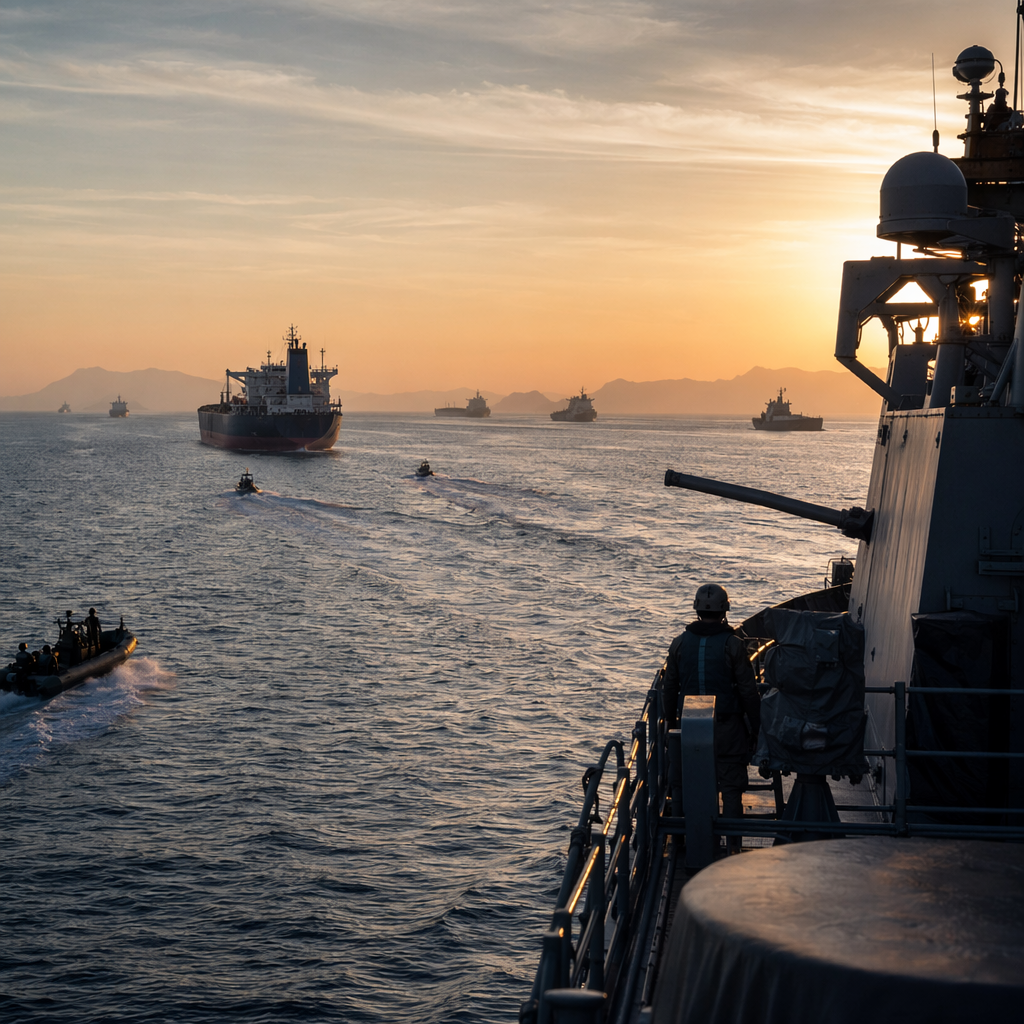
About one-fifth of the world’s petroleum liquids consumption passes through the Strait of Hormuz, according to the U.S. Energy Information Administration (EIA), making the narrow sea lane between Iran and Oman one of the most closely watched waterways in global trade. As of 2026, the strait remains central to energy markets, naval security planning and regional diplomacy because disruptions there can affect oil and liquefied natural gas shipments moving from the Gulf to Asia, Europe and other destinations.
The Strait of Hormuz links the Persian Gulf with the Gulf of Oman and the Arabian Sea. At its narrowest point, it is about 21 miles wide, the EIA has reported, with shipping lanes only a few miles wide in each direction under internationally recognized traffic separation schemes. The geography is a major reason governments, shipping companies and energy traders monitor developments there closely.
Recent news coverage of the strait has focused on three connected issues: the volume of oil and gas moving through the route, maritime security incidents involving commercial vessels, and the military posture of states operating in and around the Gulf. Reuters, the EIA, the International Energy Agency (IEA), the U.S. Navy and regional government statements have all reported developments that continue to shape the risk assessment for shipowners and energy buyers.
How much oil moves through the Strait of Hormuz?
The EIA has described the Strait of Hormuz as the world’s most important oil transit chokepoint. In its analysis of global chokepoints, the agency said oil flows through the strait averaged about 20.9 million barrels per day in 2023, including crude oil, condensate and petroleum products. That was equal to roughly 20% of global petroleum liquids consumption.
Although full-year 2026 energy-flow totals are not available in advance, the strait’s role remains structurally important as of 2026 because Gulf producers continue to rely heavily on the route. Saudi Arabia, Iraq, the United Arab Emirates, Kuwait, Qatar and Iran all export significant energy volumes from the Gulf region. Some countries have pipelines that bypass the strait, but the EIA has reported that available bypass capacity is limited compared with total Gulf export volumes.
Reuters reporting in 2024 and 2025 repeatedly linked oil price movements to tensions around the Gulf and Red Sea shipping routes. The market response is partly explained by the size of flows. When traders assess possible disruptions at Hormuz, they consider not only actual interruptions but also insurance rates, tanker routing, naval warnings and the risk premium added to crude benchmarks such as Brent.
For context, the IEA said in 2024 that global oil demand was around 102 million barrels per day in 2023 and projected further demand growth in 2024, led largely by non-OECD economies. Because Hormuz handles a large share of seaborne crude flows from major producers, even short-lived instability can attract global attention.
Key 2024–2026 figures that explain the news
- 2023/2024: The EIA reported that oil flows through the Strait of Hormuz averaged about 20.9 million barrels per day in 2023, roughly one-fifth of global petroleum liquids consumption.
- 2024: The IEA estimated world oil demand at about 103 million barrels per day in 2024 in its monthly oil market reporting, showing why a chokepoint carrying millions of barrels daily remains critical.
- 2024: The U.S. Navy’s Fifth Fleet, headquartered in Bahrain, continued to oversee U.S. maritime operations across about 2.5 million square miles of water, including the Gulf, Red Sea, Gulf of Oman and parts of the Indian Ocean, according to U.S. Navy public information.
- 2024: Qatar remained one of the world’s largest LNG exporters, and a significant portion of Qatari LNG exports transited the Strait of Hormuz, according to EIA and government energy data.
- 2025: Reuters reported continued concern among shipping and energy companies over Gulf security after a series of vessel seizures and attacks in regional waters in previous years.
- As of 2026: The strait’s narrowest point remains about 21 miles wide, with designated inbound and outbound shipping lanes, according to EIA descriptions of the chokepoint.
Security incidents and vessel seizures
Security concerns in the Strait of Hormuz are not new, but recent incidents have kept the area in international headlines. Reuters has reported on multiple vessel seizures and maritime confrontations involving Iran and commercial ships in and near the strait. These events have led to public warnings from Western naval forces and renewed calls for secure passage through international waterways.
In April 2024, Iran seized the container ship MSC Aries near the Strait of Hormuz, according to Reuters. The vessel was linked by shipping databases to Israeli-affiliated interests. Iran’s Islamic Revolutionary Guard Corps said it had taken control of the ship, while international officials called for the release of the crew and vessel. The incident occurred during a period of heightened regional tension following the war in Gaza and exchanges involving Iran and Israel.
The MSC Aries case followed earlier incidents. In 2023, Iran seized the Marshall Islands-flagged tanker Advantage Sweet in the Gulf of Oman and the Panama-flagged tanker Niovi near the Strait of Hormuz, according to U.S. Navy and Reuters reports at the time. The U.S. Navy said those seizures were part of a wider pattern of Iranian interference with commercial shipping in the region.
Iran has said in various government and military statements that some seizures were connected to legal disputes, alleged maritime violations or responses to actions against Iranian interests. The United States and allied governments have described several of the incidents as threats to freedom of navigation. Reuters coverage has generally framed these episodes as part of a wider security contest involving Iran, the United States, Israel and Gulf Arab states.
Why LNG markets watch the strait
The Strait of Hormuz is not only an oil route. It is also a major corridor for liquefied natural gas. Qatar, one of the world’s largest LNG exporters, ships LNG from Ras Laffan through the Gulf and onward via Hormuz to international buyers. EIA analysis has noted that the strait carries a large share of global LNG trade because of Qatar’s export role.
As of 2026, LNG buyers in Asia remain especially exposed to Gulf shipping routes. Japan, South Korea, China and India have all been major LNG importers, and Qatari LNG has formed part of supply portfolios across the region. European buyers also increased LNG imports after Russia’s 2022 invasion of Ukraine reduced pipeline gas flows to Europe, according to the IEA and European Union energy data.
Any delay at Hormuz can influence shipping schedules, spot LNG prices and charter rates. LNG cargoes are more complex to reroute than some other commodities because they require specialized vessels, regasification terminals and long-term contract coordination. That is why energy agencies and market analysts treat Hormuz as a gas-security issue as well as an oil-security issue.
Naval presence and government responses
The United States has maintained a major naval presence in the region for decades. The U.S. Fifth Fleet, based in Bahrain, covers the Persian Gulf, Gulf of Oman, Red Sea and parts of the Indian Ocean. Its public mission includes maritime security, deterrence and support for freedom of navigation. In 2024, the command continued to report patrols and multinational maritime-security activities in response to threats against commercial shipping.
Britain has also maintained naval assets in the region and participates in maritime security operations. Gulf Arab states, including Saudi Arabia, the United Arab Emirates, Bahrain and Oman, have their own coast guard and naval forces responsible for territorial waters and port security. Oman is especially relevant because the strait’s southern side includes Omani waters, including the Musandam Peninsula.
Iran’s navy and the Islamic Revolutionary Guard Corps Navy operate on the northern side of the strait and across Gulf waters. Iranian officials have repeatedly said they view foreign military deployments in the Gulf as destabilizing. U.S. and allied officials have said their deployments are intended to protect commercial navigation and deter attacks on shipping.
Reuters has reported that military activity near the strait is often accompanied by diplomatic messaging. Statements from Washington, Tehran, London and Gulf capitals are watched closely by shipowners because changes in warning levels can affect insurance premiums and operational decisions.
Energy prices and market reaction
Oil markets often respond quickly to news involving the Strait of Hormuz, even when physical flows continue. Traders evaluate whether an incident is isolated or could expand into a broader threat to shipping. Reuters market reports in 2024 showed that Brent crude prices reacted to Middle East escalation risks, including Iranian-Israeli tensions and attacks affecting shipping in nearby regional waters.
The price effect depends on several measurable factors: the duration of the disruption, the number of vessels affected, spare production capacity, inventories in consuming countries and alternative export routes. The International Energy Agency coordinates emergency oil stock policies among its member countries, while the United States maintains the Strategic Petroleum Reserve under the Department of Energy.
However, replacing Hormuz flows quickly would be difficult if the route were fully blocked. The EIA has noted that Saudi Arabia and the United Arab Emirates have pipelines that can move some crude outside the Gulf, but those systems cannot carry all oil normally shipped through the strait. Iraq, Kuwait and Qatar have more limited direct alternatives for large-scale seaborne exports.
Shipping insurance and operational risks
Commercial shipping companies monitor the Strait of Hormuz through security advisories, flag-state notices and guidance from naval coordination centers. When risk rises, insurers may increase war-risk premiums for vessels entering the Gulf. Reuters and maritime insurance sources have reported similar patterns during earlier Gulf crises and periods of heightened tension.
Tankers and LNG carriers transiting the strait also follow vessel-tracking and reporting protocols. Ships commonly use Automatic Identification System data, although AIS transmissions can become sensitive in high-risk areas. Naval forces sometimes advise vessels to maintain communication with maritime security centers and report suspicious activity.
Port operations in the Gulf remain closely connected to the strait. Major export terminals in Saudi Arabia, Iraq, Kuwait, Qatar, the UAE and Iran depend on secure transit into the Gulf of Oman. Any sustained disruption could affect refinery feedstocks, crude export schedules, LNG deliveries and petrochemical shipments.
Regional diplomacy and the legal framework
The Strait of Hormuz is governed by a mix of territorial waters, international navigation rights and customary maritime practice. The United Nations Convention on the Law of the Sea includes provisions on transit passage through straits used for international navigation. Iran has signed but not ratified the convention; Oman has ratified it. Despite legal differences, commercial navigation through the strait has continued under established international practice.
Diplomatic developments also affect risk assessments. Relations between Iran and Gulf Arab states have fluctuated, with periods of confrontation and limited de-escalation. In 2023, Saudi Arabia and Iran restored diplomatic relations under a China-brokered agreement, according to official statements and Reuters reporting. That development reduced some direct bilateral tension, but it did not remove wider security concerns tied to the Israel-Iran confrontation, the Gaza war, sanctions and maritime incidents.
As of 2026, the Strait of Hormuz remains a focal point because it combines geography, energy dependence and military presence in one narrow corridor. Government data show the scale of oil and gas flows; Reuters reporting documents recurring maritime incidents; and naval releases show sustained security deployments. For energy markets and shipping firms, the main issue is not only whether the strait is open on a given day, but how reliably vessels can move through it without delays, seizures or higher operating costs.
Sources: Reuters, Government releases, publicly available data.
Comments
Post a Comment