Self Enumeration 2027: India’s Digital Census Shift, Legal Rules, and What Residents May Be Asked to Do
Self Enumeration 2027: India’s Digital Census Shift, Legal Rules, and What Residents May Be Asked to Do
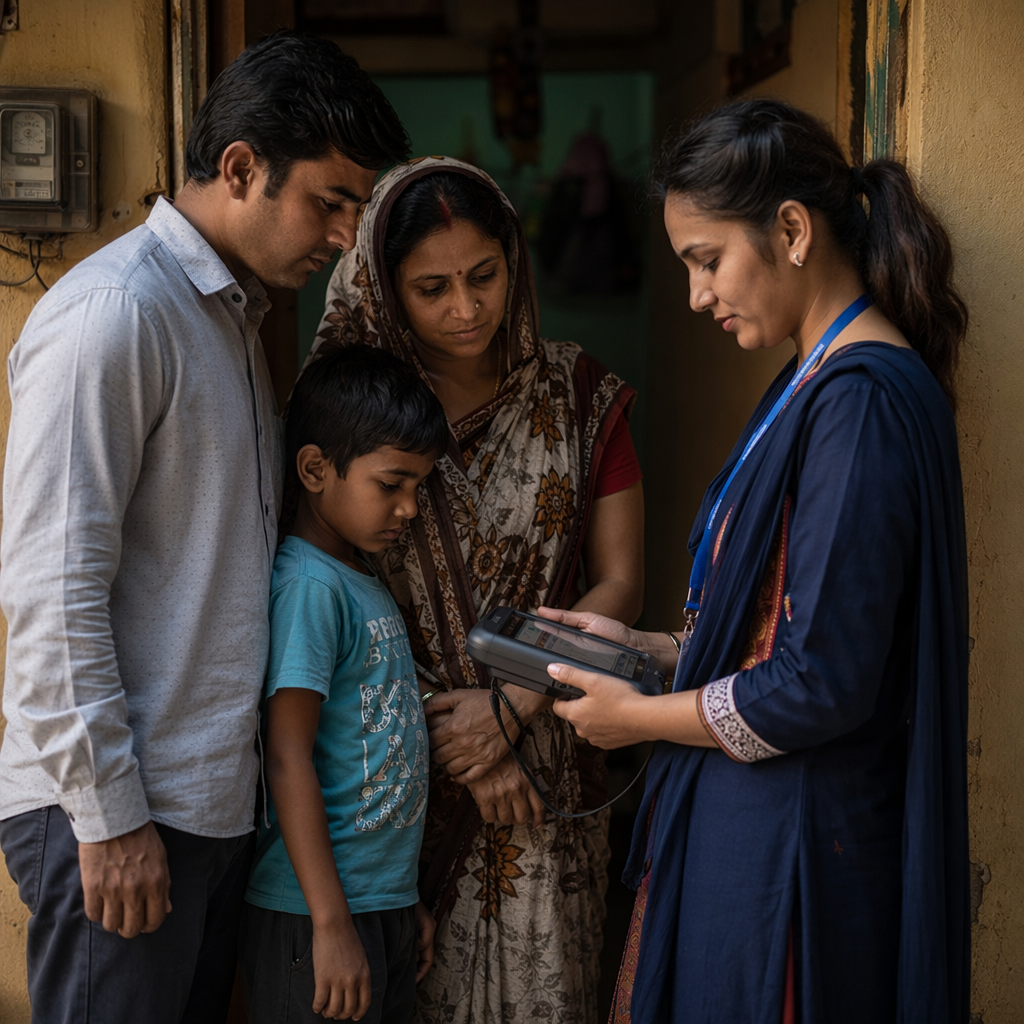
India’s next Census is scheduled to be completed in 2027, making it the country’s first population count after a delay of more than a decade and the first to offer a digital self-enumeration option. The last completed Census was held in 2011, when India recorded a population of 1.21 billion, according to the Office of the Registrar General and Census Commissioner of India. Since then, India has become the world’s most populous country: the United Nations Population Fund’s 2024 State of World Population report estimated India’s population at about 1.44 billion in 2024.
The 2027 exercise is expected to be a major administrative undertaking because the Census is used for planning welfare schemes, public infrastructure, electoral processes, and official statistics. The self-enumeration feature, announced by the Government of India in connection with the next Census, is intended to allow residents to submit household details themselves through a digital platform, while field enumerators continue to verify and cover households that do not use the online option.
As of 2026, the full operational schedule, questionnaire format, and public portal details are to be read together with official notifications issued by the Ministry of Home Affairs and the Registrar General and Census Commissioner. However, government statements and prior Census rules already indicate the broad direction: India’s 2027 Census will combine traditional door-to-door enumeration with digital data collection tools, including self enumeration.
What self enumeration means in the Census context
Self enumeration refers to a process in which a household provides its own Census information directly, usually through an official online system, instead of giving every response orally to an enumerator at the doorstep. In India’s case, the approach has been linked to the forthcoming digital Census and the government’s stated plan to allow residents to fill in their details through an online facility.
This does not mean the Census becomes voluntary or fully remote. Under India’s Census framework, information is collected under the Census Act, 1948, and residents are legally required to provide accurate answers to prescribed questions. Enumerators remain central to the process, especially for households without internet access, people who need assistance, and areas where digital participation is limited.
The shift is significant because India’s Census has traditionally relied on millions of field workers visiting households across villages, towns, and cities. In the 2011 Census, the government reported that about 2.7 million enumerators and supervisors were deployed to collect data across the country. A digital system could change how forms are filled, monitored, and processed, but it does not remove the need for ground verification.
Timeline: why the 2027 Census is delayed
India conducts its Census every 10 years, but the exercise due in 2021 was postponed after the COVID-19 pandemic disrupted field operations. The Census usually has two main phases: house listing and housing census, followed by population enumeration. The 2021 process could not proceed on schedule after restrictions and public health concerns affected preparatory activities.
Reuters reported in October 2024 that India was preparing to conduct its long-delayed Census, with the process expected to begin after administrative preparations. Government communications have also indicated that the upcoming Census will be digital and will include self enumeration. In 2025, the Press Information Bureau and Ministry of Home Affairs releases confirmed that the Census would be conducted in two phases and completed by 2027, with caste enumeration also included in the exercise.
The delay matters because many official datasets, including population shares, household conditions, migration patterns, literacy indicators, and local-level demographic counts, still depend on 2011 Census data. While surveys and administrative databases have been updated since then, the Census remains the only exercise that attempts to cover every person and every household in India.
Key 2024–2026 facts shaping self enumeration
The digital self-enumeration model is being introduced at a time when India has expanded internet access, digital identity coverage, and mobile connectivity, although gaps remain between regions and income groups. The following recent indicators provide context for the 2027 exercise:
- Population scale: The UNFPA estimated India’s population at about 1.44 billion in 2024, making it the world’s largest national population.
- Digital connectivity: The Telecom Regulatory Authority of India reported more than 950 million internet subscribers in India in 2024, reflecting the large potential user base for online services.
- Mobile connections: TRAI data in 2024 showed India had more than 1.1 billion telephone subscribers, most of them wireless users.
- Digital public infrastructure: As of 2025, the Unique Identification Authority of India reported Aadhaar coverage of more than 1.3 billion residents, though Aadhaar is a separate identity system and not a substitute for Census enumeration.
- Economic planning need: The International Monetary Fund’s 2025 database placed India among the world’s largest economies by nominal GDP, increasing the policy importance of accurate demographic and labour-related data.
- Administrative update: Government releases in 2025 stated that India’s next Census will be carried out with digital tools and completed by 2027.
These figures do not mean every household will self-enumerate. They show the environment in which the government is adding an online option to a national enumeration system that must still reach remote villages, informal settlements, migrant households, and people without reliable access to smartphones or broadband.
How self enumeration may work for households
The Government of India has previously stated that the next Census will use a mobile application for data collection and provide a portal for self enumeration. In practice, a household using self enumeration would be expected to access the official Census platform, enter prescribed details, and submit responses for members of the household. Enumerators may then verify the submission or collect data from households that have not used the portal.
The exact user process depends on official instructions issued closer to the start of field operations. Based on the government’s digital Census announcements, the process is expected to focus on household-level demographic and housing information rather than financial transactions. Residents should rely only on official government websites, official mobile applications, and instructions from authorized Census personnel.
Self enumeration should not be confused with private surveys, political data collection, or commercial forms. Census data collection is governed by law, and individual responses are protected for statistical use. The Census Act contains confidentiality provisions restricting the disclosure of personal Census information.
What information the Census usually collects
Past Indian Census exercises collected information about household conditions and individual characteristics. The 2011 Census gathered data on age, sex, marital status, literacy, disability, workers and non-workers, migration, fertility, household amenities, housing materials, drinking water, sanitation, electricity, and assets, among other topics. The exact 2027 questionnaire will depend on the notified schedule and forms.
For the coming Census, one major confirmed change is the inclusion of caste enumeration. In 2025, the Government of India said caste enumeration would be part of the next Census. This is a significant administrative addition because the national Census has collected Scheduled Caste and Scheduled Tribe data in previous rounds, but a wider caste count has not been part of the regular post-Independence Census in the same way.
Because Census questions affect national statistics for years, their wording, translation, coding, and training instructions are important. India’s Census is conducted in multiple languages and across all states and Union territories. That creates practical challenges for digital forms, local scripts, offline support, and error correction.
Why the 2027 count matters for public policy
The Census provides the base numbers used by central and state governments, researchers, courts, election authorities, and local bodies. It supports planning for schools, hospitals, roads, water supply, housing, welfare delivery, and disaster management. Many schemes use population and household indicators to estimate needs and allocate resources.
As of 2026, India is still relying on 2011 Census population data for many official denominators, even though the country’s population, urbanization levels, migration patterns, and household structure have changed. The World Bank’s publicly available data show India’s urban population share has continued rising since 2011, and UN estimates place India’s population far above the 2011 count. The updated Census is therefore expected to reset the statistical base for the late 2020s.
Delimitation of parliamentary and assembly constituencies is also linked to Census data under India’s constitutional and legal framework, although the timing and use of specific Census figures depend on separate laws and constitutional provisions. The 2027 data may therefore have significance beyond routine statistical publication.
Digital benefits and practical limits
Digital self enumeration may reduce manual data-entry errors, speed up processing, and give households a way to fill forms at a convenient time. A mobile application for enumerators can also improve monitoring, reduce paper handling, and help supervisors track coverage. These are administrative benefits cited in government discussions of a digital Census.
However, the Census must cover everyone, including people who are offline, elderly residents who may need help, persons with disabilities, homeless populations, nomadic groups, and households in areas with poor connectivity. This is why door-to-door enumeration remains essential. Self enumeration is best understood as an additional channel, not a replacement for field coverage.
Digital collection also requires public awareness about fraud prevention. Residents should not share sensitive information through unofficial links or apps claiming to conduct Census work. Official Census staff carry identification, and official portals are announced through government channels. As of 2026, residents should wait for formal instructions before submitting any Census information online.
Privacy, confidentiality, and data protection
Census confidentiality is a core legal requirement. Under the Census Act, individual records are not meant to be used as evidence in civil or criminal proceedings, and Census officers are required to protect the information collected. The published Census results are statistical tables, not individual household files.
India also enacted the Digital Personal Data Protection Act in 2023, creating a broader legal framework for processing personal data. While Census operations are governed by specific Census law and official rules, the digital nature of the 2027 exercise increases public attention on cybersecurity, authentication, and secure storage.
Government agencies have not released every technical detail publicly, and security architecture is typically not fully disclosed for operational reasons. What is clear from official statements is that the next Census is intended to be digital, and residents should use only official platforms when the self-enumeration window is opened.
What residents should watch for before 2027
Before self enumeration begins, the government is expected to issue notifications and instructions through the Ministry of Home Affairs, the Office of the Registrar General and Census Commissioner, state governments, and district administrations. These notices should clarify the reference date, phases, languages, portal access, enumerator visits, and helpline support.
Residents should look for official details on whether a household must create a login, how members are listed, how a reference number is generated, and how the enumerator verifies a self-enumerated household. They should also check whether the portal supports local languages and whether forms can be saved before final submission.
For landlords, tenants, students, migrant workers, and people living in hostels or shared accommodation, the official instructions will be important because Census counting follows residence rules set for the enumeration period. Accurate listing prevents duplication and omission.
International context
India is not the only country moving toward online Census participation. Several national statistical offices, including those in the United Kingdom, Canada, Australia, and the United States, have used online response options in recent Census rounds. However, India’s scale is much larger than most countries. A digital option in a country of about 1.44 billion people, according to UNFPA’s 2024 estimate, requires extensive field coordination and multilingual support.
The Indian model is therefore expected to remain hybrid: self enumeration for those who can use it, assisted digital collection by enumerators, and continued outreach to ensure universal coverage.
What is confirmed as of 2026
As of 2026, the confirmed direction is that India’s next Census will be completed in 2027, conducted in two phases, use digital tools, and include a self-enumeration option. Government releases have also stated that caste enumeration will be included. The final household experience will depend on detailed instructions issued before fieldwork begins.
For residents, the most important points are practical: wait for the official Census portal or app announcement, provide accurate information, avoid unofficial links, and cooperate with authorized enumerators. For policymakers and researchers, the 2027 Census is expected to provide the first full national demographic update since 2011, replacing a statistical gap that has affected planning through the 2020s.
Sources: Reuters, Government releases, publicly available data.
Comments
Post a Comment