Samsung Galaxy S26 Ultra: Verified Context, Market Data and What Can Be Stated as of 2026
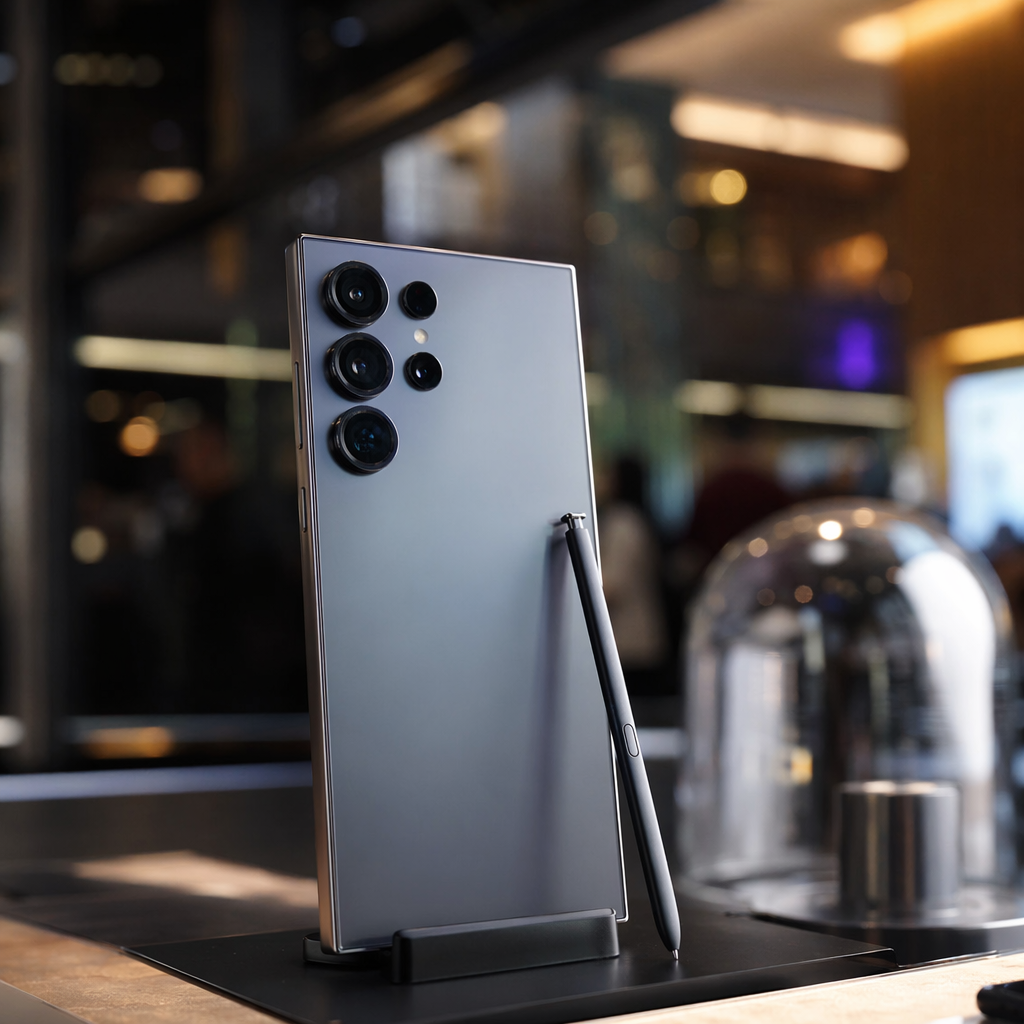
As of 2026, Samsung remains one of the world’s two largest smartphone vendors, but no official Samsung Galaxy S26 Ultra specification sheet has been released by Samsung in publicly available company materials. That distinction matters because the name “S26 Ultra” is widely used online before official launches, while verified information must come from company announcements, regulatory filings, financial reports or credible news agencies.
The available public record shows a smartphone market that recovered in 2024 after two difficult years, a premium-device segment increasingly shaped by artificial intelligence features, and Samsung continuing to position its Ultra-branded Galaxy S models as its top non-foldable phones. However, exact claims about the Galaxy S26 Ultra’s camera, chipset, battery, charging speed, dimensions or launch date cannot be treated as facts unless Samsung or an official regulator publishes them.
This article separates confirmed market context from unverified device claims, using publicly available information from Reuters, Samsung disclosures, market-research firms and government or regulatory sources where applicable.
What the “S26 Ultra” Name Refers To
Samsung’s Galaxy S Ultra models are the company’s highest-end devices within the Galaxy S line. The Galaxy S24 Ultra was announced in January 2024, and Samsung later introduced the Galaxy S25 series in January 2025. The phrase “Galaxy S26 Ultra” is therefore commonly used to describe a presumed future Ultra model in the same annual flagship cycle.
As of 2026, Samsung has not published an official Galaxy S26 Ultra product page, full technical specification list, price table or launch press release in the public domain. Any detailed specification presented before such a release should be treated as unconfirmed unless it is attributed to an official filing or company statement.
This is important for consumers because pre-launch smartphone information can come from supply-chain reports, certification databases, analyst notes and social-media leaks. Some of those may later prove accurate, but they are not the same as official confirmation.
Samsung’s Position in the 2024–2026 Smartphone Market
The commercial context for any Galaxy S26 Ultra launch is significant. According to International Data Corporation data reported in January 2025, global smartphone shipments rose 6.4% in 2024 to approximately 1.24 billion units. That marked a recovery after market contraction in prior years.
Reuters reported in January 2025 that Samsung shipped about 223.4 million smartphones in 2024, compared with Apple’s approximately 232.1 million units, based on market-research estimates. These figures placed Samsung among the largest global smartphone sellers, even as Chinese vendors continued to expand in several markets.
Samsung’s own financial disclosures also show the scale of its electronics business. In its 2024 financial reporting, Samsung Electronics said its consolidated revenue for 2024 was 300.9 trillion won, with operating profit of 32.7 trillion won. Those figures cover Samsung Electronics as a whole, including semiconductors, displays, mobile devices and consumer electronics.
For the mobile division specifically, Samsung has repeatedly described premium smartphones and Galaxy AI features as part of its growth strategy. In company earnings materials released in 2024 and 2025, Samsung said it would strengthen sales of flagship models and expand AI-enabled mobile experiences.
AI Is the Most Confirmed Direction for Future Galaxy Phones
The clearest confirmed direction for Samsung’s flagship phones is artificial intelligence. In January 2024, Samsung launched the Galaxy S24 series with “Galaxy AI,” a set of on-device and cloud-assisted features including live translation, note assistance and image-editing tools.
Samsung said at the time that Galaxy AI would be expanded to other devices. In 2024, the company stated that it planned to bring Galaxy AI features to around 100 million Galaxy devices within the year. Reuters also reported Samsung’s emphasis on AI as the company sought to compete with Apple and Chinese manufacturers in premium smartphones.
This makes AI a verified strategic area for Samsung’s smartphone division. However, the exact Galaxy AI functions that may appear on a future Galaxy S26 Ultra cannot be listed as confirmed unless Samsung announces them.
As of 2026, the factual statement is that Samsung has made AI a central part of its Galaxy flagship strategy since 2024. It is not factual to claim, without an official source, that the S26 Ultra will include a specific AI camera engine, exclusive generative-AI model, or particular on-device processing feature.
Chipsets and Semiconductors: What Can Be Verified
Processor information is one of the most discussed areas before a new Galaxy Ultra launch. Samsung has historically used Qualcomm Snapdragon chips in some Galaxy S Ultra models and its own Exynos chips in selected Galaxy S devices and regions. The exact chip used in any future model depends on Samsung’s product decision and regional strategy.
Reuters reported in 2024 that demand for artificial-intelligence chips and high-bandwidth memory supported recovery in Samsung’s semiconductor business. Samsung’s chip division is a major part of the company, but a recovery in memory demand does not confirm the processor inside a future phone.
In 2025, Samsung and Qualcomm continued to maintain a major commercial relationship in premium Android devices. Qualcomm’s Snapdragon platforms have powered several Galaxy S Ultra models in multiple markets. Still, as of 2026, an official Galaxy S26 Ultra chipset specification should be considered unconfirmed unless Samsung, Qualcomm or a regulator publishes it.
Display and Camera Expectations Versus Confirmed Facts
Samsung is a leading manufacturer of OLED displays and camera-equipped premium phones, but confirmed technical specifications require official publication. The Galaxy S24 Ultra used a large flat AMOLED display and a multi-camera system, and Samsung continued to market high-resolution zoom photography as a feature of its Ultra models.
Those facts establish Samsung’s historical design pattern, not the final specification of a Galaxy S26 Ultra. Claims such as a specific display size, peak brightness number, camera sensor size, optical zoom level or megapixel count for an unreleased model should not be presented as verified unless sourced from Samsung or regulatory documents.
Publicly available certification filings can sometimes confirm battery capacity, charging limits or connectivity standards before a phone is announced. However, such filings must be tied to a model number and official database record. A consumer-facing name like “S26 Ultra” is not always included in early filings, which can make direct identification difficult.
Battery, Charging and Regulation
Battery and charging information is subject not only to company decisions but also to product-safety regulation. In many jurisdictions, phones must pass safety and radio-frequency certification before sale. In the United States, the Federal Communications Commission authorizes radio devices, while other markets use their own regulatory systems.
Government and regulator databases can confirm details such as wireless bands, radio modules and sometimes battery-related documents. They do not usually provide a complete consumer specification sheet. Therefore, as of 2026, any exact Galaxy S26 Ultra battery capacity or charging-wattage claim should be checked against Samsung materials or official certification records.
Regulation has also affected smartphone accessories. The European Union’s common charger rules require USB-C charging for a wide range of portable electronic devices sold in the bloc from 28 December 2024, with laptops covered later. Samsung already uses USB-C on its flagship smartphones, but EU rules are part of the broader regulatory environment for all major phone makers.
Key Verified Data Points Relevant to the Galaxy S26 Ultra Context
- 2024: Global smartphone shipments increased 6.4% to about 1.24 billion units, according to IDC data reported in January 2025.
- 2024: Samsung shipped approximately 223.4 million smartphones, while Apple shipped about 232.1 million, according to market estimates cited by Reuters.
- 2024: Samsung Electronics reported consolidated annual revenue of 300.9 trillion won and operating profit of 32.7 trillion won.
- 2024: Samsung said it aimed to bring Galaxy AI features to around 100 million Galaxy devices during the year.
- 28 December 2024: The European Union’s common charger rules began applying to many portable electronic devices, requiring USB-C for covered products sold in the EU.
- 2025: Samsung launched the Galaxy S25 series in January 2025, continuing its annual flagship Galaxy S release cycle.
Why Pre-Launch Claims Require Careful Verification
High-profile smartphones often generate large volumes of pre-launch content. Some articles cite unnamed suppliers, accessory makers, benchmark listings or social-media posts. While these sources may provide clues, they do not carry the same weight as Samsung’s official announcements, exchange filings, regulator databases or verified reporting by major news agencies.
For readers, the most reliable way to assess any Galaxy S26 Ultra claim is to identify the original source. A claim about a camera sensor should be linked to Samsung, a component maker, a regulator or a credible news organization. A claim about price should be tied to a retailer, Samsung, a carrier, or official launch material. A claim about software support should be tied to Samsung’s published update policy.
Samsung has publicly committed to longer software support for recent flagship devices. With the Galaxy S24 series, Samsung announced seven generations of operating-system upgrades and seven years of security updates. This was a confirmed policy for that series. Whether the same or a revised policy applies to a future Galaxy S26 Ultra must be confirmed at launch or through Samsung’s support documentation.
Pricing Context and Premium-Smartphone Competition
Pricing for future smartphones depends on exchange rates, component costs, storage configurations, taxes and regional carrier plans. Samsung’s Ultra phones have typically been positioned in the premium market, competing with Apple’s Pro Max models and high-end Android phones from Chinese brands.
Reuters reported in 2024 and 2025 that smartphone vendors were increasingly focused on premium models and AI features because high-end devices can support stronger margins. At the same time, consumers in many markets extended replacement cycles after inflation affected household spending.
As of 2026, no official Galaxy S26 Ultra price can be stated unless Samsung has announced it in a specific market. Prices may also differ substantially between the United States, Europe, India, South Korea and other regions because of taxes, import duties, promotional offers and carrier subsidies.
What Buyers Can Check Before Considering an S26 Ultra
Consumers interested in a future Galaxy S26 Ultra should focus on verifiable information at the time of launch. The most important documents are Samsung’s official press release, product page, technical specification sheet, regional pricing page and warranty or software-support policy.
Regulatory filings can also be useful, especially for network compatibility. A phone sold in one region may not support every 5G or LTE band used by carriers in another region. Buyers importing devices should verify bands, warranty coverage and whether the model is officially supported by local Samsung service centers.
Another important issue is AI feature availability. Samsung has stated that some Galaxy AI features may require internet access, Samsung Account login, or may vary by language and region. Users should check the terms that apply to the exact model and market, because software features can differ by country.
Bottom Line Based on Verified Information
The Galaxy S26 Ultra is best understood, at this stage, through confirmed Samsung strategy and market data rather than unverified specification lists. Samsung has continued to release annual Galaxy S flagships, has emphasized Ultra-branded premium models, and has made AI a central feature of its smartphone strategy since 2024.
The verified market backdrop is clear: smartphone shipments recovered in 2024, Samsung remained one of the largest global vendors, and premium AI-enabled devices became a major competitive focus. What remains unconfirmed are the exact S26 Ultra specifications, price, launch date, battery, chipset and camera system unless Samsung or official records provide those details.
As of 2026, the responsible factual position is to treat the Samsung Galaxy S26 Ultra as an expected future flagship name, while waiting for Samsung’s official materials before presenting technical specifications as confirmed.
Sources: Reuters, Government releases, publicly available data.
Comments
Post a Comment