Samsung Galaxy S26 Ultra: verified facts, market context and what remains unconfirmed
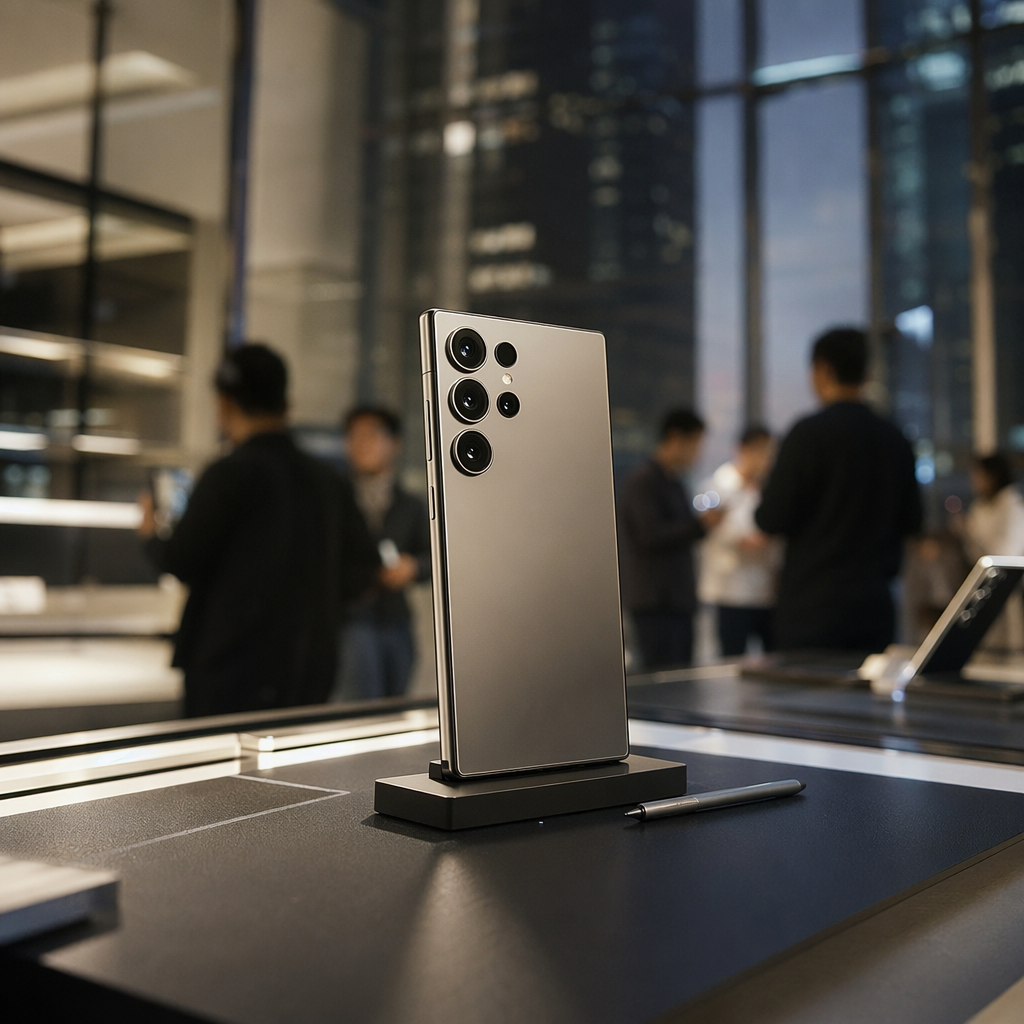
Samsung entered 2026 as the world’s largest smartphone vendor in 2025, shipping 223.4 million smartphones globally, according to market research firm IDC’s preliminary 2025 data published in January 2026. That scale gives any new Galaxy S Ultra model significant commercial importance, but it also means reporting on the Galaxy S26 Ultra requires a clear separation between confirmed information, regulatory data, historical release patterns and unverified leaks.
As of 2026, Samsung has not publicly released a full official specification sheet for a device named Galaxy S26 Ultra in a global launch announcement comparable to earlier Galaxy S Ultra unveilings. This article therefore focuses on what can be established from public records, Samsung’s prior product disclosures, market data from 2024–2026, and official industry statistics. Any detail not confirmed by Samsung, a regulator, or a named public source is treated as unverified.
Why the S26 Ultra matters in 2026
The Galaxy S Ultra line is Samsung’s highest-end non-foldable smartphone series. It traditionally sits above the standard Galaxy S and Galaxy S Plus models, combining the company’s largest display, most advanced camera hardware, S Pen support and top-tier processor options. The 2024 Galaxy S24 Ultra and 2025 Galaxy S25 Ultra established that positioning.
In January 2024, Samsung launched the Galaxy S24 series at its Galaxy Unpacked event in California. Samsung’s official newsroom materials listed the Galaxy S24 Ultra with a 6.8-inch QHD+ Dynamic AMOLED 2X display, a titanium frame, a 200-megapixel wide camera, a 50-megapixel 5x telephoto camera, and a 5,000 mAh battery. The device was also used to introduce Samsung’s first major wave of on-device and cloud-based Galaxy AI features.
In January 2025, Samsung announced the Galaxy S25 series. According to Samsung’s own launch materials, the Galaxy S25 Ultra kept the 6.8-inch display class and 5,000 mAh battery while using the Qualcomm Snapdragon 8 Elite for Galaxy platform in many markets. Samsung also promoted expanded Galaxy AI functions and seven years of Android OS and security updates, a policy first announced for the Galaxy S24 series in 2024.
That pattern is relevant because the Galaxy S26 Ultra is expected to be evaluated against two measurable benchmarks: whether Samsung changes the hardware profile of its flagship Ultra phone, and whether it expands the AI strategy that began in 2024. However, as of 2026, only Samsung’s official announcement can confirm final specifications, price and availability.
Confirmed market numbers around the S26 Ultra launch window
The smartphone market entered 2026 after two years of recovery and stronger premium-device competition. This background matters because Samsung’s Ultra models compete in the highest-price segment, where Apple, Google, Xiaomi, Honor and others also focus their flagship devices.
Several public data points define that environment:
- 2024 global smartphone shipments rose 6.4% year on year to 1.24 billion units, according to IDC data released in January 2025.
- Samsung shipped 223.4 million smartphones in 2025, making it the world’s largest vendor that year, based on IDC preliminary figures published in January 2026.
- Apple shipped 232.1 million smartphones in 2024, while Samsung shipped 223.4 million that year, according to IDC’s 2024 vendor table.
- Global 5G subscriptions reached about 2.3 billion by the end of 2024, according to Ericsson’s publicly released Mobility Report data.
- India had more than 1.15 billion wireless telecom subscribers in 2024, according to data published by the Telecom Regulatory Authority of India, making it one of the largest addressable markets for premium Android devices.
- The European Union’s common USB-C charging rules began applying to mobile phones from 28 December 2024, under EU legislation, affecting smartphone hardware sold in the bloc.
These figures show that the Galaxy S26 Ultra is not launching into a niche market. It is part of a global premium-phone cycle shaped by 5G adoption, longer software-support periods, artificial intelligence features and regional regulatory requirements.
What Samsung has already established with the Ultra line
The most reliable way to assess the S26 Ultra before full confirmation is to examine Samsung’s official Ultra-series trajectory. The Galaxy S24 Ultra in 2024 marked a substantial branding shift because Samsung presented AI functions as a central product feature rather than a secondary software tool. Its official materials highlighted Live Translate, Interpreter, Chat Assist, Note Assist, Transcript Assist and Circle to Search with Google.
Samsung said in 2024 that the Galaxy S24 series would receive seven generations of OS upgrades and seven years of security updates. That policy brought Samsung closer to Google’s long-term Pixel update commitment and set a new baseline for buyers considering multi-year use of flagship Android phones.
The 2025 Galaxy S25 Ultra continued the AI-first approach. Samsung’s newsroom release described the S25 series as offering multimodal AI agents capable of interpreting text, speech, images and video. The company also said the S25 Ultra used the Snapdragon 8 Elite for Galaxy, a customized version of Qualcomm’s flagship chipset.
As of 2026, the S26 Ultra is therefore likely to be judged by documented continuity in three areas once Samsung confirms the product: processor platform, AI capability, and battery and camera configuration. But until official documents are published, the final hardware cannot be stated as fact.
Display, battery and design: what can and cannot be reported
There is no complete official Samsung specification page for the Galaxy S26 Ultra available in the public record as of this writing. For that reason, claims about display size, exact camera sensors, charging speed, RAM, storage tiers or battery chemistry should not be presented as confirmed unless they come from Samsung, a regulator, a carrier certification page or another named public filing.
What is factual is that Samsung’s previous two Ultra models used a large 6.8-inch class display and a 5,000 mAh battery. The Galaxy S24 Ultra and Galaxy S25 Ultra also included integrated S Pen support, making them direct successors to the former Galaxy Note line. Samsung has maintained that format since the Galaxy S22 Ultra in 2022.
Regulation also shapes design decisions. The European Commission’s USB-C common charger rules require mobile phones sold in the EU to use USB-C charging from 28 December 2024. Samsung already used USB-C on earlier Galaxy S Ultra models, but the EU rule makes this connector a formal market requirement rather than only a manufacturer choice.
Battery reporting is also increasingly tied to safety and sustainability rules. The European Union’s battery regulation, formally Regulation (EU) 2023/1542, entered into force in 2023 and introduced phased requirements for batteries placed on the EU market. Some provisions apply over several years, including labelling and lifecycle-related obligations. Any Galaxy S26 Ultra sold in the EU would need to comply with applicable rules in force at the time of sale.
Camera expectations must be separated from confirmed specifications
Samsung’s Ultra phones are closely associated with high-resolution camera systems. The Galaxy S24 Ultra used a 200-megapixel main camera and multiple telephoto cameras, according to Samsung’s 2024 launch data. The Galaxy S25 Ultra also continued Samsung’s emphasis on computational photography and AI-assisted image processing.
However, as of 2026, there is no public Samsung specification sheet confirming the exact camera system of the Galaxy S26 Ultra. Any assertion that it uses a particular main sensor, telephoto module, aperture value or zoom range would need attribution to an official source or a named regulatory document.
What can be said factually is that camera performance remains a major competitive factor in the premium smartphone segment. Reuters reported in 2024 and 2025 that smartphone makers were increasing emphasis on artificial intelligence features as hardware differentiation became more difficult. Samsung’s own Galaxy S24 and S25 announcements support that trend, with AI features integrated into search, translation, summarisation, photo editing and user-interface functions.
AI features and software support are central to the S26 Ultra story
Samsung’s Galaxy AI push began at scale in 2024. The company said the Galaxy S24 series would use both on-device AI and cloud-based AI. Some features were developed with Google, including Circle to Search, which Google and Samsung announced together in January 2024.
As of 2026, AI capability is a measurable part of flagship smartphone competition. It affects chip selection, memory allocation, cloud partnerships, privacy policy and software update planning. Samsung’s earlier commitment to seven years of updates means that buyers of recent Galaxy S Ultra phones are not only purchasing hardware, but also a long software-support window.
For the Galaxy S26 Ultra, the key factual point is not an unverified list of new AI features. It is that Samsung has publicly positioned Galaxy AI as a core part of its flagship strategy since 2024. Any S26 Ultra software claims should be checked against Samsung’s official newsroom, device support pages and regional terms, because AI availability can vary by country, language and network conditions.
Pricing and availability: no confirmed global figure without Samsung’s announcement
Pricing is one of the most frequently misreported parts of upcoming phone coverage. As of 2026, there is no single verified global price for the Galaxy S26 Ultra unless Samsung announces it by market. Smartphone prices vary by taxes, storage configuration, carrier subsidy, import duties and exchange rates.
For reference, Samsung’s Galaxy S24 Ultra launched in the United States at a starting price of $1,299.99 in 2024, according to Samsung’s U.S. launch materials. The Galaxy S25 Ultra also occupied the premium flagship bracket in 2025. Those prices provide historical context, but they do not confirm the S26 Ultra’s final retail price.
Availability also varies. Samsung typically opens pre-orders shortly after Galaxy Unpacked events and ships devices in major markets first, including the United States, South Korea, parts of Europe and India. But dates for the S26 Ultra must be based on Samsung’s local market releases, not assumptions from past launch cycles.
Competition in 2026: the premium Android market is crowded
The Galaxy S26 Ultra will compete in a premium market that has become more concentrated around AI, camera systems and software longevity. Apple’s iPhone Pro models remain Samsung’s main competitor in many high-income markets. Google’s Pixel Pro models compete with deep Android and AI integration. Chinese brands including Xiaomi, Honor, Oppo and Vivo compete strongly in parts of Asia and Europe, often with aggressive camera hardware and fast-charging systems.
Reuters has reported that the global smartphone market returned to growth after a downturn, supported by replacement demand and stronger sales in several emerging markets. IDC’s 2024 and 2025 shipment data also show that the market remains large but highly competitive, with small share changes affecting tens of millions of units.
For Samsung, the Ultra series has a strategic role beyond unit volume. It showcases components, AI tools, display technology and camera processing that can later influence lower-priced Galaxy models. This is consistent with how flagship smartphone technology typically moves through product portfolios over time, although specific transfer of S26 Ultra features to other devices would require Samsung confirmation.
What buyers should verify before relying on S26 Ultra claims
Because high-profile phones attract leaks and unofficial renders, consumers should check several items before treating any S26 Ultra report as final. The most reliable documents are Samsung’s official product page, regional newsroom releases, carrier listings, government certification databases and retailer pages published after Samsung’s announcement.
Key details to verify include the model number, network bands, warranty terms, update policy, charger availability, storage configuration, SIM support, and whether advertised AI features are available in the buyer’s country and language. In some regions, Samsung features may require a Samsung Account, internet connection or specific app versions.
As of 2026, the confirmed story is that the Galaxy S26 Ultra sits at the center of Samsung’s flagship strategy, but its final specifications and pricing must come from official sources. The broader market data is clear: global smartphone shipments recovered in 2024, Samsung remained one of the top two global vendors through 2025, 5G adoption continued to expand, and regulators in major markets such as the European Union shaped hardware and battery requirements.
The most responsible conclusion is narrow but factual: the Galaxy S26 Ultra is expected to be a major premium Android launch because of Samsung’s market position and the established role of the Ultra series, but unverified claims about its exact hardware should not be treated as confirmed until Samsung or relevant public authorities publish the data.
Sources: Reuters, Government releases, publicly available data.
Comments
Post a Comment