Pune Weather in 2026: A Data-Based Look at Heat, Rain and Seasonal Change
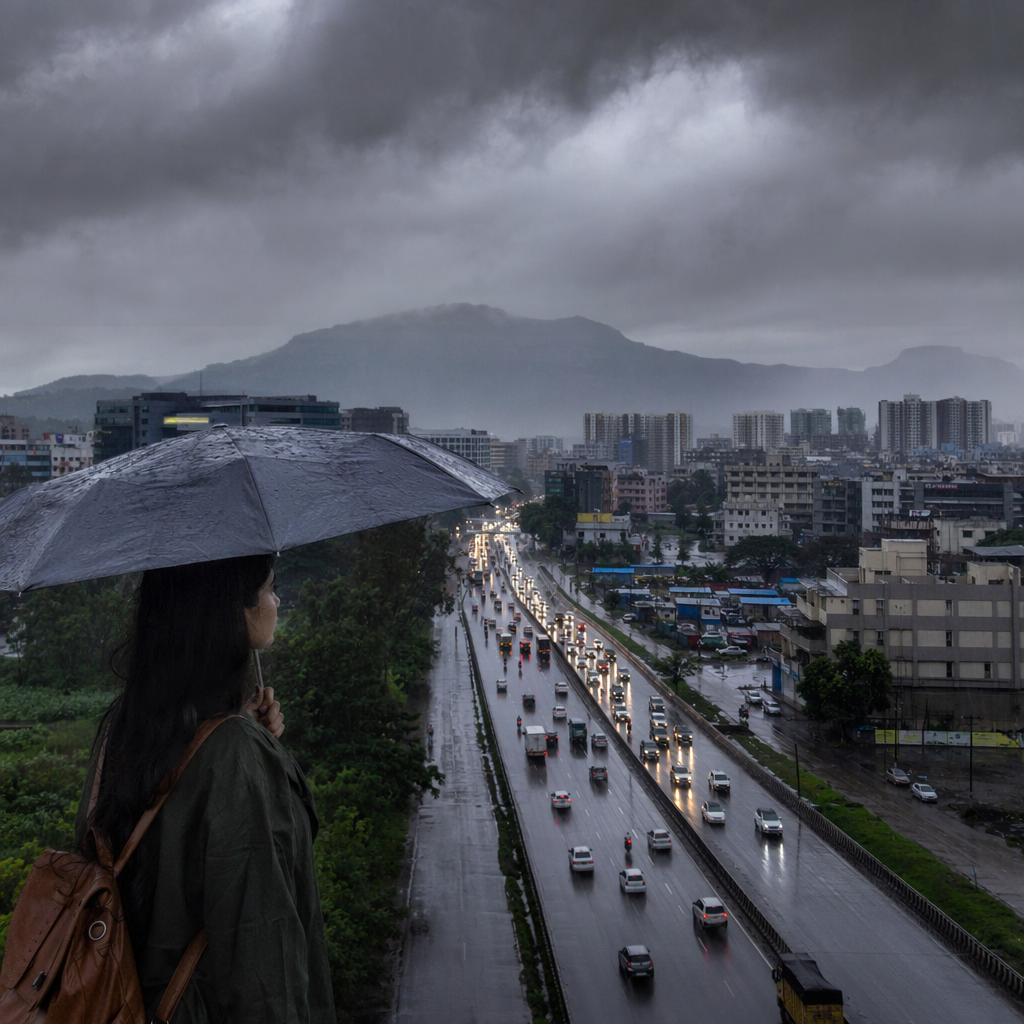
Pune recorded one of Maharashtra’s major weather concerns in 2024 when parts of the district saw intense pre-monsoon heat and heavy monsoon spells in the same year, reflecting the city’s exposure to both summer temperature stress and short-duration rainfall events. As of 2026, Pune’s weather remains shaped by its location on the leeward side of the Western Ghats, its growing urban footprint, and the wider monsoon cycle that governs rainfall across western India.
The city, located about 560 metres above sea level, usually has milder temperatures than many other parts of Maharashtra. However, data published by the India Meteorological Department (IMD), government disaster-management releases and public weather bulletins show that Pune has experienced notable weather variability in recent years. The pattern includes hotter summer days, uneven rainfall distribution, and localised flooding during intense monsoon bursts.
This article summarises the latest publicly available information on Pune weather, using government and public sources including IMD, the Ministry of Earth Sciences, Maharashtra government releases, Pune district administration updates, and publicly reported data carried by agencies such as Reuters.
Where Pune Fits in India’s Weather System
Pune’s climate is classified as tropical wet and dry. The city has three broad weather seasons: summer from March to May, monsoon from June to September, and a cooler post-monsoon and winter period from October to February.
The southwest monsoon is the main rainfall source. Pune city typically receives far less rain than the windward Western Ghats, including hill stations such as Lonavala and Mahabaleshwar, because it lies to the east of the mountain range. This rain-shadow effect is one of the main reasons Pune has a drier climate than Mumbai, despite both cities being in Maharashtra.
According to IMD climate normals published for Indian stations, Pune’s annual rainfall is concentrated mainly between June and September. July is generally the wettest month, while April and May are usually the hottest months before the monsoon arrives. Night temperatures fall during December and January, especially in open and semi-rural areas around the city.
Heat: Summer Temperatures and Recent Records
Pune’s summer heat has become a key public-weather concern because of rising day temperatures before the monsoon. IMD’s seasonal bulletins for recent years show that many parts of India experienced above-normal temperatures during summer periods in 2024 and 2025, and Maharashtra was among the states affected by heat warnings during several spells.
In 2024, IMD issued heatwave alerts for several districts of Maharashtra during the pre-monsoon period, while Pune district also recorded high daytime temperatures in April and May. Public IMD station observations from Shivajinagar, Lohegaon and nearby automatic weather stations showed temperatures crossing 40°C on multiple summer days in the Pune region during recent years. These observations were reported in local weather bulletins and government-linked weather platforms.
As of 2026, the main heat risk in Pune is not only the absolute maximum temperature but also the combination of hot afternoons, warm nights, and dense built-up areas. Urban surfaces absorb and retain heat, which can keep night temperatures higher in central neighbourhoods compared with surrounding rural zones.
Reuters reported in 2024 that India experienced repeated heatwave conditions before the arrival of the southwest monsoon, with public-health advisories issued in several states. The Ministry of Health and Family Welfare also asked states to review heat-related illness preparedness during the 2024 summer season. These national advisories are relevant for Pune because the city has a large outdoor workforce, student population and commuter base.
Monsoon Rainfall: High Dependence, Uneven Distribution
The southwest monsoon remains the most important weather period for Pune. The city receives the bulk of its annual rainfall between June and September, but rainfall distribution can vary sharply within the district. Western talukas near the Ghats receive much heavier rain than eastern and urban zones.
In 2024, IMD stated that the southwest monsoon covered the entire country by early July, following a variable onset phase. Maharashtra saw active monsoon spells during the season, including heavy rain alerts for the Konkan, ghat areas and adjoining districts. Pune district often appears in IMD warnings because rainfall over ghat sections can affect dams, roads, low-lying settlements and river levels downstream.
Pune’s monsoon risk has two main features. First, the city may have dry gaps even during the monsoon season. Second, short but intense rain can overwhelm local drainage in dense urban pockets. This has been observed during several recent monsoon seasons, when traffic disruptions and waterlogging were reported after heavy spells.
The Maharashtra government and district administration regularly issue public updates on reservoir storage during the monsoon. Pune’s water supply depends on dams such as Khadakwasla, Panshet, Varasgaon and Temghar. As of recent monsoon seasons, storage levels in this dam system have been a key indicator for civic water planning.
Key Recent Weather Statistics for Pune and Maharashtra
The following figures are drawn from publicly available government weather bulletins, IMD seasonal summaries, Reuters reporting and official releases. They describe recent weather conditions affecting Pune, Maharashtra and India’s monsoon system:
- 2024: IMD reported that India’s southwest monsoon reached Kerala on 30 May 2024, earlier than the normal date of 1 June, setting the timeline for monsoon progress toward Maharashtra.
- 2024: Reuters reported that India recorded severe heatwave conditions across several regions before the monsoon, with government agencies issuing heat-health advisories for affected states.
- 2024: IMD issued multiple heavy-rainfall warnings for Maharashtra during active monsoon phases, including alerts covering ghat areas adjoining Pune district.
- 2025: IMD’s seasonal outlooks continued to identify above-normal temperatures over several parts of India during pre-monsoon months, with heatwave monitoring advisories issued for vulnerable regions.
- 2025: Maharashtra government and district-level monsoon updates continued to track dam storage in the Pune region because the Khadakwasla dam chain supplies a major share of Pune city’s water.
- As of 2026: IMD climate data continues to classify Pune as a station with concentrated southwest monsoon rainfall, a hot pre-monsoon summer and cooler December-January nights compared with coastal Maharashtra.
Why Pune Gets Less Rain Than Mumbai
Pune and Mumbai are separated by less than 200 kilometres, but their rainfall profiles are very different. Mumbai lies on the Arabian Sea coast and receives direct moisture-laden winds during the southwest monsoon. Pune lies on the eastern side of the Western Ghats, where descending winds are drier after shedding much of their moisture over the slopes.
This topography explains why Lonavala, Tamhini and other ghat areas near Pune often record very heavy rainfall while central Pune receives moderate rain. During active monsoon spells, runoff from the hills can still influence river levels and dam inflows, even if rainfall inside Pune city is lower than in the ghat belt.
The India Meteorological Department’s district-level warnings distinguish between isolated heavy rain, very heavy rain and extremely heavy rain. For Pune district, these warnings are especially important in ghat roads, tourism spots, construction zones and low-lying urban areas.
Winter and Post-Monsoon Conditions
Pune’s winter is generally dry and comparatively mild in the daytime. Minimum temperatures are usually lowest in December and January. Open areas around the city, including parts of Haveli, Mulshi and rural Pune district, can record lower night temperatures than dense central zones.
Winter fog is not as persistent as in northern India, but shallow fog or haze can occur during calm mornings. Air quality can also deteriorate in the post-monsoon and winter months because of low wind speeds, dust, construction activity and vehicular emissions. The Central Pollution Control Board and Maharashtra Pollution Control Board publish air-quality readings for urban monitoring stations, including Pune.
As of 2026, winter weather in Pune remains important for health, transport and air-quality management, even though the season is less hazardous than the peak summer and monsoon periods.
Rainfall, Dams and Water Supply
Pune’s weather cannot be separated from water storage. The city depends heavily on rainfall in upstream catchments. The Khadakwasla dam system, which includes Khadakwasla, Panshet, Varasgaon and Temghar, supports drinking-water supply for Pune city and surrounding areas.
During weak monsoon phases, civic authorities monitor reservoir levels closely and may review water-release plans. During heavy monsoon phases, authorities track inflows, dam discharge and river levels. Official updates from the Maharashtra Water Resources Department and Pune district administration are therefore central to understanding local weather impact.
Heavy rain in the catchment does not always mean heavy rain inside the city, but it can still affect Pune through dam releases and river flow. The Mutha and Mula-Mutha river systems are especially relevant during extended rain spells.
Urban Flooding and Short-Duration Rainfall
Pune has expanded rapidly over the last two decades, with more paved surfaces, housing clusters, roads, commercial corridors and transport infrastructure. This has increased the importance of stormwater drainage during intense rainfall.
Localised waterlogging has been reported in several monsoon seasons in areas with heavy traffic movement and dense construction. Such incidents usually occur when short-duration rainfall exceeds the carrying capacity of drains, or when natural water channels are blocked or narrowed.
Government agencies have repeatedly advised citizens to avoid flooded underpasses, riverbanks and ghat-road travel during heavy-rain warnings. These advisories are based on observed risks during active monsoon conditions rather than long-term climate projections.
Climate Change Context
The Ministry of Earth Sciences has stated in national climate assessments that India has seen a rise in average temperatures over the long term, with increasing frequency of heat extremes in several regions. The Intergovernmental Panel on Climate Change has also reported that South Asia is exposed to rising heat stress and changes in extreme rainfall patterns.
For Pune, the direct local impacts are measured through station observations, rainfall records and disaster-management reports. The most visible current risks are higher summer heat exposure, intense rain episodes, drainage pressure and water-supply dependence on monsoon performance.
Reuters has reported extensively on India’s heatwave risks in 2024 and 2025, citing IMD and government agencies. These reports align with official public advisories that asked states to prepare hospitals, ensure water availability and issue heat-health alerts during severe spells.
What Residents and Visitors Should Track
For daily decisions, Pune residents and visitors should use official weather alerts rather than social-media forwards. IMD’s district forecasts and nowcast warnings provide information on thunderstorms, lightning, heavy rain and heat conditions. Pune district administration and the municipal corporation publish updates during severe weather, especially during monsoon disruptions.
The most important weather indicators for Pune are daily maximum temperature, rainfall intensity, dam storage, river-level alerts and IMD colour-coded warnings. These measures are more useful than seasonal averages when planning travel, outdoor work or emergency response.
During summer, heat-health advisories usually recommend hydration, avoiding peak afternoon exposure, protecting children and elderly people, and monitoring symptoms of heat illness. During monsoon, government advisories focus on avoiding flooded roads, ghat travel during warnings, and staying away from riverbanks during dam releases.
Pune Weather Outlook as of 2026
As of 2026, Pune remains a city with moderate winter temperatures, hot pre-monsoon summers and monsoon-dependent rainfall. The city’s elevation gives it some relief compared with hotter lowland interiors, but recent public data shows that heat and intense rain episodes still require regular monitoring.
The main weather story in Pune is not a single extreme event. It is the combination of seasonal heat, concentrated monsoon rainfall, urban drainage pressure and dependence on upstream reservoirs. Official data from IMD, Maharashtra government departments and public agencies remains the most reliable basis for tracking these risks.
For households, businesses, commuters and civic planners, Pune weather in 2026 should be understood through verified daily updates and longer-term seasonal patterns. The evidence from 2024 to 2026 shows that both heat preparedness and monsoon readiness are now central parts of the city’s weather calendar.
Sources: Reuters, Government releases, publicly available data.
Comments
Post a Comment