Pradhan Mantri Kisan Samman Nidhi: What the Scheme Provides to Farmers
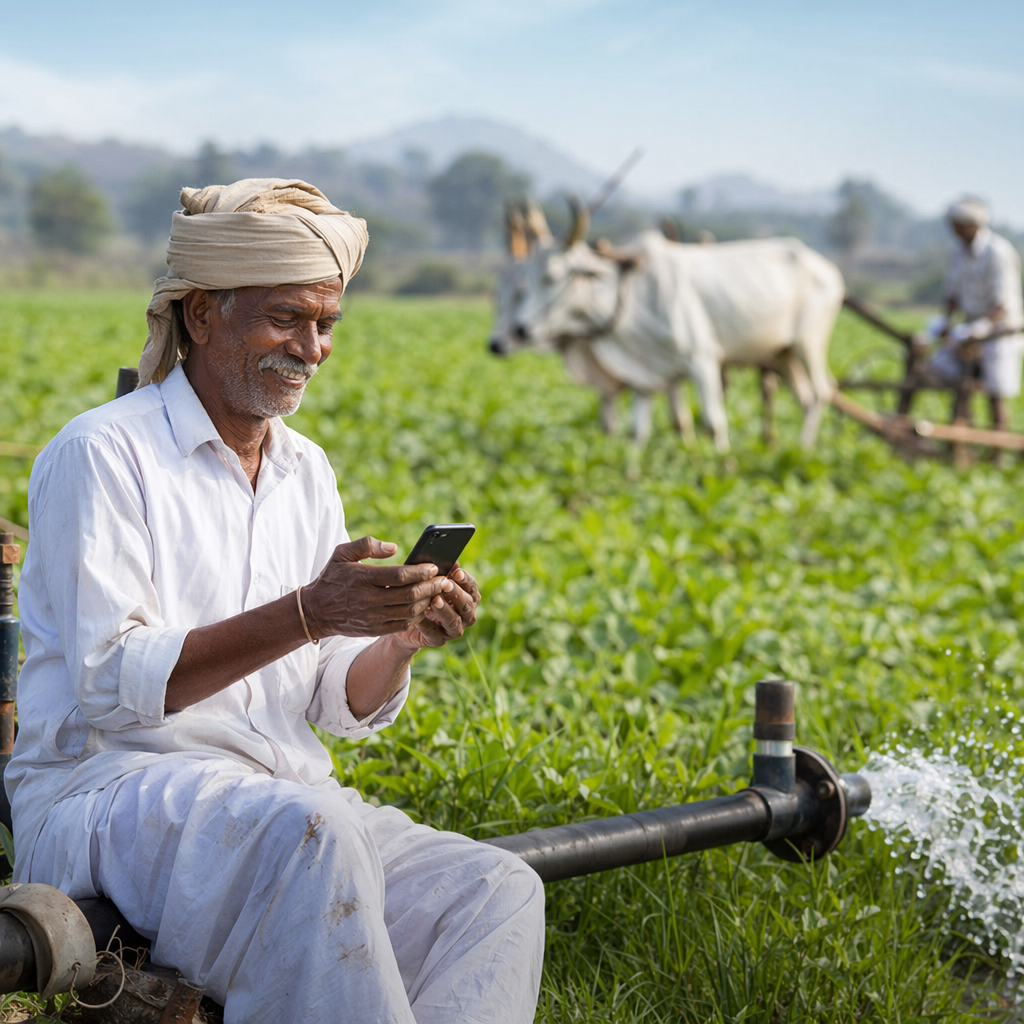
More than ₹3.24 lakh crore had been transferred to over 11 crore farmers under Pradhan Mantri Kisan Samman Nidhi by February 2024, according to the Government of India. The scheme, widely known as PM-KISAN, is one of India’s largest direct benefit transfer programmes for farmers. It provides ₹6,000 per year to eligible farmer families in three equal instalments of ₹2,000 each.
Launched by the Government of India in February 2019, PM-KISAN is administered by the Ministry of Agriculture and Farmers Welfare. The programme uses the Direct Benefit Transfer system, under which money is sent directly into beneficiaries’ bank accounts. This design was adopted to reduce delays and leakages in the delivery of income support.
As of 2026, PM-KISAN remains a central scheme funded fully by the Union government. The state governments and Union Territory administrations identify eligible farmer families and upload beneficiary details to the PM-KISAN portal. The Centre then releases funds based on verified records, subject to eligibility, Aadhaar seeding, land records and e-KYC compliance.
How PM-KISAN Works
Under the scheme, an eligible farmer family receives ₹6,000 per financial year. The amount is paid in three instalments of ₹2,000, generally released once every four months. The money is credited directly into the bank account of the beneficiary through the Public Financial Management System and Direct Benefit Transfer network.
The Government of India defines a farmer family for the scheme as a husband, wife and minor children who own cultivable land, subject to exclusion criteria. The scheme originally applied to small and marginal farmers with up to two hectares of land, but it was later expanded to cover all eligible landholding farmer families, regardless of landholding size.
According to government releases, the scheme has relied increasingly on digital verification. Aadhaar-based authentication, bank account validation and land record linkage are used to reduce duplicate or ineligible entries. e-KYC has also been made mandatory for registered farmers to continue receiving instalments.
Key Figures and Recent Updates
Several official numbers show the scale of PM-KISAN between 2024 and 2026. In February 2024, the government stated that over ₹3.24 lakh crore had been disbursed to more than 11 crore farmers since the launch of the scheme. On 28 February 2024, the 16th instalment was released from Yavatmal, Maharashtra, with the government announcing transfers of more than ₹21,000 crore to over 9 crore farmer beneficiaries.
In June 2024, after the formation of the new Union government, Prime Minister Narendra Modi approved the release of the 17th instalment. Government releases reported that the instalment covered around 9.3 crore farmers and involved transfers of about ₹20,000 crore. Reuters also reported in June 2024 that the first decision after the government took office was linked to the release of PM-KISAN funds to farmers.
The Union Budget for 2024-25 continued allocation for PM-KISAN under the Ministry of Agriculture and Farmers Welfare. Budget documents placed the scheme among the government’s major farmer welfare programmes, with expenditure continuing through direct transfers rather than price-linked support.
As of 2026, the annual benefit amount remains ₹6,000 per eligible farmer family. There has been public discussion in different forums about farmer income support, but official scheme rules continue to list the payment at three instalments of ₹2,000 each.
Eligibility Criteria
PM-KISAN is available to landholding farmer families that meet the scheme’s conditions. The beneficiary must be listed in state or Union Territory land records. The land should be cultivable, and the farmer family should not fall under the exclusion categories prescribed by the government.
The following categories are excluded from receiving PM-KISAN benefits:
- Institutional landholders.
- Farmer families in which one or more members are current or former holders of constitutional posts.
- Serving or retired officers and employees of central or state governments, public sector undertakings and government autonomous bodies, excluding multi-tasking staff, Class IV and Group D employees.
- Professionals such as doctors, engineers, lawyers, chartered accountants and architects registered with professional bodies and carrying out practice.
- Persons who paid income tax in the last assessment year.
- Retired pensioners receiving a monthly pension of ₹10,000 or more, except certain lower-grade employees.
These exclusions are listed in official PM-KISAN guidelines. The purpose is to restrict the scheme to eligible farming households and prevent payments to higher-income or non-farming categories.
Registration Process
Farmers can register for PM-KISAN through state agriculture departments, Common Service Centres or the official PM-KISAN portal. Registration requires basic personal details, Aadhaar number, bank account information and land record details.
The National Informatics Centre supports the scheme’s digital infrastructure. After registration, the applicant’s information is verified by the state or Union Territory government. Once approved and validated, the beneficiary becomes eligible for future instalments subject to compliance requirements.
Farmers can check their beneficiary status on the PM-KISAN portal using their registration number or other available details. The portal also allows correction of certain information, such as Aadhaar details, depending on the verification status and state-level procedures.
e-KYC Requirement
e-KYC is mandatory for PM-KISAN beneficiaries. The government introduced this requirement to confirm that payments reach genuine beneficiaries and to reduce duplicate or incorrect claims. Farmers can complete e-KYC through three methods: Aadhaar-based OTP verification on the PM-KISAN portal, biometric authentication at Common Service Centres, or face authentication through the official mobile application where available.
Beneficiaries who do not complete e-KYC may face delays or stoppage of instalments. Aadhaar seeding of bank accounts is also important because Direct Benefit Transfer depends on verified financial information. Government advisories have repeatedly asked farmers to complete e-KYC, update land records and ensure that bank account details are correct.
Payment Schedule and Instalments
PM-KISAN instalments are not paid as a monthly pension. The scheme provides three payments in a financial year. The usual cycle is April-July, August-November and December-March, although exact release dates depend on administrative approval and verification.
Large instalment releases are often announced through official government events. In February 2024, the 16th instalment was released to more than 9 crore farmers. In June 2024, the 17th instalment was approved for about 9.3 crore beneficiaries. These releases illustrate the size of each payment round, with total transfers usually running above ₹20,000 crore when more than 9 crore beneficiaries are covered.
The amount received by an individual farmer family remains ₹2,000 per instalment. If a farmer is found ineligible after verification, future payments can be stopped and, in some cases, recovery proceedings may be initiated according to government rules.
Role of States and Land Records
Although PM-KISAN is funded by the Union government, state governments play a central role in identifying beneficiaries. States and Union Territories verify ownership of cultivable land and confirm whether an applicant meets eligibility conditions. Their records determine whether the central system can process payment.
This makes land record accuracy important. In states where land ownership records are digitised and updated, verification can move faster. Where records are incomplete or disputed, applications can remain pending until corrected. The government has linked PM-KISAN with broader efforts to improve digital land records and beneficiary databases.
The Agriculture Ministry has also used special drives to update beneficiary data, complete e-KYC and resolve pending cases. These drives are intended to help eligible farmers who were registered but were not receiving instalments because of incomplete Aadhaar, bank or land details.
PM-KISAN and Direct Benefit Transfer
PM-KISAN is part of India’s Direct Benefit Transfer architecture, which aims to transfer subsidies and welfare payments directly to bank accounts. The system uses Aadhaar, bank validation and digital payment infrastructure. According to the government, this reduces intermediaries and allows the Centre to track fund movement more transparently.
Unlike crop procurement or fertiliser subsidy programmes, PM-KISAN does not depend on the crop grown, the volume produced or market sale. It is an income support scheme linked to landholding and eligibility. The money can be used by farmers for agricultural inputs, household expenses or other needs, as no specific spending condition is attached to the payment.
Government statements have described the programme as support for farm-related expenses, including seeds, fertilisers and working capital needs. However, the scheme amount is fixed and does not vary by crop, region, inflation or size of operational cost.
Budgetary and Administrative Context
The Union government finances PM-KISAN through budget allocations under the Department of Agriculture and Farmers Welfare. The scheme’s annual outgo depends on the number of eligible verified beneficiaries. With payments of ₹6,000 per beneficiary per year, every 1 crore eligible farmer families require about ₹6,000 crore annually.
For a beneficiary base of around 9 crore farmers, the annual requirement is about ₹54,000 crore. For a beneficiary base of 10 crore farmers, the requirement rises to about ₹60,000 crore. Budget documents for recent years show PM-KISAN continuing as one of the largest schemes in the agriculture ministry’s expenditure profile.
Administrative changes since launch have focused on beneficiary verification. Early years of the scheme saw rapid enrolment, while later years placed more emphasis on cleaning databases, Aadhaar authentication, e-KYC and removal of ineligible entries. This is reflected in the difference between the total number of farmers who have received benefits since launch and the number receiving a particular instalment after verification.
Common Reasons for Non-Payment
Farmers registered under PM-KISAN may not receive an instalment for several verified reasons. The most common causes include incomplete e-KYC, mismatch between Aadhaar and bank details, incorrect bank account number, pending land verification, or the applicant falling under an exclusion category.
Another reason can be the non-linking of Aadhaar with the bank account for Direct Benefit Transfer. In some cases, payments may be processed but fail at the banking stage because of inactive accounts or incorrect IFSC details. Beneficiaries are advised through official channels to check their status on the PM-KISAN portal and contact local agriculture offices or Common Service Centres for correction.
Documents Usually Required
The documents required for PM-KISAN registration can vary by state, but the core requirements generally include Aadhaar number, bank account details, mobile number and land ownership records. Some states may require additional documents for verification, especially where land records are not fully digitised.
Farmers should ensure that the name in Aadhaar, bank account and land records is consistent. Differences in spelling, incomplete names or outdated records can delay approval. The government’s digital verification process depends on matching data across multiple databases.
What Farmers Should Check in 2026
As of 2026, eligible farmers should verify three main items: e-KYC status, Aadhaar-bank linkage and land record approval. These are the most important conditions for receiving instalments without delay. Farmers who have not received recent payments can use the beneficiary status option on the official PM-KISAN portal to see whether the issue is related to Aadhaar, bank validation or state approval.
They should also rely on official channels for updates. The government releases instalment information through the Press Information Bureau, the Ministry of Agriculture and Farmers Welfare, and the PM-KISAN portal. News agencies such as Reuters report major national announcements, including large instalment releases and policy decisions.
PM-KISAN remains a fixed annual income support programme of ₹6,000 for eligible landholding farmer families. Its operation depends on verified beneficiary records, state-level land data and direct bank transfer systems. Official data up to 2024 showed cumulative transfers above ₹3.24 lakh crore, and releases in 2024 continued to cover around 9 crore or more farmers per instalment.
Sources: Reuters, Government releases, publicly available data.
Comments
Post a Comment