Petrol, Diesel Prices on May 14: India Keeps Retail Rates Unchanged as Crude Benchmarks Remain Below 2024 Peaks
Petrol and Diesel Prices on May 14: What Consumers Paid in Major Indian Cities
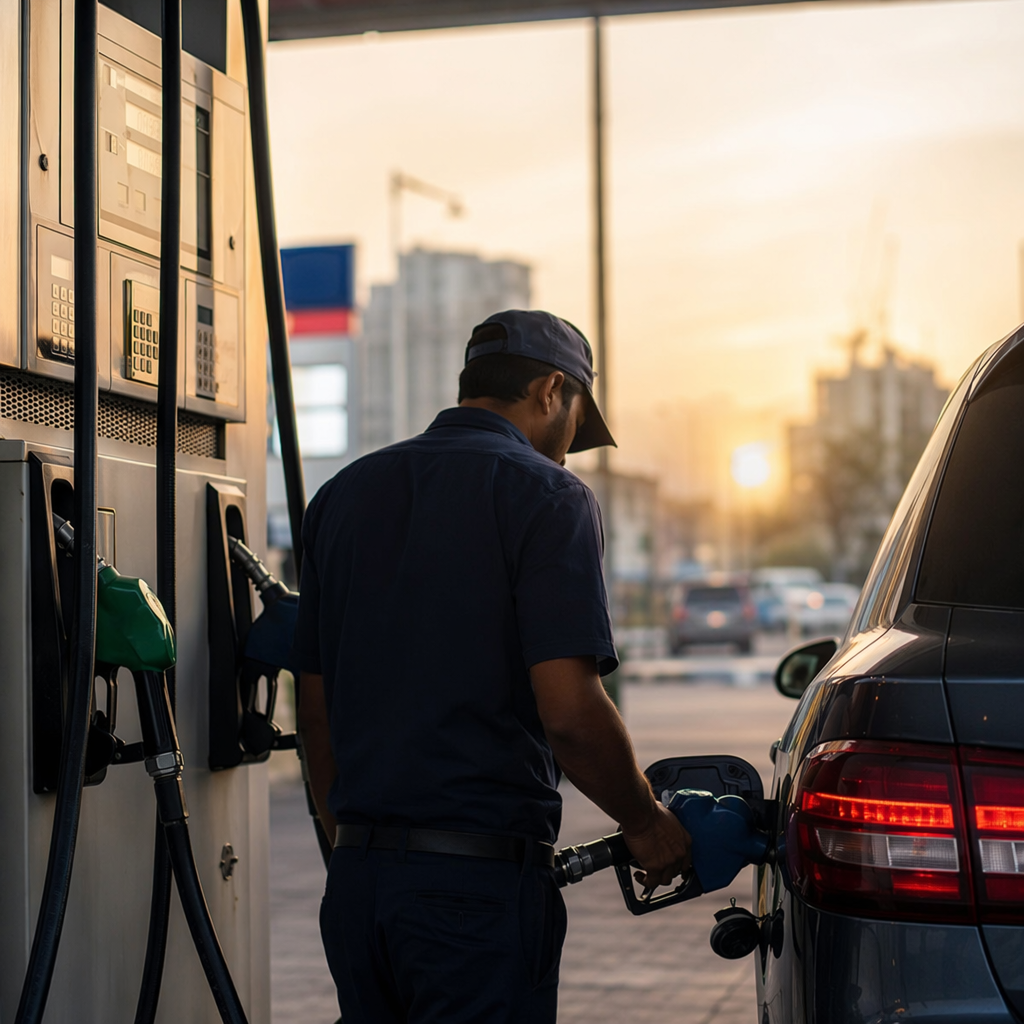
Petrol and diesel prices in India remained unchanged on May 14, 2026, according to publicly available daily fuel price listings from state-run oil marketing companies and retail price trackers that compile official dealer rates. The stability continued a pattern seen after the last nationwide reduction in March 2024, when public-sector oil companies cut petrol and diesel prices by ₹2 per litre.
As of 2026, fuel prices in India are set through a daily pricing system by oil marketing companies such as Indian Oil Corporation, Bharat Petroleum Corporation and Hindustan Petroleum Corporation. However, retail rates have remained largely steady for extended periods because final pump prices include central excise duty, state value-added tax, dealer commission and other local components.
On May 14, 2026, consumers in Delhi paid about ₹94.72 per litre for petrol and ₹87.62 per litre for diesel. In Mumbai, petrol was around ₹104.21 per litre and diesel around ₹92.15 per litre. Kolkata’s petrol rate was about ₹103.94 per litre, while diesel was around ₹90.76 per litre. In Chennai, petrol was listed near ₹100.75 per litre and diesel at about ₹92.34 per litre. These city-wise prices reflect local tax differences and transport costs.
The figures matter because petrol and diesel prices affect household transport bills, freight costs, farm operations and inflation-sensitive sectors. Diesel is especially important in India because it is widely used by trucks, buses, tractors, generators and parts of the rail-linked logistics chain.
City-Wise Petrol and Diesel Prices on May 14, 2026
Retail fuel prices differ across Indian states and cities because taxes are not uniform. State VAT rates and local levies can make the pump price in one city significantly higher than another, even when the base fuel cost is similar.
- Delhi: Petrol about ₹94.72 per litre; diesel about ₹87.62 per litre.
- Mumbai: Petrol about ₹104.21 per litre; diesel about ₹92.15 per litre.
- Kolkata: Petrol about ₹103.94 per litre; diesel about ₹90.76 per litre.
- Chennai: Petrol about ₹100.75 per litre; diesel about ₹92.34 per litre.
- Bengaluru: Petrol about ₹102.92 per litre; diesel about ₹89.02 per litre.
- Hyderabad: Petrol about ₹107.46 per litre; diesel about ₹95.70 per litre.
These are retail pump prices and may vary slightly by outlet, district and brand. Oil companies typically update prices at 6 a.m. each day, though in recent years most major-city rates have remained unchanged for long stretches.
Last Major Change: ₹2 Cut in March 2024
The most recent broad-based national change in Indian petrol and diesel prices occurred in March 2024. On March 14, 2024, India’s Ministry of Petroleum and Natural Gas said public-sector oil marketing companies had reduced petrol and diesel prices by ₹2 per litre across the country. The revised prices took effect from March 15, 2024.
The government release said the reduction was expected to benefit consumers and support mobility, diesel vehicles, agriculture and allied sectors. The move came shortly before India’s 2024 general election schedule was announced by the Election Commission of India.
Before that cut, petrol and diesel prices in many Indian cities had remained broadly unchanged since May 2022, when the central government reduced excise duties. In May 2022, the Union government cut excise duty by ₹8 per litre on petrol and ₹6 per litre on diesel. Several states also announced VAT reductions around that period, leading to lower pump prices.
As of 2026, the March 2024 reduction remains the main nationwide price cut publicly announced by oil marketing companies in recent years. No comparable nationwide petrol or diesel reduction had been announced for May 14, 2026.
Why Prices Differ: Taxes, Freight and Dealer Commissions
India’s retail fuel price is not determined only by crude oil costs. The final amount paid by consumers includes several components. The base price reflects crude oil, refining and company-level costs. After that, central excise duty, state VAT, dealer commission and transportation charges are added.
Central excise duty is uniform across India, but VAT varies by state. This is why Delhi, Mumbai, Chennai, Kolkata, Bengaluru and Hyderabad report different retail rates. Freight costs also matter because fuel must be transported from refineries, ports and depots to individual retail outlets.
The Petroleum Planning and Analysis Cell, part of India’s Ministry of Petroleum and Natural Gas, publishes data on fuel consumption, imports, product prices and tax components. Government data show that India is highly dependent on imported crude oil, making global crude prices, the rupee-dollar exchange rate and refining margins important variables for fuel pricing.
India’s Crude Oil Import Dependence Remains High
India is one of the world’s largest crude oil importers. According to data published by India’s Petroleum Planning and Analysis Cell, India’s import dependence for crude oil and petroleum products was above 85% in recent years. In 2023-24, India’s crude oil import dependence was reported at around 87.7%.
This reliance means global market conditions can affect domestic fuel economics, even when retail rates are kept stable. A rise in Brent crude prices or a weakening rupee can increase the cost of imported crude. Conversely, lower crude prices can reduce pressure on refiners and oil marketing companies.
Reuters reported that Brent crude traded through 2024 and 2025 with fluctuations linked to OPEC+ supply decisions, demand expectations, geopolitical risks and U.S. inventory data. In April 2024, Brent crude moved above $90 a barrel amid Middle East tensions. By parts of 2025, crude benchmarks were generally lower than their 2022 peaks, when Russia’s invasion of Ukraine caused sharp volatility in global energy markets.
As of 2026, crude oil prices remain a key factor watched by refiners, fuel retailers, transport companies and policymakers. But the Indian retail price seen by consumers on May 14 also reflects taxes and the pricing decisions of public-sector oil companies.
Fuel Consumption Trends: Diesel Still Dominates Transport Demand
Diesel remains India’s largest petroleum product by consumption. Government data from the Petroleum Planning and Analysis Cell show diesel demand is closely linked to freight movement, agriculture, construction and mining activity. Petrol consumption is more closely tied to two-wheelers, cars and urban mobility.
For the financial year 2023-24, India’s petroleum product consumption reached about 233.3 million tonnes, according to PPAC data. Diesel accounted for the largest share, while petrol demand continued to grow as personal mobility expanded. In 2024, India’s transport fuel use also reflected higher road traffic and commercial activity following the post-pandemic recovery years.
In 2024-25, official monthly PPAC data showed continued consumption of petrol and diesel at high levels, though growth varied by season. Diesel demand typically changes with monsoon activity, agricultural cycles and freight movement. Petrol demand is influenced by commuting patterns, vehicle sales and holiday travel.
As of 2026, India’s fuel market remains sensitive to both global crude prices and domestic demand. Stable retail rates can provide predictability for households and transport operators, but oil companies still face cost movements in crude procurement, refining and currency exchange.
Global Context: Brent, OPEC+ and Supply Conditions
International crude prices influence India because most crude oil is imported and priced in dollars. Reuters has reported that OPEC+ production policy, U.S. crude inventories, China’s demand outlook and geopolitical risks have been recurring drivers of oil market movement during 2024 and 2025.
In 2024, OPEC+ continued coordinated production policies aimed at managing market supply. Reuters reported in June 2024 that OPEC+ extended some output cuts into 2025 while outlining a gradual phase-out plan for some voluntary reductions. Those decisions affected expectations for available global crude supply.
At the same time, global demand growth forecasts were revised at different points by agencies including the International Energy Agency and OPEC. The IEA reported in 2024 that oil demand growth was expected to slow from the post-pandemic rebound pace, while OPEC’s own forecasts were generally more optimistic. These differences contributed to market uncertainty.
For Indian consumers, however, the immediate pump price on May 14, 2026 was not a direct one-day reflection of Brent crude. Retail prices remained stable because domestic pricing includes taxes, margins and company-level pricing decisions.
Inflation Link: Fuel Prices and Household Costs
Fuel prices affect inflation through direct and indirect channels. Petrol directly affects personal transport costs. Diesel affects freight, public transport, agriculture and the movement of goods. If diesel becomes more expensive, logistics costs can rise for food, manufactured products and construction materials.
India’s Consumer Price Index inflation moderated from the high levels seen in 2022 but remained closely monitored through 2024 and 2025. Government data from the Ministry of Statistics and Programme Implementation showed CPI inflation averaged 5.4% in 2023-24. The Reserve Bank of India’s inflation target is 4%, with a tolerance band of 2% to 6%.
Because fuel is a widely used input, stable petrol and diesel prices can reduce volatility in transport-linked costs. However, food prices, housing, services, core goods and global commodity prices also shape inflation outcomes. The Reserve Bank of India has repeatedly noted in its policy statements that food price shocks and fuel costs can influence inflation expectations.
May 14 Snapshot: What Changed and What Did Not
On May 14, 2026, the key point for consumers was that petrol and diesel rates in major Indian metros were broadly unchanged from the levels prevailing after the March 2024 cut. Delhi remained below ₹100 per litre for petrol, while Mumbai, Kolkata, Chennai, Bengaluru and Hyderabad continued to show petrol prices above ₹100 per litre because of state-level tax differences.
Diesel also remained cheaper than petrol in the main cities, reflecting the different tax and pricing structure. Delhi’s diesel price was around ₹87.62 per litre, while Hyderabad’s was about ₹95.70 per litre, showing a difference of more than ₹8 per litre between the two markets.
As of 2026, the main measurable factors behind fuel prices are global crude oil costs, rupee-dollar exchange rates, central and state taxes, dealer commissions and domestic pricing decisions by oil marketing companies. The May 14 rates show how these factors translate into different pump prices across the country.
For consumers, the practical result was straightforward: no nationwide price increase or decrease was reported for May 14, 2026, and daily pump prices in major cities continued to reflect the post-March 2024 rate structure.
Sources: Reuters, Government releases, publicly available data.
Comments
Post a Comment