Petrol and Diesel Price Hike: What the Latest Fuel Price Movements Mean for Consumers and the Economy
Petrol and Diesel Price Hike: Key Facts Behind the Latest Fuel Cost Pressure
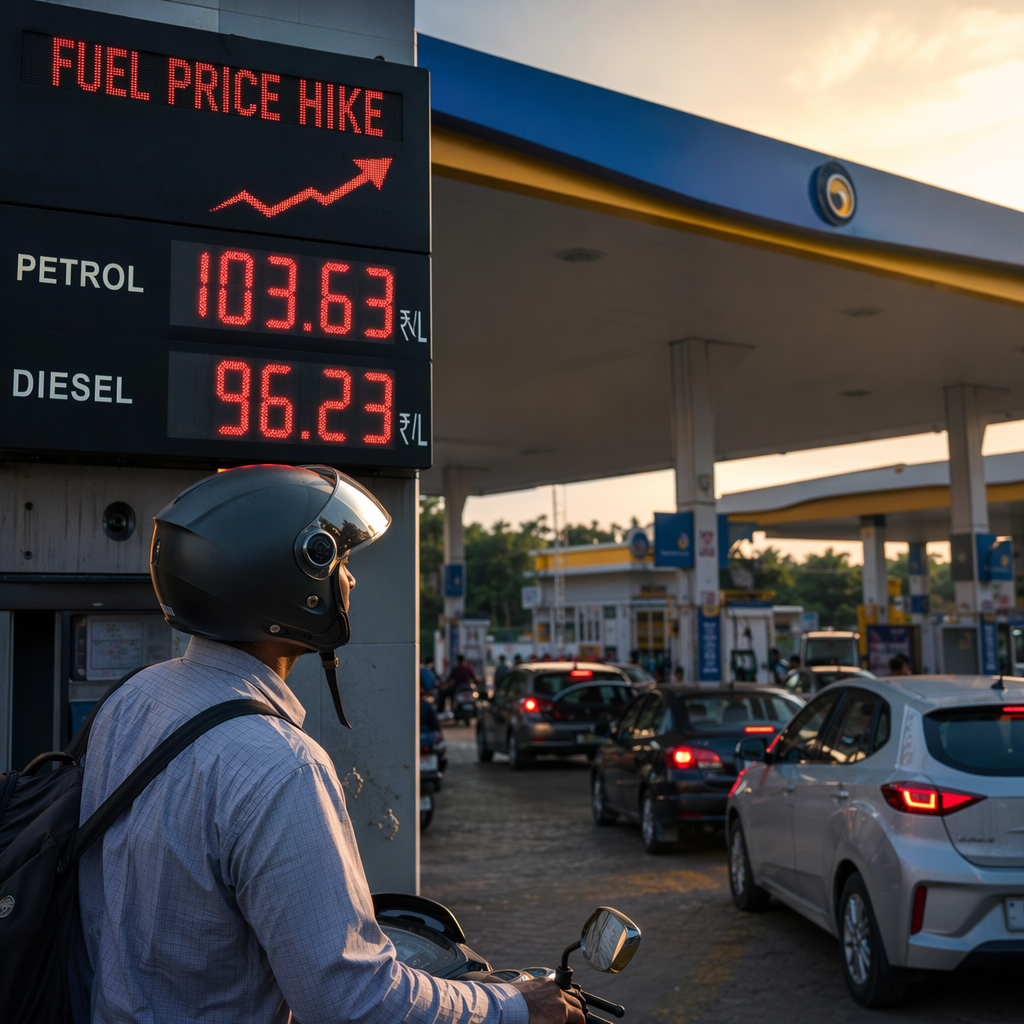
Fuel prices remain one of the most closely watched economic indicators because they directly affect transport costs, household budgets, food supply chains, and business operating expenses. As of 2026, petrol and diesel prices continue to be shaped by a combination of crude oil prices, taxation, currency exchange rates, refining costs, and government pricing policies. In countries where retail fuel prices are market-linked, changes in global oil benchmarks can move quickly into pump prices. In countries where fuel is regulated or partially subsidised, the effect can appear with a delay through official price revisions.
The most recent period of fuel price pressure has followed a volatile oil market. According to Reuters market reporting, Brent crude oil prices moved through 2024 in response to supply decisions by OPEC+ producers, demand expectations in China and the United States, and geopolitical risks affecting energy shipping routes. Brent is a key international benchmark used in pricing crude oil imports, and it plays a significant role in determining petrol and diesel costs in import-dependent economies.
Government data and oil company pricing notices show that a fuel price hike is rarely the result of one factor alone. Retail pump prices normally include the base cost of fuel, freight, refining and marketing margins, dealer commissions, excise duties, value-added tax or sales tax, and currency conversion where crude is imported. This means that even when international crude oil softens, the final price paid by consumers may not fall at the same speed if taxes, exchange rates, or distribution costs remain high.
Global Oil Prices Remained Volatile in 2024 and 2025
In 2024, crude oil prices stayed sensitive to both supply and demand signals. Reuters reported that Brent crude traded above $90 a barrel in April 2024 after tensions in the Middle East raised concerns about supply disruption. Later in the year, prices eased at different points as traders assessed demand growth and supply levels. These movements matter because petrol and diesel are refined products derived from crude oil.
The U.S. Energy Information Administration, a government statistical agency, reported in 2024 that global petroleum and liquid fuels consumption was above 100 million barrels per day. Such large demand means that relatively small changes in supply expectations can influence prices. The International Energy Agency also reported in 2024 that oil demand growth had slowed compared with the rebound years following the COVID-19 pandemic, but demand remained historically high.
Refining costs can also add pressure. Diesel prices are especially sensitive to refining capacity because diesel is widely used in trucking, farming, construction, mining, public transport, and industrial operations. When refinery maintenance, fuel specification changes, or shipping disruptions reduce available diesel supply, retail diesel prices can rise even if crude oil prices are stable.
Several measurable indicators from 2024–2026 help explain the price environment:
- 2024: Reuters reported Brent crude rising above $90 per barrel in April 2024 during heightened Middle East supply concerns.
- 2024: The U.S. Energy Information Administration reported global petroleum and liquid fuels consumption at more than 100 million barrels per day.
- 2024: India’s Ministry of Petroleum and Natural Gas reported that petrol and diesel prices in major cities were linked to international product prices, exchange rates, freight, dealer commission and taxes.
- 2025: Reuters reported continued oil market volatility linked to OPEC+ supply policy, demand forecasts, and geopolitical developments.
- 2025: Government fuel price notifications in several economies continued to show separate tax components, including excise duties and value-added taxes, as major parts of retail prices.
- As of 2026: pump prices in market-linked systems continue to reflect crude oil, currency, refining margin, freight, and tax movements rather than crude oil alone.
Why Petrol and Diesel Prices Rise at the Pump
A petrol or diesel price hike begins with the cost of crude oil or imported refined fuel, but the retail price is built in layers. In many economies, crude is bought in U.S. dollars. If a local currency weakens against the dollar, the domestic cost of importing oil can rise even when the dollar price of crude is unchanged. This is why exchange rates are frequently cited by government petroleum ministries and oil marketing companies when explaining pump price movements.
Taxes are another major factor. In India, for example, the retail price of petrol and diesel includes central excise duty, state-level value-added tax, dealer commission, freight, and the basic refinery or oil marketing company price. The Petroleum Planning and Analysis Cell, under India’s Ministry of Petroleum and Natural Gas, regularly publishes fuel price build-up data showing the share of taxes and other components in retail prices. Similar structures exist in many countries, though the names and rates differ.
Diesel can be more economically sensitive than petrol because it is heavily used in goods transport. A diesel price hike can increase costs for trucking companies and logistics operators. Those costs may then move into wholesale and retail prices for food, construction materials, consumer goods, and industrial products. Central banks and finance ministries monitor fuel prices because energy is a direct part of inflation indices and an indirect cost in many other sectors.
Petrol price hikes are more visible to households because petrol is widely used in private vehicles and two-wheelers. The effect is immediate for commuters, taxi operators, delivery workers, and small businesses that rely on personal transport. In urban areas, repeated fuel increases can also raise operating costs for app-based transport, local courier services, and small retailers.
Impact on Inflation and Household Budgets
Fuel is included in consumer price inflation baskets in many countries. Even where petrol and diesel have a modest direct weighting, their indirect impact can be larger. Transport costs affect food distribution, manufactured goods, public transport fares, and commercial services. The World Bank and national statistics offices have repeatedly noted that energy price shocks can pass through into broader inflation depending on tax policy, subsidies, competition, and exchange rates.
During 2024, inflation data in several economies showed that fuel and energy remained important contributors to month-to-month price movements. In the United States, the Bureau of Labor Statistics reported monthly changes in gasoline prices as part of its Consumer Price Index releases. In India, the Ministry of Statistics and Programme Implementation publishes consumer price inflation data that includes fuel and light as a separate category. In the United Kingdom, the Office for National Statistics tracks motor fuels within transport inflation.
For households, the effect of a fuel price hike depends on income, vehicle use, public transport access, and local tax systems. Lower-income households may spend a smaller absolute amount on petrol but can be more exposed to rising food and transport costs. Businesses that operate fleets, generators, farm machinery, or delivery networks face a more direct cost impact.
As of 2026, governments continue to balance three competing pressures: keeping fuel affordable for consumers, maintaining tax revenue, and limiting fiscal exposure from subsidies. Fuel tax cuts can reduce pump prices quickly, but they also lower government revenue. Subsidies can shield consumers from market shocks, but they increase public spending and may become difficult to maintain if crude prices remain elevated.
Diesel Price Hikes Have a Wider Supply Chain Effect
Diesel is the main fuel for heavy goods vehicles in many countries. It is also used in agriculture, fishing, rail systems, mining, backup power generation, and construction equipment. Because of this, a diesel price hike is often viewed as a production and distribution cost increase rather than only a consumer fuel issue.
Reuters has reported in recent years that diesel markets can tighten when refinery output is disrupted or when sanctions and trade restrictions alter flows of refined products. Europe, for example, adjusted fuel supply routes after restrictions on Russian oil and fuel imports. Such changes can raise shipping distances, freight costs, and regional price differences.
In agricultural economies, diesel prices affect irrigation pumps, tractors, harvesters, and transportation of crops to markets. Higher diesel costs can therefore influence farm operating expenses. Government agriculture and energy departments often track these effects when considering relief measures, fuel subsidies, or targeted support for farmers and transport operators.
The same applies to public transport. Bus operators, municipal services, and school transport providers face direct exposure to diesel costs. In some countries, fare increases require government approval, which means public agencies or operators may absorb higher costs for a period before prices are adjusted.
Role of Government Policy and Taxes
Government policy plays a central role in fuel prices. Some countries use market-based pricing, where oil marketing companies revise petrol and diesel prices frequently. Others use monthly or weekly government-administered pricing. Some maintain subsidies, while others use fuel taxes as an important source of revenue.
In 2024, several governments used tax changes, price caps, or targeted subsidies to reduce the impact of fuel costs. These measures were recorded in official energy ministry announcements and budget documents. However, the size of the effect varied depending on the existing tax rate and the share of imported fuel in domestic consumption.
India provides a clear example of the importance of tax structure. Retail petrol and diesel prices vary by state because value-added tax rates differ. The central government sets excise duty, while state governments impose VAT or sales tax. This means the same base fuel price can result in different pump prices across cities. Official data from the Petroleum Planning and Analysis Cell shows that tax components have often formed a substantial part of retail fuel prices.
In the United States, gasoline taxes include a federal excise tax and state taxes, but the overall tax share is generally lower than in many European economies. In the United Kingdom and much of Europe, fuel duties and value-added taxes form a larger share of pump prices. These differences explain why the same global crude oil price can result in very different retail fuel prices across countries.
Crude Oil, Exchange Rates and Refining Margins
The international crude oil price is only the starting point. Petrol and diesel are refined products, so refining margins matter. A refining margin is the difference between the cost of crude oil and the market value of refined products. When demand for diesel or gasoline is strong, or when refinery capacity is limited, refining margins can increase. This raises the cost of finished fuel even without a major crude oil increase.
Exchange rates also have a measurable effect. Oil is mainly priced in U.S. dollars. For an importing country, a weaker currency raises the local cost of crude and refined fuel. Central bank exchange rate data and government petroleum pricing formulas regularly show this link.
Freight and insurance costs can also rise during shipping disruptions. Reuters reported in 2024 that attacks on commercial shipping in the Red Sea led some vessels to avoid the Suez Canal route, increasing journey times around southern Africa. Longer routes can raise transport costs for crude and refined fuel cargoes, contributing to regional fuel price pressure.
What Consumers and Businesses Are Watching in 2026
As of 2026, consumers, transport operators, and policymakers are watching several indicators to understand whether petrol and diesel prices may remain under pressure. These include Brent crude prices, OPEC+ supply decisions, refinery output, domestic tax policy, exchange rates, and official inflation data.
Businesses are also focusing on fuel efficiency and logistics planning. Fleet operators commonly respond to fuel price hikes by optimising routes, reducing idle time, renegotiating freight contracts, or adding fuel surcharge clauses. Airlines, shipping companies, and trucking firms often use hedging or contractual fuel adjustment mechanisms, although these tools vary by market and company size.
For households, the immediate response is usually more limited. Drivers may reduce non-essential travel, shift to public transport where available, or compare pump prices across fuel stations. In markets where electric vehicles and hybrid vehicles are expanding, fuel costs are one factor in purchase decisions. However, official transport data show that petrol and diesel vehicles still make up a large share of road transport fleets in many countries as of 2026.
Fuel Price Hikes Remain a Major Economic Indicator
A petrol or diesel price hike affects more than the cost of filling a tank. It can influence inflation, freight rates, food prices, farm costs, public transport budgets, and household spending. The scale of the impact depends on crude oil prices, taxes, subsidies, exchange rates, refinery capacity, and how quickly costs move through the economy.
As of 2026, publicly available government data and Reuters market reporting show that global fuel prices remain tied to a complex mix of energy supply, geopolitical risk, domestic policy, and currency movements. For consumers and businesses, the pump price is the final result of that chain.
Sources: Reuters, Government releases, publicly available data.
Comments
Post a Comment