Petrol and Diesel Price Hike: What 2024–2026 Data Shows About Fuel Costs, Taxes and Global Oil Markets
Petrol and Diesel Price Hike: What 2024–2026 Data Shows
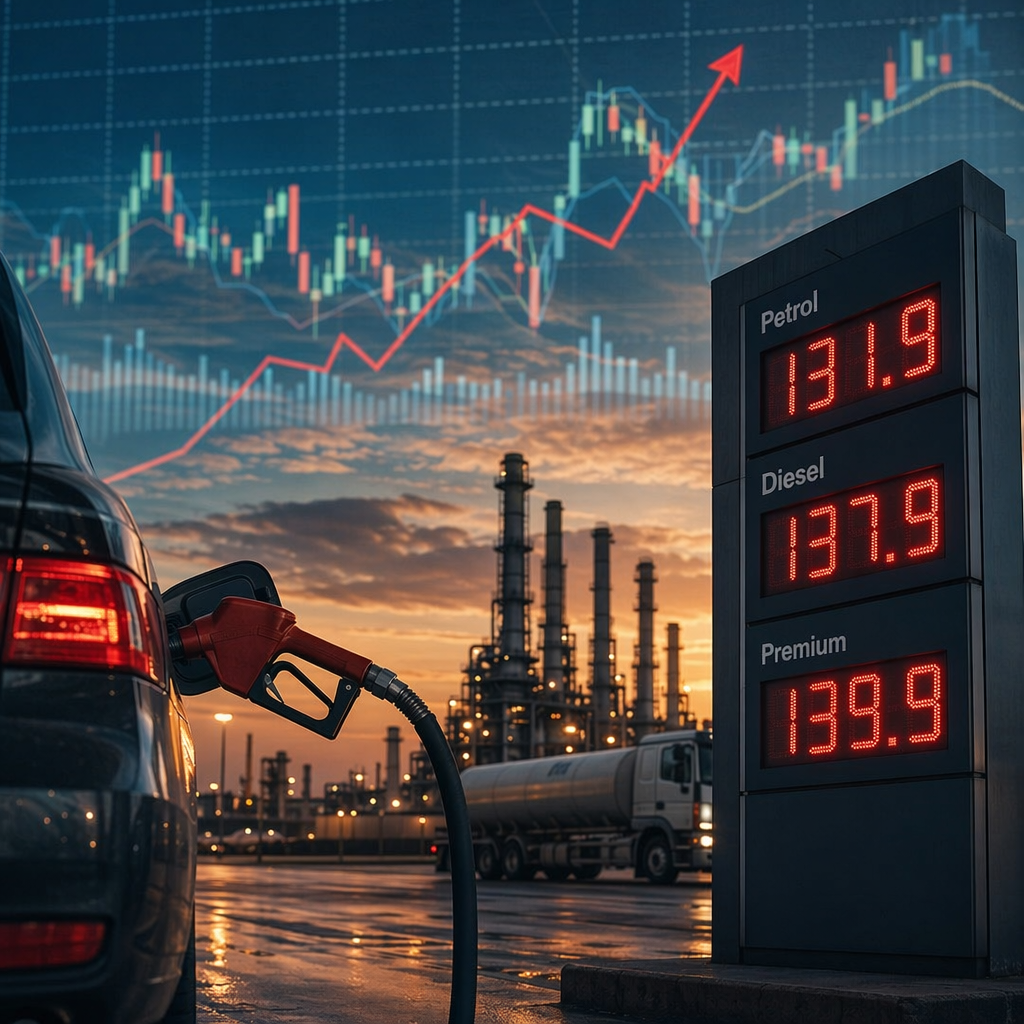
As of 2026, petrol and diesel prices remain closely tied to global crude oil costs, domestic taxes, exchange rates and government pricing policies. Even when pump prices appear stable for long periods, the underlying cost of fuel can change sharply because refiners and oil-marketing companies buy crude in international markets, usually priced in U.S. dollars.
Fuel price movements affect household budgets, transport charges, farming costs, airline operations, freight rates and inflation. In countries that import most of their crude oil, a rise in international oil prices or a fall in the local currency can increase the cost of petrol and diesel even before taxes and dealer margins are added.
This article explains the petrol and diesel price hike using verified public information available through 2024, 2025 and early 2026, including data and reporting from Reuters, government petroleum ministries, central banks and international energy agencies.
Why Petrol and Diesel Prices Rise
Retail fuel prices are generally built from several components: the cost of crude oil, refinery processing charges, freight, marketing costs, dealer commission, excise duty, value-added tax or sales tax, and other state or local levies. A change in any major component can raise pump prices.
Crude oil is the largest internationally traded input. Brent crude, a global benchmark used in many oil transactions, moved in a wide range during 2024. Reuters reported in April 2024 that Brent crude had traded above $90 per barrel amid concerns about Middle East supply risks and OPEC+ production policy. By comparison, Brent had averaged about $82 per barrel in 2023, according to the U.S. Energy Information Administration.
When crude prices rise, refiners pay more for raw material. If governments do not offset that increase through tax cuts, subsidies or price controls, the increase can reach consumers as higher petrol and diesel prices.
Key 2024–2026 Fuel Market Numbers
The fuel price debate is often driven by daily pump rates, but the broader data shows why price hikes can occur even without a sudden change at the retail station.
- 2024: Reuters reported that Brent crude crossed $90 a barrel in April 2024, reflecting geopolitical risk and supply concerns.
- 2024: India cut petrol and diesel prices by ₹2 per litre in March 2024, according to the Ministry of Petroleum and Natural Gas, ahead of the national election period.
- 2024: The International Energy Agency said global oil demand was about 103 million barrels per day in 2024, reflecting continued transport and industrial fuel use.
- 2025: The U.S. Energy Information Administration forecast global liquid fuels consumption at around 104 million barrels per day in 2025, showing continued demand growth.
- 2024: India imported more than 85% of its crude oil requirement, according to government petroleum data, making domestic fuel prices sensitive to global crude and exchange-rate movements.
- As of 2026: fuel prices in many markets remain influenced by OPEC+ production decisions, refining margins, taxes and currency values, according to Reuters and government energy-market updates.
Global Oil Prices and the Cost of Pump Fuel
Petrol and diesel prices are not determined only by local retailers. In most countries, they begin with crude oil, which is purchased in the international market. Brent crude and West Texas Intermediate are the two main benchmarks cited by oil traders, governments and financial news agencies.
In 2024, crude prices were affected by OPEC+ supply decisions, Red Sea shipping disruptions, the Israel-Gaza war, Russia-related sanctions and expectations for demand in China and the United States. Reuters repeatedly reported that oil traders watched OPEC+ production cuts closely because supply reductions can support higher prices.
OPEC+ members had already been managing output through voluntary cuts. When major producers reduce supply or extend cuts, available crude in the market can tighten. If demand remains steady, prices may rise. That increase can raise the landed cost of crude for importing countries.
Diesel can be especially sensitive because it is widely used in trucking, agriculture, mining, construction and manufacturing. A diesel price increase can move through supply chains more quickly than petrol because freight operators often pass higher fuel costs to shippers.
Taxes Are a Major Part of the Pump Price
In many countries, taxes form a large share of petrol and diesel retail prices. These include central excise duties, state value-added tax, sales tax, environmental charges, road levies and other fees. As a result, pump prices may not fall at the same pace as crude prices if taxes remain unchanged.
India provides a clear example because petrol and diesel prices include central excise duty and state taxes. The central government reduced excise duties in 2021 and 2022, and oil-marketing companies later announced a retail reduction of ₹2 per litre in March 2024, according to the Ministry of Petroleum and Natural Gas. However, state-level taxes continued to vary, which meant petrol and diesel prices differed between cities.
For consumers, this means the same litre of petrol can cost more in one state or province than another, even when the base fuel cost is similar. Local tax policy, transport cost from depots and dealer commission can all create price differences.
Exchange Rates Add Pressure in Importing Countries
Most crude oil contracts are priced in U.S. dollars. When a country’s currency weakens against the dollar, crude becomes more expensive in local-currency terms. This can create upward pressure on petrol and diesel prices even if Brent crude is unchanged.
For example, a country that imports oil must convert local currency into dollars to pay suppliers. A weaker currency means refiners need more local currency for the same barrel of crude. This effect is especially important for large oil importers, including India, Japan, South Korea and several European economies.
Government and central bank data show that exchange-rate movements were an important factor for import costs during 2024 and 2025. Reuters also reported through 2024 that oil prices and currency values were watched together by investors because both affect inflation and trade balances.
India’s Petrol and Diesel Price Context
India is one of the world’s largest oil consumers and imports most of the crude it refines. According to the Petroleum Planning and Analysis Cell under India’s Ministry of Petroleum and Natural Gas, the country’s import dependence has remained above 85% in recent years. This high dependence means international crude price movements are a central factor in domestic fuel cost calculations.
Retail prices in India are usually revised by oil-marketing companies, including Indian Oil Corporation, Bharat Petroleum Corporation and Hindustan Petroleum Corporation. The prices vary by city because of state taxes and freight costs. Major metro prices are commonly published daily by oil-marketing companies.
In March 2024, the Ministry of Petroleum and Natural Gas announced that oil-marketing companies had reduced petrol and diesel prices by ₹2 per litre. Reuters reported that the reduction came after a long period of unchanged pump prices and before India’s general election. After that reduction, city-level prices continued to depend on local taxes.
As of 2026, India’s fuel pricing framework continues to be shaped by global crude prices, refining margins, taxes and currency movements. Any future hike or cut depends on these measurable factors and on official pricing decisions announced by companies or government departments.
How Diesel Price Hikes Affect Inflation
Diesel is a major commercial fuel. Trucks, buses, tractors, generators, ships and construction equipment depend on it. Therefore, a diesel price hike can affect inflation through transport and production costs.
When diesel becomes costlier, freight operators face higher operating expenses. Food, construction materials, manufactured goods and farm inputs can become more expensive to move. In economies where road transport carries a large share of freight, diesel price increases can have a visible impact on wholesale and retail prices.
Central banks monitor fuel prices because energy is part of inflation baskets directly and indirectly. Directly, consumers pay for petrol, diesel, cooking gas or electricity. Indirectly, businesses pay more for logistics and production. The Reserve Bank of India and other central banks have repeatedly identified fuel and commodity prices as risks to inflation forecasts in recent policy documents.
How Petrol Price Hikes Affect Consumers
Petrol is used heavily by private vehicles, two-wheelers and small commercial transport. A petrol price hike affects daily commuting costs. The impact is larger for workers and small businesses that rely on vehicles but do not have easy access to public transport.
Unlike diesel, petrol has a more direct household-budget effect. The monthly cost depends on the vehicle’s mileage, distance travelled and local pump price. In urban areas, higher petrol prices can also increase the cost of app-based transport, local deliveries and small business operations.
Where petrol taxes are ad valorem, meaning charged as a percentage of price, a higher base price can increase the tax amount collected per litre. Where taxes are fixed per litre, the tax amount stays the same even when crude prices change.
Refining Margins and Supply Constraints
Fuel price hikes can also occur because of refining margins. Crude oil must be processed into petrol, diesel, jet fuel and other products. If refineries are under maintenance, disrupted by conflict, or unable to meet product demand, fuel margins can rise even when crude prices are not rising sharply.
Reuters reported during 2024 that diesel and refining margins were influenced by refinery outages, shipping disruptions and demand patterns. The Red Sea shipping disruptions also affected freight routes for oil and refined products, increasing voyage times and transport costs for some cargoes.
Diesel supply has been watched closely because it is linked to industrial activity and long-haul transportation. A shortage of refined diesel can raise diesel prices even if crude oil supply is adequate.
Government Responses to Fuel Price Hikes
Governments can respond to petrol and diesel price hikes in several ways. The most common methods are tax reductions, subsidies, price caps, strategic petroleum reserve releases, direct cash transfers or allowing market prices to adjust.
Tax cuts can reduce pump prices quickly, but they also reduce government revenue. Subsidies can protect consumers from sudden increases, but they shift costs to public budgets or state-owned energy companies. Price controls can prevent immediate hikes, but they may create losses for retailers if costs remain high for long periods.
In 2024, several governments continued to balance fuel affordability with fiscal costs. Reuters coverage showed that energy subsidies and tax policies remained politically important in many countries because fuel prices influence inflation and household spending.
Why Prices May Not Fall Immediately When Crude Falls
Consumers often expect petrol and diesel prices to fall as soon as crude oil declines. In practice, the pass-through can be delayed or partial. Refiners may have purchased crude at earlier higher prices, exchange rates may offset the decline, taxes may remain unchanged, or companies may use the period to recover earlier losses.
Retail prices also depend on product prices, not just crude prices. Petrol and diesel are refined products with their own wholesale markets. If diesel demand is high, diesel prices may remain firm even when crude prices fall.
This is why government petroleum price data, company price notifications and Reuters market reports often refer to both crude oil benchmarks and refined product cracks or margins.
Outlook as of 2026
As of 2026, petrol and diesel price hikes remain linked to four measurable drivers: global crude prices, refinery margins, tax policy and exchange rates. Publicly available data from Reuters, government petroleum departments, the International Energy Agency and the U.S. Energy Information Administration show that global oil demand stayed above 100 million barrels per day during 2024 and 2025, while supply policy continued to depend heavily on OPEC+ decisions.
For consumers, the most reliable way to track possible price changes is to follow official fuel price notifications, government tax announcements, central bank inflation reports and international crude benchmarks. Fuel prices can change because of market movements, but confirmed hikes or cuts are only established when announced by authorised companies or government agencies.
Sources: Reuters, Government releases, publicly available data.
Comments
Post a Comment