Norovirus: the leading cause of acute gastroenteritis outbreaks in many countries
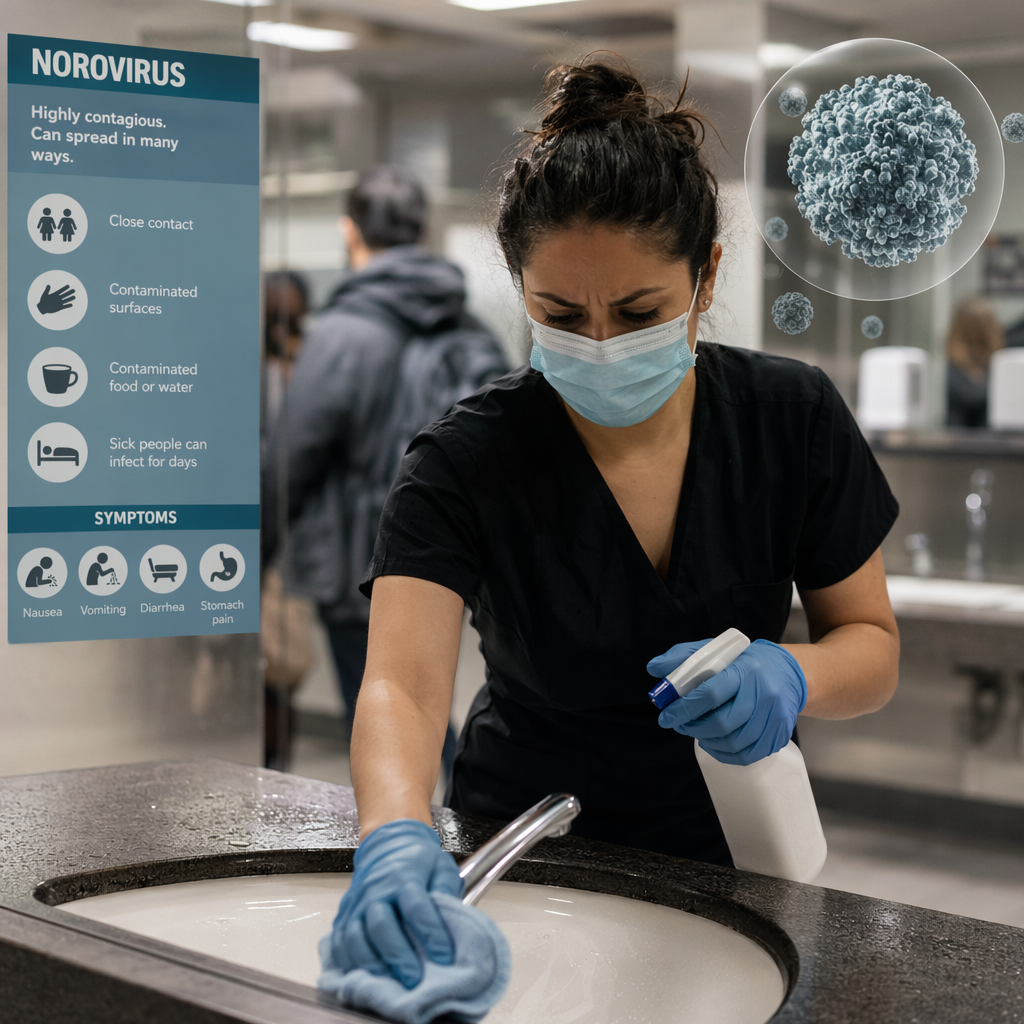
Norovirus can spread through a very small amount of viral particles and is responsible for hundreds of millions of gastrointestinal illness cases worldwide each year. The World Health Organization has estimated that norovirus causes about 685 million cases of acute gastroenteritis annually, including about 200 million cases among children under five. The U.S. Centers for Disease Control and Prevention (CDC) has stated that, in the United States, norovirus causes about 19 million to 21 million illnesses each year, resulting in approximately 109,000 hospitalizations and 900 deaths.
As of 2026, norovirus remains a major public health concern because it spreads quickly in homes, hospitals, care facilities, cruise ships, schools, childcare centers and food-service settings. It is not related to influenza, despite being widely called “stomach flu.” Norovirus is a group of viruses that inflame the stomach and intestines, causing acute gastroenteritis.
Public health agencies in the United States, the United Kingdom, Canada and Europe continue to monitor norovirus activity through outbreak reports, laboratory surveillance and hospital data. Recent public reporting from 2024 and 2025 showed elevated activity in several regions, especially during winter months, when norovirus traditionally peaks in the Northern Hemisphere.
What norovirus is and how it spreads
Norovirus is highly contagious. CDC guidance states that a person can get sick by swallowing microscopic particles of feces or vomit from an infected person. Transmission can happen through direct contact, contaminated food or water, contaminated surfaces, or aerosolized droplets from vomiting that settle on surfaces.
The virus is difficult to control because it can survive on surfaces and resists some common disinfectants. CDC guidance recommends using chlorine bleach solutions or disinfectants registered by the U.S. Environmental Protection Agency as effective against norovirus. Alcohol-based hand sanitizers may reduce some germs, but CDC states that handwashing with soap and water is preferred for norovirus prevention.
Norovirus also has a low infectious dose. Public health agencies have repeatedly emphasized that it may take only a small number of particles to cause illness. People can continue shedding virus after symptoms improve, which is why food handlers and healthcare workers are advised to stay home for at least 48 hours after symptoms stop, according to CDC and UK Health Security Agency guidance.
Symptoms and duration
Norovirus symptoms usually begin 12 to 48 hours after exposure. The most common symptoms are diarrhea, vomiting, nausea and stomach pain. Some people also experience fever, headache and body aches. Most otherwise healthy adults recover within one to three days, but dehydration can occur, especially among young children, older adults and people with underlying health conditions.
The main medical risk is dehydration. Signs include decreased urination, dry mouth, dizziness, unusual sleepiness and, in infants, fewer wet diapers. Public health agencies advise seeking medical care if symptoms are severe, if blood appears in stool, if vomiting prevents fluid intake, or if dehydration is suspected.
Recent outbreak and surveillance data
As of 2026, the most recent publicly available government surveillance data show that norovirus activity remains seasonal but can vary substantially by region and year.
In the United States, CDC’s NoroSTAT surveillance system tracks outbreaks reported by participating states. CDC’s national burden estimate continues to cite about 19 million to 21 million U.S. illnesses annually, with around 109,000 hospitalizations and 900 deaths each year. These figures are used by CDC as the overall national estimate of norovirus burden and remain among the clearest indicators of the disease’s scale.
CDC data for the 2024–2025 season also showed high norovirus activity compared with several recent years. In public updates during the 2024–2025 winter season, CDC reported increases in test positivity and outbreak reporting in the United States, consistent with the virus’s usual winter pattern. Reuters, citing CDC data in January 2025, reported that U.S. norovirus outbreaks had risen during the winter period and that CDC data showed levels above recent seasonal averages.
In England, the UK Health Security Agency reported elevated norovirus activity in the 2024–2025 season. UKHSA surveillance updates in early 2025 stated that laboratory reports were above the five-season average for comparable weeks. UKHSA also reported substantial outbreaks in hospitals and care homes, settings where transmission can be rapid because residents or patients may be medically vulnerable and because shared spaces increase exposure risk.
In Canada, the Public Health Agency of Canada continued to identify norovirus as a major cause of acute gastrointestinal illness and foodborne outbreaks. Canadian public health guidance notes that norovirus illness usually lasts one to three days and spreads through contaminated food, water, surfaces and close contact.
The European Centre for Disease Prevention and Control has also identified norovirus as a common cause of gastroenteritis outbreaks in Europe, particularly in healthcare and institutional settings. National authorities in European countries publish routine updates when outbreaks affect hospitals, long-term care homes, schools or food-service operations.
Key figures reported by public health authorities
- 2024–2026: CDC continues to estimate that norovirus causes about 19 million to 21 million illnesses in the United States each year.
- 2024–2026: CDC estimates about 109,000 U.S. hospitalizations annually are linked to norovirus.
- 2024–2026: CDC estimates about 900 U.S. deaths annually are associated with norovirus, mainly affecting older adults and medically vulnerable people.
- 2024–2026: WHO’s global estimate attributes about 685 million cases of acute gastroenteritis each year to norovirus worldwide.
- 2024–2026: WHO estimates about 200 million annual cases occur in children under five globally.
- 2025: Reuters reported, citing CDC surveillance, that U.S. norovirus activity increased during the winter season and was above recent seasonal averages.
Why winter outbreaks are common
Norovirus can circulate throughout the year, but outbreaks are most common in winter in temperate regions. CDC describes this pattern as the reason norovirus is sometimes called the “winter vomiting disease.” The seasonal increase is linked to several factors documented by public health agencies: people spend more time indoors, the virus remains stable in the environment, and transmission is efficient in crowded settings.
Healthcare facilities face particular challenges. Vomiting incidents can contaminate bathrooms, bedrooms, hallways and shared equipment. Long-term care facilities often serve older residents, who face a higher risk of severe dehydration and complications. Hospitals may temporarily close wards to new admissions during outbreaks to limit spread, according to UKHSA and NHS infection-control guidance.
Foodborne norovirus and contamination risks
Norovirus is one of the most frequently reported causes of foodborne illness. CDC states that infected food workers are a common source of foodborne outbreaks, especially when ready-to-eat foods are handled after cooking or washing. Foods linked to outbreaks have included leafy greens, fresh fruit and shellfish.
Shellfish, especially oysters, are a documented risk because they filter water and can concentrate viruses if harvesting areas are contaminated. Several national food safety agencies, including the U.S. Food and Drug Administration and the UK Food Standards Agency, publish advisories or recall notices when shellfish are linked to norovirus illness.
Food businesses are advised to exclude symptomatic workers, reinforce handwashing, disinfect contaminated areas and avoid bare-hand contact with ready-to-eat foods. CDC recommends that food workers should not prepare or serve food while sick and for at least 48 hours after symptoms stop.
Diagnosis and treatment
Most norovirus cases are diagnosed based on symptoms and outbreak context. Laboratory testing can confirm infection by detecting viral RNA in stool samples, especially during outbreaks in hospitals, long-term care facilities, cruise ships or food-service settings. Testing is not always required for individual mild cases because treatment is supportive.
There is no specific antiviral treatment for norovirus, and antibiotics do not work because norovirus is viral rather than bacterial. Treatment focuses on fluid replacement, oral rehydration solutions and monitoring for dehydration. Severe dehydration may require medical assessment and intravenous fluids.
Public health authorities advise against using anti-diarrheal medicines in young children unless directed by a healthcare professional. Adults with underlying conditions should follow medical advice, particularly if symptoms are prolonged or severe.
Prevention guidance in homes and public settings
CDC, UKHSA and other government agencies give broadly similar prevention advice. The most important steps are proper handwashing, safe food handling, isolation while symptomatic, and thorough cleaning after vomiting or diarrhea incidents.
Hands should be washed with soap and water for at least 20 seconds, especially after using the bathroom, changing diapers, cleaning contaminated areas and before preparing or eating food. Fruits and vegetables should be washed carefully. Shellfish should be cooked thoroughly. Laundry contaminated with vomit or stool should be handled carefully, washed with detergent and dried using the longest suitable cycle.
Cleaning requires attention to contact time and disinfectant strength. CDC advises cleaning visible contamination first and then disinfecting with a chlorine bleach solution or an EPA-registered product effective against norovirus. Disposable gloves should be used, and contaminated paper towels or cloths should be discarded safely.
Schools, childcare centers and workplaces
Norovirus outbreaks in schools and childcare settings can spread quickly because children may have close contact, share surfaces and have developing hygiene habits. Public health guidance generally recommends excluding children with vomiting or diarrhea until at least 48 hours after symptoms stop.
Workplaces can reduce transmission by encouraging sick employees to stay home, increasing cleaning of high-touch surfaces and ensuring access to soap, water and disposable towels. Food-service workplaces have stricter expectations because a single infected food handler can contaminate meals served to many people.
As of 2026, public health agencies continue to stress that norovirus control depends on early reporting of outbreaks in institutions. Rapid reporting allows local health departments to advise on isolation, environmental cleaning, food handling and reopening procedures.
Cruise ships and travel settings
Cruise ships receive public attention during norovirus outbreaks, but CDC notes that norovirus outbreaks also occur commonly on land. Ships are monitored closely because passengers live in shared spaces, eat in common dining areas and may travel from many regions. CDC’s Vessel Sanitation Program posts outbreak updates when gastrointestinal illness reaches reporting thresholds on ships calling at U.S. ports.
Travelers can reduce risk by washing hands frequently, avoiding food preparation for others while sick, reporting symptoms promptly on ships or in hotels, and following isolation guidance. Cruise operators are required to apply sanitation measures and report qualifying outbreaks under CDC rules for vessels under the U.S. program.
Vaccines and current research
As of 2026, there is no licensed norovirus vaccine available for routine public use. Research has continued because of the disease burden in children, older adults, military personnel, travelers and healthcare settings. Vaccine development is complex because norovirus has multiple genotypes and immunity after infection may not provide long-term protection against all strains.
Government and academic research groups continue to study immune responses, transmission patterns and potential vaccine candidates. Public health agencies have not replaced prevention guidance with vaccination because no approved vaccine is currently available for routine use.
Public health significance in 2026
Norovirus remains significant because it combines rapid spread, environmental persistence and high annual case numbers. The burden estimates from CDC and WHO show why health agencies continue to prioritize hand hygiene, food safety and outbreak response. The virus usually causes short illness in healthy adults, but its impact is much greater in hospitals, long-term care homes and among people at risk of dehydration.
As of 2026, the core public health message remains consistent across government sources: people with vomiting or diarrhea should stay away from food preparation, healthcare work and group settings until at least 48 hours after symptoms end; contaminated surfaces should be cleaned and disinfected; and handwashing with soap and water remains the most reliable everyday prevention measure.
Sources: Reuters, Government releases, publicly available data.
Comments
Post a Comment