Noel Tata: The Low-Profile Executive Behind Key Tata Group Businesses
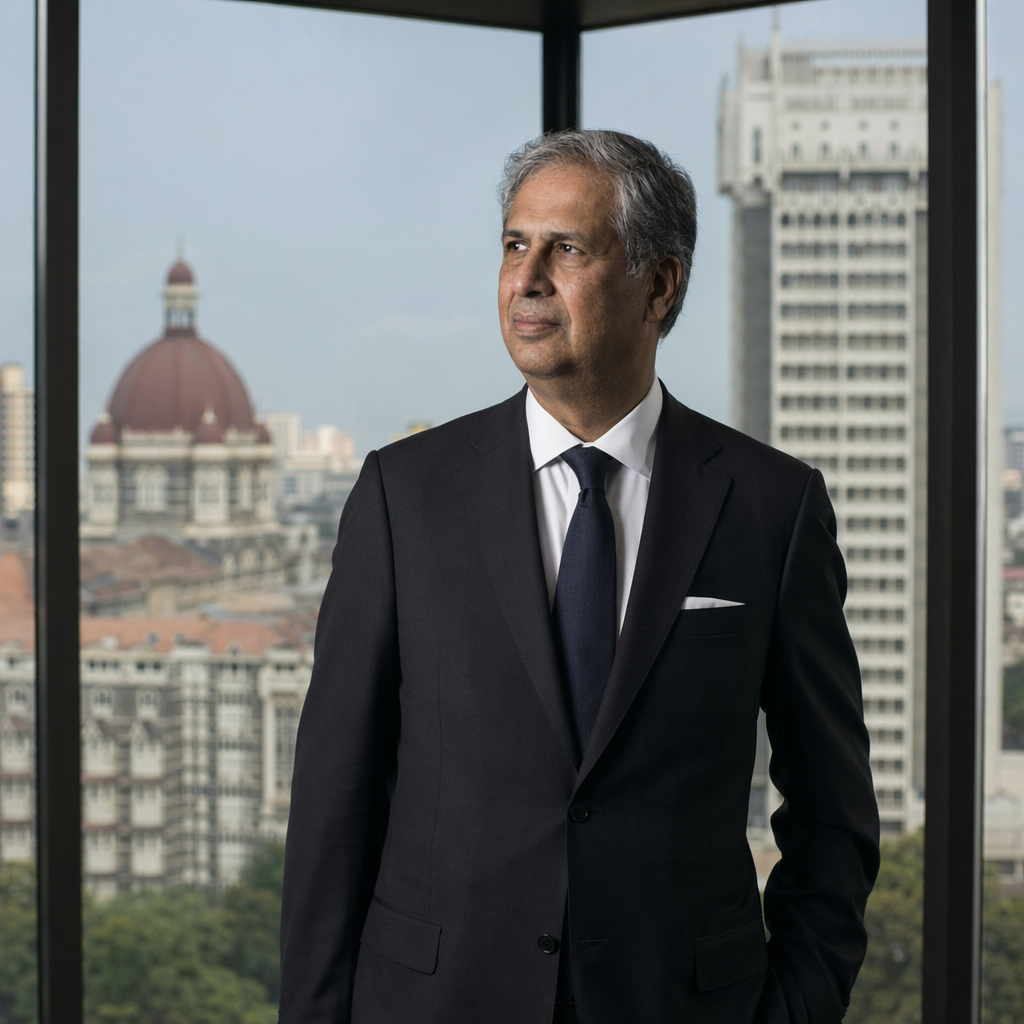
As of 2026, Noel Naval Tata is one of the most closely watched figures in Indian business governance because of his leadership roles across Tata Trusts and several Tata Group companies. His profile rose sharply after Tata Trusts said in October 2024 that he had been appointed chairman of Sir Dorabji Tata Trust and Sir Ratan Tata Trust, two principal charitable trusts that together hold a controlling influence over Tata Sons, the holding company of the Tata Group, according to Reuters reports from October 2024.
The appointment followed the death of Ratan Tata on 9 October 2024. Ratan Tata, who had chaired Tata Sons and later Tata Trusts, was one of India’s most recognised industrial leaders. Noel Tata’s elevation placed a business executive known for a comparatively understated public presence at the centre of a group whose listed and unlisted companies operate in steel, automobiles, technology services, retail, hotels, power, consumer products and financial services.
The Tata Group is one of India’s largest conglomerates. Tata Sons states that the group operates in more than 100 countries and has products and services in over 150 countries. For the financial year 2023-24, Tata Sons reported that the group’s aggregate revenue was $165 billion, while its combined market capitalisation was about $365 billion as of 31 March 2024. These figures give context to why governance positions at Tata Trusts and Tata Sons are watched closely by investors, policymakers and corporate governance observers.
Who Is Noel Tata?
Noel Naval Tata was born in 1957 and is the son of Naval Tata and Simone Tata. He is the half-brother of Ratan Tata. He studied at the University of Sussex in the United Kingdom and completed the International Executive Programme at INSEAD, according to corporate profiles published by Tata companies.
Unlike several high-profile Indian industrialists, Noel Tata has generally maintained a limited public profile. His career has been built largely through operating roles in Tata Group companies, especially in retail, international trading and consumer-facing businesses. He has served on the boards of major Tata entities and has held chairmanships in companies including Trent, Tata International and Voltas.
His professional standing is linked closely with the growth of Trent Ltd, the Tata Group’s retail company. Trent runs formats including Westside, Zudio and Star. The company has become one of the most visible retail growth stories in India’s organised consumer market.
October 2024: A Major Governance Shift at Tata Trusts
On 11 October 2024, Reuters reported that Noel Tata had been appointed chairman of Tata Trusts, succeeding Ratan Tata. Tata Trusts is not a single entity but a set of philanthropic trusts, the most important of which include Sir Dorabji Tata Trust and Sir Ratan Tata Trust. The trusts are significant because they own a majority stake in Tata Sons.
According to Tata Trusts’ own disclosures, the trusts collectively hold about 66% of the equity share capital of Tata Sons. Tata Sons is the principal investment holding company and promoter of major Tata operating companies. This ownership structure gives Tata Trusts an important role in the long-term direction and governance framework of the wider group, even though operating companies are run by their own boards and management teams.
The change came during a period when India’s corporate groups were facing increased investor scrutiny over succession planning, board independence and the relationship between promoter entities and listed companies. Reuters reported that Noel Tata was already a trustee of Sir Dorabji Tata Trust and Sir Ratan Tata Trust before his appointment as chairman.
As of 2026, Noel Tata’s chairmanship of Tata Trusts makes him a key figure in the governance architecture of the Tata Group, though the day-to-day executive leadership of Tata Sons remains separate from the trusts. Natarajan Chandrasekaran, former chief executive of Tata Consultancy Services, has served as chairman of Tata Sons since 2017.
Key Positions Held by Noel Tata
Noel Tata’s roles have spanned retail, engineering products, international business and investment oversight. Public filings and company profiles show that he has held leadership or board positions across multiple Tata entities.
- Chairman, Tata Trusts: Appointed in October 2024 after the death of Ratan Tata, according to Reuters.
- Chairman, Trent Ltd: Associated with the expansion of Westside and Zudio in India’s retail market.
- Chairman, Tata International: Previously managing director of the group’s global trading and distribution business.
- Chairman, Voltas Ltd: Linked with one of India’s established air-conditioning and engineering companies.
- Board roles: Has served on boards of Tata Investment Corporation and other Tata-linked entities, according to company disclosures.
Trent and the Retail Expansion Linked to Noel Tata
Trent Ltd is central to understanding Noel Tata’s business profile. The company operates Westside, a department store format, and Zudio, a value fashion format. In annual reports, Trent has described Zudio as a fast-growing concept aimed at affordable fashion.
For the financial year 2023-24, Trent reported consolidated revenue from operations of about ₹12,375 crore, compared with about ₹8,242 crore in FY 2022-23, according to the company’s annual report. That represented a sharp year-on-year increase in a period when India’s organised retail sector continued to expand after the disruption caused by the COVID-19 pandemic.
Trent also reported a consolidated net profit of about ₹1,477 crore in FY 2023-24, compared with around ₹394 crore in FY 2022-23. The figures are based on the company’s audited financial statements and stock exchange filings.
Store expansion has been a major part of Trent’s growth. By the end of FY 2023-24, Trent’s annual report said the company operated 232 Westside stores and 545 Zudio stores. The pace of expansion made Zudio one of the most closely followed retail formats in India’s listed consumer sector.
In 2024, analysts and business media frequently linked Trent’s retail performance to the broader consumer shift toward branded and organised formats in India. However, the company’s own filings remain the most reliable source for confirmed store counts, revenues and profit figures.
Tata Group Scale: Why the Trusts Matter
The importance of Noel Tata’s role is tied to the size and structure of the Tata Group. Tata Sons is the holding company and promoter of the group’s major companies. Tata Consultancy Services, Tata Motors, Tata Steel, Titan, Tata Consumer Products, Indian Hotels, Voltas and Trent are among the publicly listed Tata companies.
In FY 2023-24, Tata Consultancy Services reported revenue of ₹240,893 crore, according to its annual report. TCS remained India’s largest IT services company by market capitalisation in 2024 and a major contributor to Tata Group earnings. Tata Motors reported consolidated revenue of ₹437,928 crore in FY 2023-24, supported by Jaguar Land Rover, commercial vehicles and passenger vehicles. Tata Steel reported consolidated revenue of ₹229,171 crore in FY 2023-24.
These numbers show the scale of the corporate ecosystem in which Tata Trusts has influence through ownership of Tata Sons. The trusts themselves are philanthropic bodies, not operating businesses. Their role includes funding work in health, education, livelihoods, water, sanitation, rural development and social justice, according to Tata Trusts’ public information.
As of 2026, the structure remains unusual by global corporate standards: charitable trusts control a majority of the holding company of one of India’s largest business groups. This structure has existed for decades and is frequently cited in discussions of Indian corporate governance.
Family Links and Succession Context
Noel Tata’s family ties have drawn public attention, but his formal authority comes from appointments to boards and trusts. He is related to the Tata family through his father Naval Tata. His mother, Simone Tata, was a prominent business leader associated with Lakmé and Trent. Noel Tata is married to Aloo Mistry, a member of the Mistry family, which has also been a significant shareholder in Tata Sons through investment firms linked to the Shapoorji Pallonji Group.
The Tata Sons shareholding dispute involving the Mistry family and Tata Group was one of India’s most closely watched corporate legal battles in the previous decade. In March 2021, India’s Supreme Court ruled in favour of Tata Sons in a case connected with the 2016 removal of Cyrus Mistry as Tata Sons chairman. That case is separate from Noel Tata’s October 2024 appointment at Tata Trusts, but it remains part of the broader governance history surrounding Tata Sons.
After Ratan Tata’s death in 2024, Reuters and other news organisations noted that Noel Tata’s long association with Tata companies and his trusteeship roles made him a continuity choice for Tata Trusts. Tata Trusts did not describe the appointment as an executive takeover of the Tata Group’s operating companies.
Philanthropic Role of Tata Trusts
Tata Trusts has historically funded social programmes across India. According to its public materials, the organisation works in healthcare, nutrition, education, livelihoods, migration, water, sanitation and digital transformation. The trusts have partnered with state governments, non-profit organisations and institutions for programme implementation.
The trusts’ funding base is linked to dividends and investment income from holdings, including the stake in Tata Sons. Since Tata Sons receives dividends from operating companies, the performance of the group’s businesses can indirectly affect the resources available for philanthropic commitments, subject to governance and legal frameworks.
India’s philanthropy sector has also been shaped by regulation. Corporate social responsibility requirements under the Companies Act, 2013, mandate qualifying companies to spend at least 2% of their average net profits from the preceding three financial years on CSR activities. This rule applies to eligible companies, not to all trusts, but it forms part of the broader public policy context in which large Indian business groups operate. The Ministry of Corporate Affairs is the government authority responsible for CSR-related rules and disclosures.
Public Visibility and Management Style
Noel Tata has not been known for frequent media interviews or public speeches. Publicly available records show a career concentrated on board leadership and company operations rather than personal branding. This has made corporate filings, annual reports and official announcements particularly important for assessing his work.
At Trent, the evidence of performance is visible in audited numbers, store expansion and market disclosures. At Tata International, his earlier leadership covered trading and distribution operations across international markets. At Tata Trusts, the main indicators will come from governance decisions, published reports, philanthropic commitments and changes, if any, in institutional priorities.
As of 2026, there is no publicly announced change to the basic Tata Group holding structure following Noel Tata’s appointment. Tata Trusts continues to be the majority owner of Tata Sons, while Tata Sons continues as the holding company and promoter of the group’s key businesses.
Confirmed Data Points From 2024–2026
Several recent figures help place Noel Tata’s role in context. Tata Sons reported $165 billion in group revenue for FY 2023-24 and about $365 billion in combined market capitalisation as of 31 March 2024. Tata Trusts holds about 66% of Tata Sons’ equity share capital. Trent reported ₹12,375 crore revenue from operations in FY 2023-24 and ₹1,477 crore consolidated net profit in FY 2023-24. Trent also reported 545 Zudio stores and 232 Westside stores by the end of FY 2023-24.
These are not estimates. They come from company annual reports, Tata Sons public disclosures and Reuters reporting. They show why Noel Tata’s move from a prominent but relatively quiet group executive to chairman of Tata Trusts became a major corporate development in India in 2024.
Noel Tata’s importance does not rest only on his surname. It is tied to a formal governance role at institutions that control the majority owner of Tata Sons, and to a record of board-level leadership at businesses such as Trent and Tata International. In India’s corporate landscape, that combination places him among the most consequential non-executive figures associated with a major business house.
Sources: Reuters, Government releases, publicly available data.
Comments
Post a Comment