Nagaland Lottery Result: What Players Need to Know in 2026
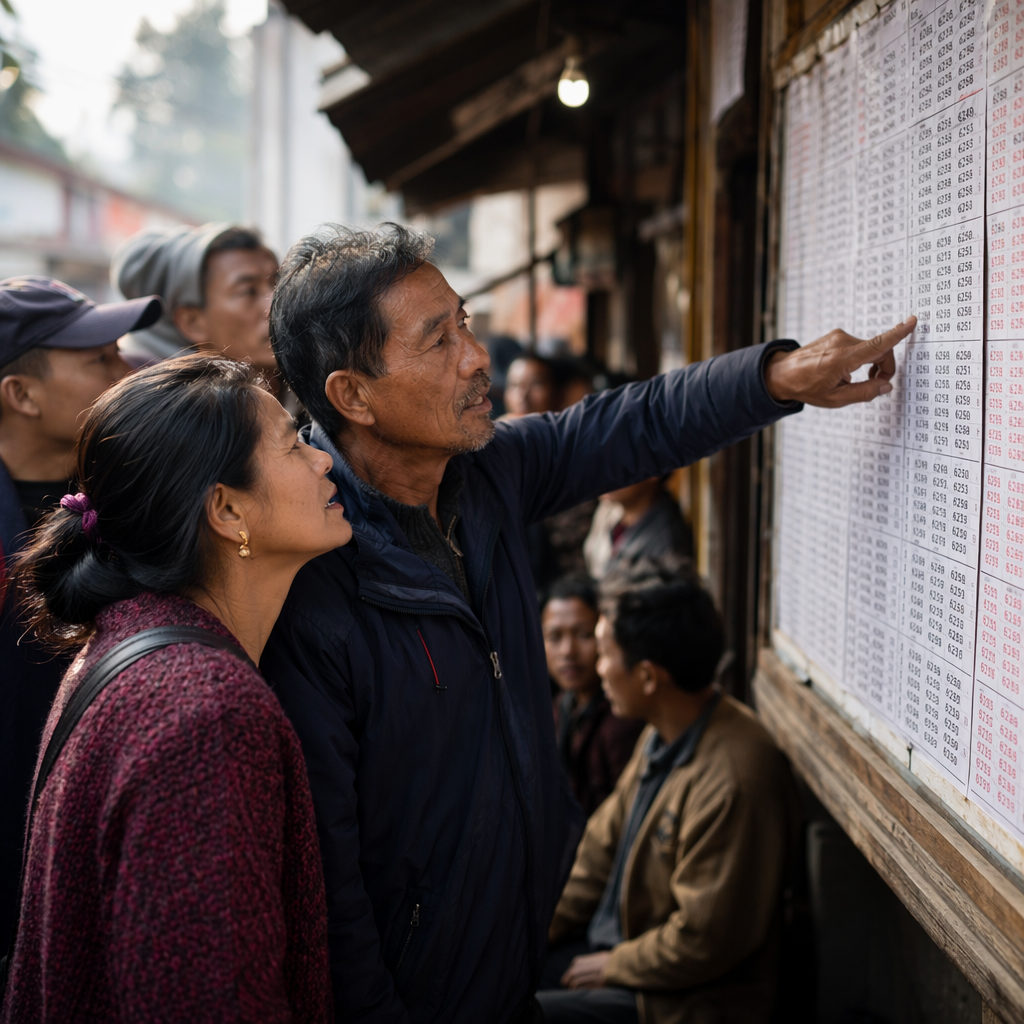
As of 2026, Nagaland remains one of the Indian states that permits government-run paper lotteries under the Lotteries (Regulation) Act, 1998, a central law that allows state governments to organize, conduct, or promote lotteries subject to statutory conditions. The Nagaland State Lottery is widely followed because its results are published daily across multiple draws, and prize claims depend on matching ticket numbers exactly with the official result sheets issued by the state-authorized lottery department and its distributors.
The term “Nagaland lottery result” usually refers to the winning numbers declared for daily lottery schemes marketed under Nagaland State Lotteries. These results are commonly checked by ticket holders after scheduled draws, often through official or authorized channels, printed result sheets, and state-approved distributors. For players, the most important point is verification: only the official result declared by the lottery authority or its authorized agency is valid for prize claims.
India does not have a single national lottery system. Instead, lotteries are regulated through a combination of central law and state-level decisions. The Lotteries (Regulation) Act, 1998, enacted by the Government of India, gives state governments the power to conduct lotteries while laying down restrictions, including that proceeds must go to the public account of the state and draws must be conducted in a manner prescribed by law. The Lotteries (Regulation) Rules, 2010 further set operational requirements for state lotteries.
Legal Status of the Nagaland Lottery
Nagaland is among the Indian states that allow state lotteries. Several other states have chosen to prohibit lotteries within their territories, but under the central framework, a state government that conducts a lottery must follow the conditions set out by Parliament and related rules.
The Government of India’s lottery framework requires that a lottery be organized by a state government, not by a private operator acting independently. Private companies may be appointed for distribution, marketing, or logistics, but the lottery must remain under the authority of the state. This distinction matters because many unofficial websites publish lottery-related numbers, advertisements, or predictions, but these do not replace official result declarations.
As of 2026, ticket holders are advised to verify Nagaland lottery results only against official result publications or authorized lottery outlets. A screenshot, social media post, or third-party upload may be useful for quick reference, but it is not a substitute for the official result sheet when a claim is submitted.
How Nagaland Lottery Results Are Usually Published
Nagaland lottery results are typically published after scheduled draws. The result sheet generally includes the draw name, draw date, ticket series, winning ticket numbers, and prize categories. Depending on the scheme, prizes may include a first prize and several lower-tier prizes, often listed by ticket number or by the last digits of the ticket.
Daily lottery schemes marketed under state-authorized arrangements often use names and draw timings that are familiar to regular participants. However, draw names, ticket prices, prize amounts, and schedules may change depending on current government approvals and distributor notices. Because of this, players should rely on the most recent official information printed on the ticket and the result notice for that specific draw date.
A typical result verification process involves comparing the full ticket number with the first-prize number and then checking whether the ticket matches any consolation or lower-prize category. In many state lotteries, lower-tier prizes are awarded based on exact numbers or partial combinations, such as the last four or five digits. The rules printed for each draw determine eligibility.
Key Facts and Recent Data Points
The lottery sector in India operates within a broader regulated gambling and public-revenue environment. The following data points provide context for readers checking Nagaland lottery results:
- 1998: The Government of India enacted the Lotteries (Regulation) Act, establishing the central legal framework for state-run lotteries.
- 2010: The Lotteries (Regulation) Rules came into force, setting additional conditions on how state lotteries must be organized and conducted.
- 2024: India continued to apply a 28% Goods and Services Tax rate on lotteries and several other gaming-related activities following GST Council decisions implemented from 2023, according to Government of India GST notifications and council communications.
- 2024: Reuters reported that India’s online gaming and real-money gaming sectors faced tighter tax and regulatory scrutiny after the GST changes, a development that also kept taxation of lotteries in focus across states.
- 2025: State lotteries remained legal only in states that permitted them, while other Indian states continued to ban lottery sales within their jurisdiction under powers recognized by central law.
- As of 2026: Nagaland continues to be identified among the Indian states where government-run lottery schemes are permitted under the central lottery law, subject to state authorization and official result publication.
Why Official Verification Matters
Lottery results are financial documents for claim purposes. A ticket holder cannot rely only on a viral message or an unofficial listing if the number appears to match. The physical ticket, official result sheet, claim form, identity documents, and compliance with claim deadlines are normally required for prize processing.
The need for verification is especially important because lottery-related fraud is common in many jurisdictions. Scams often involve fake winning notices, advance-fee requests, or messages claiming that a person has won without buying a valid ticket. Government consumer-protection agencies in several countries, including India’s official cybercrime reporting systems, have repeatedly warned the public about fraudulent prize schemes.
No legitimate lottery prize should require a winner to pay a private individual through an unofficial channel before receiving winnings. Taxes, if applicable, are deducted or processed according to law, not through informal payment demands over messaging apps.
Prize Claims and Documentation
To claim a Nagaland lottery prize, ticket holders generally need to preserve the original ticket in good condition. A torn, altered, or overwritten ticket may face rejection during verification. Winners of smaller prizes may be able to claim through authorized sellers or distributors, depending on the amount and scheme rules. Larger prizes are usually processed through designated offices after document verification.
Although exact claim requirements can vary by scheme, winners are commonly asked to submit identity proof, address proof, photographs, bank details, the original winning ticket, and a signed claim form. For major prizes, Permanent Account Number details may be required because lottery winnings are taxable under Indian income-tax law.
Under India’s Income-tax Act, lottery winnings fall under “income from other sources” and are subject to tax deduction at source when they exceed the statutory threshold. The applicable tax treatment should be checked through current Income Tax Department guidance or a qualified tax professional, because rates, surcharge, and cess may affect the final amount received by the winner.
Taxation of Lottery Winnings in India
Lottery taxation in India has two separate layers: taxation on the lottery product and taxation on prize winnings. The Goods and Services Tax framework applies to lottery tickets, while the Income-tax Act applies to winnings.
As of 2026, GST treatment of lotteries remains part of India’s broader gaming-tax framework. The GST Council, a constitutional body made up of Union and state representatives, has considered lottery and gaming taxation multiple times in recent years. In 2024, the 28% GST rate on lottery and gaming-related categories remained a key reference point in government tax communications and industry reporting.
Separately, prize winnings are taxable as income. In practice, this means that the gross prize announced in a result sheet may differ from the net amount credited to the winner after tax deduction and statutory compliance. Ticket holders should avoid assuming that the published prize amount is the same as the final amount received.
Common Terms Seen in Nagaland Lottery Results
Lottery result sheets often use repeated terms that can confuse first-time players. “Series” generally refers to the alphabetical or alphanumeric grouping of tickets. “Ticket number” is the unique number printed on the ticket. “First prize” refers to the top winning category for the draw. “Consolation prize” may apply to tickets with the same number in different series, depending on the draw rules. Lower prizes may depend on matching the last digits of the ticket number.
Readers should check whether a prize category requires a full match or a partial match. If the result sheet states that the last four digits qualify for a prize, the ticket does not need to match the full first-prize number. If the category requires an exact ticket number and series, both must match. These distinctions affect whether a claim is valid.
Risks Linked to Unofficial Lottery Result Websites
Many websites publish Nagaland lottery results soon after draws. Some may reproduce official sheets accurately, while others may carry delayed, incomplete, or incorrect information. Because prize claims involve money, even a single digit error can mislead a ticket holder.
There are also privacy risks. Some websites or social media pages ask users to submit ticket numbers, phone numbers, or identity details. Players should avoid sharing personal documents with unknown platforms. Claim documents should be submitted only to authorized offices, official departments, or verified distributors involved in the scheme.
The safest practice is to check the result through more than one reliable source and then confirm it against the official result sheet. Ticket holders should also keep the original ticket unsigned only until they are ready to submit a claim, unless the official instructions require immediate signing for ownership protection.
How to Check a Nagaland Lottery Result Correctly
A careful result check reduces the risk of missing a prize or acting on a false result. The ticket holder should first identify the draw name and date printed on the ticket. Lottery tickets are draw-specific, so a result from another date cannot be used to claim a prize. Next, the player should match the series and number exactly as printed.
For first-prize categories, both the full number and any required series must be checked. For lower-tier categories, the result sheet should be read line by line because some prizes depend on the last digits. If the ticket appears to win, the holder should preserve the ticket, avoid overwriting it, and contact an authorized claim point.
Players should also check the claim deadline. Lottery prizes are typically claimable only within a fixed period after the draw. Missing the deadline may make a ticket invalid for payment even if the number appears in the result sheet.
Consumer Protection and Responsible Participation
Lotteries are games of chance. The official result is determined by the draw process, not by prediction, analysis, or past patterns. Any website or individual claiming to guarantee a Nagaland lottery result in advance should be treated with caution. Under the state-lottery system, winning numbers are valid only after the draw is conducted and the result is officially declared.
Public authorities in India have also increased attention on gaming, taxation, and consumer-protection issues in recent years. Reuters reported in 2024 that India’s gaming sector faced significant regulatory and tax pressure after changes to GST treatment. While lotteries and online gaming are not identical products, both are part of the wider policy discussion around chance-based participation, taxation, and consumer safeguards.
As of 2026, the most reliable approach for Nagaland lottery participants is simple: buy only from authorized sellers, keep the ticket safe, check only official results, and follow the documented claim process. This protects both the ticket holder and the integrity of the prize claim.
What Readers Should Remember
Nagaland lottery results are legally relevant only when they come from official or authorized sources. The draw date, ticket number, series, prize category, tax treatment, and claim deadline all matter. A winning number posted online is not enough by itself; the original ticket and official verification remain central to the process.
For anyone checking a result in 2026, the practical steps are to confirm the draw name, compare the ticket carefully, preserve the original ticket, avoid unofficial payment requests, and contact the authorized claim office if a prize appears to be won. These steps reflect the legal structure created by the Government of India’s lottery law and the state-run model under which Nagaland lotteries operate.
Sources: Reuters, Government releases, publicly available data.
Comments
Post a Comment