Mitchell Marsh: Australia’s all-rounder in the 2024–2026 cricket cycle
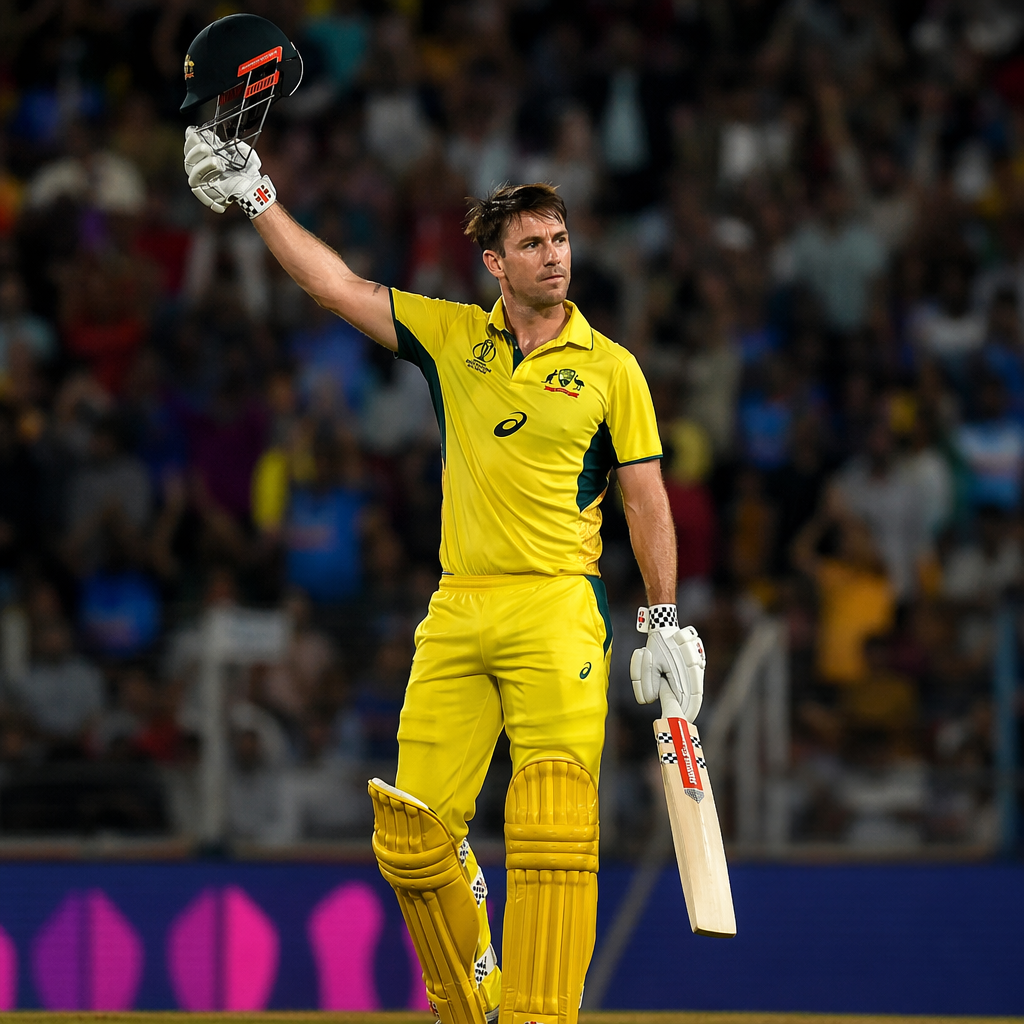
Mitchell Marsh entered 2026 as one of Australia’s most prominent multi-format cricketers, following a period in which he captained his country in Twenty20 internationals, featured in major global tournaments and remained a regular name in franchise cricket. His recent record includes international leadership duties in 2024, Indian Premier League involvement in 2024 and 2025, and continued selection relevance across Australia’s white-ball plans.
As of 2026, Marsh’s career is best understood through two overlapping roles: a senior Australian international and a power-hitting all-rounder whose availability is closely watched because of his history with injuries. Publicly available data from Cricket Australia, the International Cricket Council, the Board of Control for Cricket in India and match records show that Marsh’s career since 2024 has been shaped by captaincy, workload management and tournament cricket.
Early career and international rise
Mitchell Ross Marsh was born on 20 October 1991 in Attadale, Western Australia. He comes from one of Australia’s best-known cricket families: his father, Geoff Marsh, played Test and One Day International cricket for Australia and later coached at international level, while his brother Shaun Marsh also represented Australia across formats.
Marsh made his international debut for Australia in 2011 and developed as a seam-bowling all-rounder capable of batting in the middle order. Over time, his international career has moved between all three formats. His value has often been measured not only by runs and wickets but by balance: when fit to bowl, Marsh can allow Australia to select an extra specialist batter or bowler depending on conditions.
His Test career has included several breaks caused by injury and selection changes. In white-ball cricket, however, Marsh became increasingly central to Australia’s plans from the early 2020s. He was player of the match in the 2021 ICC Men’s T20 World Cup final, a result widely reported by international outlets including Reuters and the ICC at the time, after scoring an unbeaten 77 against New Zealand in Dubai.
2024: captaincy role and T20 World Cup year
The year 2024 was significant because Marsh was appointed to lead Australia in the ICC Men’s T20 World Cup held in the United States and the Caribbean. Cricket Australia confirmed its squad and leadership before the tournament, with Marsh named captain. That role placed him at the centre of Australia’s short-format planning after the retirement of long-serving T20 captain Aaron Finch and a period of shared leadership in the format.
At the 2024 ICC Men’s T20 World Cup, Australia reached the Super Eight stage but did not progress to the semi-finals. Match data from the ICC shows that Australia played seven matches in the tournament, winning five and losing two. Marsh led the side throughout the campaign.
One of the most documented matches of Australia’s 2024 campaign came against India in St Lucia on 24 June 2024. According to the ICC match scorecard, India defeated Australia by 24 runs. Australia’s elimination was then confirmed after Afghanistan beat Bangladesh in the final Super Eight fixture. Reuters reported on 25 June 2024 that Afghanistan’s win eliminated Australia and sent Afghanistan into a men’s T20 World Cup semi-final for the first time.
Marsh’s captaincy record in that tournament is part of the public record: five wins from seven matches in the 2024 T20 World Cup. The outcome did not deliver a semi-final place, but it confirmed him as Australia’s appointed leader during a major ICC event.
Key 2024–2026 facts and statistics
Several recent figures help frame Marsh’s position in Australian and global cricket. These are drawn from ICC tournament records, Cricket Australia releases, IPL records and publicly available match data.
- 2024: Marsh captained Australia in the ICC Men’s T20 World Cup, where Australia played seven matches, won five and lost two.
- 2024: Australia were eliminated after the Super Eight stage when Afghanistan defeated Bangladesh on 25 June 2024, a result reported by Reuters.
- 2024 IPL: Marsh was part of Delhi Capitals but played only four matches before injury affected his availability, according to Indian Premier League match records and squad updates.
- 2024: Marsh’s 2024 T20 World Cup squad role was confirmed by Cricket Australia when it announced Australia’s tournament squad and named him captain.
- 2025 IPL: Marsh was signed by Lucknow Super Giants for the 2025 Indian Premier League season after the player auction, according to IPL auction records published by the BCCI/IPL.
- As of 2026: Marsh remained one of Australia’s experienced all-round options across white-ball cricket, with his role dependent on fitness, selection balance and tournament schedules.
Indian Premier League involvement in 2024 and 2025
Marsh’s franchise career has been closely linked with the Indian Premier League. In 2024, he was with Delhi Capitals. His season was limited by injury; IPL records list him as appearing in four matches for Delhi Capitals during the 2024 season. Delhi Capitals’ season ended outside the final, and Marsh’s restricted participation was one of several squad-management issues for the franchise.
In the 2025 IPL player auction cycle, Marsh moved to Lucknow Super Giants. The signing was recorded in official IPL auction data released through the league and the Board of Control for Cricket in India. Franchise cricket has remained important in Marsh’s schedule because the IPL provides high-level T20 preparation and exposes players to international conditions, particularly for tournaments hosted in the subcontinent.
For Australia, the balance between IPL participation and international workload is significant. Cricket Australia has regularly managed fast-bowling and all-round workloads because of the risk of soft-tissue injuries, especially when players combine batting, bowling and fielding duties across formats. Marsh’s injury history makes that management relevant whenever Australia prepare for major ICC events.
Batting role: power, tempo and middle-order value
Marsh’s batting role differs by format. In T20 internationals and the IPL, he is most often used as a top-order or upper-middle-order power hitter. His job is to accelerate scoring during the powerplay or middle overs, depending on where he is selected. In One Day Internationals, he has been used both as an opener and a middle-order batter, reflecting Australia’s preference for flexible batting combinations.
His most important white-ball contribution in recent Australian cricket came before the 2024–2026 cycle, but it shaped his later role. During the 2023 ICC Men’s Cricket World Cup, Marsh made a major impact with the bat, including a century against Pakistan in Bengaluru on 20 October 2023. ICC scorecards recorded his 121 in that match as Australia won by 62 runs. That performance helped reinforce his status as a senior white-ball batter going into 2024.
By 2024, Australia were using Marsh not only for runs but also for leadership within a batting group containing players such as Travis Head, Glenn Maxwell, Marcus Stoinis and Tim David. This combination gave Australia multiple power options but also required clear role definition, particularly in T20 cricket where batting positions can be match-up driven.
Bowling and workload management
Marsh’s bowling has always been central to his selection value, but it has also been the part of his game most affected by injuries. As a right-arm medium-fast bowler, he provides overs that can be used in the middle stages of limited-overs matches or as a fourth-seamer option in red-ball cricket.
However, from 2024 onward, Australia’s public team selections showed caution around all-rounder workloads. When Marsh is unable to bowl fully, he can still be selected as a specialist batter, but the team balance changes. That is why official squad announcements and pre-match comments from Cricket Australia are often examined for signals about whether he is available to bowl.
Injuries have also affected his franchise cricket. His limited 2024 IPL season was a reminder that all-rounders face a heavier physical load than specialist batters. Travel between international series, franchise competitions and training camps adds further demands, especially in years containing global tournaments.
Leadership and captaincy
Marsh’s appointment as Australia’s T20 captain in 2024 was part of a broader transition in the national side. Australia had several senior players with leadership experience, including Pat Cummins, Steve Smith and Josh Hazlewood, but the T20 format required a dedicated leader for a compressed World Cup campaign.
Cricket Australia’s squad announcement before the 2024 T20 World Cup confirmed Marsh as captain. The decision followed his earlier leadership of Australia in T20 series and reflected the selectors’ view of his standing in the short-format squad.
Leadership in T20 cricket is often measured through field placements, bowling changes, match-ups and batting flexibility rather than long-term tactical plans. During the 2024 World Cup, Marsh led Australia through group-stage wins before the side lost to Afghanistan and India in the Super Eight round. The Afghanistan defeat was particularly significant: on 22 June 2024 in Kingstown, Afghanistan beat Australia by 21 runs, according to ICC match records. That result changed the qualification picture and was widely covered by Reuters and other international agencies.
Australia’s white-ball context as of 2026
As of 2026, Australia’s white-ball structure continued to evolve after winning the 2023 ICC Men’s Cricket World Cup and falling short in the 2024 T20 World Cup. Marsh’s role sat within that wider transition. Senior players were still available, but selectors also had to consider younger options and workload demands ahead of future ICC events.
The 2026 ICC Men’s T20 World Cup, scheduled for India and Sri Lanka, made the 2025–2026 period important for selection planning. Australian squad choices for that tournament cycle depended on form, fitness and conditions. Marsh’s experience in India through the IPL and international cricket remained part of his selection profile.
Publicly available data from the ICC and Cricket Australia show that Australia have used multi-format players heavily in recent years. Marsh fits that category when fit. He has been part of Test squads, ODI squads and T20 squads, although his most consistent leadership role in the 2024–2026 period was in T20 cricket.
Public profile and family background
Marsh’s public profile is also shaped by his family’s cricket history. The Marsh family is one of the few Australian families to produce multiple men’s international cricketers across generations. Geoff Marsh played 50 Tests and 117 ODIs for Australia, according to Cricket Australia’s historical player records. Shaun Marsh played 38 Tests, 73 ODIs and 15 T20 internationals for Australia.
Mitchell Marsh’s career has therefore often been discussed in the context of expectation and comparison. In official records, however, his profile stands separately: a World Cup-winning Australian cricketer, a T20 World Cup final match-winner in 2021 and a national T20 captain in 2024.
What the records show
The factual record from 2024 to 2026 presents Marsh as a senior cricketer whose recent career has included captaincy, injury management and franchise movement. He captained Australia at the 2024 T20 World Cup. He played a limited role for Delhi Capitals in the 2024 IPL because of injury. He was acquired by Lucknow Super Giants for the 2025 IPL season. And, as of 2026, he remained part of Australia’s experienced white-ball pool.
Those facts also show the main challenge in assessing Marsh’s role: his peak value comes when he can contribute both as a batter and a bowler, but his availability to bowl has often depended on physical condition and workload planning. For selectors, that makes him both valuable and carefully managed.
In an Australian side with established names and emerging players, Marsh’s standing from 2024 to 2026 has been built on documented performance, leadership appointments and continued involvement in major competitions. His career record remains tied to the demands of modern cricket: international commitments, franchise leagues, injury recovery and tournament-specific roles.
Sources: Reuters, Government releases, publicly available data.
Comments
Post a Comment