Kalyan Jewellers Share: What Recent Data Shows
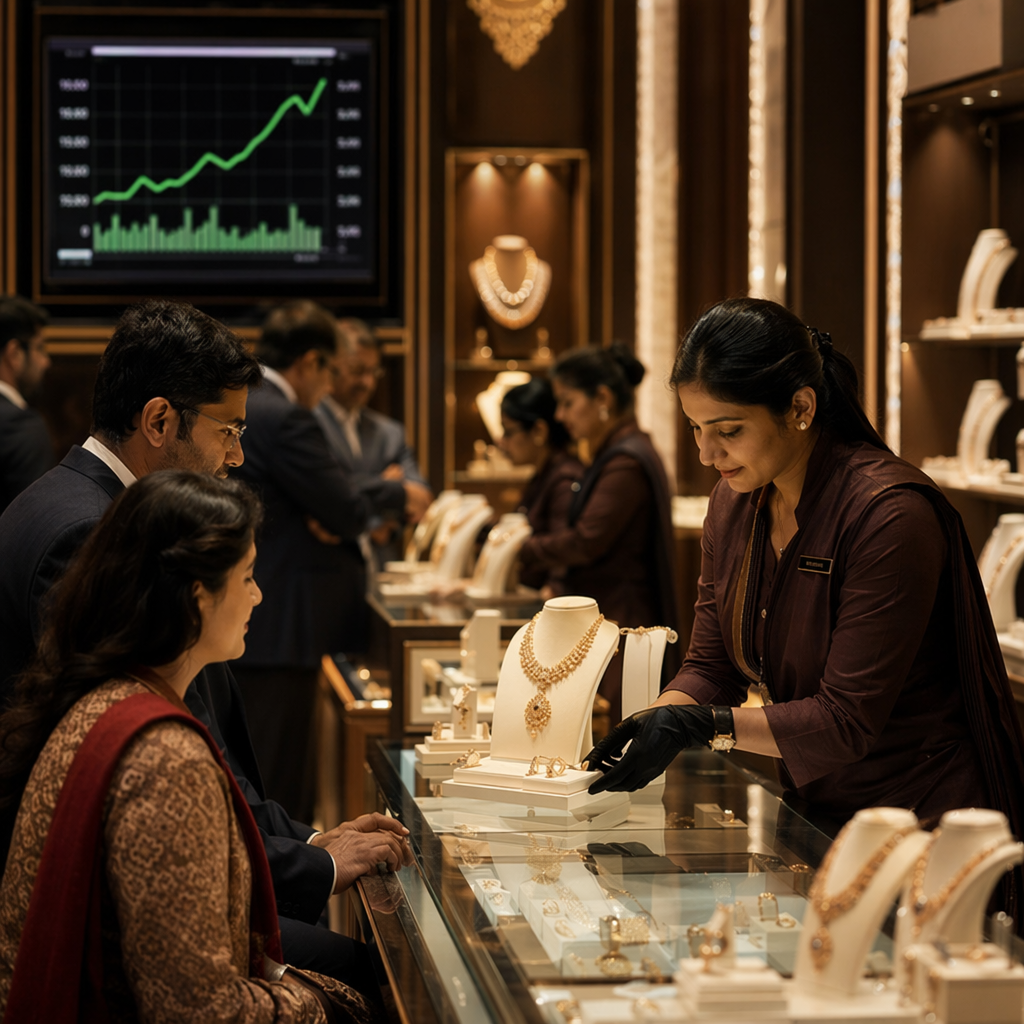
Kalyan Jewellers India Ltd. has remained one of the most closely tracked jewellery retail stocks in India, supported by store expansion, higher organised jewellery demand and rising revenue in recent financial years. The company, listed on the National Stock Exchange and BSE, operates in a sector where gold prices, consumer demand, wedding-season spending and regulatory transparency all influence investor attention.
As of 2026, Kalyan Jewellers’ share continues to be evaluated through measurable indicators: quarterly revenue growth, profit after tax, store additions, debt levels, gold price movement and India’s broader retail jewellery environment. The company’s recent disclosures to stock exchanges and publicly available financial reports show that its growth has been tied closely to network expansion and same-store sales performance.
This article summarises the stock’s recent background and operating performance using available public data, company filings, exchange disclosures and sector information from government and market sources.
Company background and stock-market presence
Kalyan Jewellers India Ltd. is an Indian jewellery retailer headquartered in Thrissur, Kerala. The company was founded in 1993 and has grown into a pan-India and international jewellery retail chain. Its product range includes gold, studded jewellery, diamonds, platinum and wedding collections.
The company’s equity shares were listed in March 2021 after an initial public offering. According to stock exchange records, Kalyan Jewellers trades on the NSE under the symbol KALYANKJIL and on the BSE under the scrip code 543278.
As of 2026, the company’s stock is part of a wider listed jewellery retail universe in India that includes Titan Company, Senco Gold, Thangamayil Jewellery and others. Market participants usually compare these companies based on revenue growth, profitability, store count, inventory turnover and brand reach.
Recent financial performance
Kalyan Jewellers has reported growth in recent financial years, supported by expansion in India and the Middle East. In its financial year 2023-24 disclosures, the company reported consolidated revenue from operations of more than ₹18,500 crore, compared with around ₹14,000 crore in the previous financial year, according to its published annual report and exchange filings.
The company also reported consolidated profit after tax of more than ₹590 crore for FY2023-24. This marked an improvement from FY2022-23, when profit after tax was lower, based on the company’s annual financial statements. The figures reflected higher sales volume, festive and wedding demand, and continued contribution from non-south Indian markets.
For FY2024-25, Kalyan Jewellers continued to report year-on-year revenue growth in quarterly updates to stock exchanges. In business updates released during 2024 and 2025, the company said its India business saw double-digit revenue growth, with new showroom additions contributing to expansion.
Reuters has reported that Indian jewellery retailers benefited in 2024 from strong demand during festive periods and from consumers shifting toward organised jewellery chains. Organised retailers have also gained from hallmarking requirements and stronger customer preference for transparent pricing and certified products.
Key statistics investors track
Several measurable indicators help explain why Kalyan Jewellers’ share receives market attention. Publicly available data from company filings, stock exchanges and government sources show the following:
- FY2023-24 revenue: Kalyan Jewellers reported consolidated revenue from operations above ₹18,500 crore, according to its annual report for the year ended March 2024.
- FY2023-24 profit: The company reported consolidated profit after tax of more than ₹590 crore for FY2023-24 in its audited results.
- Store network in 2024: Company business updates during 2024 showed continued showroom expansion across India and overseas markets, including the Middle East.
- India gold imports in 2024: Government trade data showed that gold remained one of India’s largest import categories, reflecting continued domestic demand for bullion and jewellery.
- Gold price movement in 2024: Reuters reported that international gold prices reached record highs during 2024, affecting jewellery pricing, margins and consumer purchase timing.
- Hallmarking regulation: The Bureau of Indian Standards has continued mandatory hallmarking implementation in India, strengthening formalisation in the jewellery market.
Share-price context and valuation drivers
Kalyan Jewellers’ share price has moved in response to both company-specific results and broader sector conditions. Jewellery retail stocks in India are often influenced by quarterly sales trends, same-store sales growth, gold price changes, gross margins and store expansion announcements.
As of 2026, analysts and investors generally review the company on several factual metrics: market capitalisation, price-to-earnings ratio, revenue growth, debt-to-equity ratio, inventory days and return on capital employed. These figures change with market price and quarterly earnings, so investors usually refer to NSE, BSE and company filings for the latest numbers.
The company’s stock performance after listing has also been connected to execution. Kalyan Jewellers was listed in 2021 at an issue price of ₹87 per share. In subsequent years, the stock saw sharp re-rating as revenue and profitability improved and as the company expanded its retail footprint. Exchange data show that the share price traded significantly above its IPO level during 2024 and 2025, though daily prices fluctuated with market conditions.
Reuters coverage of India’s equity markets in 2024 noted that domestic consumer companies and retail-focused businesses drew investor interest as India’s economic growth remained among the fastest among major economies. Jewellery retail benefited from this broader consumption theme, though the sector remained exposed to gold-price volatility.
Expansion strategy and store growth
Kalyan Jewellers has focused on expanding beyond its traditional stronghold in south India. In recent years, the company has increased the number of showrooms in non-south markets such as Maharashtra, Gujarat, Uttar Pradesh, Rajasthan and the National Capital Region.
The company has also used a franchise-owned company-operated model, commonly referred to as FOCO, in several markets. Under this structure, franchise partners invest capital while the company operates or manages key aspects of store operations. The model can support faster expansion with lower capital intensity compared with fully company-owned stores.
In business updates issued in 2024 and 2025, Kalyan Jewellers said it continued to add showrooms under its growth plan. The company has also expanded its lighter-format jewellery brand Candere, which serves the online and omnichannel jewellery segment. Candere operates in a different price and product category from the flagship Kalyan Jewellers stores, helping the company address younger and digital-first consumers.
Store additions are important for valuation because they influence future revenue capacity. However, new stores also require inventory, working capital and disciplined execution. Public filings show that jewellery retailers carry large inventories because gold and diamond jewellery must be available in a wide range of designs, weights and price bands.
Gold prices and demand environment
Gold prices are a major factor for Kalyan Jewellers’ share because they influence both sales value and consumer behaviour. When gold prices rise, the revenue value of jewellery sold can increase, but some consumers may delay purchases or choose lower-weight products. When prices fall, demand may improve, but inventory valuation and margin management become important.
Reuters reported that spot gold prices hit record levels in 2024, supported by global central-bank buying, geopolitical risks and expectations around interest-rate changes. India, as one of the world’s largest gold-consuming countries, is directly affected by such price movements.
Government data show that gold imports remain a major component of India’s merchandise imports. The Ministry of Commerce and Industry regularly publishes import data, including gold shipments. Changes in import volumes and values can indicate shifts in domestic demand and inventory build-up by traders and jewellers.
For jewellery retailers, higher gold prices can raise ticket sizes but may also increase working-capital requirements. Kalyan Jewellers’ filings show that inventory financing and gold-metal loans are part of the operating structure used by organised jewellery companies. These financing costs are important for profit margins.
Regulation and hallmarking
India’s jewellery market has been affected by formalisation measures over the past decade. One of the most important regulatory developments has been hallmarking. The Bureau of Indian Standards has implemented mandatory hallmarking of gold jewellery in phases, requiring jewellers in covered districts to sell hallmarked gold jewellery with purity certification.
As of 2026, hallmarking remains an important consumer-protection and transparency measure in the jewellery sector. For organised players such as Kalyan Jewellers, mandatory hallmarking supports a more standardised retail environment. Smaller unorganised jewellers have also had to adapt to the rules, which include registration and hallmarking-centre compliance.
The Goods and Services Tax system has also contributed to formalisation. Gold jewellery in India attracts GST, and invoices are part of the regulated sale process. Publicly listed jewellery companies must additionally follow Securities and Exchange Board of India disclosure rules, quarterly reporting norms and audit requirements.
Risks visible in public data
Although Kalyan Jewellers has reported growth, its share is linked to several measurable risks. These risks are visible in financial statements and sector data rather than being speculative.
First, gold-price volatility affects inventory value, consumer demand and gross margins. Reuters data for 2024 showed large movements in global gold prices, including record highs. Such changes can alter customer purchase timing and product mix.
Second, working-capital requirements are high. Jewellery retailers must hold significant inventory across showrooms. Company balance sheets show inventory as a major current asset, and financing costs can affect profit after tax.
Third, store expansion carries execution risk. New showrooms require location selection, local marketing, inventory planning and staff training. Public filings indicate that revenue from new stores may take time to stabilise.
Fourth, consumer demand can vary by region and season. Wedding dates, festivals such as Akshaya Tritiya, Dhanteras and Diwali, and local economic conditions influence jewellery purchases in India.
What quarterly updates show
Kalyan Jewellers regularly issues business updates before quarterly results. These updates typically include revenue growth trends in India, Middle East performance, showroom additions and festive-season commentary. In 2024 and 2025, the company’s updates reported continued expansion and double-digit growth in several periods.
Quarterly results provide more detailed financial information. Investors usually review operating revenue, gross margin, earnings before interest and tax, profit after tax, finance cost and inventory position. Exchange filings also disclose segment-level information, including India and Middle East operations.
The Middle East business is relevant because a portion of the company’s revenue comes from Gulf markets. Demand in the Gulf is influenced by expatriate consumers, local retail spending and gold-price trends. Currency movements and regional retail conditions may also affect consolidated results.
As of 2026: factors shaping the stock
As of 2026, Kalyan Jewellers’ share is shaped by a combination of company performance and sector conditions. The main factual drivers include revenue growth, showroom expansion, profit margins, financing costs, gold prices and regulatory formalisation.
India’s broader macroeconomic backdrop is also relevant. Government and Reserve Bank of India data during 2024 and 2025 showed India remaining one of the faster-growing major economies. Consumer-facing sectors, including organised retail, were affected by urban consumption trends, rural demand recovery and inflation conditions.
For shareholders, the most recent audited annual report, quarterly results, investor presentations and stock-exchange filings remain the primary sources for current figures. Market price and valuation ratios should be checked from NSE or BSE because they change daily.
Kalyan Jewellers’ recent public record shows a company that has expanded rapidly from a regional jeweller into a national listed retail chain. Its share performance, however, continues to depend on reported earnings, execution of store additions and conditions in India’s gold and jewellery market.
Sources: Reuters, Government releases, publicly available data.
Comments
Post a Comment