Iran, War Risk and the Strait of Hormuz: Why a Narrow Waterway Remains Central to Global Energy Security
Iran, War Risk and the Strait of Hormuz
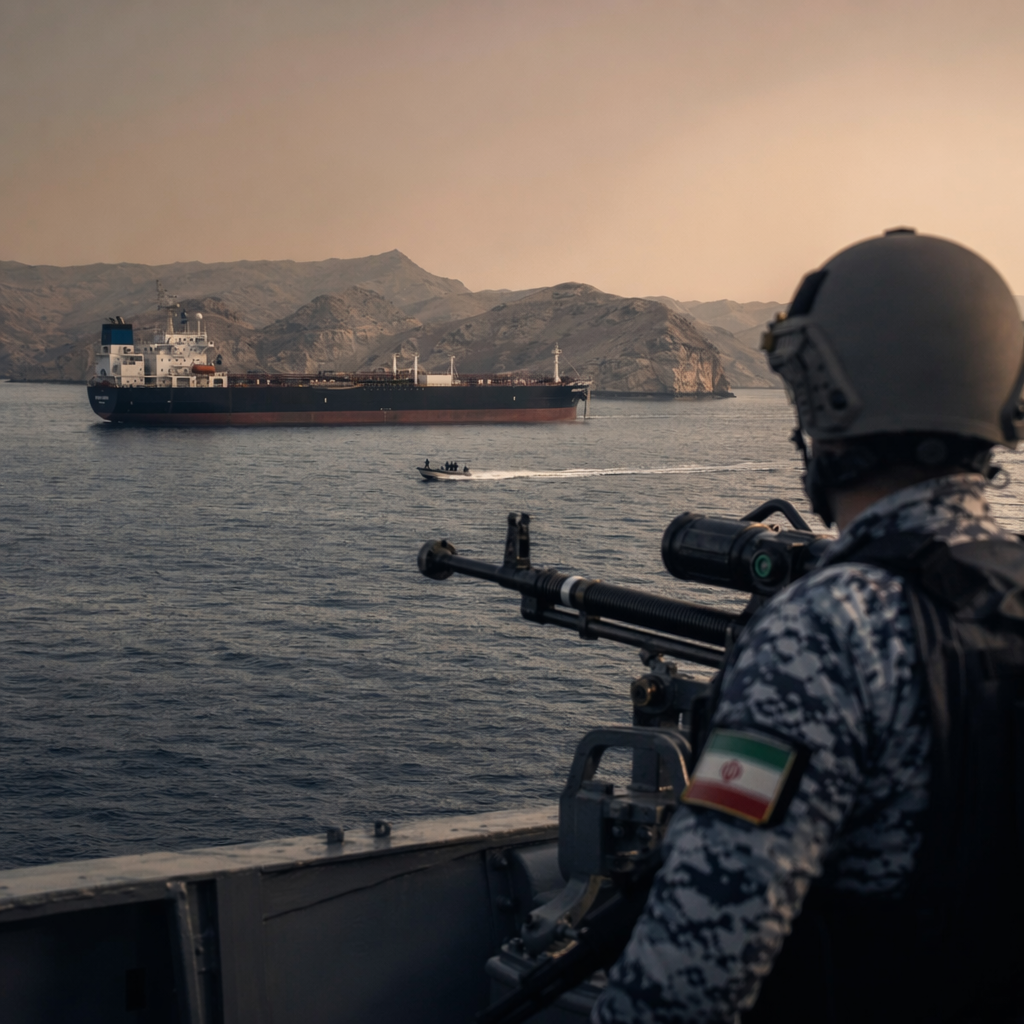
About one-fifth of the world’s petroleum liquids consumption passed through the Strait of Hormuz in 2024, according to the U.S. Energy Information Administration (EIA), making the waterway between Iran and Oman one of the most strategically important maritime chokepoints in the world. As of 2026, the Strait of Hormuz remains at the center of global concern whenever tensions involving Iran, Gulf Arab states, Israel, the United States, or shipping in the wider Middle East rise.
The concern is not theoretical. The strait is the main sea route for crude oil and liquefied natural gas exports from major Gulf producers, including Saudi Arabia, Iraq, the United Arab Emirates, Kuwait, Qatar and Iran. Any military confrontation involving Iran that affected shipping in Hormuz could quickly influence oil prices, insurance costs, naval deployments and energy planning far beyond the Gulf.
This article explains the role of the Strait of Hormuz in the context of Iran-related conflict risks, using publicly available data from government agencies, Reuters reporting and international energy sources.
Where the Strait of Hormuz Is and Why It Matters
The Strait of Hormuz connects the Persian Gulf with the Gulf of Oman and the Arabian Sea. At its narrowest point, it is roughly 21 miles, or 33 kilometers, wide, according to the EIA. Shipping lanes are even narrower: vessels move through two-mile-wide inbound and outbound traffic lanes, separated by a buffer zone.
Geography explains much of the security concern. Iran lies to the north of the strait, while Oman and the United Arab Emirates lie to the south. Tankers carrying oil and gas from Gulf ports must generally pass through this corridor before reaching Asian, European or other global markets.
The EIA has described Hormuz as the world’s most important oil transit chokepoint. In 2024, the agency estimated that around 20 million barrels per day of crude oil, condensate and petroleum products moved through the strait. That volume represented about one-fifth of global petroleum liquids consumption.
Liquefied natural gas is also central to the discussion. Qatar, one of the world’s largest LNG exporters, ships most of its LNG through Hormuz. According to EIA and International Energy Agency data, Qatar remained a leading LNG supplier in 2024, and its export routes depend heavily on secure passage through the Gulf.
Iran’s Position and the Military Dimension
Iran’s coastline gives it proximity to shipping routes, and its armed forces have long treated Gulf waters as a national security priority. The Islamic Revolutionary Guard Corps Navy, separate from Iran’s regular navy, operates in the Gulf and has been involved in patrols, vessel interceptions and exercises reported by international media and maritime authorities.
Reuters has reported repeatedly in 2024 and 2025 on incidents involving merchant ships in the Gulf region, including vessel seizures and heightened security alerts following wider regional tensions. Western governments and shipping associations have also issued advisories at different times warning operators to exercise caution in the Strait of Hormuz and nearby waters.
Iranian officials have, in past years, threatened to disrupt shipping through Hormuz during periods of pressure or conflict. However, actual closure of the strait has not occurred in recent decades. The difference between threat, temporary disruption and full closure is important. A short-term security incident can raise insurance premiums and delay cargoes; a sustained closure would require a much broader military and economic escalation.
Recent Context: 2024–2026 Data and Developments
As of 2026, several recent data points explain why the Iran-Hormuz issue remains a global security and economic concern:
- 2024: The EIA estimated that about 20 million barrels per day of petroleum liquids moved through the Strait of Hormuz, equal to roughly 20% of global petroleum liquids consumption.
- 2024: Global oil demand was estimated by the International Energy Agency at about 102 million barrels per day, showing the scale of Hormuz flows in relation to world consumption.
- 2024: Reuters reported continued maritime security alerts in Gulf waters amid regional tensions linked to the Israel-Hamas war, Houthi attacks in the Red Sea and Iran-related military activity.
- 2025: U.S. and allied naval forces continued maritime security operations in the Middle East, with the U.S. Navy’s Fifth Fleet based in Bahrain and responsible for operations covering the Gulf, Red Sea, Gulf of Oman and parts of the Indian Ocean.
- 2025: The EIA and OPEC data continued to show that Gulf producers remained among the world’s largest oil exporters, with much of their seaborne crude exports dependent on Hormuz transit.
- As of 2026: No internationally verified full closure of the Strait of Hormuz had occurred, but governments and shipping firms continued to treat the waterway as a high-risk chokepoint during periods of military escalation.
How an Iran War Could Affect Hormuz
The phrase “Iran war Hormuz” is often used to describe a scenario in which military conflict involving Iran affects shipping through the strait. The possible mechanisms include missile fire near shipping lanes, naval mines, drone attacks, vessel seizures, cyberattacks on port systems or direct confrontation between Iranian and foreign naval forces.
Government and energy analysts generally distinguish between limited disruption and sustained closure. A limited disruption might involve temporary rerouting, slower ship movements, higher war-risk insurance premiums or naval escorts. A sustained closure would be far more serious because alternative export routes cannot fully replace Hormuz flows.
Several Gulf states have built pipelines to reduce reliance on the strait, but these routes cover only part of regional export capacity. Saudi Arabia operates the East-West Pipeline to the Red Sea. The United Arab Emirates operates a pipeline from Abu Dhabi to Fujairah, outside the strait. Even with those routes, large volumes of Gulf oil and LNG still depend on Hormuz.
The EIA has noted that the available bypass pipelines have limited capacity compared with the total volume normally moving through the strait. This means that a major interruption would likely affect global supply balances, especially for Asian buyers that import large volumes of Gulf crude and LNG.
Oil Prices, Insurance and Shipping Costs
Energy markets typically react quickly to security events in or near Hormuz. Reuters market reports have shown that oil prices often rise when traders assess a greater risk of supply disruption in the Middle East. The scale of any price movement depends on the incident, available spare capacity, commercial inventories, demand conditions and diplomatic response.
Shipping costs can also rise before any physical closure occurs. War-risk insurance premiums are sensitive to attacks, seizures and military warnings. If insurers classify voyages through Gulf waters as higher risk, tanker operators and charterers may face additional costs. Those costs can be passed through to refiners and, eventually, consumers depending on market conditions.
The International Energy Agency’s 2024 oil market data placed global demand at just over 100 million barrels per day. With Hormuz handling about 20 million barrels per day of petroleum liquids, even partial disruption would represent a significant operational challenge for traders, refiners and governments managing emergency stockpiles.
Natural Gas and LNG Risks
Oil is not the only concern. LNG markets could also be affected by insecurity in Hormuz. Qatar’s LNG export terminals are located inside the Gulf, and LNG carriers transit the strait to reach customers in Asia and Europe.
Europe increased LNG imports after Russia’s full-scale invasion of Ukraine in 2022, and Asian economies such as China, Japan, South Korea and India remain major LNG buyers. Any interruption to Qatari LNG cargoes could therefore influence spot prices and supply planning.
Unlike crude oil, LNG supply chains are technically complex. LNG must be cooled, transported in specialized vessels and regasified at import terminals. Delays in shipping schedules can have consequences for utilities, industrial users and storage planning, particularly during high-demand seasons.
U.S. and International Naval Presence
The United States maintains a major naval presence in the region through the U.S. Fifth Fleet, headquartered in Bahrain. The fleet’s area of operations includes the Persian Gulf, Gulf of Oman, Arabian Sea, Red Sea and parts of the Indian Ocean. Its stated missions include maritime security, deterrence and protection of freedom of navigation.
Other countries have also participated in maritime security efforts in and around the Gulf. These deployments are intended to reassure commercial shipping and deter attacks or seizures. However, a large naval presence can also increase the complexity of crisis management when military forces from rival states operate in close proximity.
Reuters has reported that the United States and partners have adjusted regional deployments during periods of heightened tension, including after attacks on shipping elsewhere in the Middle East. These movements are closely watched by energy markets because they signal how governments assess the risk to sea lanes.
Iran’s Economy and the Strait
Iran is not only a military actor near Hormuz; it is also an energy exporter affected by the same waterway. Iran exports crude oil and petroleum products, though its trade has been shaped by U.S. sanctions. The country’s economy depends in part on energy revenue, and disruption in Gulf shipping can affect Iran as well as its neighbors.
According to OPEC data for 2024, Iran remained a major crude oil producer among member states. Reuters has reported that Iranian oil exports continued despite sanctions, with much of the trade involving Asian buyers. Because Iran also relies on Gulf shipping routes, a prolonged disruption of Hormuz would create economic costs for Tehran as well as for other exporters.
This interdependence is one reason analysts and governments track both rhetoric and actual military capability. Statements threatening Hormuz can influence markets, but long-term disruption would carry economic risks for all regional states.
Legal and Diplomatic Issues
The Strait of Hormuz is governed by international maritime rules, including principles related to transit passage through straits used for international navigation. The United Nations Convention on the Law of the Sea provides a legal framework, although not all relevant states have the same treaty status.
In practice, maritime security in Hormuz depends on a combination of law, diplomacy, naval deterrence and commercial risk management. When tensions rise, governments may issue navigation warnings, insurers may change risk assessments and shipping companies may adjust routes or speeds.
Diplomatic efforts have repeatedly focused on preventing direct military escalation in the Gulf. Reuters and government statements in 2024 and 2025 documented continuing contacts among regional and international actors aimed at reducing the risk of broader conflict, especially after crises linked to Israel, Gaza, Lebanon, Syria, Iraq, Yemen and Iran.
Why Asia Is Especially Exposed
Asian economies are among the largest buyers of Gulf oil and LNG. China, India, Japan and South Korea import substantial volumes of crude from producers whose seaborne exports pass through Hormuz. This means a disruption would not be only a Middle Eastern issue; it would directly affect industrial economies and major consumer markets in Asia.
The EIA has previously reported that most crude oil and condensate moving through Hormuz goes to Asian markets. In 2024 and 2025, Asia remained the main destination for Gulf energy exports, according to energy trade data cited by government agencies and Reuters reporting.
For import-dependent countries, the risk is managed through strategic petroleum reserves, diversified suppliers, long-term contracts and diplomatic engagement. However, those tools reduce exposure rather than eliminate it.
What to Watch as of 2026
As of 2026, the main indicators watched by governments, energy companies and shipping operators include military movements, vessel seizures, missile or drone activity, insurance rates, oil futures prices, official navigation warnings and diplomatic statements.
A conflict involving Iran would not automatically close the Strait of Hormuz. But the waterway’s importance means even limited incidents can have global consequences. With roughly 20 million barrels per day of petroleum liquids transiting the strait in 2024, and with LNG flows also dependent on safe passage, Hormuz remains one of the clearest links between regional security and the world economy.
The central fact is measurable: a narrow sea passage bordered by Iran carries a large share of the world’s traded energy. That is why every serious military escalation involving Iran draws immediate attention from governments, shipping companies, insurers and energy markets.
Sources: Reuters, Government releases, publicly available data.
Comments
Post a Comment