Iran War and Regional Security: Key Facts, Figures and Developments as of 2026
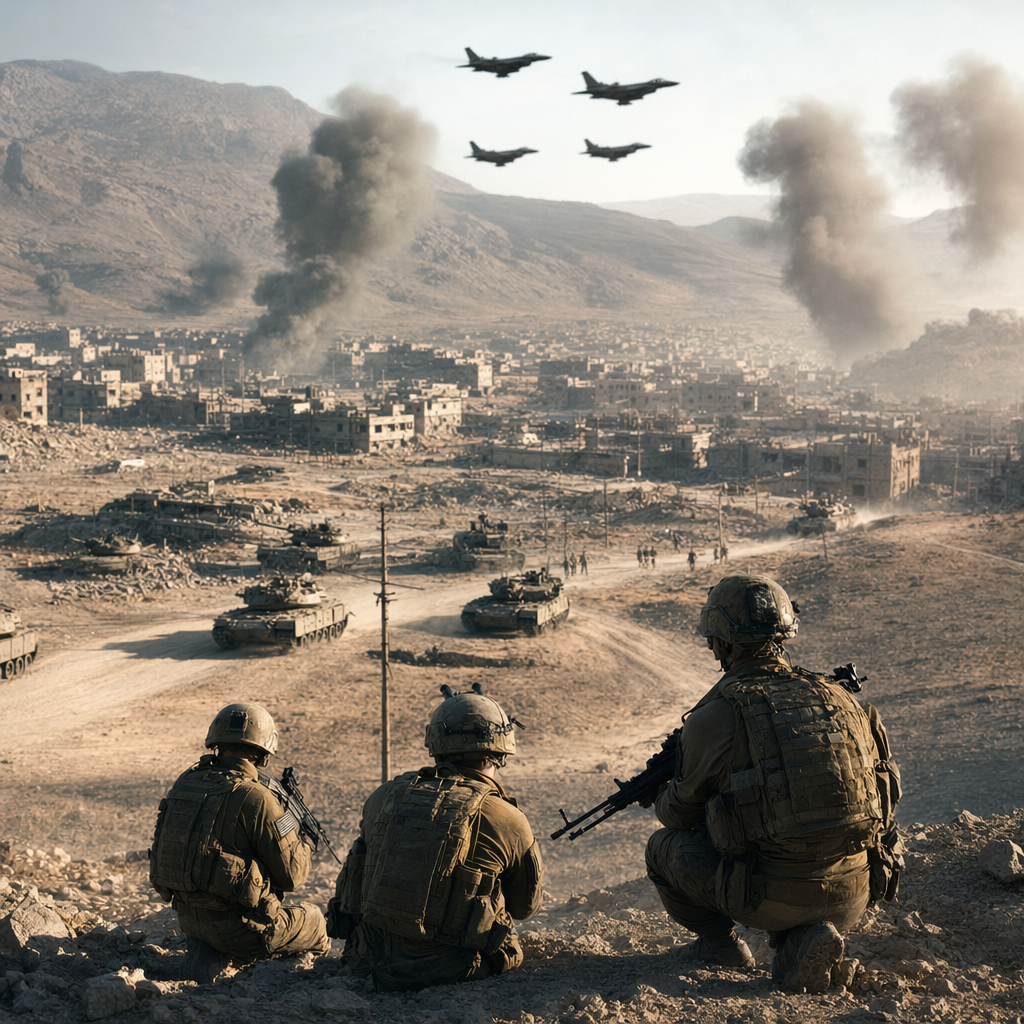
As of 2026, Iran remains at the centre of one of the world’s most closely watched security flashpoints, shaped by its nuclear programme, missile and drone capabilities, U.S. sanctions, maritime incidents in the Gulf, and conflicts involving armed groups across the Middle East. Reuters, U.N. agencies, U.S. government releases and the International Atomic Energy Agency have all reported developments that show how tensions involving Iran have widened beyond its borders.
There has not been a formally declared full-scale war between Iran and the United States or Israel as of 2026. However, Iran has been involved in repeated direct and indirect confrontations, including cross-border strikes, attacks on military sites, maritime seizures, sanctions disputes and proxy-linked violence. The risk has been measured not only in diplomatic statements but also in military deployments, casualty figures, shipping disruptions and nuclear monitoring reports.
In April 2024, Iran launched more than 300 drones and missiles toward Israel, according to Reuters citing Israeli and U.S. officials. Israel, the United States and allied forces said most were intercepted. The attack followed an April 1, 2024 strike on an Iranian diplomatic compound in Damascus, Syria, which Iran attributed to Israel. Israel did not formally claim responsibility. The exchange marked one of the most direct state-to-state escalations between Iran and Israel in decades.
Iran’s security posture is closely tied to its regional network of allied armed groups. The U.S. government has repeatedly identified Iran as a supporter of groups including Hezbollah in Lebanon, Hamas in Gaza, the Houthis in Yemen, and several Iraqi militias. Iran says its regional policy is defensive and intended to counter U.S. and Israeli influence. Western governments and Gulf Arab states have described the same activities as destabilising. These opposing official positions have shaped the crisis without resolving it.
Major flashpoints linked to Iran
Several fronts have defined the Iran-related security environment from 2024 to 2026. Each has its own causes, but they are connected by military deterrence, sanctions, and diplomatic breakdowns.
- Iran-Israel confrontation: direct missile and drone exchanges in 2024 and repeated strikes in Syria and other regional theatres.
- Iran nuclear programme: IAEA monitoring disputes and uranium enrichment levels reported above limits set by the 2015 nuclear deal.
- Red Sea and Gulf shipping: Houthi attacks on vessels and U.S.-led naval responses affecting trade routes.
- Iraq and Syria: attacks involving Iran-backed militias and U.S. military positions.
- Sanctions and oil exports: U.S. restrictions on Iran’s economy, petroleum trade and financial networks.
April 2024: Iran’s direct attack on Israel
The April 2024 attack was a turning point. Reuters reported that Iran fired more than 300 projectiles, including drones, cruise missiles and ballistic missiles, at Israel. Israeli officials said the vast majority were intercepted with assistance from the United States, Britain, France and Jordan. U.S. President Joe Biden said American forces helped shoot down drones and missiles launched by Iran.
According to Israeli military statements reported by Reuters in April 2024, damage was limited and one military facility sustained minor damage. Medical services reported that a young girl was seriously injured. Iran’s Islamic Revolutionary Guard Corps said the attack was retaliation for the Damascus strike that killed senior Iranian military personnel. The United Nations Security Council held emergency discussions after the attack, reflecting international concern about escalation.
Israel later carried out a limited strike on Iran in April 2024, according to Reuters citing sources familiar with the matter. Iranian officials downplayed the impact and said air defences were activated near Isfahan. The limited scale of that response was widely reported as preventing immediate all-out war, though both countries maintained military readiness.
The nuclear issue remains central
Iran’s nuclear programme remains one of the main drivers of international concern as of 2026. The 2015 Joint Comprehensive Plan of Action, known as the JCPOA, limited Iran’s uranium enrichment to 3.67% and capped its stockpile of low-enriched uranium at 202.8 kg. The United States withdrew from the agreement in 2018, and Iran later breached multiple limits.
The International Atomic Energy Agency has reported since 2021 that Iran enriched uranium up to 60% purity. Weapons-grade uranium is generally considered around 90% enrichment. Iran says its nuclear programme is peaceful and denies seeking nuclear weapons. The IAEA and Western governments have stated that Iran’s levels of enrichment have no clear civilian justification at that scale, while also noting that weaponisation would require additional steps beyond enrichment.
In 2024, the IAEA reported continuing difficulties in monitoring parts of Iran’s nuclear programme, including limits on inspectors and surveillance equipment. Reuters reported in 2024 that Western powers pushed for censure measures at the IAEA Board of Governors because of Iran’s reduced cooperation. Iran criticised such moves as political and said it would respond if pressured.
As of 2026, no publicly verified government or IAEA declaration has confirmed that Iran has built a nuclear weapon. The issue remains focused on breakout capability, monitoring access, uranium stockpiles and diplomatic negotiations.
Regional war pressures after the Gaza conflict
The war in Gaza that began after Hamas attacked Israel on October 7, 2023 significantly raised tensions involving Iran. Israel says Hamas killed about 1,200 people and took more than 250 hostages in the October 2023 attack, figures reported by Reuters citing Israeli authorities. Gaza health authorities said tens of thousands of Palestinians were killed in Israel’s subsequent military campaign by 2024 and 2025; Reuters has regularly cited the Hamas-run Gaza health ministry for those figures while noting the source.
Iran has long supported Hamas, though Iranian officials said they were not involved in the October 7 operation. U.S. and Israeli officials have stated that Iran provides funding, training and weapons support to Hamas and Palestinian Islamic Jihad. The Gaza war contributed to wider regional confrontations involving Hezbollah in Lebanon, Iraqi militias, Syrian strike zones and Houthi attacks in the Red Sea.
Hezbollah and Israel exchanged fire across the Lebanon-Israel border throughout 2024. Reuters reported that tens of thousands of civilians were displaced on both sides of the border. The conflict raised concerns that a wider Israel-Iran confrontation could emerge through Lebanon, where Hezbollah is Iran’s most powerful regional ally.
Red Sea shipping and the Houthi connection
Another major Iran-linked flashpoint has been the Red Sea. Yemen’s Houthi movement, which is aligned with Iran, began attacking commercial vessels in late 2023, saying the operations were linked to the war in Gaza. The United States, Britain and other governments said the attacks threatened international shipping and were not limited to Israeli-linked vessels.
In January 2024, the United States and Britain launched strikes against Houthi targets in Yemen. The U.S. Department of Defense said the strikes were intended to degrade missile, drone and radar capabilities. Reuters reported that shipping companies rerouted vessels around the Cape of Good Hope, extending voyages and raising costs for trade between Asia and Europe.
The Red Sea is a critical route because the Suez Canal handles a significant share of global trade. The World Bank and shipping industry data in 2024 showed disruptions to container shipping and longer delivery times. Egypt, which earns revenue from the Suez Canal, reported pressure on canal receipts in 2024 as traffic declined due to rerouting.
U.S. military presence and militia attacks
The United States has maintained forces in Iraq and Syria as part of the campaign against Islamic State. U.S. government data has commonly placed the deployment at about 2,500 troops in Iraq and around 900 in Syria in recent years, including 2024. These forces have repeatedly come under attack from Iran-aligned militias.
In January 2024, a drone attack on a U.S. outpost in Jordan near the Syrian border killed three U.S. service members and wounded dozens, according to the U.S. Department of Defense and Reuters. The United States attributed the attack to Iran-backed militants. Iran denied directing the strike. The U.S. responded with airstrikes against targets in Iraq and Syria that it said were linked to Iran’s Islamic Revolutionary Guard Corps and affiliated groups.
These incidents demonstrated how an Iran-related war could expand through third countries even without a formal declaration of war. Iraq’s government has repeatedly called for restraint and has objected to violations of its sovereignty by outside powers.
Sanctions, oil and the Iranian economy
Economic pressure is another major part of the confrontation. The United States has imposed extensive sanctions on Iran’s banking, oil, shipping, defence and technology sectors. Washington says sanctions are intended to limit Iran’s nuclear and military capabilities and reduce funding for armed groups. Tehran says the sanctions are illegal and harm civilians.
Despite sanctions, Iran continued exporting oil in 2024. The U.S. Energy Information Administration and market reporting cited by Reuters showed that Iranian crude exports increased compared with earlier years under maximum pressure sanctions, with much of the trade linked to Asian buyers. Exact volumes vary by tracking firm because sanctions cause shipments to be harder to verify.
Iran’s economy has faced high inflation, currency weakness and limited foreign investment. The International Monetary Fund has published estimates showing inflation remained high in Iran during 2024. Government budget pressures, sanctions enforcement and oil export revenues all affect Iran’s ability to fund domestic spending and regional policy.
Key statistics from 2024–2026
Publicly reported figures help show the scale of the crisis. The following statistics are based on Reuters reports, U.S. government statements, Israeli authorities, IAEA material and other public data available during 2024–2026:
- More than 300 drones and missiles were launched by Iran at Israel in April 2024, according to Reuters citing Israeli and U.S. officials.
- About 2,500 U.S. troops in Iraq and about 900 in Syria were reported by U.S. government sources in 2024 as part of the anti-Islamic State mission.
- Three U.S. service members were killed in a January 2024 drone attack in Jordan, according to the U.S. Department of Defense.
- JCPOA limits set uranium enrichment at 3.67%, while IAEA reporting since 2021 has documented Iranian enrichment up to 60%.
- About 1,200 people were killed in Israel in the October 7, 2023 Hamas attack, according to Israeli authorities cited by Reuters, a key trigger for later regional escalation in 2024.
- More than 250 hostages were taken in the October 7 attack, according to Israeli authorities cited by Reuters.
Diplomacy and unresolved risks
Diplomatic efforts have continued through several channels, including Oman-mediated contacts, European diplomacy, United Nations discussions and IAEA negotiations. Iran and the United States have not restored the JCPOA as of 2026. Talks have repeatedly stalled over sanctions relief, verification, enrichment levels and regional security questions.
The United Nations has urged restraint during major escalations, including the April 2024 Iran-Israel exchange and Red Sea incidents. The IAEA has continued pressing Iran for monitoring access and explanations related to nuclear safeguards. Gulf Arab states, including Saudi Arabia and the United Arab Emirates, have called for de-escalation while also strengthening defence ties with international partners.
As of 2026, the Iran war question is not limited to whether Iran and another state formally declare war. The measurable reality is a pattern of direct strikes, proxy-linked attacks, maritime disruption, nuclear escalation concerns and sanctions enforcement. The April 2024 Iran-Israel exchange showed that direct confrontation is possible. The continued activity of militias and the unresolved nuclear file show why the risk remains active.
Any assessment of the conflict must separate verified facts from claims made by governments and armed groups. Verified public data confirms repeated military incidents, major regional deployments, civilian displacement, shipping disruption and nuclear monitoring disputes. It does not confirm, as of 2026, that Iran has produced a nuclear weapon or that a formal all-out Iran-U.S. or Iran-Israel war has been declared.
Sources: Reuters, Government releases, publicly available data.
Comments
Post a Comment