IPL: The Numbers Behind India’s Twenty20 Cricket League as of 2026
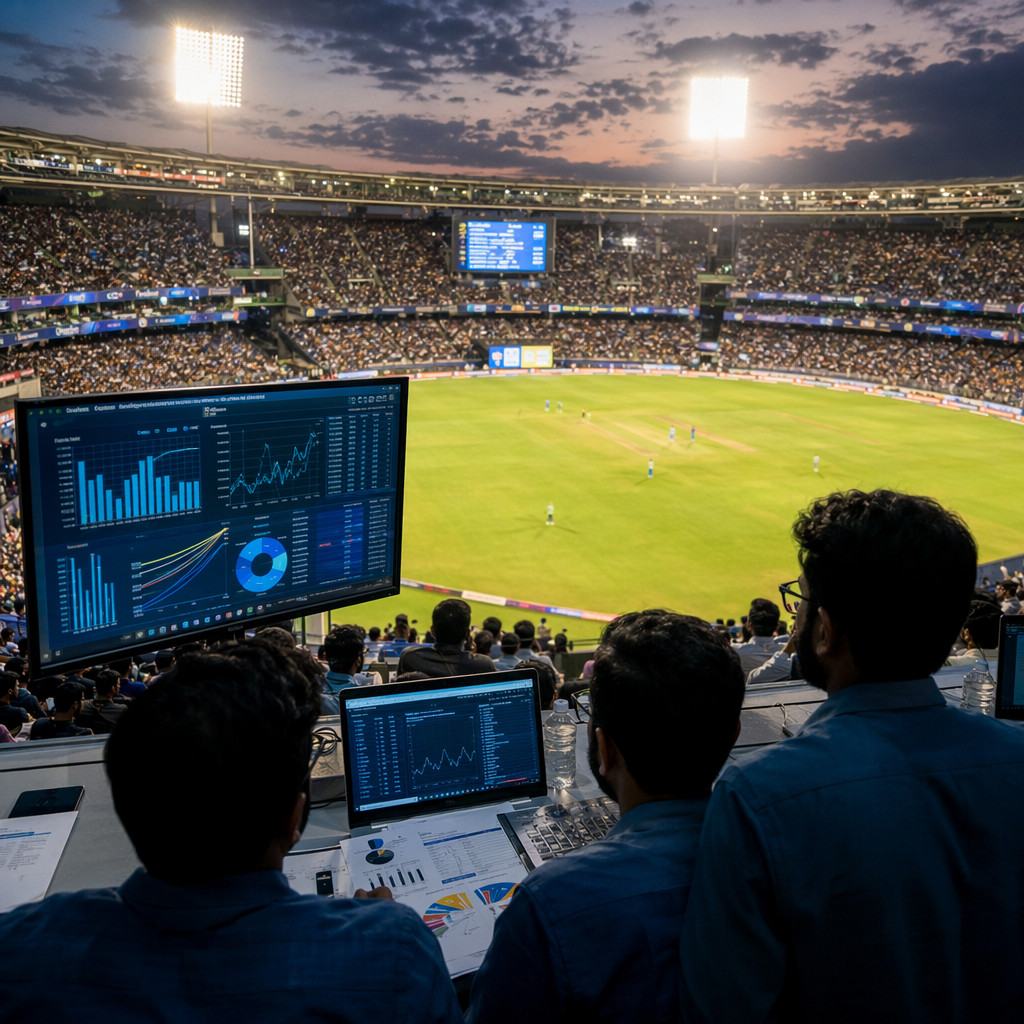
The Indian Premier League entered its 2026 cycle as one of the world’s most valuable sports properties, supported by a five-year media-rights deal worth ₹48,390 crore for 2023–2027. The figure, announced by the Board of Control for Cricket in India (BCCI) in June 2022 and reported by Reuters, placed the tournament among the most commercially significant annual leagues in global sport.
As of 2026, the IPL remains a ten-team Twenty20 cricket competition operated by the BCCI, with matches usually staged across Indian cities in a March-to-May window. The league combines domestic Indian players, overseas professionals, franchise ownership, stadium ticketing, digital broadcasting, and sponsorships. Its importance is measured not only by viewership and revenue, but also by its role in India’s sports economy and the global cricket calendar.
The IPL was founded in 2008 after the rise of Twenty20 cricket, a shorter format in which each team faces a maximum of 20 overs. Since then, it has grown from an eight-team tournament into a ten-team competition. The current structure, in place after the addition of Gujarat Titans and Lucknow Super Giants in 2022, has expanded the number of matches and increased the tournament’s broadcast inventory.
Commercial scale and media rights
The most important indicator of the IPL’s scale is its media-rights valuation. In 2022, the BCCI sold IPL media rights for the 2023–2027 cycle for ₹48,390 crore. According to Reuters reporting at the time, the rights were split between television and digital packages. Disney Star retained television rights for the Indian subcontinent, while Viacom18 secured digital rights for the same market.
The 2023–2027 rights cycle covers five IPL seasons, including 2024, 2025 and 2026. On a per-match basis, the deal made the IPL one of the highest-valued sports broadcast properties in the world. The figure also reflects the rapid shift in Indian sports consumption from television-only viewing to a combination of television and mobile streaming.
As of 2026, the IPL’s media-rights structure is central to how the league generates income. Broadcast and digital partners pay the BCCI for rights, while franchises receive a share of central revenue in addition to generating their own sponsorship, ticketing and merchandising income.
2024 season: Kolkata Knight Riders’ third title
The 2024 IPL season ended on 26 May 2024 at the M. A. Chidambaram Stadium in Chennai, where Kolkata Knight Riders defeated Sunrisers Hyderabad by eight wickets in the final. The result gave Kolkata Knight Riders their third IPL title, following previous wins in 2012 and 2014. Match details were reported by Reuters and published by the BCCI/IPL through official scorecards.
The 2024 season included ten teams and 74 matches, the standard schedule size after the league’s expansion to ten franchises. Kolkata Knight Riders finished the final by chasing a target of 114, after Sunrisers Hyderabad were bowled out for 113. The final was notable for being one of the lowest first-innings totals in an IPL final.
Virat Kohli of Royal Challengers Bengaluru finished as the leading run-scorer of IPL 2024, with 741 runs. Harshal Patel, playing for Punjab Kings, finished as the leading wicket-taker with 24 wickets. These figures were listed in official IPL tournament statistics and reported by cricket data providers and news agencies.
2025 season: Royal Challengers Bengaluru win first IPL title
The 2025 IPL season concluded with Royal Challengers Bengaluru winning their first IPL championship. The final was played on 3 June 2025 at the Narendra Modi Stadium in Ahmedabad, where Royal Challengers Bengaluru defeated Punjab Kings by six runs. The result was reported by Reuters and by official IPL platforms.
Royal Challengers Bengaluru scored 190 for 9 in the final, while Punjab Kings finished on 184 for 7. The victory ended a long wait for the Bengaluru franchise, which had previously reached IPL finals but had not won the title before 2025.
The 2025 season also retained the ten-team format and 74-match schedule. It remained part of the 2023–2027 media-rights cycle, meaning it was covered under the ₹48,390 crore broadcasting and digital rights agreement announced by the BCCI.
As of 2026: league structure and teams
As of 2026, the IPL consists of ten franchises: Chennai Super Kings, Mumbai Indians, Kolkata Knight Riders, Royal Challengers Bengaluru, Sunrisers Hyderabad, Rajasthan Royals, Delhi Capitals, Punjab Kings, Gujarat Titans and Lucknow Super Giants.
Each franchise operates under BCCI rules, including player contracts, salary-auction regulations and squad composition limits. Overseas players are permitted, but playing elevens are capped at a maximum of four overseas players. This rule has been a core feature of the competition and is designed to balance international participation with opportunities for Indian players.
The competition format has varied slightly across seasons depending on scheduling requirements, but the ten-team structure introduced after 2022 has remained in place through the 2024 and 2025 seasons. As of 2026, the IPL continues to function as a closed franchise league, with no promotion or relegation.
Key IPL facts and statistics from 2024–2026
- 2024: Kolkata Knight Riders won their third IPL title, defeating Sunrisers Hyderabad by eight wickets in Chennai on 26 May 2024, according to Reuters and official IPL records.
- 2024: Virat Kohli scored 741 runs for Royal Challengers Bengaluru, the highest aggregate in that season’s IPL, according to official tournament statistics.
- 2024: Harshal Patel took 24 wickets for Punjab Kings, finishing as the season’s leading wicket-taker, according to official IPL statistics.
- 2025: Royal Challengers Bengaluru won their first IPL title by defeating Punjab Kings by six runs in Ahmedabad on 3 June 2025, as reported by Reuters and official IPL records.
- 2025: The IPL continued with ten teams and a 74-match schedule, consistent with the expanded format used after the addition of Gujarat Titans and Lucknow Super Giants in 2022.
- 2026: As of 2026, the league remains within the BCCI’s 2023–2027 media-rights cycle, valued at ₹48,390 crore, based on BCCI announcements and Reuters reporting.
Player auction system and squad building
The IPL’s player auction is a major administrative and commercial feature of the league. Teams use a defined purse to acquire Indian and overseas players. The auction system is designed to distribute player talent across franchises while allowing clubs to retain core squad members under retention rules set by the BCCI.
Ahead of each season, franchises submit retention lists and release players into the auction pool. The auction affects both sporting strategy and salary distribution. Indian domestic players can receive major contracts if they attract competitive bidding, while international players often enter the auction after participating in national teams or other T20 leagues.
The league’s salary rules are published by the BCCI and IPL authorities before each auction cycle. Player contracts are paid by franchises, while match fees, central revenue sharing and sponsorship arrangements operate within the broader framework of BCCI and franchise agreements.
Role in Indian cricket and player development
The IPL has become a key pathway for Indian players because performances in the tournament are closely followed by selectors, franchises and state associations. The league gives domestic players exposure to international teammates, high-attendance matches and televised competition.
Several India players have moved from domestic cricket to national-team consideration after IPL performances. The tournament also provides match practice for established international players before global events. The International Cricket Council and national boards have adjusted player workload planning around the IPL window because many top cricketers participate in the tournament.
From a governance perspective, the IPL remains under the BCCI, which is a national sports body for cricket in India and a member of the International Cricket Council. The Ministry of Youth Affairs and Sports does not directly run the IPL, but Indian government permissions, security coordination, taxation, visas and local administration are relevant to staging matches across states.
Venues, crowds and city impact
IPL matches are hosted in major Indian stadiums such as Eden Gardens in Kolkata, Wankhede Stadium in Mumbai, M. A. Chidambaram Stadium in Chennai, Arun Jaitley Stadium in Delhi, M. Chinnaswamy Stadium in Bengaluru and Narendra Modi Stadium in Ahmedabad. The Narendra Modi Stadium, operated by the Gujarat Cricket Association, is the largest cricket stadium in the world by seating capacity, with a commonly cited capacity of more than 100,000.
Match staging requires coordination between franchise operators, state cricket associations, police, transport agencies and municipal bodies. High-profile matches can involve traffic controls, security deployments and crowd-management plans. These arrangements are usually announced locally by state authorities and police departments before match days.
The IPL also generates demand for hospitality, travel, food services, local advertising and event staffing. While the exact city-level economic effect varies by venue and season, the league’s match calendar creates predictable short-term commercial activity around stadiums.
Broadcasting and digital viewing
The IPL’s current rights cycle shows how Indian cricket consumption has changed. Television continues to be important, especially for households and public viewing, while digital streaming has become central for younger audiences and mobile users. The separation of television and digital rights for the 2023–2027 cycle reflected this market shift.
In 2024 and 2025, IPL matches were available through rights holders under the BCCI’s licensing agreements. Broadcasters and streaming platforms monetised the tournament through advertising, subscriptions or hybrid access models, depending on their business strategy in each season.
As of 2026, the IPL is not only a cricket tournament but also a major advertising product. Brands use live match inventory, team sponsorships, jersey placements, boundary boards, digital campaigns and player endorsements to reach audiences during the season. The scale of the media-rights deal indicates the size of expected advertising and distribution revenues tied to the tournament.
Governance, integrity and regulation
The BCCI administers IPL rules, disciplinary processes, player registration, match operations and anti-corruption protocols. The league has an Anti-Corruption Unit framework, and players and officials are required to follow reporting obligations relating to suspicious approaches.
The IPL has previously faced governance and integrity challenges, including the 2013 spot-fixing and betting case that led to investigations, sanctions and changes in oversight. Since then, the BCCI has continued to operate anti-corruption education and monitoring systems during the tournament. These procedures are part of the league’s official compliance structure.
Government bodies may become involved when issues include law enforcement, public order, taxation, broadcasting policy or visas for overseas participants. For routine sporting matters, however, the tournament is governed by the BCCI and its IPL regulations.
Why the IPL remains central to world cricket
The IPL’s importance is measurable through its rights valuation, player contracts, global participation and annual schedule position. The ₹48,390 crore media-rights agreement for 2023–2027 provides a verified financial benchmark. The 2024 and 2025 seasons added sporting data points: Kolkata Knight Riders won a third title in 2024, while Royal Challengers Bengaluru won their first in 2025.
As of 2026, the league continues to influence international cricket calendars because many leading players participate. National boards must consider the IPL window when managing player workloads, and broadcasters treat the tournament as one of cricket’s most valuable annual assets.
The available data from 2024–2026 shows a league operating at large commercial scale while maintaining a stable ten-team structure. Its results, statistics and finances are documented through BCCI releases, official IPL records, Reuters reporting and publicly available sports data.
Sources: Reuters, Government releases, publicly available data.
Comments
Post a Comment