FIFA World Cup 2026: the first 48-team tournament across three countries
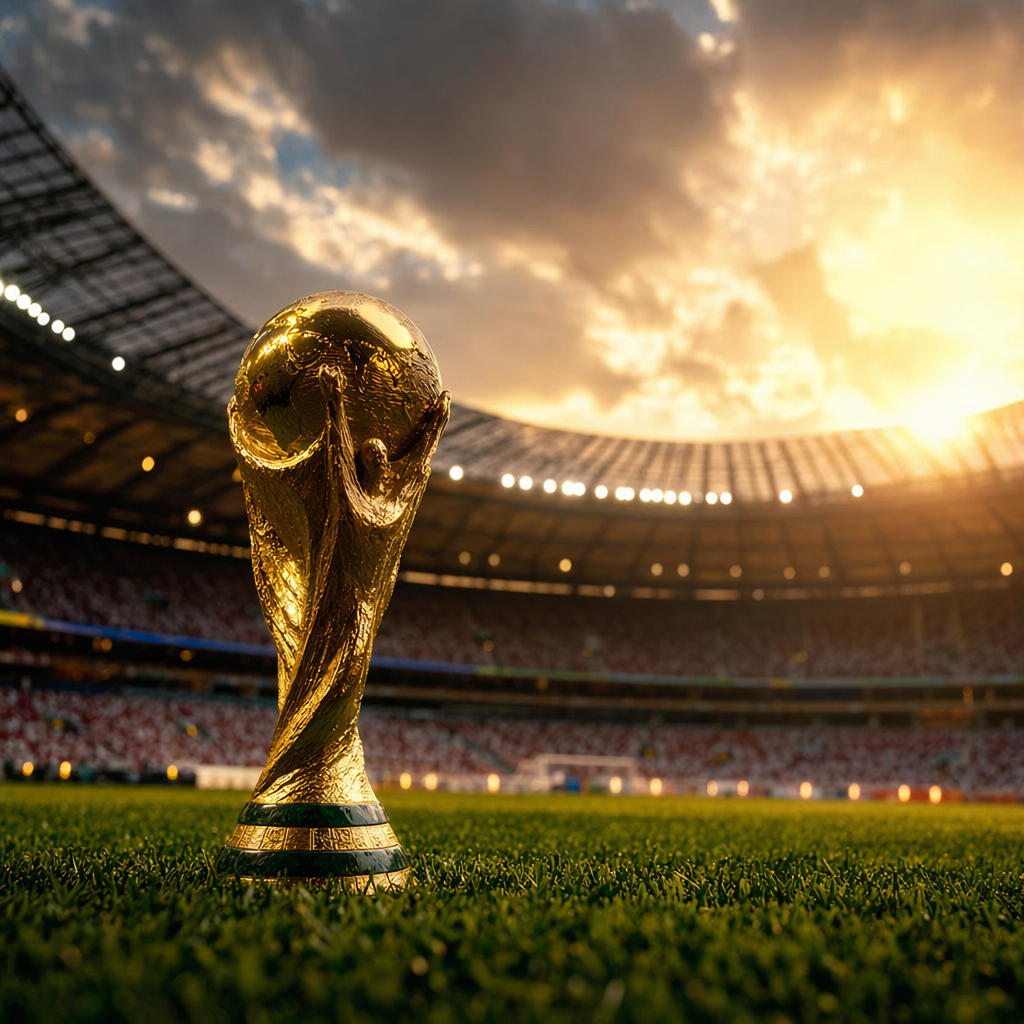
The FIFA World Cup 2026 will be the largest edition in the tournament’s history: 48 national teams, 104 matches and 16 host cities across the United States, Canada and Mexico. FIFA confirmed the expanded match schedule in February 2024, marking a major increase from the 64-match format used at the 2022 World Cup in Qatar.
As of 2026, the competition is scheduled to run from 11 June to 19 July 2026. It will open at the Estadio Azteca in Mexico City and end with the final at MetLife Stadium in East Rutherford, New Jersey, according to FIFA’s published match schedule. The tournament will also be the first men’s World Cup jointly hosted by three countries.
The 2026 event carries major logistical, sporting and commercial significance. It expands the number of participating teams by 50% compared with the 32-team format used from 1998 through 2022. It also spreads matches across North America, using existing major stadiums and transport networks in 11 U.S. cities, three Mexican cities and two Canadian cities.
Confirmed host countries and host cities
The 2026 World Cup is being hosted by the United States, Canada and Mexico. FIFA selected the joint North American bid in June 2018. The final vote was held at the 68th FIFA Congress in Moscow, where the United 2026 bid defeated Morocco by 134 votes to 65, according to FIFA’s official records.
The host-city list was confirmed by FIFA in 2022. In total, 16 metropolitan areas will stage matches:
- United States: Atlanta, Boston, Dallas, Houston, Kansas City, Los Angeles, Miami, New York/New Jersey, Philadelphia, San Francisco Bay Area and Seattle.
- Mexico: Guadalajara, Mexico City and Monterrey.
- Canada: Toronto and Vancouver.
FIFA’s 2024 schedule allocation confirmed that the United States will host most of the tournament’s 104 matches. Canada and Mexico will each stage 13 matches, while the United States will stage 78. These figures were published when FIFA announced the full match schedule on 4 February 2024.
Opening match and final venue
The opening match is scheduled for 11 June 2026 at Estadio Azteca in Mexico City. The venue is historically significant because it hosted World Cup finals in 1970 and 1986. In 2026, it is set to become the first stadium to host matches in three separate men’s World Cups.
The final is scheduled for 19 July 2026 at MetLife Stadium, located in East Rutherford, New Jersey, near New York City. FIFA confirmed the final venue in February 2024. MetLife Stadium, opened in 2010, has a listed seating capacity of more than 82,000 for American football events, according to publicly available stadium information and event records.
The schedule also assigns the opening match for Canada to Toronto on 12 June 2026 and the opening match for the United States to Los Angeles on the same date. Mexico’s national team is scheduled to play the first match of the tournament in Mexico City, according to FIFA’s match schedule.
New 48-team format
The 2026 World Cup will feature 48 teams for the first time. FIFA originally approved expansion from 32 to 48 teams in 2017. The final competition format, confirmed by FIFA in March 2023, uses 12 groups of four teams. The top two teams from each group, plus the eight best third-placed teams, will advance to a 32-team knockout stage.
This structure creates a total of 104 matches. The previous 32-team format, used in Qatar in 2022, had 64 matches. The increase of 40 matches is one of the largest structural changes in World Cup history.
FIFA said the format was chosen to reduce the risk of final group-stage matches being affected by teams knowing results in other groups, and to preserve a four-team group structure that has long been used at the tournament. The knockout stage will begin with the round of 32 and continue through the round of 16, quarter-finals, semi-finals, third-place match and final.
Qualification places by confederation
As of 2026, the allocation of direct World Cup qualification places has increased for every confederation compared with the 32-team era. FIFA’s confirmed slot distribution gives more national associations a direct route to the finals.
The 48 places are allocated as follows, including host qualification and intercontinental play-off places:
- AFC, Asia: 8 direct places plus access to the intercontinental play-offs.
- CAF, Africa: 9 direct places plus access to the intercontinental play-offs.
- Concacaf, North and Central America and the Caribbean: 6 direct places, including host nations, plus access to the intercontinental play-offs.
- CONMEBOL, South America: 6 direct places plus access to the intercontinental play-offs.
- OFC, Oceania: 1 direct place plus access to the intercontinental play-offs.
- UEFA, Europe: 16 direct places.
Canada, Mexico and the United States qualified automatically as host nations. FIFA confirmed the hosts’ automatic qualification in 2023. Their places count within Concacaf’s overall allocation.
Confirmed tournament schedule and match distribution
The full match schedule released by FIFA in February 2024 includes 104 games over 39 days. That schedule sets out the number of matches for each host country and confirms the location of key knockout fixtures.
According to FIFA’s 2024 schedule, Dallas will host nine matches, the most of any city in the tournament. New York/New Jersey will host eight matches, including the final. Atlanta and Dallas will host the semi-finals. Miami will stage the third-place match.
The quarter-finals are scheduled for Los Angeles, Kansas City, Miami and Boston. The round-of-16 and round-of-32 matches are distributed across the three host countries, with knockout matches scheduled in major U.S., Mexican and Canadian venues.
Several host cities will also stage national team base and fan operations during the tournament period. Local organizing committees have worked with municipal and federal authorities on transport, security and public services planning. U.S., Canadian and Mexican government agencies have issued travel, security and border-processing guidance as part of the broader preparation process.
Key 2024–2026 facts and statistics
The following confirmed figures are central to the 2026 tournament:
- 2026: 48 teams will compete, up from 32 at the 2022 tournament.
- 2026: 104 matches are scheduled, compared with 64 in 2022.
- 2026: 16 host cities will stage matches across three countries.
- 2024: FIFA confirmed the final at MetLife Stadium on 4 February 2024.
- 2026: The tournament is scheduled to run for 39 days, from 11 June to 19 July.
- 2026: The United States will host 78 matches, while Canada and Mexico will host 13 each, according to FIFA’s 2024 match schedule.
Tickets, fans and travel planning
As of 2026, FIFA is responsible for official World Cup ticket sales through its ticketing platform. The tournament’s scale is expected to require major coordination among federal, state, provincial and municipal authorities in the three host countries. Government agencies in the United States, Canada and Mexico have separate responsibilities covering visas, border control, policing, emergency response, aviation security and public transport.
For international visitors, travel requirements vary by nationality and destination. The U.S. Department of State, the Government of Canada and Mexico’s foreign affairs authorities publish visa and entry rules. These official sources remain the primary references for fans planning cross-border travel during the tournament.
FIFA and host-city authorities have also identified public transport, crowd management and accommodation as major operational areas. Several venues are located in suburban stadium districts, including MetLife Stadium in New Jersey and AT&T Stadium in Arlington, Texas. Others are closer to urban rail and downtown networks, including venues in Mexico City, Toronto, Vancouver and Seattle.
Commercial and broadcast framework
The World Cup is one of FIFA’s largest revenue sources, through broadcasting, sponsorship, ticketing and hospitality. FIFA’s financial reporting has previously shown that World Cup cycles account for most of the organization’s revenue. For the 2023–2026 cycle, FIFA has published budget and revenue projections through its official financial documents.
Broadcast rights for the 2026 tournament have been assigned in major markets through FIFA agreements. In the United States, Fox Sports holds English-language rights and Telemundo holds Spanish-language rights under previously announced broadcast deals. Other national broadcasters are assigned by market through FIFA’s rights process.
Reuters has reported on the tournament’s commercial scale and the role of North American venues in supporting large attendances. The 2026 edition is expected to use several stadiums with capacities above 60,000, including venues used for NFL games in the United States and major football stadiums in Mexico and Canada.
Security and public administration
Large international sporting events require multi-agency planning. In the United States, security coordination typically involves federal agencies including the Department of Homeland Security, the FBI, Customs and Border Protection, and local law-enforcement partners. Canada and Mexico have their own federal and local public-safety structures for tournament planning.
Government releases and public procurement documents in host jurisdictions have referred to planning for transport, emergency services, fan zones and venue operations. These responsibilities are separate from FIFA’s role in running the competition itself. FIFA manages the sporting event, commercial rights and ticketing; public authorities manage border, policing, emergency and city-service functions.
As of 2026, no single public document covers all operational spending across every host city because budgets are held by different local and national bodies. Host cities have published planning materials at different stages, including council briefings, transport assessments and local organizing committee updates.
Sporting importance of the expanded field
The 48-team format changes qualification paths for every region. Africa’s direct places increase to nine, Asia’s to eight, and Europe’s to 16. Oceania receives one direct place for the first time in the men’s World Cup format. These allocations were confirmed by FIFA after the expansion decision.
For national teams, the larger field reduces the number of countries eliminated before the finals and increases representation from confederations outside Europe and South America. However, the tournament winner will still need to progress through a longer knockout path than in previous editions. The champions will play eight matches if they start in the group stage and reach the final, compared with seven matches under the 32-team format.
The draw procedure, team seeding and final qualified-team list depend on qualification results and FIFA regulations. FIFA traditionally uses its world rankings and competition rules to determine draw pots, although the final draw details are published closer to the tournament.
What is already confirmed
Several core facts are fixed ahead of the tournament. The hosts are Canada, Mexico and the United States. The tournament dates are 11 June to 19 July 2026. The opening match is set for Mexico City, and the final is set for MetLife Stadium in New Jersey. The tournament will include 48 teams, 12 groups of four, a 32-team knockout stage and 104 total matches.
Other details, including all qualified teams, squad lists, match officials and some operational information, are determined through qualification and FIFA’s later administrative announcements. National teams must also follow FIFA rules on player registration, medical procedures and disciplinary regulations.
As of 2026, the FIFA World Cup 2026 is defined by scale: three host countries, 16 cities, 48 teams, 104 matches and the first expanded men’s World Cup format. Those confirmed figures make it structurally different from every previous edition of the competition.
Sources: Reuters, Government releases, publicly available data.
Comments
Post a Comment