FIFA World Cup 2026: The Biggest Edition in Tournament History
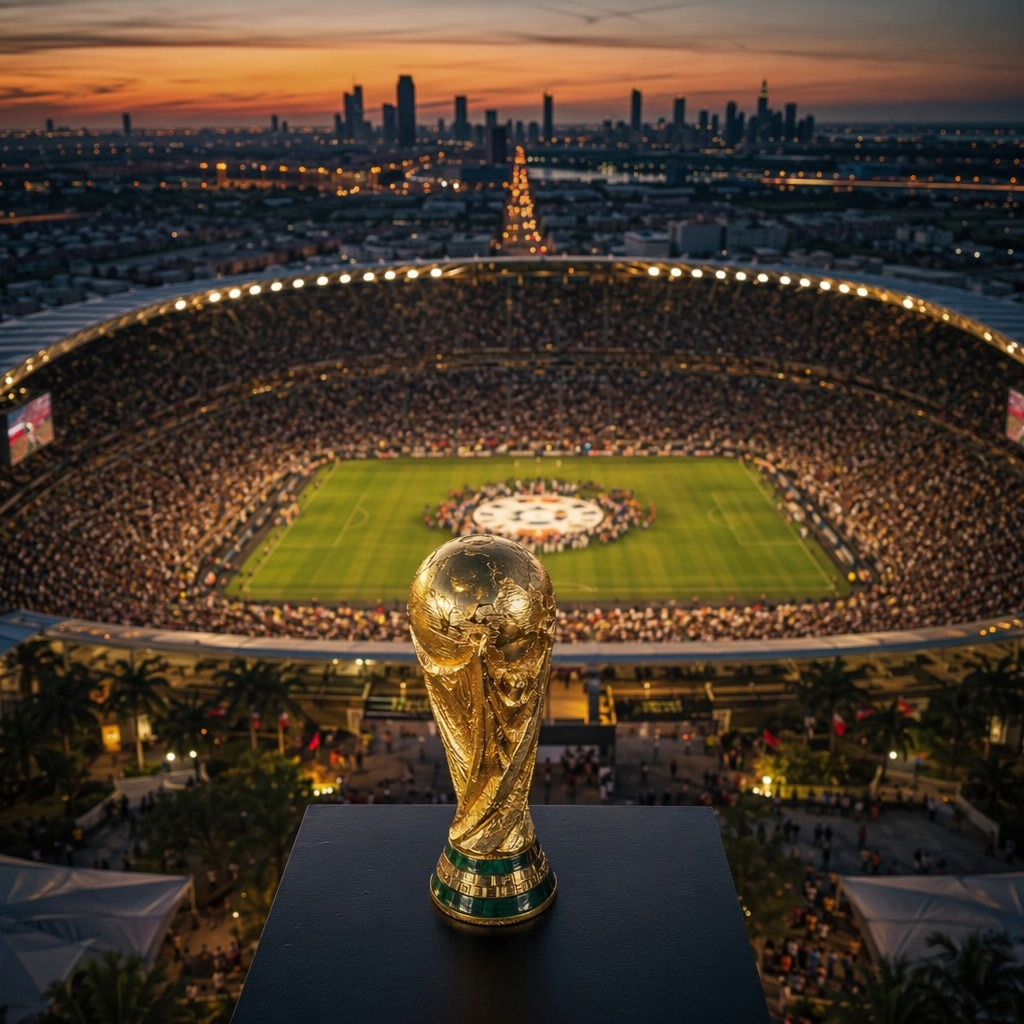
The 2026 FIFA World Cup will be the first edition to feature 48 national teams, 104 matches and three host countries: the United States, Canada and Mexico. FIFA confirmed the expanded match schedule in 2023, and the tournament is scheduled to run from 11 June to 19 July 2026. As of 2026, it is set to be the largest World Cup by number of participating teams and matches since the competition began in 1930.
The tournament will be staged across 16 host cities: 11 in the United States, three in Mexico and two in Canada. According to FIFA’s official match schedule released in February 2024, the opening match will be played at Estadio Azteca in Mexico City, while the final is scheduled for MetLife Stadium in East Rutherford, New Jersey. Reuters reported the venue decision on 4 February 2024, citing FIFA’s announcement.
The 2026 edition marks a major structural change for international football. The men’s World Cup had used a 32-team format from 1998 through 2022. FIFA’s expansion to 48 teams increases representation across confederations and changes the group-stage design. The final tournament will have 12 groups of four teams, with the top two teams from each group and the eight best third-placed teams progressing to a new round of 32.
Host Countries and Match Distribution
The United States will host the majority of matches, with games scheduled in Atlanta, Boston, Dallas, Houston, Kansas City, Los Angeles, Miami, New York/New Jersey, Philadelphia, San Francisco Bay Area and Seattle. Mexico’s host cities are Mexico City, Guadalajara and Monterrey. Canada’s host cities are Toronto and Vancouver.
FIFA announced in 2024 that the United States will stage 78 matches, while Canada and Mexico will each stage 13 matches. The full tournament total is 104 matches, compared with 64 matches at the 2022 World Cup in Qatar. This is one of the clearest numerical changes between the 2022 and 2026 tournaments.
Mexico will become the first country to host World Cup matches in three different editions, after previously hosting in 1970 and 1986. Estadio Azteca, the venue for the 2026 opening match, also hosted World Cup finals in 1970 and 1986, according to FIFA records. Canada will host men’s World Cup matches for the first time, although it previously hosted the 2015 FIFA Women’s World Cup.
Key 2024–2026 Facts and Figures
Several official figures released between 2024 and 2026 define the scale and structure of the tournament. They include changes to qualification, competition format, host venues and match scheduling.
- 48 teams in 2026: FIFA confirmed that the men’s World Cup will expand from 32 to 48 teams for the 2026 tournament.
- 104 matches in 2026: FIFA’s 2024 schedule listed 104 matches, up from 64 in the 2022 World Cup.
- 16 host cities: The tournament will be staged in 16 cities across the United States, Canada and Mexico.
- 39 days: The competition is scheduled from 11 June to 19 July 2026.
- 12 groups: The tournament format includes 12 groups of four teams.
- 6 direct CONMEBOL places: South American qualifying for 2026 provides six automatic World Cup places, plus one intercontinental playoff place, according to FIFA’s allocation.
Qualification Structure for 2026
The qualification process for the 2026 FIFA World Cup began in 2023 and continues through 2025 and 2026, depending on the confederation. As the three host countries, the United States, Canada and Mexico qualify automatically. FIFA confirmed automatic qualification for all three hosts, with their slots deducted from the overall allocation for Concacaf.
The expanded tournament increased the number of available qualification places by confederation. FIFA’s slot allocation for 2026 gives the Asian Football Confederation 8 direct places and one playoff place; the Confederation of African Football 9 direct places and one playoff place; Concacaf 6 direct places, including the three hosts, and two playoff places; CONMEBOL 6 direct places and one playoff place; the Oceania Football Confederation 1 direct place and one playoff place; and UEFA 16 direct places.
South American qualifying began in September 2023 and continued through 2024. Reuters reported on multiple qualifying rounds during 2024, including matches involving Argentina, Brazil, Uruguay and Colombia. Under the 2026 allocation, six of the 10 CONMEBOL teams qualify directly, meaning 60 percent of the confederation’s members receive automatic World Cup places.
UEFA qualifying for the 2026 World Cup is scheduled across 2025, with European teams competing for 16 places. The expansion from 13 European places in 2022 to 16 in 2026 is part of FIFA’s overall allocation change. The African allocation rises from five teams in 2022 to nine direct places in 2026, reflecting the wider tournament field.
Opening Match and Final Venue
The 2026 World Cup opening match is scheduled for 11 June 2026 at Estadio Azteca in Mexico City. The final is scheduled for 19 July 2026 at MetLife Stadium in East Rutherford, New Jersey. FIFA announced the match placements in February 2024, and Reuters reported the final venue selection the same day.
MetLife Stadium is located in the New York/New Jersey host area and has a listed capacity of more than 82,000 for NFL events, according to publicly available venue information. FIFA capacity configurations can vary because of broadcast, hospitality and tournament operations requirements.
The United States last hosted the men’s World Cup in 1994. That tournament had 24 teams and 52 matches, according to FIFA historical records. The 2026 tournament will therefore have twice the number of teams as 1994 and exactly double the number of matches.
Economic and Government Planning
Government agencies in the three host countries have been involved in planning for security, transport, visas and local operations. In the United States, host city planning involves local governments, stadium authorities and federal coordination for major international events. Canada and Mexico have also issued public communications through city and national bodies on preparations for match hosting.
In February 2024, FIFA’s schedule announcement provided the basis for local operational planning. Host cities use the match calendar to coordinate fan zones, public transport capacity, policing plans and volunteer programs. These arrangements are typically managed by local organizing committees in coordination with FIFA and public agencies.
Tourism and visitor management are also central to preparations. The 2026 tournament will take place across large geographic distances, with venues spread from Vancouver to Mexico City and from Seattle to Miami. That makes air travel, accommodation capacity and city-level transport planning significant operational issues. Public agencies have not published one single combined cross-border visitor estimate for the full tournament, but host governments and city authorities have referred to the event as a major international tourism and logistics undertaking.
Broadcasting, Commercial Rights and Global Audience
FIFA World Cup broadcasting rights are sold by territory and typically cover television, radio and digital platforms. For the 2026 edition, major rights agreements were already in place before the final tournament schedule was released. In the United States, Fox Sports and Telemundo hold English- and Spanish-language rights respectively for the men’s World Cup through 2026, according to prior FIFA and broadcaster announcements.
The 2022 World Cup final between Argentina and France was watched by a large global audience, according to FIFA’s post-tournament reporting. While 2026 audience figures cannot be known before the tournament is played, the larger match total means broadcasters will have more fixtures to schedule than in any previous World Cup. The increase from 64 to 104 matches represents a 62.5 percent rise in the number of games compared with 2022.
Commercially, FIFA’s 2023 annual report listed the 2023–2026 cycle as the governing body’s operating period leading into the next men’s World Cup. FIFA revenue is tied to broadcasting rights, marketing rights, hospitality, licensing and ticketing. The 2026 tournament is the main event of that cycle.
Competition Format and Sporting Impact
The 2026 format keeps four-team groups rather than using three-team groups, a structure FIFA revised after reviewing competition integrity and scheduling. The final tournament begins with 48 teams split into 12 groups. The top two in each group advance automatically, joined by the eight best third-placed teams. From that point, the competition becomes a knockout tournament starting with the round of 32.
This means the eventual champion will play eight matches if it starts in the group stage and reaches the final, compared with seven matches under the 32-team format used from 1998 to 2022. Teams that progress deep into the tournament will therefore face a longer route than in previous editions.
The expanded format also increases the number of countries able to qualify for the finals. Smaller and mid-ranked football nations have more available routes through confederation qualifying, especially in Africa, Asia and Oceania. As of 2026, Oceania has a guaranteed direct place for the first time under FIFA’s allocation system, rather than relying only on intercontinental playoffs.
Security, Travel and Cross-Border Coordination
Because the tournament will be hosted by three countries, cross-border coordination is a defining feature of the 2026 World Cup. Teams, officials, media and supporters may travel between the United States, Canada and Mexico during the tournament depending on the match schedule. Visa and entry requirements remain subject to each national government’s laws.
For major sporting events, host governments typically coordinate public safety, customs, aviation and emergency response. In the United States, federal agencies work with state and local authorities for security planning around major international events. In Canada and Mexico, similar coordination involves national and local public safety bodies.
FIFA’s venue selection also places matches in existing stadiums rather than requiring the construction of entirely new World Cup-specific venues. Many selected stadiums are used for NFL, Major League Soccer, Liga MX, concerts or other major events. Temporary tournament modifications may include grass playing surfaces, media facilities, hospitality zones and security perimeters.
What Makes 2026 Different from Previous World Cups
The 2026 FIFA World Cup differs from earlier editions in several measurable ways. It is the first to be hosted across three countries, the first with 48 teams, and the first with 104 matches. It also introduces a round of 32 to the men’s World Cup knockout stage.
Compared with Qatar 2022, the tournament will involve 16 more teams and 40 more matches. Compared with the 1994 World Cup in the United States, it will include 24 more teams and 52 more matches. These figures show the scale of FIFA’s expansion over three decades.
As of 2026, the tournament schedule identifies Mexico City as the opening match host and New York/New Jersey as the final host. The full event will span 39 days and operate across three national jurisdictions, multiple time zones and 16 metropolitan areas.
Sources: Reuters, Government releases, publicly available data.
Comments
Post a Comment