Elections in 2024–2026: What the Latest Data Shows
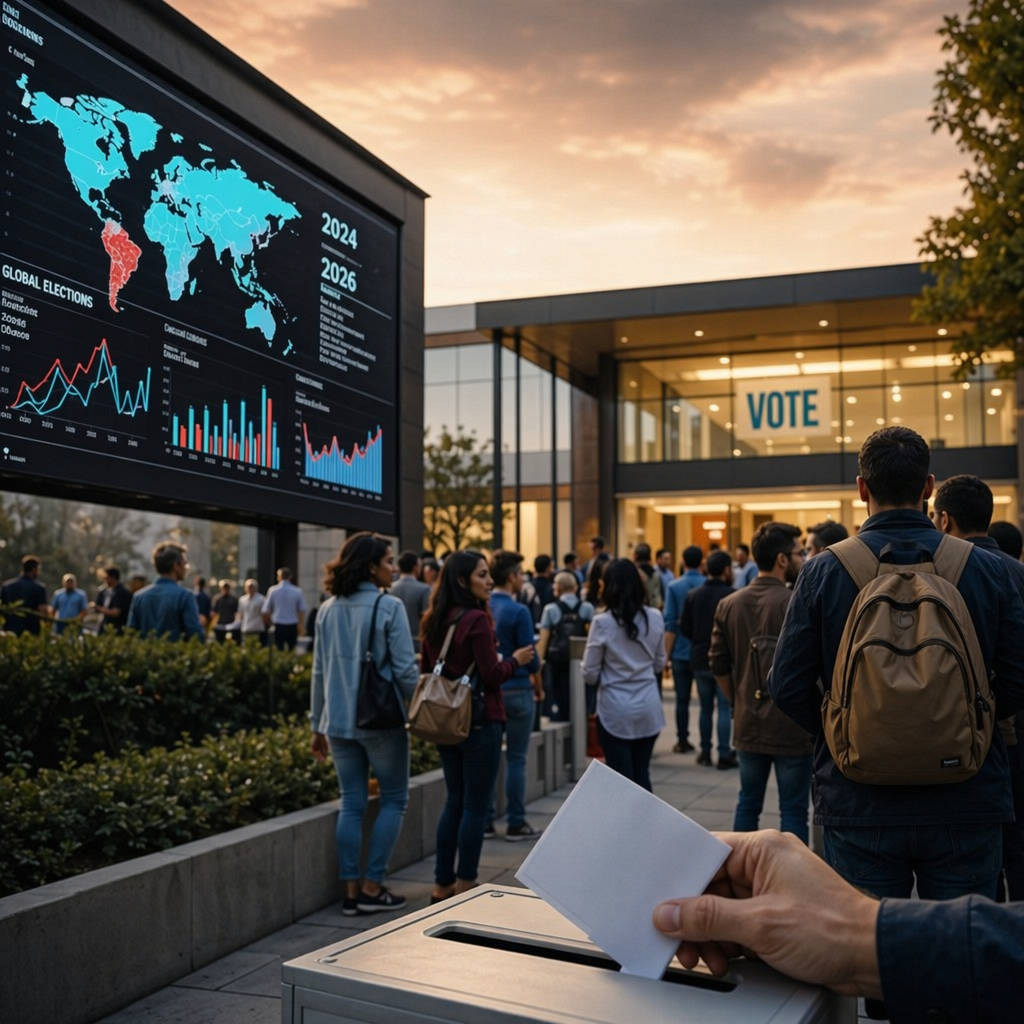
More than 970 million people were eligible to vote in India’s 2024 general election, according to the Election Commission of India, making it the largest democratic exercise recorded in the world. The election was held in seven phases from 19 April to 1 June 2024, with counting on 4 June 2024. As of 2026, elections remain one of the most measurable indicators of democratic participation, public trust and political representation across countries.
The word “चुनाव”, or election, refers to the formal process through which citizens choose representatives, governments or decide public questions through voting. In modern democracies, elections are not limited to national parliaments. They include presidential races, state and provincial assemblies, local governments, referendums and party primaries. Their scale, frequency and rules differ by country, but the core elements are common: voter registration, candidate nomination, campaigning, polling, counting and certification of results.
Between 2024 and 2026, elections have drawn global attention because of their size and their timing. Several major democracies, including India, the United States, Indonesia, Mexico, South Africa and the European Union, held major votes in 2024. Government data, election commissions and international reporting agencies such as Reuters documented large voter rolls, high campaign spending, changes in turnout and wider use of technology in administration.
India’s 2024 Lok Sabha Election: Scale and Administration
India’s 2024 Lok Sabha election was conducted for 543 elected parliamentary seats. According to the Election Commission of India, 968 million registered voters were on the electoral roll in 2024, including about 497 million men and 471 million women. The Commission also reported more than 10.5 million polling officials were deployed across the country.
The 2024 election used electronic voting machines, a system India has used nationwide in parliamentary elections since the 2000s. Voter-verifiable paper audit trail devices, known as VVPATs, were also deployed. The Election Commission said over 1.05 million polling stations were set up for the 2024 Lok Sabha election, designed to keep polling access within reach of voters, including in remote and rural areas.
Final turnout data released by the Election Commission showed 642 million voters cast ballots in 2024. The Commission stated this included 312 million women voters, one of the highest female participation figures ever recorded in an Indian general election. The overall turnout was around 65.8%, slightly below the 2019 turnout of 67.4%, according to Election Commission data and Reuters reporting in June 2024.
Results declared on 4 June 2024 showed the Bharatiya Janata Party won 240 seats, while the Indian National Congress won 99 seats. The BJP-led National Democratic Alliance secured a parliamentary majority with its allies. These figures were published by the Election Commission of India and reported by Reuters on results day.
Major Global Elections in 2024
India was not the only country with a large electoral exercise in 2024. In the same year, Indonesia held presidential and legislative elections on 14 February. Indonesia’s General Elections Commission said more than 204 million people were eligible to vote in 2024. Reuters reported that Prabowo Subianto won the presidential election with nearly 59% of the vote, based on official results announced in March 2024.
The United States held its presidential, congressional and state-level elections on 5 November 2024. The U.S. Census Bureau and state election offices track turnout after each federal election cycle. As of 2026, official state-level certifications remain the primary public record for the 2024 election results. The Federal Election Commission also publishes campaign finance data, including contributions and spending by candidates, parties and political committees.
Mexico held elections on 2 June 2024, including the presidency, Congress and local offices. According to Mexico’s National Electoral Institute, nearly 98 million citizens were registered to vote in 2024. Claudia Sheinbaum won the presidential election and became Mexico’s first woman elected president, a result confirmed by the electoral authority and reported by Reuters in June 2024.
South Africa held its national and provincial elections on 29 May 2024. The Electoral Commission of South Africa reported about 27.8 million registered voters. The African National Congress received about 40% of the national vote, losing its parliamentary majority for the first time since 1994, according to official results and Reuters reporting.
The European Parliament elections took place from 6 to 9 June 2024 across the European Union. The European Parliament said about 373 million EU citizens were eligible to vote. Official turnout was about 51%, similar to the 2019 election level, according to European Parliament data.
What Election Data Measures
Election data is not limited to who wins. It covers voter registration, turnout, demographics, invalid ballots, polling station access, campaign finance, complaints, security arrangements and counting procedures. These figures help election authorities and courts evaluate whether the process followed legal standards.
- Registered voters: the number of citizens eligible and listed to vote.
- Turnout: the share or number of registered voters who cast ballots.
- Seats won: the number of constituencies or offices secured by parties or candidates.
- Vote share: the percentage of valid votes received by a party or candidate.
- Campaign finance: reported donations, expenditures and public funding where required by law.
- Rejected or invalid ballots: votes not counted due to legal or procedural reasons.
As of 2026, election management bodies increasingly publish online dashboards, downloadable results and polling station data. India’s Election Commission, the U.S. Federal Election Commission, the European Parliament, Mexico’s National Electoral Institute and South Africa’s Electoral Commission all provide official public records. News agencies such as Reuters typically cite these authorities when reporting results and turnout.
Technology and Election Administration
Technology plays different roles across election systems. India uses electronic voting machines and VVPAT slips. The United States uses a mix of paper ballots, optical scanners and ballot-marking devices, depending on state and county rules. Many European countries use paper ballots for national elections, while some countries use electronic counting or digital voter services.
The main administrative purpose of technology is to improve speed, accuracy and accessibility. However, election technology is usually governed by laws, audits and certification rules. In India, the Election Commission has stated that its electronic voting machines are standalone devices and are not connected to the internet. In the United States, the Cybersecurity and Infrastructure Security Agency works with state and local election offices on election infrastructure security, but election administration remains decentralized under state law.
Reuters and government agencies reported in 2024 that misinformation, cyber risks and foreign influence concerns were part of election security planning in several countries. Election authorities responded through fact-checking units, public advisories, observer access and transparency measures. The specific tools varied by country and legal framework.
Women, Youth and Representation
Representation is a measurable part of elections. In India’s 2024 general election, the Election Commission reported 312 million women voted. Women’s turnout has increased over several election cycles, and in some Indian states women’s turnout exceeded men’s turnout in previous elections. Candidate representation, however, remained lower than voter participation. Official candidate data showed women were a minority among total contestants in the 2024 Lok Sabha election.
Mexico’s 2024 election marked a significant gender milestone because Claudia Sheinbaum became the first woman elected president. Mexico has gender parity rules for many elected offices, and its National Electoral Institute publishes candidate and representation data. In the European Parliament election of 2024, representation varied by member state, with the Parliament publishing official breakdowns after results were confirmed.
Youth participation is also tracked where age-based voter data is available. India’s Election Commission said before the 2024 election that more than 18 million first-time voters aged 18–19 were registered. Youth turnout can affect campaign strategy, especially where employment, education, cost of living and digital access are major campaign issues.
Campaign Finance and Regulation
Campaign finance rules differ sharply between countries. In the United States, the Federal Election Commission publishes contribution and expenditure data for federal races. Political action committees, party committees and candidate committees report fundraising and spending under federal law. In India, candidates must file expenditure statements, and the Election Commission sets expenditure limits for parliamentary and assembly candidates. Political party funding is reported through official filings and audited accounts.
In 2024, campaign finance was closely watched in several countries because elections were highly competitive and media spending was substantial. Reuters reported campaign spending, advertising strategies and fundraising trends in the United States and other major democracies, relying on official filings and market data where available.
Election silence periods, advertising rules, donation caps and public funding systems vary. Some countries restrict paid political advertising on television or require equal broadcast time. Others focus on disclosure and reporting rather than strict spending caps. As of 2026, digital political advertising remains a regulatory focus because campaign messages can be targeted by geography, age, language and online behavior.
Counting, Results and Legal Challenges
The final stage of any election is counting and certification. In India, votes from electronic voting machines are counted at designated centers under Election Commission supervision, with party agents present. In the United States, states certify results under their own deadlines, and recounts or court challenges may occur under state law. In South Africa, results are declared by the Electoral Commission after objections and verification procedures.
Legal challenges are part of election systems, not necessarily evidence of failure. Courts or election tribunals may review candidate eligibility, recount requests, campaign violations or polling irregularities. Official results become final only after the required certification process is complete. Reliable reporting therefore distinguishes between projections, partial counts and certified results.
Reuters and other international agencies typically use official election commission data, court documents and verified statements from authorities when reporting disputed outcomes. This matters because premature claims can mislead voters and markets.
As of 2026: Why Elections Remain Central to Governance
As of 2026, the 2024 election cycle remains one of the most documented in recent history because many of the world’s largest democracies voted in the same year. India recorded 642 million votes cast. Indonesia had more than 204 million eligible voters. Mexico registered nearly 98 million voters. South Africa recorded about 27.8 million registered voters. The European Union had about 373 million eligible voters for European Parliament elections.
These figures show the administrative scale of elections rather than the political meaning of any single result. Elections require voter lists, polling staff, security planning, accessible polling places, transparent counting and legal review. They also require public trust in official information. For that reason, government releases, court records and recognized news agencies remain the most reliable sources for election reporting.
Sources: Reuters, Government releases, publicly available data.
Comments
Post a Comment