Delhi Temperature: Recent Heat Records, Seasonal Patterns and Public Health Risks
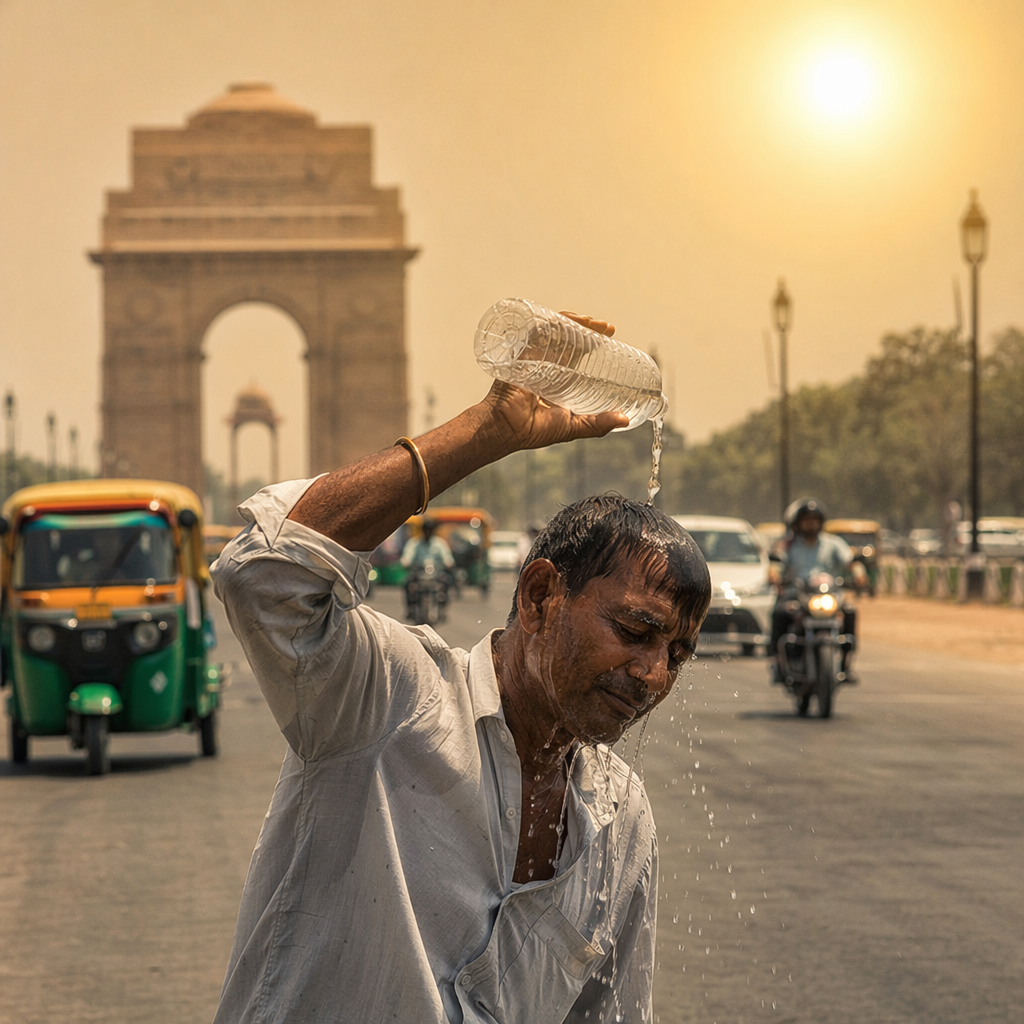
Delhi recorded some of its most extreme heat readings in 2024, including a reported 52.9°C at Mungeshpur on 29 May 2024, according to India Meteorological Department (IMD) station data reported by Reuters. The IMD later said the reading was being examined because it was significantly higher than nearby stations, but the episode drew attention to the scale of heat stress faced by India’s capital during peak summer.
As of 2026, Delhi’s temperature profile remains defined by sharp seasonal contrasts: cold winter mornings, hot and dry pre-monsoon months, humid monsoon periods and a gradual post-monsoon decline. Official weather observations for the National Capital Territory are recorded through IMD stations including Safdarjung, Palam, Lodhi Road, Ridge, Ayanagar, Narela and Mungeshpur. Among these, Safdarjung is widely used as Delhi’s representative observatory in government weather summaries.
Delhi’s summer heat is not new, but recent years have brought several high-impact events. In 2024, the city faced repeated heatwave conditions during May and June, with maximum temperatures crossing 45°C at multiple stations. Reuters reported that on 29 May 2024, while Mungeshpur showed 52.9°C, two other Delhi stations recorded temperatures above 49°C. The IMD said the unusually high reading would be verified because local factors or sensor issues could affect automatic weather station data.
The broader pattern is supported by official climate monitoring. The IMD’s long-period data show that May and June are Delhi’s hottest months. Average maximum temperatures in the pre-monsoon season commonly remain above 40°C, while heatwave days are declared when observed temperatures meet IMD thresholds based on departure from normal or absolute temperature levels. Under IMD criteria, a heatwave is generally considered when the maximum temperature is at least 40°C in plains and is 4.5°C or more above normal; a severe heatwave is declared when the departure is 6.5°C or more.
Recent Delhi Temperature Statistics
Several recent data points from 2024 and publicly released government information help explain the current situation:
- 29 May 2024: Reuters reported an automatic weather station reading of 52.9°C at Mungeshpur, while noting IMD verification concerns because nearby stations recorded lower but still extreme readings.
- 29 May 2024: Delhi’s Najafgarh station recorded around 49.1°C, and Narela recorded around 49.9°C, according to IMD data cited in public weather reports.
- June 2024: Reuters reported that Delhi hospitals saw a rise in heatstroke cases during a prolonged heatwave, with authorities urging residents to avoid afternoon exposure.
- 2024: India’s Ministry of Earth Sciences and IMD reported unusually high temperatures across north-west India during parts of the pre-monsoon season, including Delhi, Rajasthan, Haryana and Uttar Pradesh.
- 2025: IMD seasonal outlooks continued to identify north-west India, including Delhi, as a region vulnerable to above-normal heat during pre-monsoon months.
- As of 2026: Delhi remains covered by IMD heatwave warnings, nowcast bulletins and district-level alerts issued through official government weather platforms during extreme temperature events.
Why Delhi Gets So Hot
Delhi’s geography and land-use pattern contribute to high summer temperatures. The city is located in north-west India, close to the Thar Desert influence zone, and receives hot, dry winds before the monsoon arrives. The period from late April to June is typically the hottest, because cloud cover is limited, solar radiation is intense and humidity is relatively low before monsoon moisture increases.
Urbanisation also affects temperature. Built-up surfaces such as concrete, asphalt and dense housing absorb and retain heat during the day, then release it at night. This is commonly known as the urban heat island effect. Government and academic studies in India have documented higher night-time temperatures in densely built-up urban areas compared with surrounding rural or open areas. In Delhi, this means that maximum temperatures are only part of the heat-risk picture; high minimum temperatures can reduce the body’s ability to recover overnight.
Air pollution and dust can also interact with weather conditions, although their impact varies by season and meteorological setting. During summer, dry winds from Rajasthan and Haryana can increase dust levels, while stagnant air in winter contributes to pollution accumulation. Temperature, wind speed, humidity and pollution are separately measured but often affect public health together.
Summer: Delhi’s Highest-Risk Season
Delhi’s hottest period generally runs from April to June. In May 2024, the city experienced multiple days when maximum temperatures exceeded 45°C in outer and western parts of the capital. Areas such as Najafgarh, Narela and Mungeshpur often record higher temperatures than Safdarjung because of local land conditions, distance from dense central greenery and exposure to dry winds.
IMD warnings in this season are issued in colour categories such as yellow, orange and red, depending on expected severity and impact. A red warning indicates that action is needed because heat conditions may pose significant risks, especially for vulnerable groups. These include outdoor workers, elderly people, infants, people with chronic illness and residents without reliable access to cooling or safe drinking water.
In June 2024, Reuters reported that a severe heatwave in north India affected daily life, power demand and hospital admissions. Delhi’s electricity demand also reached record levels during extreme heat. Government and power distribution company data showed that Delhi’s peak power demand crossed 8,600 MW in June 2024, reflecting high cooling needs during the heatwave period. Rising electricity demand during heatwaves is a measurable indicator of how temperature affects urban infrastructure.
Monsoon Temperature: Lower Maximums, Higher Humidity
The arrival of the south-west monsoon usually lowers Delhi’s maximum temperatures. However, humidity rises sharply, which can increase discomfort even when the thermometer shows lower values than in May or June. The IMD normally marks monsoon onset over Delhi around late June, though the exact date varies from year to year.
During monsoon months, daytime temperatures often remain in the low-to-mid 30s Celsius, but high relative humidity can raise the heat index. The heat index represents how hot conditions feel to the human body when humidity is considered. Public health agencies, including India’s National Disaster Management Authority (NDMA), advise hydration, shade, reduced outdoor work during peak hours and monitoring of heat stress symptoms during such periods.
Rainfall also produces short-term cooling, but uneven rain distribution can create sharp local differences. A thunderstorm can reduce the temperature in one part of Delhi while another area remains hot and humid. This is one reason station-wise readings across Delhi often differ significantly on the same day.
Winter Temperature: Cold Waves and Low Visibility
Delhi’s winters bring a different temperature risk. From December to January, minimum temperatures can fall below 5°C during cold-wave periods. The IMD defines cold waves in plains using minimum temperature thresholds and departures from normal. Cold nights are often accompanied by dense fog, calm winds and poor air quality.
Safdarjung has recorded very low winter temperatures in recent years. For example, in January 2023, Delhi saw minimum temperatures close to 1.9°C at Safdarjung, according to IMD data reported by Indian news agencies and weather bulletins. While this falls outside the 2024–2026 window, it remains relevant for understanding the city’s winter extremes. In January 2024 and January 2025, IMD continued issuing cold-day and dense-fog warnings for north-west India, including Delhi, during periods of low maximum temperatures and reduced visibility.
Winter temperature conditions in Delhi are shaped by north-westerly winds, western disturbances, fog formation and radiative cooling during clear nights. A western disturbance can bring cloud cover or light rainfall, sometimes raising minimum temperatures but lowering daytime maximums. When dense fog persists, sunlight is reduced and day temperatures can remain unusually low.
Temperature Differences Within Delhi
Delhi’s temperature is not uniform. The difference between stations can exceed several degrees Celsius on extreme days. Safdarjung, located in a relatively greener part of central Delhi, often records lower maximum temperatures than outer stations. Palam, near the airport, has historically shown higher readings because of open surfaces and airport-area conditions. Mungeshpur, Najafgarh and Narela, located in outer Delhi, can show some of the highest maximum temperatures during dry heat episodes.
This local variation was visible during the 29 May 2024 heat event. While Mungeshpur’s reported 52.9°C reading attracted international attention, other stations in Delhi also recorded extreme temperatures near or above 49°C. IMD officials said automatic weather station readings require quality checks, especially when one station differs sharply from surrounding stations. This distinction is important because one unverified local reading should not be treated as the official representative temperature for the entire city.
For official city-level reporting, Safdarjung remains the most commonly cited station. However, for local risk planning, district-level and station-level data matter. A resident in Najafgarh or Narela may face hotter outdoor conditions than someone in a greener central zone, even on the same day.
Public Health and Safety Measures
High temperatures in Delhi have direct public health implications. Heat exhaustion and heatstroke can occur when the body is unable to regulate temperature. Symptoms include dizziness, confusion, rapid pulse, high body temperature, nausea and loss of consciousness. India’s National Centre for Disease Control and NDMA have issued heat-related guidance for state governments, municipal bodies and the public.
Common government advisories include drinking water regularly, avoiding alcohol during heat exposure, wearing light cotton clothing, using hats or umbrellas outdoors and avoiding strenuous work between noon and late afternoon. Employers are advised to adjust work schedules for outdoor labourers during heatwave warnings. Schools may also change timings or suspend outdoor activities when red or orange alerts are issued.
Delhi’s heat risk is also linked to housing and income. People living in informal settlements, construction workers, traffic police, street vendors and delivery workers face prolonged exposure. Government heat action plans generally focus on early warning, public messaging, drinking water points, hospital preparedness and coordination between municipal agencies.
What to Watch As of 2026
As of 2026, the most reliable way to track Delhi temperature is through IMD’s official forecasts, nowcasts and station observations. Daily maximum and minimum readings can change quickly due to wind shifts, cloud cover, rainfall and local surface conditions. During summer, residents and institutions generally monitor IMD heatwave bulletins; during winter, cold-wave and fog warnings become more important.
The key temperature indicators for Delhi are maximum temperature, minimum temperature, departure from normal, humidity, heat index and station location. A single maximum reading can show extreme heat, but public health risk is better understood by combining temperature with humidity, night-time cooling, exposure duration and access to shelter.
Delhi’s recent temperature record shows that the capital faces both severe heat and cold. The 2024 heatwave demonstrated how quickly temperatures above 45°C can affect transport, hospitals, electricity use and outdoor work. Government alerts, verified station data and public health advisories remain central to managing those risks.
Sources: Reuters, Government releases, publicly available data.
Comments
Post a Comment