Delhi Temperature: What Recent Data Shows Through 2026
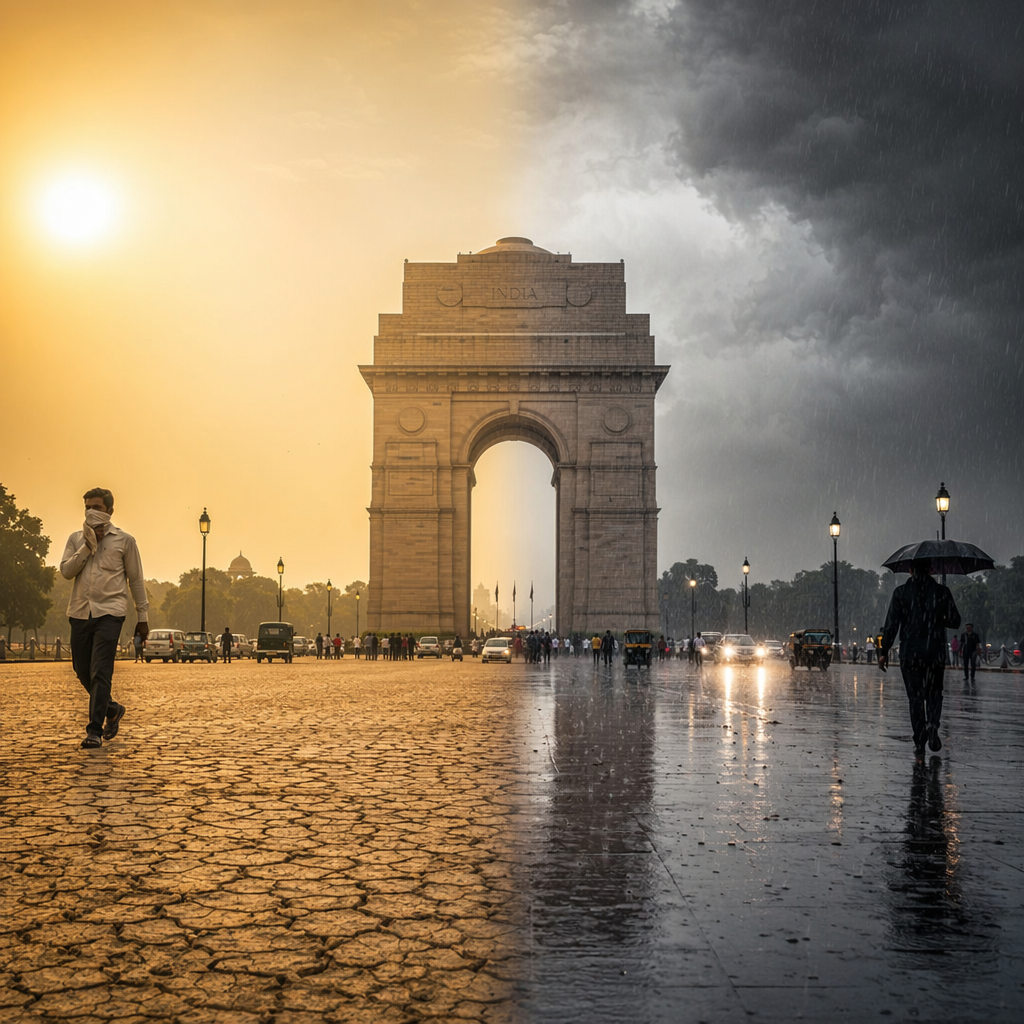
Delhi recorded 52.9°C at Mungeshpur on 29 May 2024, according to an India Meteorological Department observation that was widely reported by Reuters and other news agencies. The reading, taken at an automatic weather station in north-west Delhi, was later examined by the weather office for possible sensor or local exposure issues, but it nevertheless reflected the scale of heat stress across the National Capital Region during one of the most severe late-May heat spells in recent years.
Delhi’s temperature profile is shaped by its inland location, distance from the sea, high urban density and seasonal wind patterns. The city experiences cold winter mornings, intense pre-monsoon heat, humid monsoon conditions and a short post-monsoon transition. As of 2026, publicly available government weather bulletins and recent reports show that Delhi remains one of India’s most closely watched urban climate zones because temperature changes directly affect electricity demand, public health, water use, school schedules, labour conditions and air quality.
The India Meteorological Department, or IMD, uses a network of observatories and automatic weather stations across Delhi, including Safdarjung, Palam, Lodhi Road, Ridge, Ayanagar, Najafgarh, Narela, Pitampura and Mungeshpur. Safdarjung is generally treated as Delhi’s representative base station for citywide climate records, while other sites show localised variation. This distinction matters because temperatures in Delhi can differ by several degrees within the same day, especially during heatwaves or winter fog episodes.
Delhi’s 2024 Heatwave: Key Temperature Records
The most prominent recent temperature event in Delhi occurred in May 2024. Reuters reported on 29 May 2024 that parts of Delhi had recorded temperatures above 50°C as north India faced severe heatwave conditions. IMD data listed 52.9°C at Mungeshpur on that date, while other Delhi stations also recorded extremely high maximum temperatures. The reading drew national attention because it was among the highest ever reported in the city’s observing network.
On the same day, IMD observations showed very high maxima at several Delhi stations. The figures reported in government-linked weather updates and media summaries included 49.1°C at Najafgarh and readings near or above 48°C at other outer Delhi stations. Safdarjung, the reference observatory, recorded a lower value than Mungeshpur but still remained under severe heatwave conditions.
IMD later said the Mungeshpur reading required examination because one automatic station had reported an outlier compared with nearby stations. The official review did not change the fact that Delhi experienced widespread dangerous heat during the period. Heatwave alerts were issued, hospitals were advised to prepare for heat illness, and state authorities restricted some outdoor activities and adjusted school guidance in response to the conditions.
Another confirmed benchmark came on 28 May 2024, when Reuters reported that Delhi’s Safdarjung observatory recorded 49.9°C in the broader region’s heatwave context, while several Delhi-NCR locations crossed the 49°C mark. IMD classified the conditions in parts of the capital as severe heatwave conditions. For residents, the distinction between 47°C, 49°C and readings above 50°C is significant because human heat stress rises sharply when high temperature combines with low wind, reflected heat from surfaces and limited night-time cooling.
Recent Stats: 2024–2026
Available government and news-agency data from 2024 onward show the following recent temperature-related markers for Delhi and the National Capital Region:
- 29 May 2024: IMD’s Mungeshpur automatic weather station in Delhi reported 52.9°C, a figure carried by Reuters and later reviewed by IMD for possible sensor or local-site factors.
- 29 May 2024: Najafgarh in Delhi reported around 49.1°C, according to IMD observations cited in public weather reports during the same heatwave.
- May 2024: IMD issued red and orange heat alerts for Delhi and neighbouring north Indian states as maximum temperatures exceeded 45°C at multiple stations.
- June 2024: Delhi continued to see maximum temperatures above 44°C during parts of the month before monsoon influence increased, according to IMD daily bulletins.
- January 2025: IMD winter bulletins for north India recorded cold-day and dense-fog conditions affecting Delhi, with minimum temperatures at the Safdarjung station falling into the single digits on several mornings.
- As of 2026: IMD continues to use Safdarjung as Delhi’s main long-period reference station while automatic weather stations such as Mungeshpur, Najafgarh, Narela and Pitampura provide neighbourhood-level temperature variation.
Why Delhi Has Large Temperature Swings
Delhi’s summer heat is driven by its geography and seasonal circulation. In April, May and June, dry north-westerly winds often move across Rajasthan and Haryana before reaching the capital. These winds can raise maximum temperatures rapidly, especially before the southwest monsoon reaches north-west India. Urban surfaces such as concrete, asphalt and built-up residential blocks absorb heat during the day and release it at night, contributing to warmer night-time conditions in dense neighbourhoods.
The city also has a marked winter season. December and January can bring cold mornings, shallow fog and cold-day conditions when daytime temperatures remain low because of poor sunlight and persistent low cloud or fog. Minimum temperatures can fall below 5°C in colder spells, especially at stations on Delhi’s outskirts. Safdarjung often shows a different value from Ridge, Ayanagar or Lodhi Road because local vegetation, open land, traffic density and elevation influence readings.
Monsoon months produce a different type of discomfort. The maximum temperature usually falls compared with May and early June, but humidity rises sharply. A day at 34°C to 36°C during July or August can still feel stressful because the body cools less efficiently when the air is humid. The IMD uses several forecast products, including heat index and wet-bulb-related assessments, to help authorities judge combined heat and humidity risks.
Safdarjung, Palam and Local Stations: Why Readings Differ
Delhi temperature reports often mention more than one number because the city has multiple stations. Safdarjung is the main climatological station and is usually cited for official Delhi city records. Palam, located near the airport zone, often reports higher maximum temperatures in summer because of open land, paved surfaces and exposure conditions. Ridge and Ayanagar can show different readings because they represent separate microclimates within the National Capital Territory.
Automatic weather stations such as Mungeshpur and Najafgarh are valuable for local monitoring but may produce readings that require technical validation if they diverge sharply from surrounding locations. In May 2024, this issue became important after the 52.9°C reading at Mungeshpur. IMD officials said the observation needed to be checked because it was unusually high compared with nearby stations. Reuters reported that the weather department was examining whether the station reading reflected a local factor or sensor issue.
Such verification is part of normal meteorological practice. Temperature records depend not only on the thermometer but also on station siting, instrument shielding, ventilation, surface cover and surrounding heat sources. A properly exposed station over natural ground may record a different value from a sensor near built-up surfaces or dry open land. For this reason, long-term climate comparisons usually rely on stations with stable observing histories.
Public Health and Heat Action Measures
High temperatures in Delhi have direct public health consequences. During severe heatwaves, government advisories generally recommend drinking water regularly, avoiding outdoor work during peak afternoon hours, wearing light clothing and recognising symptoms such as dizziness, headache, confusion and fainting. Labourers, street vendors, traffic police, construction workers, elderly residents and people without reliable cooling are among the groups more exposed to heat stress.
In May and June 2024, Delhi hospitals and public authorities issued advisories as heatwave conditions intensified. Reuters reported that north India’s heatwave placed pressure on power supply and public services. The Delhi government and local agencies have used heat action planning measures such as public warnings, school advisories and hospital preparedness notices. These actions are based on IMD forecasts and colour-coded warnings.
Heat also affects energy demand. Delhi’s electricity consumption typically rises during extreme summer spells because of air-conditioner and cooler use. Power distribution companies publish demand updates during peak summer periods. In recent years, Delhi has repeatedly reported summer peak power demand above 7,000 megawatts, and in 2024 demand crossed previous high levels during the heatwave season, according to official and utility statements reported by Indian media. The demand pattern is closely linked to maximum temperature, night-time temperature and humidity.
Winter Temperatures and Cold-Day Conditions
Delhi’s temperature story is not limited to summer. Winter cold is a recurring risk, particularly from late December to January. IMD defines cold-day conditions when the maximum temperature falls significantly below normal while the minimum is also low. Fog and low visibility can disrupt flights, trains and road transport. Palam airport weather reports are especially important during these periods because aviation operations depend on visibility as well as temperature.
In January 2024 and January 2025, IMD bulletins for north India repeatedly mentioned dense fog and cold-day conditions affecting Delhi and neighbouring states. Minimum temperatures in Delhi during winter commonly fall into single digits. On colder mornings, outlying stations such as Ayanagar or Ridge may report lower minimum temperatures than Safdarjung. These variations reflect open land exposure, wind conditions and the urban heat-island effect.
The urban heat-island effect can keep central Delhi warmer at night than peripheral or less built-up locations. However, that does not eliminate winter risk. People without adequate shelter remain vulnerable when night temperatures fall and wind chill increases. Government agencies and local bodies usually open night shelters and issue advisories during cold waves.
Rainfall, Monsoon and Temperature Relief
The southwest monsoon usually brings relief from Delhi’s highest maximum temperatures, but it does not always reduce heat stress immediately. Before monsoon onset, the capital can experience hot and humid days with high discomfort levels. Once monsoon showers become regular, daytime temperatures generally decline, but waterlogging, traffic disruption and humidity become major concerns.
In 2024, Delhi experienced both severe heat before monsoon and later heavy rainfall events during the rainy season. Government weather warnings issued during monsoon months often focused on thunderstorms, intense spells of rain and local flooding. Temperature during such periods can drop sharply within hours after rain, but high humidity can keep perceived conditions uncomfortable.
Temperature records must therefore be read with season and weather context. A 44°C dry heatwave day in May presents one type of risk. A 35°C humid day in July presents another. A 7°C foggy morning in January affects transport, respiratory health and shelter needs. Delhi’s climate risk profile includes all three situations within the same year.
What “As of 2026” Means for Delhi Temperature Tracking
As of 2026, Delhi temperature monitoring depends on a combination of IMD daily observations, automatic weather stations, satellite products, forecast models and government advisories. The most reliable day-to-day source remains the India Meteorological Department, which publishes city forecasts, warnings and observed temperatures. Reuters and other international news agencies report major heatwave or cold-wave events when they affect large populations or public systems.
For readers comparing current temperature with past records, the main point is to identify the station. A record at Safdarjung has a different meaning from a record at Mungeshpur or Najafgarh. Safdarjung is best suited for long-term Delhi comparisons, while local stations help show neighbourhood-level extremes. This is why official summaries often list several stations instead of one citywide number.
The recent period from 2024 to 2026 shows that Delhi continues to face both extreme maximum temperatures and sharp seasonal variation. The 2024 heatwave demonstrated how quickly the capital can move from high summer conditions to emergency-level heat alerts. Winter bulletins in 2024 and 2025 showed that cold and fog remain significant seasonal hazards. Government data and agency reports indicate that Delhi’s temperature should be interpreted as a year-round public-service issue, not only as a summer weather headline.
Sources: Reuters, Government releases, publicly available data.
Comments
Post a Comment