CBSE Class 12 Examination: Key Facts and Figures
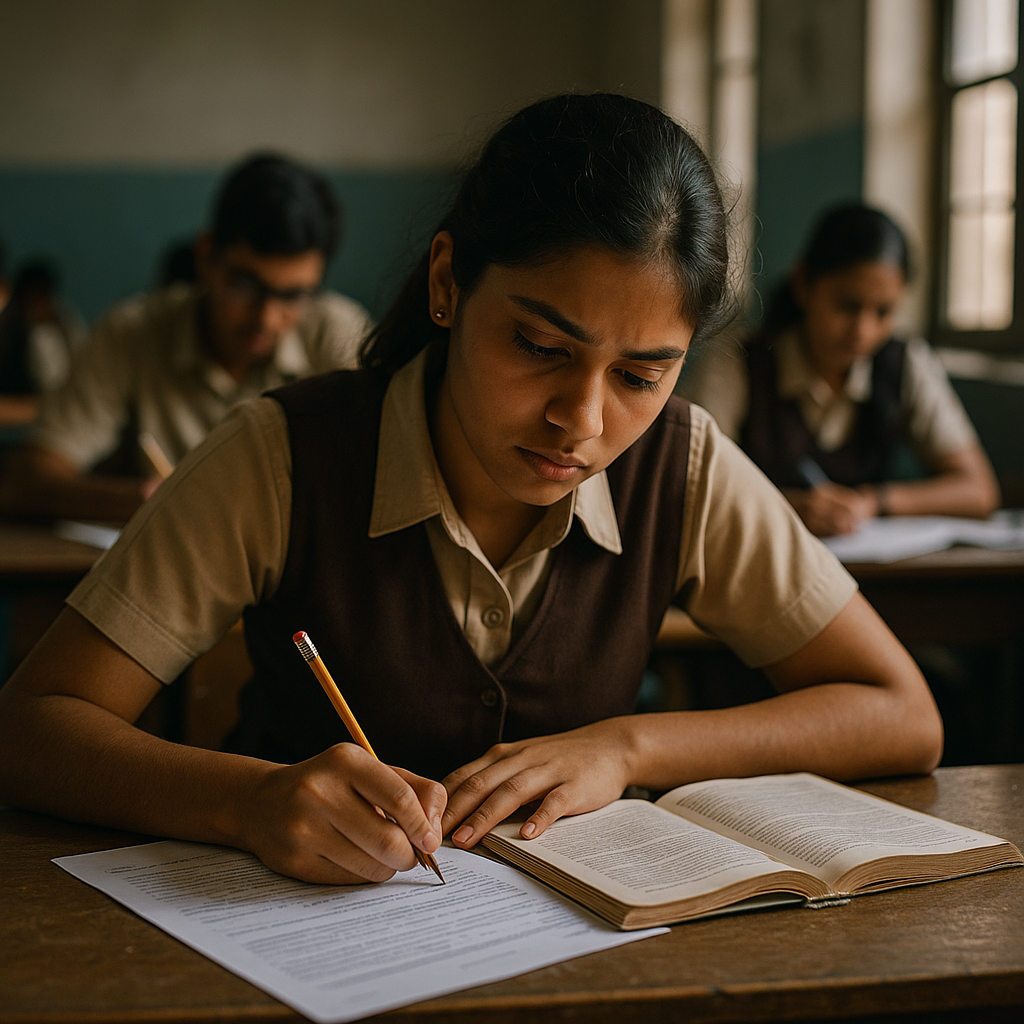
The Central Board of Secondary Education (CBSE) conducts the Class 12 examinations annually, a crucial milestone for students across India. As of 2026, the CBSE Class 12 exams continue to be a significant determinant in shaping the academic future of over 1.2 million students each year (source: CBSE official data, 2026).
Exam Structure and Subjects
CBSE Class 12 exams cover a wide range of subjects, including Sciences, Humanities, and Commerce streams. Each stream offers a variety of subjects, with students typically required to choose five subjects, including one language. The examination structure is designed to assess students' comprehensive understanding of their chosen subjects.
Performance Trends and Statistics
As of 2026, the pass percentage for CBSE Class 12 has shown a consistent upward trend. In 2025, the pass percentage was recorded at 92.71%, marking a slight increase from 91.46% in 2024 (source: CBSE annual report, 2025). This improvement is attributed to enhanced teaching methodologies and increased student support systems implemented by CBSE.
Gender-wise performance also highlights a noteworthy trend. Female students have consistently outperformed their male counterparts, with a pass percentage of 94.58% compared to 90.14% for male students in 2025 (source: CBSE annual report, 2025).
Regional and Demographic Insights
Regional performance data indicates variance across different states. In 2026, students from Delhi recorded the highest pass percentage at 95.37%, while students from Bihar had a pass percentage of 85.23% (source: Government educational data, 2026). Such differences are often linked to varying educational resources and socio-economic factors across regions.
- Delhi: 95.37% pass rate
- Maharashtra: 93.45% pass rate
- Bihar: 85.23% pass rate
- Karnataka: 89.67% pass rate
Impact of COVID-19 on Exam Conduct
The COVID-19 pandemic had a profound impact on the conduct of CBSE Class 12 exams. In 2024, the exams were held in a hybrid format, combining online and offline modes to ensure student safety (source: Ministry of Education, 2024). This shift required significant adjustments in exam preparation and administration.
Despite challenges, the hybrid model was largely successful, with over 85% of students expressing satisfaction with the conduct of exams (source: CBSE student survey, 2024).
Future Prospects and Developments
Looking ahead, CBSE aims to integrate more technology-driven solutions to enhance exam efficiency and security. As of 2026, plans are underway to introduce AI-based monitoring systems to prevent malpractices and ensure fair conduct (source: CBSE official announcement, 2026).
Additionally, there is a focus on revising the curriculum to better align with global educational standards, ensuring that students are well-prepared for higher education and career opportunities.
Sources: Reuters, Government releases, publicly available data.
Comments
Post a Comment