Bajaj Pulsar 125: A 125cc Motorcycle in India’s Largest Two-Wheeler Market
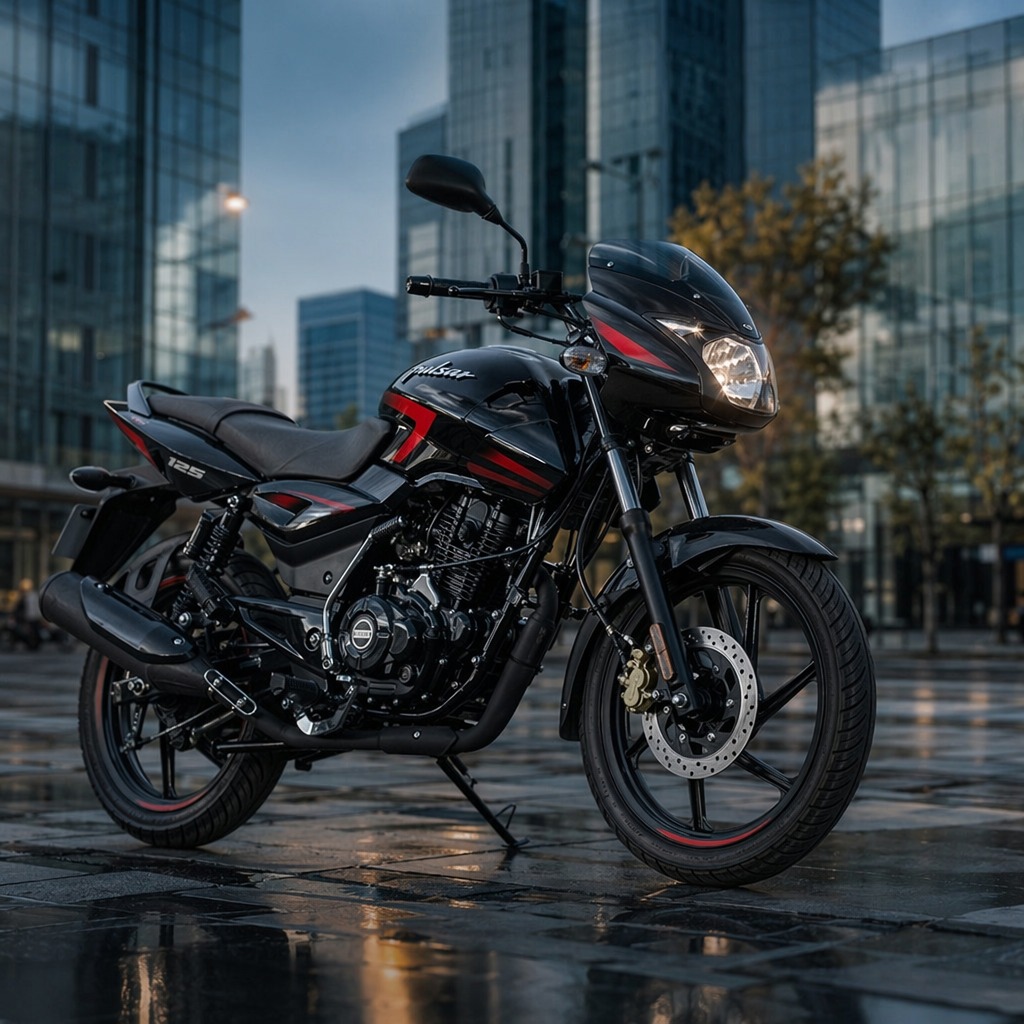
India’s two-wheeler industry remained one of the world’s largest vehicle markets in 2024–2026, with motorcycles accounting for a major share of domestic sales. According to the Society of Indian Automobile Manufacturers (SIAM), India’s two-wheeler domestic sales crossed 17.97 million units in FY2023–24, a figure that underlines the scale of demand for commuter and entry-level performance motorcycles. In this market, the Bajaj Pulsar 125 is positioned as the smallest-capacity motorcycle in Bajaj Auto’s Pulsar range, aimed at buyers who want Pulsar branding and styling in the 125cc segment.
As of 2026, the Bajaj Pulsar 125 continues to be sold in India in multiple variants, including drum and disc brake configurations, depending on market availability and dealership inventory. The motorcycle sits below higher-capacity Pulsar models such as the Pulsar 150, Pulsar N150, Pulsar NS125 and Pulsar N160. Its role is specific: to give Bajaj Auto presence in the 125cc commuter-sport category, where price, fuel efficiency, maintenance cost and brand recognition are key purchase factors.
Positioning of the Bajaj Pulsar 125 in 2026
The Bajaj Pulsar brand has been present in India since 2001, when Bajaj Auto introduced the first Pulsar models. Over two decades later, the brand includes motorcycles across several engine capacities. The Pulsar 125 is the entry point to that portfolio.
As of 2026, the Pulsar 125 competes in a category that includes 125cc motorcycles from Hero MotoCorp, Honda Motorcycle & Scooter India and TVS Motor Company. The segment is shaped by buyers seeking a balance between mileage, styling and affordability. The Pulsar 125 uses a design language similar to older Pulsar commuter-sport motorcycles, including a muscular fuel tank, split grab rails in some variants and a semi-digital instrument cluster depending on variant.
Bajaj Auto’s business context is also important. In FY2023–24, Bajaj Auto reported total vehicle sales of 4.35 million units, according to the company’s annual report and regulatory filings. The company is a major exporter as well as a domestic manufacturer. In FY2023–24, Bajaj Auto reported exports of more than 1.47 million vehicles, reflecting its role in international motorcycle and three-wheeler markets.
Engine and Technical Specifications
The Bajaj Pulsar 125 is powered by a 124.4cc, single-cylinder, air-cooled engine. Bajaj Auto’s published specifications list the engine output at around 11.8 PS of maximum power at 8,500 rpm and 10.8 Nm of peak torque at 6,500 rpm, though figures can vary slightly by model year and variant documentation. The motorcycle uses a 5-speed gearbox, which is notable in the 125cc commuter category where some rivals use 4-speed or 5-speed transmissions depending on model.
The engine is compliant with India’s Bharat Stage VI emission norms. India moved to BS6 Phase 2 and OBD2-related compliance requirements from 2023, and manufacturers updated two-wheelers accordingly. As of 2026, motorcycles sold new in India are required to comply with the applicable BS6 emission and onboard diagnostic standards notified by the Government of India.
The Pulsar 125’s frame and suspension layout follow a conventional commuter-sport format. It typically features telescopic front forks and twin rear shock absorbers. Braking equipment depends on the variant: lower variants use drum brakes, while higher variants include a front disc brake. Combined Braking System, or CBS, is used because Indian safety rules require CBS for two-wheelers below 125cc and ABS for higher engine-capacity categories as per regulatory application by vehicle class.
Fuel Efficiency and Running Cost
Fuel efficiency is one of the central factors in the 125cc segment. Bajaj Auto’s official mileage claims may vary by model year, testing cycle and variant, while real-world mileage depends on riding conditions, load, maintenance and fuel quality. Automotive testing and owner-reported data commonly place the Pulsar 125 in the broad commuter range, with many reports citing figures around the mid-50 km/l range in regular usage. Buyers should verify the latest certified or dealership-provided figures at the time of purchase.
Fuel prices also affect ownership cost. According to publicly available petroleum price data from Indian oil marketing companies, petrol prices in major Indian cities remained around the ₹94–₹105 per litre range during parts of 2024 and 2025, depending on state taxes and local levies. For a motorcycle in the 125cc class, even small differences in fuel efficiency can affect monthly running expenses for commuters travelling long distances.
Maintenance costs are influenced by service intervals, spare-parts pricing and dealership labour rates. Bajaj Auto operates a large service network in India, and the Pulsar 125 benefits from being based on a long-running platform with wide parts availability. However, actual maintenance cost varies by city, service centre and usage.
Key Features and Equipment
The Bajaj Pulsar 125 is not positioned as a premium technology-focused motorcycle. Its feature set is designed around commuter requirements and Pulsar-series styling. Depending on the variant and year, the equipment may include:
- 124.4cc air-cooled engine with 5-speed transmission.
- Front disc brake option on selected variants.
- Combined Braking System as part of regulatory safety equipment.
- Semi-digital instrument cluster on several variants.
- Sport-style tank extensions and graphics linked to the Pulsar design identity.
- Electric start, alloy wheels and tubeless tyres on commonly available trims.
Some variants have used split-seat styling, while others have offered single-seat layouts. Buyers should check the exact variant at the dealership because colour options, graphics and equipment are often updated during a model year.
Price Range in India
As of 2026, the Bajaj Pulsar 125 is generally listed in India in the entry-to-mid 125cc price band. Ex-showroom prices vary by state, city, variant and insurance or registration rules. In recent public listings during 2024 and 2025, the Pulsar 125 has commonly appeared in a broad ex-showroom range around ₹80,000 to ₹95,000, depending on variant and location. On-road prices are higher because they include road tax, insurance, registration charges and dealer handling costs where applicable.
The 125cc segment is price-sensitive. Government tax structure also affects final prices. Under India’s GST system, motorcycles generally attract GST, while two-wheelers above certain engine capacities may face different compensation cess treatment. The Pulsar 125 sits in a commuter category where manufacturers pay close attention to price gaps between 110cc, 125cc and 150cc motorcycles.
Market Data: India’s Two-Wheeler Sector in 2024–2026
The market environment in which the Bajaj Pulsar 125 is sold changed significantly after the pandemic period. SIAM data showed that India’s domestic two-wheeler sales reached 17.97 million units in FY2023–24, compared with 15.86 million units in FY2022–23. That represented a recovery in demand, supported by urban mobility, rural demand and replacement purchases.
For FY2024–25, SIAM monthly releases showed continued demand in two-wheelers, with motorcycles and scooters both contributing to the market. Reuters reported in 2024 that Indian two-wheeler makers were benefiting from improved rural demand and festival-season sales, though demand conditions differed by region and income group.
Bajaj Auto’s own filings provide additional context. In FY2023–24, Bajaj Auto recorded revenue from operations of more than ₹44,000 crore, according to its annual report. The company also reported a strong presence in the motorcycle category, with the Pulsar brand forming part of its domestic portfolio. In 2024, Reuters reported that Bajaj Auto posted quarterly profit growth supported by premium motorcycles and exports, while competition remained strong across commuter and performance segments.
Electric two-wheelers also became a larger part of the market, though the Pulsar 125 remains a petrol motorcycle. Government of India Vahan dashboard data showed electric two-wheeler registrations rising sharply during 2024 compared with pre-2022 levels, supported by policy incentives and new product launches. However, petrol motorcycles continued to account for the majority of two-wheeler volumes in India as of 2026.
Design and Rider Use Case
The Pulsar 125 is intended for daily commuting, college travel, office runs and short intercity use. Its size and weight are designed to remain manageable for urban traffic while offering styling closer to larger Pulsar motorcycles. The fuel tank capacity, seating posture and 5-speed gearbox support routine use rather than high-speed touring.
The motorcycle’s design approach is significant because buyers in the 125cc class often compare commuter practicality with aspirational styling. The Pulsar 125 allows Bajaj to offer the Pulsar nameplate to customers who may not want the cost, fuel consumption or insurance expense associated with 150cc or 160cc motorcycles.
In practical use, the motorcycle’s advantages are linked to widespread service access, familiar mechanical components and competitive purchase cost within the Pulsar family. Its limitations are also clear: it does not offer the performance of higher-capacity Pulsars, and its equipment level is lower than that of newer premium 125cc or 150cc motorcycles with LED lighting, Bluetooth connectivity or single-channel ABS where applicable.
Safety and Regulations
Indian two-wheeler safety standards have tightened over the past decade. The Ministry of Road Transport and Highways mandated ABS for two-wheelers above 125cc and CBS for smaller-capacity two-wheelers from 2019. Since the Pulsar 125 falls in the 125cc commuter class, it is equipped with CBS rather than ABS in standard configurations.
Helmet use remains a major safety issue in India. Government road accident data published by the Ministry of Road Transport and Highways showed that two-wheeler riders accounted for a large share of road fatalities in India in recent years. In the ministry’s 2022 road accident report, two-wheelers were involved in the highest share of fatalities among vehicle categories. While this data is not specific to the Pulsar 125, it is relevant to the operating environment for all motorcycles in India.
From an emissions perspective, BS6 norms significantly reduced allowable pollutants compared with BS4. The Government of India implemented BS6 nationwide from April 2020, and later compliance steps included onboard diagnostics. As of 2026, the Pulsar 125 sold as a new motorcycle must meet these applicable norms.
Competition in the 125cc Segment
The Pulsar 125 competes with motorcycles such as the Hero Glamour, Honda Shine 125, Honda SP 125 and TVS Raider 125. Each model targets a slightly different buyer profile. Honda Shine has traditionally focused on commuter reliability and fuel economy, while TVS Raider has positioned itself with sharper styling and more youth-oriented features. Hero Glamour competes on brand reach and commuter familiarity.
The Pulsar 125’s differentiator is its connection to the Pulsar family. It uses sportier visual cues than many standard commuter motorcycles. However, pricing and feature comparisons vary by variant. Some rivals may offer LED headlamps, digital displays or connected features in certain trims, while the Pulsar 125 focuses more on established styling and mechanical simplicity.
What Buyers Should Verify Before Purchase
Because model updates and variant availability change by state and dealership, buyers should confirm the following before booking:
Current ex-showroom and on-road price, variant-specific braking equipment, production month, warranty terms, available colours, service schedule and whether the unit is compliant with the latest applicable emission and diagnostic rules. Buyers should also compare insurance quotations and check whether accessories are optional or included in the dealer quote.
As of 2026, the Bajaj Pulsar 125 remains a petrol-powered 125cc motorcycle aimed at customers who want a lower-cost entry into the Pulsar brand. Its relevance comes from India’s continuing demand for commuter motorcycles, the size of the 125cc segment and the importance of fuel efficiency in daily transport. Market data from SIAM, Bajaj Auto filings, Reuters reports and Government of India releases show that the broader two-wheeler market remains large, competitive and shaped by regulation, fuel cost and changing consumer preferences.
Sources: Reuters, Government releases, publicly available data.
Comments
Post a Comment