Overview of the 2026 Tamil Nadu Legislative Assembly Election
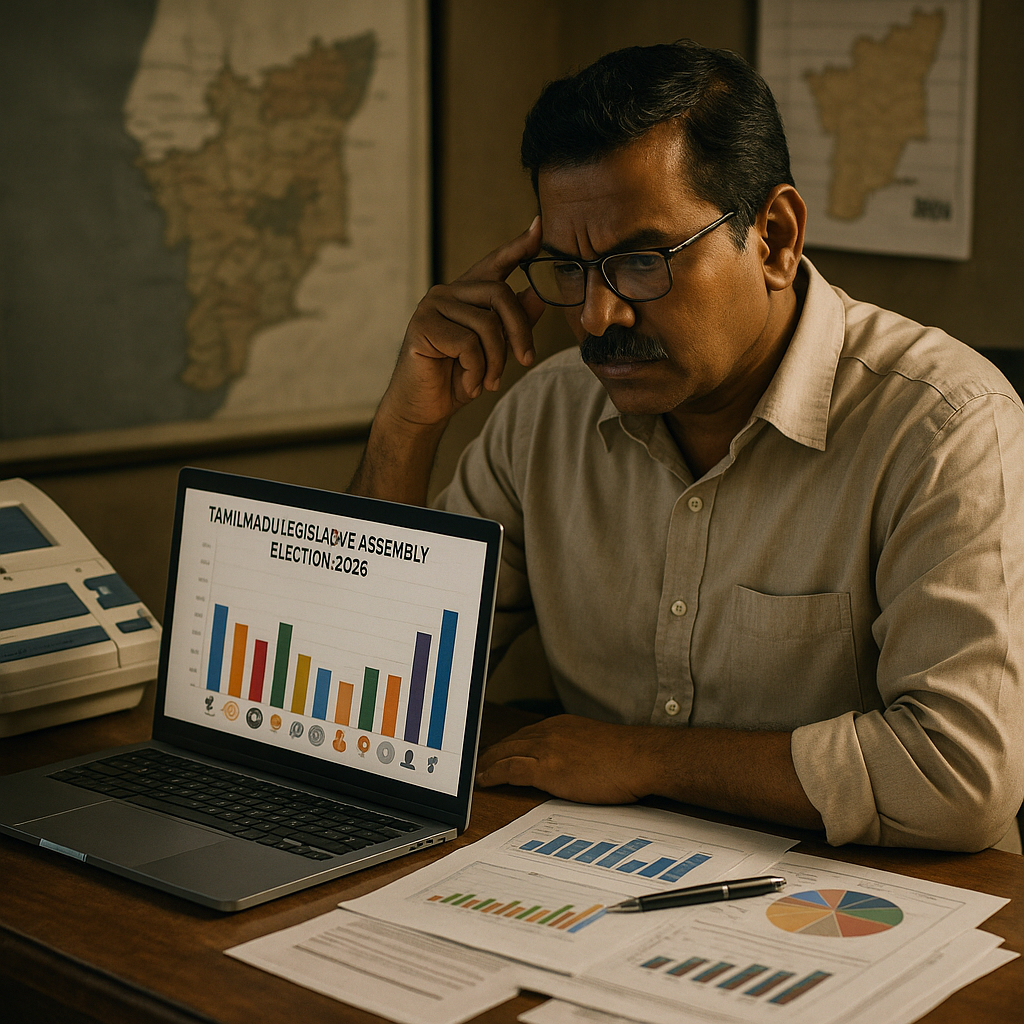
The 2026 Tamil Nadu Legislative Assembly election marks a significant event in the political landscape of India, as the state gears up for another round of electoral contests. As of 2026, Tamil Nadu's population is approximately 77 million, making it one of the most populous states in the country. This election will determine the composition of the 234-member assembly, with political parties vying for a majority to form the government.
Key Political Players and Alliances
In the 2026 election, the principal political parties in Tamil Nadu remain the Dravida Munnetra Kazhagam (DMK) and the All India Anna Dravida Munnetra Kazhagam (AIADMK). Both parties have historically dominated the state's political scene. The DMK, led by Chief Minister M.K. Stalin, is seeking to retain power after winning a decisive victory in the 2021 elections. On the other hand, the AIADMK, despite internal challenges, is attempting to regain its influence in the state.
As of 2024, the DMK holds 133 seats in the assembly, while the AIADMK has 66 seats. The remaining seats are occupied by smaller parties and independents. The Bharatiya Janata Party (BJP), which has been trying to expand its footprint in Tamil Nadu, currently holds four seats. (Source: Tamil Nadu Legislative Assembly records)
Electoral Issues and Voter Concerns
Several key issues are expected to influence the 2026 elections. Among them, economic development, job creation, and social welfare programs are at the forefront. Tamil Nadu's Gross State Domestic Product (GSDP) was estimated at $320 billion in 2024, making it one of the largest economies among Indian states. However, unemployment remains a concern, with the unemployment rate recorded at 4.8% as of 2025. (Source: Ministry of Statistics and Programme Implementation, Government of India)
Additionally, environmental concerns, particularly regarding water management and pollution, are significant in a state that has faced acute water shortages in recent years. The government's response to these issues will likely play a crucial role in shaping voter preferences.
Voter Demographics and Participation
The electorate in Tamil Nadu is diverse, with a significant number of young voters. As of 2026, approximately 15% of the voters are aged 18-25, highlighting the importance of youth-centric policies in the election campaigns. Furthermore, women constitute nearly 50% of the electorate, emphasizing the need for gender-sensitive policies. (Source: Election Commission of India)
In the 2021 elections, voter turnout was recorded at 72.81%, a slight decrease from previous years. Efforts are underway to increase participation, particularly among urban voters, who have shown lower turnout rates in past elections.
Challenges and Opportunities
The 2026 election presents both challenges and opportunities for political parties in Tamil Nadu. Key challenges include addressing the aspirations of a diverse and dynamic electorate, managing coalition dynamics, and ensuring effective governance. Opportunities lie in harnessing technology to engage with voters, implementing sustainable development policies, and fostering economic growth.
The Election Commission has introduced several measures to ensure free and fair elections, including the use of electronic voting machines (EVMs) and voter-verified paper audit trails (VVPATs). These measures aim to enhance transparency and credibility in the electoral process.
- DMK's current seat count: 133 (as of 2024)
- AIADMK's current seat count: 66 (as of 2024)
- Tamil Nadu's GSDP: $320 billion (as of 2024)
- Unemployment rate: 4.8% (as of 2025)
- Voter turnout in 2021: 72.81%
As Tamil Nadu approaches the 2026 elections, the political landscape continues to evolve, with parties strategizing to address the concerns of the electorate and secure a majority in the assembly. The outcome of this election will have significant implications for the state's governance and development trajectory in the coming years.
Sources: Reuters, Government releases, publicly available data.
Comments
Post a Comment