Air India in 2026: India’s Flag Carrier Enters a High-Stakes Expansion Phase
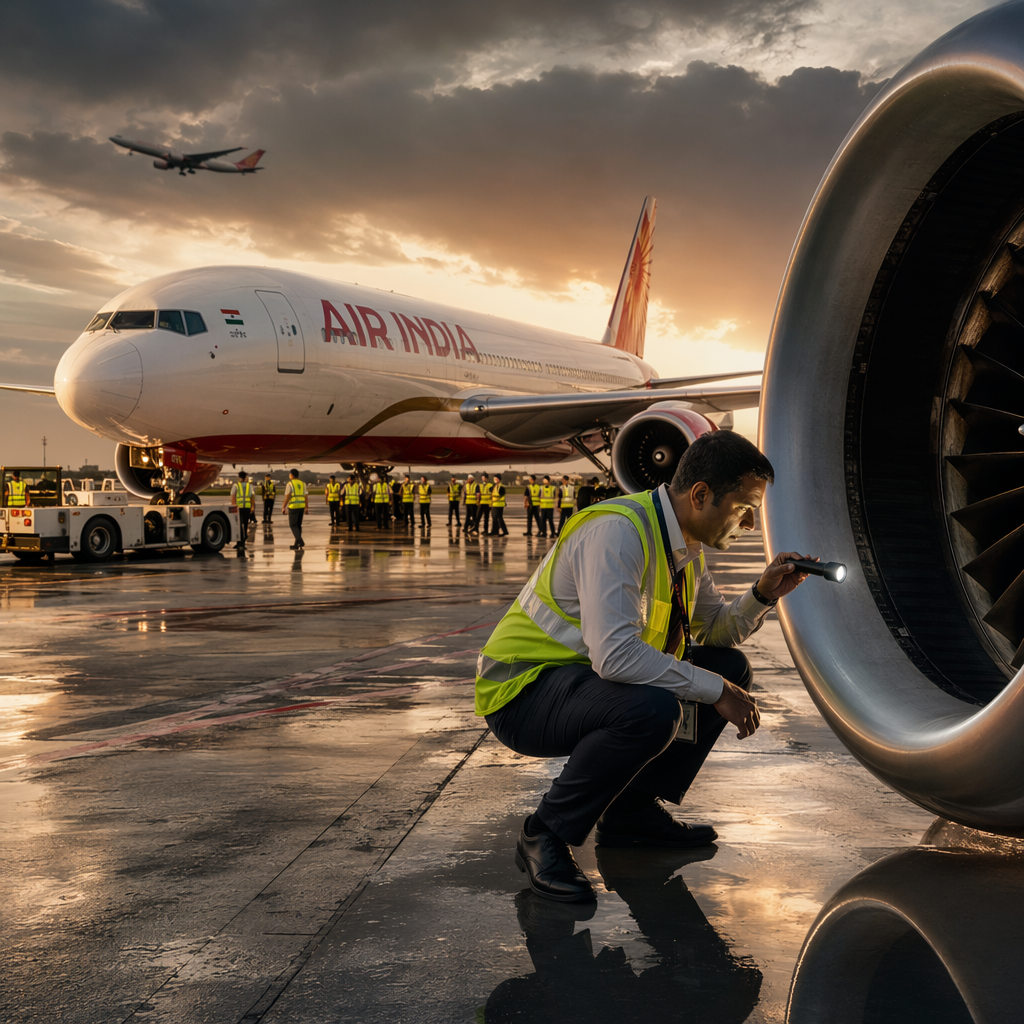
Air India is one of the world’s largest airline turnaround projects in 2026, combining a major fleet renewal plan, network expansion, operational integration and heightened regulatory scrutiny. The airline, owned by Tata Group, is being rebuilt after decades as a state-run carrier and is central to India’s ambition to become a larger international aviation hub.
The scale of the transformation is significant. In February 2023, Air India announced an order for 470 aircraft from Airbus and Boeing, a deal widely reported by Reuters and described at the time as one of the largest aircraft orders in commercial aviation. Deliveries from that order continue to shape the airline’s position as of 2026, alongside the integration of Vistara and Air India Express operations under the Tata aviation portfolio.
The airline’s progress is being watched by regulators, passengers, aircraft manufacturers and global competitors. India is already one of the fastest-growing civil aviation markets. According to India’s Ministry of Civil Aviation and Directorate General of Civil Aviation data published in recent years, domestic air passenger traffic has remained above pre-pandemic levels, with airlines competing aggressively for capacity, routes and aircraft.
Ownership and Restructuring After Privatisation
Air India returned to Tata Group ownership in January 2022 after the Government of India completed the sale of the carrier. The transaction ended nearly seven decades of state ownership. The government had earlier confirmed that Talace Pvt Ltd, a Tata Sons subsidiary, won the bid for Air India with an enterprise value of ₹18,000 crore.
Since then, Tata Group has moved to simplify its airline structure. Air India became the full-service international-focused carrier, while Air India Express was positioned as the low-cost arm. Vistara, a joint venture between Tata Sons and Singapore Airlines, was approved for merger into Air India, with Singapore Airlines holding a minority stake in the enlarged airline. The Competition Commission of India approved the Air India-Vistara merger in September 2023, subject to commitments.
The restructuring is not only a branding exercise. It involves aircraft transfers, staff harmonisation, frequent-flyer integration, technology upgrades, network coordination and customer service changes. These processes are complex because they involve different fleets, contracts, systems and regulatory approvals.
Key Numbers Behind Air India’s Transformation
Several verifiable figures show the size of Air India’s current strategy and the wider market in which it operates:
- 470 aircraft ordered in 2023: Air India placed firm orders for 250 Airbus aircraft and 220 Boeing aircraft, according to Reuters and company announcements.
- $400 million cabin retrofit programme: Air India announced a major refurbishment programme for its legacy wide-body aircraft, covering new seats, inflight entertainment and cabin interiors.
- ₹18,000 crore privatisation transaction: The Government of India announced this enterprise value when Tata Group acquired Air India.
- More than 150 million domestic passengers in India in 2023: DGCA data showed Indian scheduled airlines carried over 15 crore domestic passengers in 2023, a key demand base for Tata Group airlines.
- Air India-Vistara merger approved in 2023: The Competition Commission of India cleared the merger with conditions, creating a larger full-service carrier under Tata Group.
- As of 2026: Air India’s fleet renewal, aircraft delivery schedule and operational integration remain ongoing under the Tata Group transformation plan.
Fleet Renewal: The Core of the Turnaround
Fleet renewal is central to Air India’s strategy. The airline inherited older aircraft that required cabin upgrades and higher maintenance attention. To compete with international carriers on long-haul routes, Air India needs modern wide-body aircraft with efficient engines, upgraded cabins and reliable entertainment systems.
The 2023 aircraft order included Airbus A350 aircraft, Boeing 787 Dreamliners, Boeing 777X aircraft, Airbus A320neo family aircraft and Boeing 737 MAX aircraft. These aircraft are intended to serve both long-haul international markets and short-haul domestic or regional routes.
Reuters reported that the 470-aircraft order was split between 250 Airbus jets and 220 Boeing jets. Airbus confirmed orders for A350 and A320neo-family aircraft, while Boeing confirmed orders including 737 MAX, 787 and 777X aircraft. The size of the order reflects long-term demand expectations in India, but aircraft delivery depends on global production schedules, supply chains, engine availability and certification timelines.
Air India has also introduced the Airbus A350 into service, marking a visible shift in passenger product. The A350 is important because it allows the airline to offer a modern long-haul cabin with improved fuel efficiency and updated onboard systems. For passengers, the aircraft provides a clearer sign of the post-privatisation product strategy than older leased or inherited aircraft.
International Network and India’s Hub Ambition
Air India’s international network is one of its most important assets. The airline operates routes connecting India with North America, Europe, the Middle East and Asia-Pacific. Indian diaspora markets, especially routes between India and the United States, Canada, the United Kingdom and Australia, are commercially important because of high visiting-friends-and-relatives traffic, student travel and business demand.
India has historically lost a significant share of long-haul connecting traffic to foreign hubs in the Gulf and Southeast Asia. Air India’s expansion plan seeks to carry more passengers directly through Indian airports, especially Delhi and Mumbai. This objective is aligned with broader government investment in airport infrastructure and civil aviation capacity.
According to India’s Ministry of Civil Aviation, the country has expanded airport infrastructure substantially over the past decade, with more operational airports than in 2014. Government releases have repeatedly stated that airport connectivity and regional aviation are priorities under schemes such as UDAN. For Air India, improved domestic feed is necessary to support long-haul international flights.
Merger With Vistara and Market Position
The merger with Vistara is a defining part of Air India’s 2024–2026 restructuring period. Vistara built a reputation as a full-service Indian airline with premium cabins, corporate traffic and international routes. Its integration into Air India gives the enlarged carrier more aircraft, trained staff, airport slots and premium-market capability.
Singapore Airlines announced that it would invest in Air India and hold a 25.1% stake in the enlarged entity following the merger, subject to regulatory approvals. This gives the combined airline access to Singapore Airlines’ experience in service standards, network planning and operational processes, while Tata Group retains majority ownership.
From a competition standpoint, the merger creates a stronger full-service rival in a domestic market dominated by IndiGo. DGCA domestic market share data in recent years has consistently shown IndiGo as India’s largest airline by passenger share. Air India’s challenge is therefore not only expansion but also reliability, on-time performance, pricing discipline and service consistency.
Air India Express and the Low-Cost Segment
Air India Express is the Tata Group’s low-cost airline platform. It has been combined with AIX Connect, formerly AirAsia India, to create a larger budget carrier. This structure allows Tata Group to compete across both full-service and low-cost segments while keeping Air India focused on premium and long-haul operations.
The low-cost market is crucial in India because price-sensitive passengers make up a large share of domestic demand. Air India Express serves domestic and international routes, including Gulf markets that are important for Indian workers and families. Labour mobility between India and Gulf countries supports steady passenger demand on these routes.
However, integration has also brought operational difficulties. In May 2024, Reuters reported that Air India Express cancelled flights after cabin crew reported sick in large numbers during a period of labour unrest. The airline later moved to restore operations. The incident showed that workforce integration remains one of the most sensitive parts of Tata Group’s aviation restructuring.
Safety, Regulation and Operational Scrutiny
Air India operates under oversight from India’s Directorate General of Civil Aviation. Like all scheduled airlines, it must comply with rules covering aircraft maintenance, pilot training, flight duty time, safety management and passenger rights.
In recent years, DGCA has issued penalties and directions to Indian airlines, including Air India, over safety, passenger handling and operational lapses. Such actions are publicly reported through regulator statements and media coverage. Regulatory scrutiny is expected to remain significant because Air India is expanding quickly, operating more aircraft and integrating multiple airline systems.
Passenger service has also been an area of official attention. In 2023 and 2024, DGCA issued directions and penalties to airlines in cases involving passenger inconvenience, denied boarding, delays or mishandling of incidents. Air India has publicly stated that it is investing in training, systems and service improvements as part of its transformation programme.
Financial Context and Investment Needs
Air India’s turnaround requires large and sustained capital investment. Aircraft purchases, leases, engine maintenance, cabin retrofits, staff training, IT systems and branding all require funding before the full benefits of expansion appear.
The airline was loss-making under government ownership for many years. The Government of India repeatedly provided support before privatisation, and official documents showed high debt and accumulated losses. Tata Group acquired the airline with the objective of rebuilding it commercially, but the process is long-term because aviation margins are generally thin and fuel, foreign exchange and maintenance costs are volatile.
Fuel remains one of the largest expenses for Indian airlines. Aviation turbine fuel in India is affected by crude oil prices, taxes and currency movement. According to government and industry data, fuel can account for a substantial share of airline operating costs. This means Air India’s financial performance depends not only on passenger demand but also on cost control and aircraft efficiency.
Branding, Cabins and Passenger Product
Air India unveiled a new brand identity in 2023, including updated livery, logo and design language. The airline has also introduced new uniforms and updated digital platforms. These changes are part of a broader effort to reposition the carrier as a modern global airline.
The cabin retrofit programme is one of the most important passenger-facing projects. Air India announced plans to refurbish legacy Boeing 777 and 787 aircraft, including new seats in premium cabins and economy class, updated entertainment systems and improved interior materials. The airline has stated that such work depends on supply chains and aircraft downtime planning.
For international passengers, consistency is a key issue. A carrier operating new A350 aircraft alongside older aircraft can have varied passenger experiences across routes. Air India’s transition period therefore includes a mix of upgraded, new and legacy aircraft until the fleet renewal programme is further advanced.
Human Resources and Training
Air India’s expansion requires pilots, cabin crew, engineers, ground staff, call-centre personnel and managers. India’s aviation growth has increased demand for trained aviation workers, especially pilots and aircraft maintenance engineers.
The airline has announced recruitment and training initiatives since privatisation. Tata Group has also invested in training infrastructure, including aviation academies and partnerships. These initiatives are necessary because aircraft deliveries cannot translate into route expansion without sufficient qualified crews and maintenance capacity.
Labour integration remains complex. Air India, Vistara, Air India Express and AIX Connect came with different workplace cultures, contracts and service standards. Harmonising these systems is a practical requirement for the combined airline group.
Competitive Landscape in 2026
As of 2026, Air India operates in a market where growth opportunities are large but competition is intense. IndiGo remains the strongest domestic competitor by market share, while Gulf carriers, European airlines and Southeast Asian airlines compete heavily for international traffic from India.
Indian passengers have more choices than before, especially on major metro routes. Price, punctuality, baggage handling, loyalty programmes and cabin quality affect passenger decisions. Air India’s advantage is its long-haul network and brand recognition, but its transformation depends on execution across daily operations.
Airport capacity is another factor. Delhi, Mumbai, Bengaluru and other major airports are expanding infrastructure, while new airports such as Navi Mumbai International Airport are expected to affect future airline planning. Slot availability, terminal capacity and international transfer facilities will influence Air India’s ability to build a stronger hub model.
What to Watch in 2026
Air India’s 2026 position can be assessed through measurable indicators: aircraft deliveries, on-time performance, international route additions, merger completion milestones, customer complaint data, safety compliance and financial disclosures. These are factual markers that will show whether the airline is converting investment into operational improvement.
The airline’s transformation is not a single event. It is a multi-year restructuring of fleet, people, systems, routes and customer product. The available public record from Reuters, government releases, regulator data and company announcements shows that Air India has entered one of the most ambitious expansion periods in its history.
Sources: Reuters, Government releases, publicly available data.
Comments
Post a Comment